Spanish
 English



LACTAC FOAMING
View All Prices
| Quantity | Unit Price |
|---|---|
| kg | |
| 1 - 99 | USD 2.63 |
| 100 - 199 | USD 2.57 |
| 200 - 499 | USD 2.51 |
| 500 - 999 | USD 2.45 |
| 1000 - 4999 | USD 2.39 |
| 5000 - 9999 | USD 2.34 |
| 10000 - 17999 | USD 2.29 |
| 18000+ | USD 2.24 |
Lactac Foaming Description — Self-Foaming Acid Detergent for Surfaces and Facilities
At Quimiconsult we manufacture Lactac Foaming, a concentrated self-foaming (high-foam) acid detergent formulated to remove scale and organic matter from surfaces, equipment and facilities in the food industry. With an acidity of 25.0 to 30.0% and a pH below 2.0 (in a 1% solution), Lactac Foaming combines the dissolving action of acid on mineral deposits with surfactants that remove fats and proteins through denaturation-precipitation, keep them in suspension to prevent redeposition, and leave the surface clean with a protective layer that temporarily prevents oxidation. It is indicated for removing scale from pasteurizers, chillers, transfer piping, process and storage tanks, and polyethylene and stainless steel equipment, and it is especially recommended in the sausage and processed meat industry for production equipment, crates and facility surfaces.
What sets Lactac Foaming apart is its high foam formation (self-foaming): unlike a low-foam acid detergent —designed for recirculation in closed CIP circuits—, Lactac Foaming generates a dense layer of foam that clings to vertical and inclined surfaces, extending the acid's contact time and improving coverage when cleaning open surfaces, equipment and facilities (COP-type) by foaming, spraying, immersion or scrubbing. It is the surface acid detergent of the family, complementing Lactac LF (low-foam acid for CIP). In addition, it is highly biodegradable, which allows its use in plants with biological wastewater treatment (activated sludge or stabilization ponds), and it is a stable product that does not release toxic vapors during storage and handling.
As direct manufacturers from our plant in San Nicolás de los Garza, Nuevo León, we control every stage of formulation and production, with analytical verification of the acidity, density and foam level of every batch. Lactac Foaming complies with SAGARPA/SADER regulations (registration Q-7498-003) and comes with a technical data sheet (FT/TDS) and safety data sheet (HDS/SDS). For anyone looking for a self-foaming acid detergent, a foaming acid degreaser for surfaces, or a Mexican-made foaming acid descaler for processed meat plants, crates and facilities, Lactac Foaming is the technical answer within Quimiconsult's catalog.
Lactac Foaming vs. Lactac LF: high foam (surfaces) vs. low foam (CIP)
Quimiconsult's family of acid detergents is chosen according to the cleaning method and the foam level it requires:
- Lactac Foaming — HIGH-foam (self-foaming) acid: for cleaning open surfaces, equipment and facilities (COP) by foaming, spraying, immersion and scrubbing. The clinging foam extends the acid's contact on vertical and inclined surfaces. It is the ideal acid for processed meats, crates, walls, equipment and facility surfaces.
- Lactac LF — LOW-foam acid: for recirculation in closed CIP circuits, where excessive foam would affect the pumps and the hydrodynamics of the cycle.
- Lactac — medium-foam descaling acid: for immersion, soaking and spraying of parts and equipment outside the circuit.
Choosing the acid with the right foam profile is key: Lactac Foaming is NOT used in CIP recirculation (its high foam is not compatible with the pumps), just as a low-foam acid does not take advantage of the adhesion that foam provides on open surfaces.
Is detergent acidic or basic? When to use each
There are acid, alkaline and neutral detergents depending on their use pH. Alkaline detergents (high pH) remove fat and protein; acid detergents such as Lactac Foaming (pH below 2.0 in a 1% solution) are the effective ones for dissolving mineral scale —carbonates, phosphates, oxalates and hard-water scale— that alkaline products do not remove. A professional cleaning program alternates alkaline cycles (organic matter) with acid cycles (mineral scale), always with an intermediate rinse. Lactac Foaming also removes fats and proteins through denaturation-precipitation thanks to its acid capacity and its surfactants, so it works as a foaming acid degreaser for surfaces.
Lactac Foaming technical characteristics
Lactac Foaming is a slightly amber, acidic, self-foaming (high-foam) liquid concentrate with an acidity of 25.0 to 30.0% and a density of 1.25 to 1.30 g/cc. Its acid capacity dissolves mineral scale and promotes the removal of fats and proteins through denaturation-precipitation: the acidic medium reduces the adhesion of residues, and the surfactants keep them in suspension, achieving deeper cleaning and preventing redeposition. After the cycle, it leaves a protective layer that temporarily prevents oxidation of metal surfaces. Its high biodegradability makes it suitable for plants with biological wastewater treatment, and its stability prevents the release of toxic vapors under normal storage and handling conditions.
Lactac Foaming technical specifications
Description:
Self-foaming (high-foam) acid detergent
Appearance:
Slightly amber liquid
Acidity:
25.0 – 30.0%
pH (1% solution):
Below 2.0
Density:
1.25 – 1.30 g/cc
Foam:
High (self-foaming)
Biodegradability:
High
Stability:
High; does not release toxic vapors under normal conditions
Use concentration (contact/immersion):
1 – 3%
Regulation:
SAGARPA/SADER — registration Q-7498-003
CAS number:
N/A (mixture)
Every delivery comes with its Technical Data Sheet (FT/TDS) and Safety Data Sheet (HDS/SDS), plus any additional regulatory documentation the customer requires for its audit and supplier approval processes.
How does Lactac Foaming work?
Lactac Foaming acts on surfaces through complementary mechanisms:
Dissolving mineral scale. The acidity of the formulation reacts with calcium and magnesium carbonates, calcium phosphates and oxalate deposits, converting these insoluble salts into soluble salts that the rinse carries away.
Removing fats and proteins through denaturation-precipitation. The acidic medium denatures and precipitates residual proteins and fats, reducing their adhesion and making them easier to remove.
Suspending residues with surfactants. The surfactants surround the loosened residues and keep them in suspension, preventing redeposition on areas already cleaned and achieving deeper cleaning.
Adhesion through active foam (self-foaming). The high foam formation keeps the acid in contact with vertical and inclined surfaces for the necessary time, without running off prematurely —the specific advantage of Lactac Foaming when cleaning open surfaces and facilities.
Temporary protective layer against oxidation. After the cycle and rinse, it leaves a layer on metal surfaces that temporarily protects them from re-oxidation.
Where Lactac Foaming fits: the program's surface acid
Lactac Foaming is the acid detergent for surfaces and facilities (COP), applied by foaming, spraying, immersion or scrubbing. Within Quimiconsult's cleaning program:
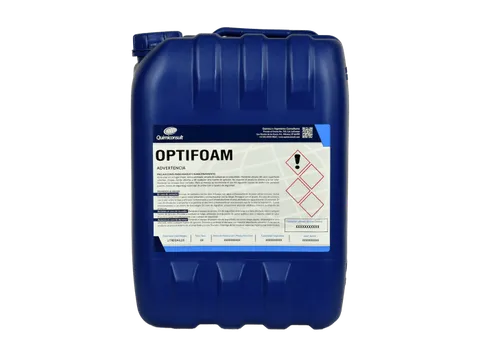
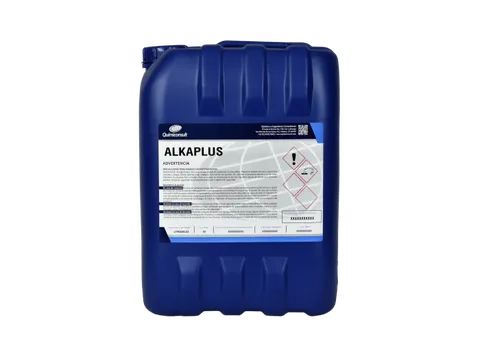
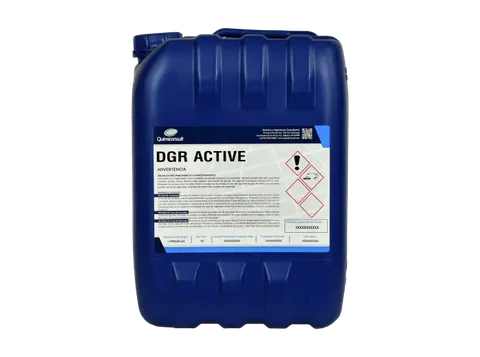
- Surface and facility cleaning (foam): self-foaming alkaline products (Optifoam neutral, DGR Active medium alkalinity, Alkaplus higher strength) for organic matter, and Lactac Foaming (self-foaming acid) for mineral scale and mixed soil on surfaces.
- CIP cleaning (recirculation, low foam): CLK Premium or Alkaflow CIP300 (alkaline) and Lactac LF (acid) in the closed circuit.
- Sanitizing (final stage): the peracetic acid–based Anticel line.
Important: the acid and alkaline cycles must never be mixed or applied without a complete intermediate rinse. In particular, Lactac Foaming (acid) must not come into contact with chlorinated alkaline detergents such as CLK Premium, since mixing a chlorinated product with an acid releases toxic chlorine gas.
Lactac Foaming industries and applications
Processed meat and meat industry
This is Lactac Foaming's flagship application: cleaning production equipment, crates and facility surfaces in sausage and meat plants, where protein, fat and mineral salt residues build up on open surfaces. Foam application keeps the acid in contact with vertical surfaces and crates, and its combined action dissolves the mineral fraction and loosens the organic fraction, backed by SAGARPA/SADER registration for establishments under official inspection.
Facility surfaces, tanks and equipment
Cleaning of facility surfaces, process and storage tanks, and polyethylene and stainless steel equipment, by foaming or spraying, where the goal is to remove mineral scale and organic soil with the advantage of foam adhesion.
Pasteurizers, chillers and piping (by contact/immersion)
Scale removal in pasteurizers, chillers and transfer piping, as well as in utensils, process tanks and polyethylene molds, by contact or immersion at dilutions of 1 to 3%.
Dairy and beverage industry
Removal of mineral scale (calcium phosphates and carbonates) and process residues on surfaces and equipment in the dairy and beverage industry, as part of the surface acid cycle of the cleaning program.
Lactac Foaming directions for use and dosage
By contact or immersion (utensils, process tanks, polyethylene molds): dilutions of 1 to 3%, depending on the scale and soil load.
By foaming and spraying (surfaces and facilities): apply the foam to the surface, leave it for the time needed to loosen the scale and soil, and rinse with water. The concentration is adjusted to the type of surface and deposit.
Good practices: the acid cycle is applied separately from the alkaline cycle and with an intermediate rinse, never mixing the two products. Finish with a complete rinse before sanitizing or resuming production. Quimiconsult's technical team helps define the concentration, method and frequency according to the product, the equipment and the water hardness.
Lactac Foaming safety, handling and storage
Lactac Foaming is a concentrated acid solution (pH below 2.0 in a 1% solution). Although it is a stable product that does not release toxic vapors under normal storage and handling conditions, it must be handled according to the recommendations in its current Safety Data Sheet (HDS/SDS). Safety glasses and gloves are recommended during handling; in case of contact with eyes or skin, rinse with plenty of water.
Incompatibilities: like any concentrated acid, keep separate from concentrated alkalis and chlorinated alkaline products. Never mix with alkaline detergents (sudden neutralization generates heat and splashing) or with chlorinated alkaline products such as CLK Premium (mixing a chlorinated product with an acid releases toxic chlorine gas). Store in high-density polyethylene (HDPE) or polypropylene containers; avoid contact of the concentrate with carbon steel, aluminum, zinc and copper. See Section 10 of the current SDS for the complete reactivity classification.
First aid (general guidance): skin or eye contact, rinse with plenty of water for several minutes (eyes, about 15 minutes) and seek medical attention; ingestion, rinse the mouth, do not induce vomiting and contact a doctor.
Storage: at room temperature, in the original closed container, in a cool, dry, ventilated place, away from heat sources, direct sunlight and incompatible materials. Classified and labeled in accordance with the Globally Harmonized System (GHS); the complete classification, H statements and precautionary statements must be taken from the current SDS. Dispose of leftover product and containers in accordance with applicable environmental legislation.
Lactac Foaming material compatibility
Lactac Foaming is compatible with standard food industry materials: stainless steel (304 and 316L), food-grade polyethylene and polypropylene, and common elastomers (EPDM, silicone). Its use is not recommended on aluminum, zinc, copper or uncoated carbon steel, since a low-pH acid can corrode these metals, especially with prolonged contact times. For non-standard materials or coatings, validate compatibility with a prior test and with Quimiconsult's technical team.
Lactac Foaming compared with other industrial cleaning detergents
Lactac Foaming (acid, high foam, surfaces) vs. Lactac LF (acid, low foam, CIP): both are acid detergents with the same acidity (25 – 30%); the difference is the foam. Lactac Foaming is self-foaming for surfaces and facilities (COP), where the clinging foam extends contact; Lactac LF is low-foam for CIP recirculation in a closed circuit. They are chosen according to the cleaning method.
Lactac Foaming (acid) vs. DGR Active / Alkaplus (surface alkalines): they are the two sides of surface cleaning. Self-foaming alkaline products remove fat and protein; Lactac Foaming removes the mineral scale and mixed soil that alkaline products do not dissolve. They are used in sequence, with an intermediate rinse and never mixed.
Lactac Foaming vs. a pure acid: a pure acid only dissolves minerals; Lactac Foaming is a foaming acid degreaser that combines scale dissolution with surfactants that remove and suspend organic matter, plus high biodegradability and a temporary protective layer against oxidation.
Frequently asked questions about Lactac Foaming
What is Lactac Foaming and what is it used for?
It is a concentrated self-foaming (high-foam) acid detergent, with an acidity of 25 – 30% and a pH below 2.0, manufactured by Quimiconsult, for removing mineral scale and organic matter from surfaces, equipment and facilities in the food industry —especially in processed meats (production equipment, crates and surfaces)— by foaming, spraying, immersion or scrubbing.
How is Lactac Foaming different from Lactac LF?
In the foam and, therefore, in the cleaning method. Lactac Foaming is high-foam (self-foaming), for surfaces and facilities (COP); Lactac LF is low-foam, for CIP recirculation in a closed circuit. Both have the same acidity (25 – 30%).
Can Lactac Foaming be used for CIP cleaning?
No. Because of its high foam, Lactac Foaming is designed for surfaces and facilities, not for CIP recirculation. For the acid cycle in CIP, Lactac LF (low foam) is used.
Is detergent acidic or basic? Which should I use?
Alkaline products remove fat and protein; acids such as Lactac Foaming dissolve mineral scale. A program alternates both, with an intermediate rinse. Lactac Foaming also removes fat and protein through denaturation-precipitation, so it acts as an acid degreaser for surfaces.
Is it compatible with stainless steel and food-grade plastics?
Yes, with 304 and 316L stainless steel, food-grade polyethylene and polypropylene, and EPDM and silicone elastomers. It is not recommended on aluminum, zinc, copper or uncoated carbon steel.
What registration does Lactac Foaming have?
It complies with SAGARPA/SADER regulations (registration Q-7498-003). Request the current documentation (FT/TDS and HDS/SDS) for your audits.
Where can I buy Lactac Foaming in Mexico?
At Quimiconsult we are direct manufacturers, with availability from the Monterrey, Nuevo León area and shipping throughout Mexico. Contact us at +52 (81) 8105 0063 for a quote, technical data sheet and advice.
Other names and terms related to Lactac Foaming
Lactac Foaming is a Quimiconsult brand. It is referred to in short as Lactac Foaming or as part of the Lactac line, and in purchase requests, specification sheets and online searches it is common to find it referenced by functional descriptions:
Lactac Foaming, Lactac, acid detergent, self-foaming acid detergent, foaming acid detergent, detergent acid, acid degreaser, acidic degreaser, foaming acid degreaser, acid descaler, acid detergent for surfaces, acid detergent for processed meats, acid detergent for crates, acid detergent for facilities, acid soap, acid cleaning solution, acid cleaner, Lactac Foaming Quimiconsult, acid detergent Monterrey, industrial acid detergent manufacturer Mexico.
These variations help buyers, maintenance managers, sanitation supervisors and quality managers find Lactac Foaming within Quimiconsult's own-manufactured segment of self-foaming acid detergents for surfaces.
Why buy Lactac Foaming from Quimiconsult?
Quimiconsult is a Mexican company with more than 30 years of experience in specialty chemicals and a direct manufacturer of a complete family of detergents and sanitizers for industrial and food cleaning. When you buy Lactac Foaming from Quimiconsult you get:
- A self-foaming acid detergent for surfaces and facilities with acidity and density specified and verified batch by batch.
- Dual action: dissolution of mineral scale and removal of organic matter through denaturation-precipitation, with a temporary protective layer against oxidation.
- High biodegradability, suitable for plants with biological wastewater treatment.
- SAGARPA/SADER compliance (Q-7498-003) and supporting documentation (FT/TDS and HDS/SDS) for your audits.
- Direct technical support from the manufacturer, with advice on the method (foaming, spraying, immersion), the concentration and the complete cleaning and sanitizing program.
- The complete family of acid detergents (Lactac Foaming for surfaces, Lactac LF for CIP, Lactac for immersion) and the complete program, from a single domestic supplier.
- Availability from Monterrey, Nuevo León, with shipping throughout Mexico.
Does your processed meat, meat, dairy or food plant need a foaming acid detergent for cleaning surfaces and facilities? Contact us at +52 (81) 8105 0063: we analyze your process, the condition of the scale and your water hardness, and propose a complete program with the products in our catalog.
Related products
Lactac Foaming is part of Quimiconsult's industrial cleaning and sanitizing portfolio. Products that complement its use within a complete program:
- Lactac LF — low-foam acid detergent for CIP (closed-circuit recirculation); the circuit version of the same acid, complementing Lactac Foaming (surfaces).
- Lactac — medium-foam descaling acid detergent, for immersion, soaking and spraying of parts and equipment.
- Optifoam / DGR Active / Alkaplus — surface detergents (neutral, medium alkalinity and higher-strength alkaline) for removing organic matter; the alkaline/neutral side of the surface cycle.
- CLK Premium — CIP alkaline detergents (chlorinated and chlorine-free) for the alkaline cycle in a closed circuit.
- Anticel Peracetic Acid (5% / 15%) — Quimiconsult's disinfectant solution: a broad-spectrum, no-rinse oxidizing sanitizer based on peracetic acid, for the final disinfection stage.
- Sanidet / Quaternary Ammonium — sanitizers for plant surfaces and facilities.
- Sequestrants and antiscalants (EDTA, sodium gluconate, PBTC) — to strengthen scale control in very hard water.
Looking to build a complete cleaning and sanitizing program (surfaces → rinse → sanitizing, and CIP alkaline → acid → sanitizing) for your plant? Contact us and we will review the options in our catalog for your industry and type of process.
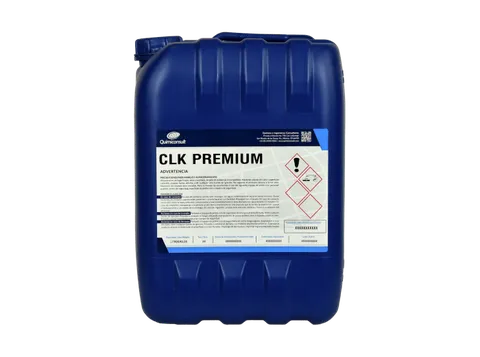
CLK PREMIUM CHLORINATED ALKALINE CIP DETERGENT FOR REMOVAL OF FAT AND PROTEIN
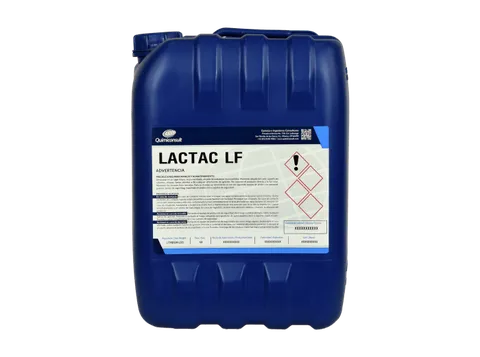
LACTAC LF ACID CIP DETERGENT FOR REMOVAL OF ORGANIC MATTER AND SCALE