Spanish
 English


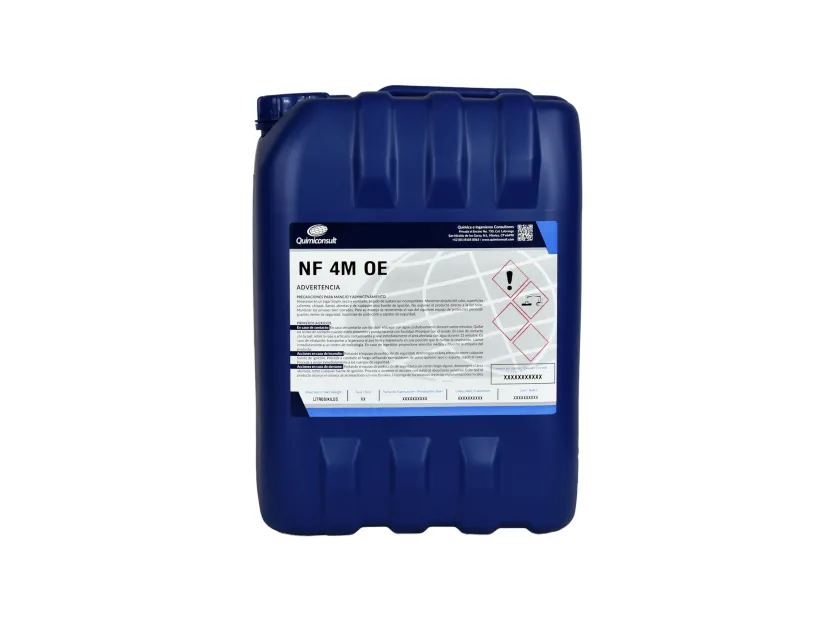
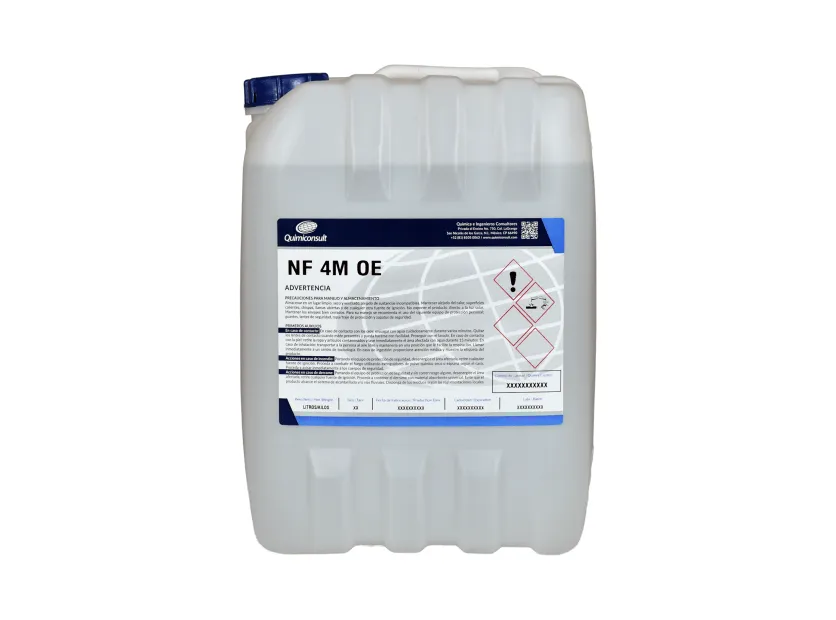
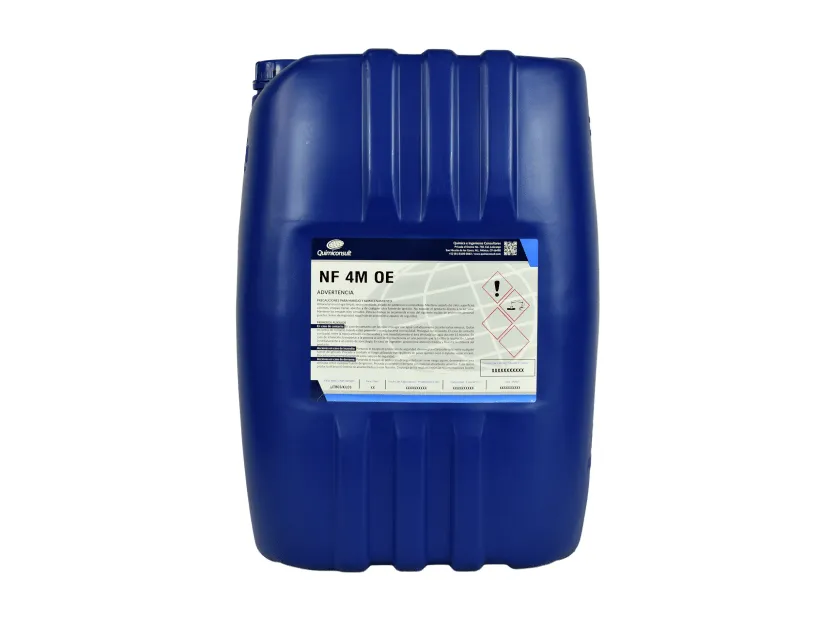
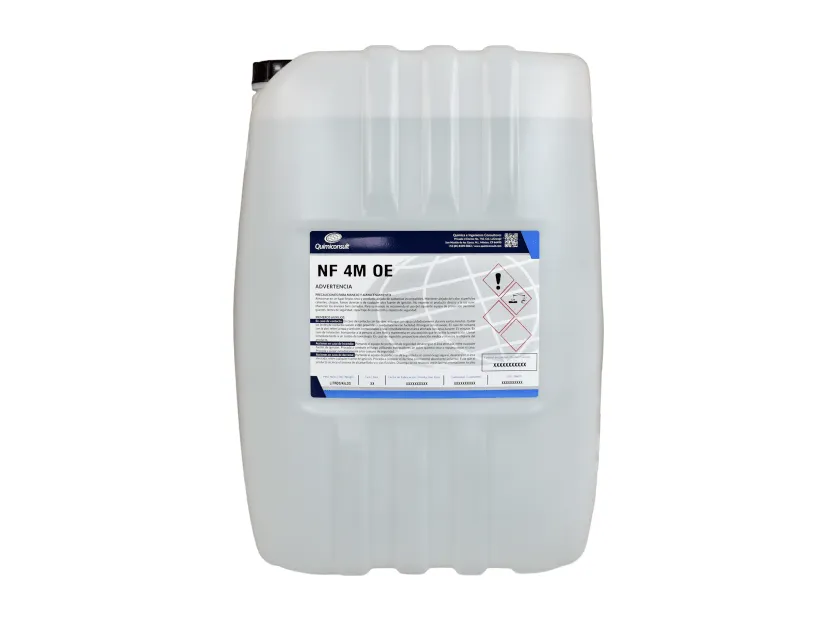
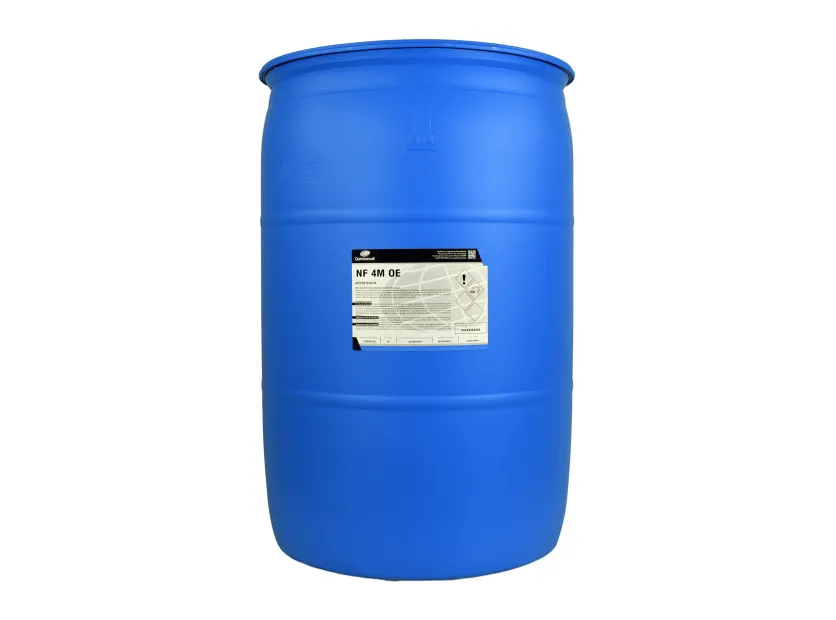
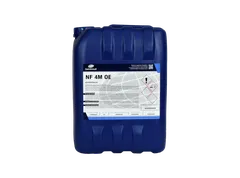
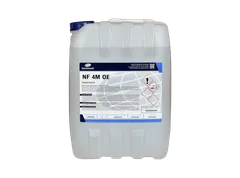
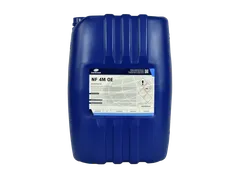
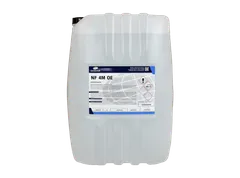
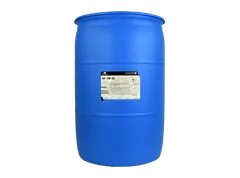
NONYLPHENOL 4 MOLES NON-IONIC SURFACTANT INDUSTRIAL GRADE
View All Prices
| Quantity | Unit Price |
|---|---|
| kg | |
| 1 - 99 | USD 4.49 |
| 100 - 199 | USD 4.42 |
| 200 - 499 | USD 4.36 |
| 500 - 999 | USD 4.30 |
| 1000 - 4999 | USD 4.24 |
| 5000 - 9999 | USD 4.18 |
| 10000 - 17999 | USD 4.13 |
| 18000+ | USD 4.08 |
Need more? Message us and we'll help you source the volume you're after.
Message us on WhatsApp Message usNF 4 M description — Nonylphenol Ethoxylate with 4 Moles of Ethylene Oxide (Industrial Grade Nonionic Surfactant)
At Quimiconsult we offer NF 4 M, also known as 4-mole Nonylphenol Ethoxylate, nonylphenol with 4 ethylene oxide units, NP-4, NPE-4, nonyl phenol 4 EO or NP 4 Moles, an industrial grade nonionic surfactant made from a nonylphenol molecule with 4 ethylene oxide units. It acts as a dispersant, degreaser, detergent, emulsifier and solubilizer, and because of its low degree of ethoxylation it sits at the lipophilic end of the nonylphenol ethoxylate family, which makes it especially valuable as an emulsifier for oily systems, a synthesis intermediate, a dispersing agent in low-polarity phases and a component for adjusting the hydrophilic-lipophilic balance (HLB) of formulations.
It is a clear to translucent liquid, 100% active (no diluents), with CAS number 9016-45-9, concentrate pH of 6.0 to 8.0, viscosity of 240 to 260 cPs, density of 1.00 to 1.03 g/mL at 25 °C and a maximum APHA color of 20. A nonylphenol's degree of ethoxylation determines its hydrophilic-lipophilic balance (HLB): the fewer moles of ethylene oxide, the lower the water solubility and the greater the affinity for oil phases. With only 4 moles of ethylene oxide, NF 4 M has a low HLB (around 8 to 9) and a marked lipophilic affinity —appreciable water solubility in nonylphenol ethoxylates typically appears from 6 moles upward—, making it the option of choice as a water-in-oil (W/O) emulsifier, a synthesis intermediate and a dispersant in low-polarity systems.
At Quimiconsult, located in San Nicolás de los Garza, Nuevo León, we manufacture and distribute NF 4 M with nationwide coverage, formulation technical support, certificates of analysis per batch, technical data sheet (TDS) and safety data sheet (HDS/SDS) in accordance with NOM-018-STPS-2015 / GHS, serving agrochemical formulators, paint and coatings manufacturers, textile plants, industrial cleaner producers, metalworking plants and product developers throughout Mexico. Unlike a distributor, we have our own R&D laboratory to adjust the degree of ethoxylation or the formulation to your application, and a technical team that advises you directly.
What is a nonionic surfactant and how is 4-mole nonylphenol identified?
A nonionic surfactant (tensoactivo or tensioactivo no iónico) is a surface-active molecule that does not dissociate into ions when dissolved in water, unlike anionic or cationic surfactants. Its structure combines a hydrophobic chain (in this case, the nonylphenol ring) with a hydrophilic ethylene oxide chain, which allows it to reduce surface and interfacial tension without adding electrical charge to the solution. This charge neutrality is what makes nonionic surfactants compatible with virtually any other type of surfactant (anionic, cationic or amphoteric), a key advantage in complex formulations.
4-mole nonylphenol is sold and referenced under various technical and search names: NF 4 M, NF-4, NP-4, NPE-4, 4-mole nonylphenol ethoxylate, 4-mole nonyl phenol, nonylphenol 4 OE, nonylphenol 4 EO, nonoxynol-4, POE (4) nonylphenol, polyethylene glycol nonylphenyl ether (4 EO), 4-mole alkylphenol ethoxylate, NP 4 Moles (the abbreviated technical name most used in quotes). People looking for this product often use terms such as what is a nonionic surfactant used for, nonionic surfactant uses, nonionic surfactant trade names, what is a nonionic surfactant or 4-mole nonylphenol industrial grade nonionic surfactant. Typical buyers are agrochemical formulators, paint and coatings manufacturers, textile technologists, process engineers and industrial cleaning companies.
Trade names and reference equivalents for 4-mole nonylphenol
4-mole nonylphenol ethoxylate is sold on the international market under various brands from different manufacturers. Formulators and buyers who already work with one of these products can place Quimiconsult's NF 4 M as a nonionic surfactant of the same family and degree of ethoxylation (nonylphenol with ~4 moles of ethylene oxide, CAS 9016-45-9). Reference brands under which this type of product is known include:
- Tergitol® NP-4 (Dow)
- Ultranex® NP-40 (Oxiteno) — where "40" corresponds to 4.0 moles of ethylene oxide according to the manufacturer's nomenclature
- Arkopal® N-040 (Clariant)
- Surfacpol® 904
- Fenolan® ET-4
These brands —Tergitol® (The Dow Chemical Company), Ultranex® (Oxiteno), Arkopal® (Clariant) and the others mentioned— are registered trademarks of their respective owners, cited here solely as a functional reference to identify the type and grade of product. The comparison is expressed only as a similarity of family and degree of ethoxylation, and does not imply that NF 4 M is identical in composition or performance to any of those products, nor that there is any affiliation, sponsorship or endorsement; results must be verified in each application through your own testing. Quimiconsult's NF 4 M is not affiliated with, sponsored or endorsed by Dow, Oxiteno, Clariant or any other trademark owner.
Not to be confused with NF1000: the trade code NF1000 (or NF-1000) corresponds to 10-mole nonylphenol ethoxylate —a different grade, with higher ethoxylation and a higher HLB—, not the 4-mole nonylphenol on this page. If you are looking for NF1000, see our NF 10 M (10-mole Nonylphenol Ethoxylate).
NF 4 M technical specifications
NF 4 M meets a consistent batch-to-batch quality profile, verifiable through a Certificate of Analysis (CoA):
Nature:
Nonionic surfactant — nonylphenol ethoxylate (4 moles of ethylene oxide)
CAS number:
9016-45-9
Other names:
NP-4, NPE-4, NP 4 Moles, 4-mole nonylphenol ethoxylate, nonoxynol-4
Active content:
100% (no diluents)
Appearance:
Clear to translucent liquid
pH (concentrate):
6.0 – 8.0
Viscosity:
240 – 260 cPs
Density at 25 °C:
1.00 – 1.03 g/mL
Color (APHA):
Maximum 20
Degree of ethoxylation:
4 moles of ethylene oxide
Nominal HLB:
~8 – 9 (lipophilic)
Quimiconsult SKU:
INMPF057
Its key functional properties are its performance as a dispersant, degreaser, detergent, emulsifier and solubilizer, with good stability in acidic and alkaline media. Because of its low degree of ethoxylation, NF 4 M is dispersible in water (forming cloudy dispersions due to its lipophilic character) and soluble in oils, alcohols, glycols and organic solvents, which makes it preferable as a W/O emulsifier, synthesis intermediate or dispersant in low-polarity systems.
Why 4 moles: classifying nonylphenol ethoxylates by degree of ethoxylation
The number of moles of ethylene oxide determines the hydrophilic-lipophilic balance (HLB) of the nonylphenol ethoxylate and, therefore, its solubility and ideal application:
- 4 moles (NF 4 M): low HLB (~8 – 9), predominantly lipophilic; low water solubility and high oil affinity. Water-in-oil (W/O) emulsifier, synthesis intermediate and dispersant in low-polarity phases.
- 6 moles: transition point where appreciable water solubility begins.
- 9 – 10 moles: intermediate-high HLB (~12 – 13); the most versatile grade, O/W emulsifier and the detergent in highest industrial demand.
- 30 moles: high HLB (~17 – 18), waxy solid; high-efficiency solubilizer in water.
- 70 moles: very high HLB, waxy solid; extreme hydrophilicity for specialized applications.
Choosing the right grade avoids extra costs and formulation problems: using a highly ethoxylated nonylphenol where oil affinity is required (as in NF 4 M applications) wastes performance; using NF 4 M where full water solubility is required causes cloudiness or phase separation. It is common practice to combine two grades —typically NF 4 M + NF 10 M— to match the formulation's HLB to the specific active ingredient, especially in agrochemical emulsifiable concentrates (EC).
The NF family at Quimiconsult
Quimiconsult manufactures and distributes a family of nonylphenol ethoxylates covering the most widely used industrial grades. Each grade differs in the number of moles of ethylene oxide, the parameter that defines its HLB, solubility and application:
- NF 4 moles (this page): low HLB, predominantly lipophilic, W/O emulsifier, for oily systems, synthesis intermediate and HLB adjustment.
- NF 10 M (10 moles): intermediate-high HLB (12 – 13), the most versatile, O/W emulsifier, detergent and dispersant.
- NF 30 moles: high HLB, waxy solid, maximum-efficiency solubilizer in water.
- NF 70 moles: very high HLB, waxy solid, extreme hydrophilicity for specialized applications.
How does NF 4 M work?
The NF 4 M molecule has an amphiphilic structure with a hydrophobic tail (nonylphenol core) and a short hydrophilic chain (4 ethylene oxide units). Because the ethylene oxide chain is relatively short, the balance tilts toward the lipophilic part (HLB ~8 – 9), so NF 4 M preferentially orients toward oil phases and water-oil interfaces, reducing interfacial tension and enabling multiple functions:
As a water-in-oil (W/O) emulsifier, it forms an interfacial film that stabilizes water droplets dispersed in a continuous oil phase, and —combined with a higher-HLB emulsifier such as NF 10 M— allows the system's HLB to be adjusted to the value required by the oil or active ingredient. As a dispersant in low-polarity phases, it adsorbs onto solid particles, creating steric hindrance that prevents agglomeration and settling in oily or low-polarity media. As a degreaser and detergent, it interacts with fats and oils, making them easier to remove from the substrate. As a wetting agent, it reduces surface tension, allowing it to wet hydrophobic surfaces such as synthetic fibers and pigments. And as a synthesis intermediate, it serves as a raw material for manufacturing surfactant derivatives and other specialty chemicals.
Industrial applications of NF 4 M
The nonionic surfactant NF 4 M is used in sectors that require interfacial activity in low-polarity systems, oil affinity or HLB adjustment. Suitability and dosage for each case must be validated under the customer's specific conditions.
Agrochemical industry
This is one of the main applications of NF 4 M. It is used as an emulsifier in emulsifiable concentrates (EC) —very often combined with NF 10 M to match the system's HLB to the formulated active ingredient—, as a component of emulsifier systems for formulations with low-polarity actives, and as an adjuvant that helps reduce interfacial tension and improve dispersion of the active ingredient. Its lipophilic character makes it ideal for the oil phase of agrochemical formulations.
Paints, coatings and inks
In paint and coatings formulation, NF 4 M acts as a pigment wetting and dispersing agent, making it easier to wet and uniformly incorporate pigments into the resin phase, which improves dispersion stability and reduces settling during storage of the finished product. Its high purity (maximum APHA color of 20) is relevant in light-colored paints and color-critical systems.
Textile industry
It is used as a wetting and dispersing agent in textile dyeing and finishing processes, helping achieve more uniform penetration of dyes and auxiliaries into the fiber, particularly in hydrophobic synthetic fibers.
Industrial cleaning and degreasing
Its performance as a degreaser and detergent makes it useful in industrial cleaner formulations for removing fats and oils from metal surfaces and process equipment, especially in low-polarity or solvent-based systems.
Metalworking industry and process fluids
NF 4 M is used as an oil emulsifier in water-soluble cutting and machining fluids, and as a component of degreasers for preparing metal surfaces prior to painting, galvanizing or anodizing.
Synthesis intermediate and specialty chemicals
Because of its lipophilic character and its reactivity as a low-grade nonylphenol ethoxylate, NF 4 M is used as a synthesis intermediate for manufacturing surfactant derivatives (for example, nonylphenol ether sulfates) and other specialty chemicals, as well as a component of formulations that need interfacial activity without full water solubility.
Competitive advantages of Quimiconsult's NF 4 M
- 100% active, undiluted: higher surfactant concentration per liter.
- Maximum APHA color of 20: high purity, relevant in light-colored paints and textiles.
- Lipophilic character (HLB ~8 – 9): the ideal grade for oil phases, W/O emulsification and HLB adjustment.
- Stability in acidic and alkaline media: compatible with formulations across a wide pH range.
- Universal compatibility: works alongside anionic, cationic, amphoteric and nonionic surfactants.
- Mexican manufacturer in Monterrey: timely delivery throughout Mexico, with no exchange-rate risk.
- In-house R&D laboratory: degree of ethoxylation adjusted to the specific application.
- Complete documentation: CoA, TDS and HDS/SDS in accordance with NOM-018-STPS-2015.
NF 4 M use and dosage recommendations
The dosage of NF 4 M varies widely depending on the end application; these are general usage references, to be validated through testing:
- As an emulsifier in agrochemical emulsifiable concentrates (EC): typically as part of the emulsifier system, combined with NF 10 M to match the HLB to the formulated active (the total percentage of the emulsifier system is usually around 5 to 15% of the formulation, split between grades).
- As an agrochemical adjuvant: around 0.1 to 0.5% v/v of the spray mix.
- As a pigment dispersant in paints: around 0.5 to 2.0% on pigment weight.
- As a textile wetting agent: around 0.5 to 1.5% of the bath.
- As an industrial degreaser: around 1 to 5% depending on the amount of soil to remove.
Method of incorporation: because of its lipophilic affinity, it is best to incorporate NF 4 M first into the oil or lower-polarity phase of the formulation, before combining with the aqueous phase, to avoid cloudiness or phase separation. In emulsification systems, it is dosed together with the rest of the emulsifier system. Preliminary testing is recommended to ensure optimal performance.
NF 4 M compared with other grades and surfactants
NF 4 M vs. NF 9 – 10 moles: NF 4 M has a low HLB, lower water solubility and greater oil affinity, ideal as a W/O emulsifier, synthesis intermediate or dispersant in non-aqueous phases. The 9 – 10 mole grade (such as NF 10 M), more water-soluble and with an intermediate-high HLB, is the most versatile for O/W emulsification, detergency and dispersion in aqueous systems. The two are frequently combined to adjust the system's HLB.
NF 4 M vs. fatty alcohol ethoxylates (APE-free): fatty alcohol ethoxylates offer a more favorable environmental profile and are the alternative many modern formulations adopt where regulations restrict alkylphenols. NF 4 M retains an advantage in cost and performance in industrial applications where its use remains permitted and unrestricted.
NF 4 M vs. anionic surfactants: anionic surfactants (such as sulfates and sulfonates) generate more foam and are sensitive to hard water and extreme pH. NF 4 M, being nonionic, is stable over a wider range of conditions and compatible with formulations that combine both types of surfactant to optimize performance.
NF 4 M compatibilities
NF 4 M is compatible with oils and oil phases, organic solvents (xylene, glycol ethers), alcohols, glycols (ethanol, ethylene glycol), other nonionic surfactants, anionic, cationic and amphoteric surfactants, and acids and bases over a wide pH range. It is dispersible in water, forming cloudy dispersions due to its low degree of ethoxylation.
It requires special precautions with strong oxidizers at high concentration (they can degrade the polyethoxylated chain or the phenolic ring) and with sustained extreme pH or temperature conditions. A small-scale compatibility test is recommended before incorporating NF 4 M into new systems, especially in aqueous formulations where its low solubility can cause cloudiness if the mixing sequence is not right (incorporate it into the lower-polarity phase).
NF 4 M presentations, storage and shelf life
Presentations: NF 4 M is available in 20 kg and 50 kg jerrycans, 200 kg drums and 1,000 kg containers (IBC), as well as bulk on request and samples for technical evaluation.
Storage: store in a cool, dry and well-ventilated area, away from incompatible substances, direct sunlight and high temperatures. Keep containers tightly closed with a tamper-evident seal and protect them from physical damage.
Shelf life: typical shelf life is 24 months from the date of manufacture in the original sealed container and under the storage conditions indicated. The official expiration date is shown on the original container and on the batch Certificate of Analysis (CoA).
Safety and regulatory considerations for NF 4 M
NF 4 M is a product for industrial and professional use; it must be handled following the recommendations of its current Safety Data Sheet (HDS/SDS). As general good practice, the use of personal protective equipment (PPE) is recommended: safety glasses, nitrile or neoprene gloves and long-sleeved clothing during handling, with adequate ventilation. Direct contact may cause skin and eye irritation; in case of contact, rinse with plenty of water. If swallowed, do not induce vomiting and seek medical attention.
Important environmental consideration: as with the alkylphenol ethoxylate family (APE/NPE), NF 4 M has an aquatic toxicity profile that requires careful management of effluents and waste to prevent direct discharge into bodies of water or storm drains. Empty containers must be triple-rinsed and disposed of in accordance with local environmental regulations; spills must be contained with inert absorbents (vermiculite, sand, diatomaceous earth) and kept out of bodies of water.
Regulatory framework: nonylphenol ethoxylates are regulated differently depending on the market. Some international markets (the European Union, and certain use categories in the United States) have established progressive restrictions on this family of compounds, while in Mexico and many other markets NF 4 M remains a standard industrial raw material authorized for the uses described. For applications intended for markets with restrictive regulation, we recommend checking the current regulations applicable to your sector and export destination, and consulting our technical team about APE-free alternatives such as fatty alcohol ethoxylates (AE) where appropriate.
The full GHS classification, hazard statements (H statements), precautionary statements and first aid must be taken from the product's current Safety Data Sheet (SDS), which is delivered with every supply. Every batch comes with a Certificate of Analysis (CoA), technical data sheet (TDS) and safety data sheet (HDS/SDS).
Frequently asked questions about NF 4 M
What is NF 4 M and what is it used for?
NF 4 M is a nonionic surfactant consisting of a nonylphenol molecule with 4 ethylene oxide units. It acts as a dispersant, degreaser, detergent, emulsifier and solubilizer. Because of its low degree of ethoxylation and lipophilic character (HLB ~8 – 9), it is the option of choice as a water-in-oil (W/O) emulsifier, synthesis intermediate, dispersant in low-polarity phases and component for adjusting the HLB of formulations, in industries such as agrochemicals, paints and coatings, textiles, industrial cleaning and metalworking.
What is a nonionic surfactant and how is it different from an anionic one?
A nonionic surfactant does not dissociate into ions when dissolved in water (it has no electrical charge), whereas an anionic one ionizes with a negative charge. The absence of charge makes nonionics compatible with virtually any other type of surfactant and stable over a wide range of pH and water hardness, with less foam than anionics.
Why doesn't NF 4 M dissolve well in water?
Its low degree of ethoxylation (4 moles) places it at the lipophilic end of the nonylphenol family (HLB ~8 – 9); appreciable water solubility in these compounds typically appears from 6 moles of ethylene oxide upward. That is why NF 4 M is dispersible in water (forming cloudy dispersions) but soluble in oils and organic solvents, and is preferred for oil phases.
Can NF 4 M be combined with NF 10 M?
Yes, and it is a very common practice: combining a lipophilic grade (NF 4 M) with a hydrophilic one (NF 10 M) allows the HLB of the emulsifier system to be matched to the value required by the oil or active ingredient, especially in agrochemical emulsifiable concentrates (EC).
Is NF 4 M compatible with anionic surfactants?
Yes. It is compatible with anionic, cationic and amphoteric surfactants, allowing it to be combined in mixed formulations to optimize performance with no risk of charge-related incompatibility.
Are there alternatives to NF 4 M?
Yes. The most common alternatives are fatty alcohol ethoxylates (AE), APE-free nonionic surfactants with a comparable technical profile for many applications, preferred where regulations restrict alkylphenols. Our technical team can advise you on alternatives for your application.
Is it possible to get a degree of ethoxylation other than 4 moles?
Yes. Our R&D laboratory in Monterrey can offer or develop nonylphenols with different degrees of ethoxylation (10, 30, 70 moles) according to the hydrophilic-lipophilic balance your application requires.
Where to buy NF 4 M (4-Mole Nonylphenol) in Mexico?
At Quimiconsult we manufacture and distribute NF 4 M with availability from San Nicolás de los Garza, Nuevo León, and nationwide coverage. We offer 20 kg and 50 kg jerrycans, 200 kg drums, 1,000 kg IBCs and bulk, with complete technical documentation (TDS, SDS, CoA per batch) and formulation technical support. We also offer NF 10 M, NF 30 and NF 70 from the same family. Request a quote at +52 (81) 8105 0063.
Other names and search terms related to NF 4 M
In the industrial market, NF 4 M is known under multiple names and search terms: NF 4 M, NF 4M, NF-4, NP-4, NPE-4, 4-mole nonylphenol, 4-mole nonyl phenol, 4-mole nonylphenol ethoxylate, nonylphenol 4 OE, nonylphenol 4 EO, nonoxynol-4, POE (4) nonylphenol, 4-mole alkylphenol ethoxylate, NP 4 Moles, nonionic surfactant (tensoactivo no iónico), nonionic surfactants, nonionic tenside (tensioactivo no iónico), what is a nonionic surfactant, what is a nonionic surfactant used for, nonionic surfactant uses, nonionic surfactant trade names, nonylphenol, nonylphenol nonionic surfactant, 4-mole nonylphenol industrial grade nonionic surfactant, industrial grade nonionic surfactant, W/O emulsifier, emulsifier for agrochemicals, dispersant for paints, textile wetting agent, industrial degreaser, synthesis intermediate, Tergitol NP-4, Tergitol NP-4 alternative, Ultranex NP-40, Arkopal N-040, Surfacpol 904, Fenolan ET-4, nonylphenol ethoxylate equivalent to Tergitol, alternative to Tergitol NP-4, NF 4 M price, 4-mole nonylphenol Mexico, NP-4 supplier, nonionic surfactant Monterrey, surfactant manufacturer Mexico.
These variations help agrochemical formulators, paint manufacturers, textile technologists, process engineers and industrial buyers find NF 4 M within Quimiconsult's nonylphenol ethoxylate family.
Request your quote for NF 4 M (4-Mole Nonylphenol)
Does your agrochemical formulation company, paint and coatings factory, textile plant, industrial cleaning plant or metalworking process need to incorporate NF 4 M into its formulation? Contact us and we will recommend the right degree of ethoxylation for your system, the optimal combination of grades to adjust the HLB, and the correct dosage and point of incorporation, with complete technical documentation, CoA per batch and delivery throughout Mexico. We also offer NF 10 M, NF 30 and NF 70 from the complete nonylphenol ethoxylate family. We manufacture in Mexico with domestic production, our own inventory and short lead times. Call us at +52 (81) 8105 0063 or visit us at Privada El Encino No. 750, Col. LaGrange, San Nicolás de los Garza, N.L., CP 66490.
Related products
- NF 10 M (10-Mole Nonylphenol Ethoxylate) — the most versatile grade in the family (HLB 12 – 13), O/W emulsifier, detergent and dispersant; combined with NF 4 M to adjust the HLB.
- NF 30 moles — high HLB, maximum-efficiency solubilizer in water.
- NF 70 moles — very high HLB, for applications requiring extreme hydrophilicity.
- Polysorbates (Polysorbate 20 / 60) — nonionic emulsifiers for specific formulations.
- Dispersants and emulsifiers for agrochemical formulation — to complete the development of EC, SC and WG.
Related categories: Agrochemical formulation auxiliaries · Textile processing auxiliaries · Dispersants for paints and inks · Supplies for industrial cleaning and metalworking.
Not sure which nonylphenol ethoxylate grade or which nonionic surfactant your formulation needs? Contact us and our technical team will help you select the grade (4, 10, 30 or 70 moles), the combination to adjust the HLB and the right dosage for your active ingredient, your system and your application.