Spanish
 English


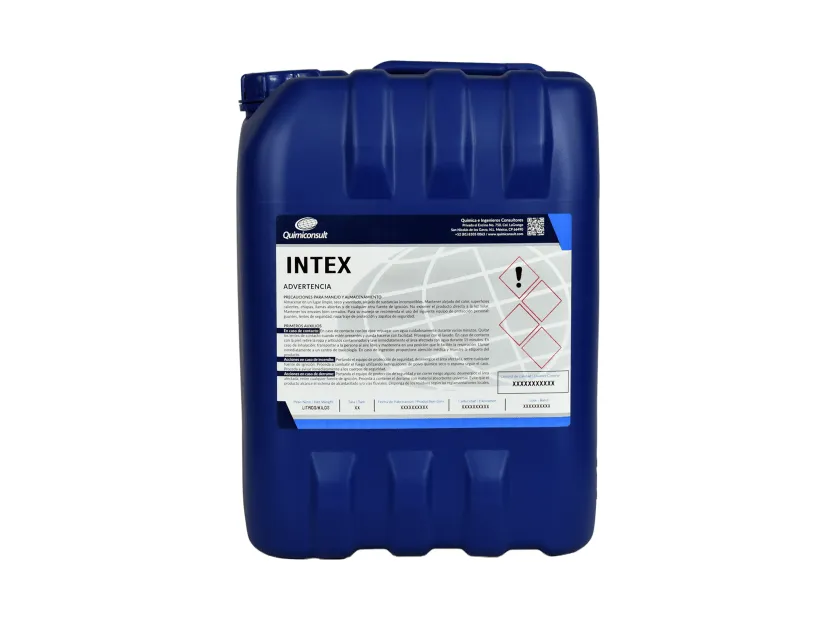
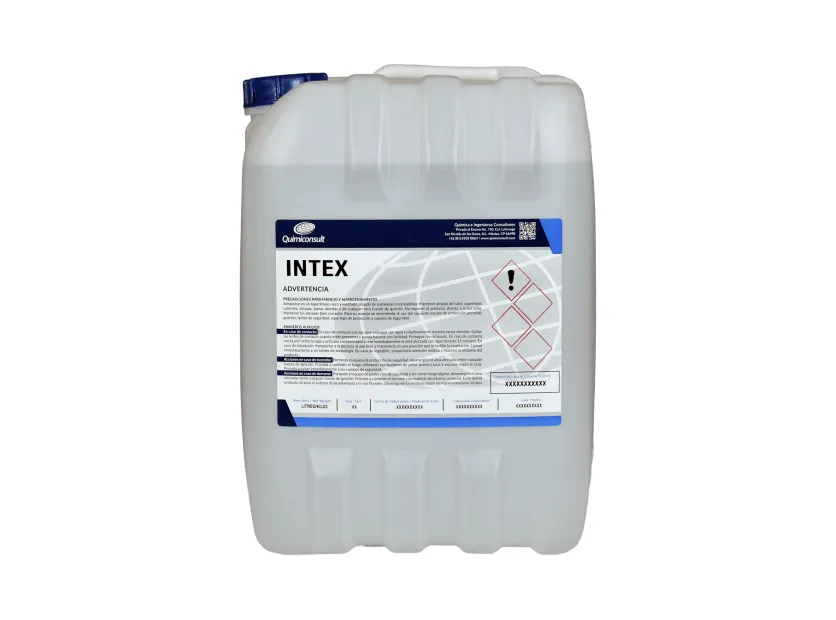
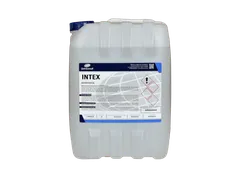
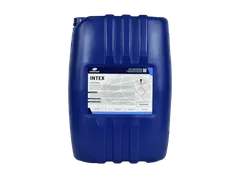
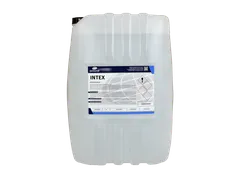
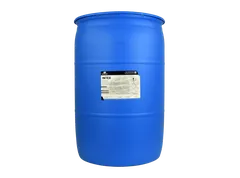
INTEX ANIONIC WETTING AGENT FOR AGROCHEMICAL USE
View All Prices
| Quantity | Unit Price |
|---|---|
| kg | |
| 1 - 99 | USD 3.51 |
| 100 - 199 | USD 3.45 |
| 200 - 499 | USD 3.40 |
| 500 - 999 | USD 3.35 |
| 1000 - 4999 | USD 3.30 |
| 5000 - 9999 | USD 3.25 |
| 10000 - 17999 | USD 3.20 |
| 18000+ | USD 3.15 |
We'll send you a single e-mail as soon as it's back in stock. No spam.
Intex Description — Anionic Wetting Agent for Agrochemical Use (Surface Tension-Reducing Blend of Anionic Surfactants)
At Quimiconsult we supply Intex, an anionic wetting agent for agrochemical use formulated as a blend of anionic surfactants. It acts as a surface tension reducer and a high-performance wetting agent: it is a clear, slightly hazy liquid with exceptionally low surface tension (25.00 to 26.50 dynes/cm), excellent uniformity and flow, rapid absorption into the substrate, and proven thermal and pH stability in water-based and solvent-based systems. The core function of Intex is to reduce the surface tension of agrochemical formulations and spray solutions, improving the wettability of leaf surfaces, the penetration of the active ingredient into plant tissue and the uniform coverage of the treated area. Its high surfactant activity allows low formulation doses (0.05 to 0.8% of the total formulation) with high performance, positioning it as one of the most efficient anionic wetting agents on the agrochemical inputs market. As direct manufacturers with our own R&D laboratory and more than 30 years of experience in specialty chemicals, we guarantee batch-to-batch consistency, with availability from our plant in Monterrey, Nuevo León, and shipping throughout Mexico.
A surface tension of 25.00 to 26.50 dynes/cm places Intex among the surfactants with the greatest surface tension reduction available for agrochemical use. For reference, pure water has a surface tension of approximately 72 dynes/cm at 25 °C, and conventional agricultural surfactants typically achieve reductions to 30 – 40 dynes/cm; Intex reaches values of 25 to 26.5 dynes/cm, which translates into greater leaf wettability and better penetration of the spray solution into waxy cuticles and low-surface-energy leaf surfaces.
Although Intex is widely recommended in agrochemical formulations, its nature as a very low surface tension anionic sulfosuccinate surfactant makes it a multifunctional, multi-industry agent: a wetting agent, penetrant, dispersant, emulsifier, co-surfactant and hydrotrope with applications in agrochemicals, emulsion polymerization, industrial and institutional cleaning, textiles, leather tanning, paints and coatings, paper, mining and other industrial processes.
For those looking for an anionic wetting agent, an agrochemical wetting agent, an anionic surfactant, a surface tension reducer, a wetting and dispersing agent for industrial processes, a co-surfactant and hydrotrope, a sulfosuccinate-type wetting agent or an alternative to Lankropol® 4500, Intex is the technical answer from the Quimiconsult catalog, backed by in-house manufacturing, complete technical documentation (TDS, SDS, CoA per batch) and advice on dosing and validating the product in each application.
What Is Intex? How This Anionic Wetting Agent Is Identified
Intex may be referenced in supplier records and in the agrochemical formulation literature under different terms:
- Trade name: Intex, Intex Wetting Agent.
- Technical function: anionic wetting agent for agrochemical use; surface tension reducer.
- Other terms: anionic wetting agent, agrochemical wetting agent, wetting agent for agrochemicals, agrochemical anionic surfactant.
- Chemical family: blend of anionic surfactants (of the sulfosuccinate type used as high-efficiency wetting agents).
- Quimiconsult SKU: INMPQ027.
- CAS number: N/A (blend).
The term anionic refers to the electrical charge of the surfactant's hydrophilic groups: anionic surfactants ionize in aqueous solution with a negative charge, which gives them high activity at air-liquid and liquid-solid interfaces and an excellent ability to reduce surface tension. This anionic nature distinguishes them from non-ionic surfactants (no charge) and cationic surfactants (positive charge), and it is what makes Intex a maximum-activity wetting agent for improving wettability and foliar absorption in agrochemical formulations.
Intex Technical Specifications
The Intex we manufacture meets a consistent batch-to-batch quality profile, verifiable through a Certificate of Analysis (CoA):
Nature:
Blend of anionic surfactants (wetting agent / surface tension reducer)
CAS number:
N/A (blend)
Appearance:
Clear, slightly hazy liquid
Surface tension:
25.00 – 26.50 dynes/cm (approx. 26 – 27 mN/m at 0.05%)
Moisture:
20 – 25%
Specific gravity:
~1.00
pH (1% solution in water):
5.0 – 7.0
Solubility in water:
Dispersible
Solubility in alcohol:
Dispersible
Base compatibility:
Water and solvent
Hard water tolerance:
Good; stable in the presence of calcium and magnesium
Foam behavior:
Low risk of foam instability
Recommended dose:
0.05 – 0.8% of the total formulation
Its key benefits and features include excellent uniformity, excellent flow results, promotion of rapid absorption, pH and thermal stability, fewer foam stability problems, compatibility with water-based and solvent-based systems, and tolerance of very hard water systems. Every delivery comes with its Certificate of Analysis (CoA) per batch, Technical Data Sheet (TDS) and Safety Data Sheet (SDS).
Anionic vs. Non-Ionic: Why Surfactant Charge Matters
The ionic charge of a wetting surfactant defines how it behaves in the formulation. As an anionic wetting agent, Intex offers the maximum surface tension reduction activity per unit of concentration, which translates into the greatest leaf wettability and the fastest absorption of the active ingredient. It is the option of choice when the goal is to reach the lowest surface tension values (25 – 26.5 dynes/cm) and maximum coverage on waxy cuticles.
Non-ionic surfactants (such as the Celerad and Celerad LC adjuvants in our line) carry no charge and offer, in return, broader compatibility with positively charged active ingredients (cationics, such as paraquat) and high tolerance of hard water and pH. The choice between an anionic and a non-ionic wetting agent depends on the charge of the active ingredient, the hardness of the mixing water and the target surface tension:
- Choose Intex (anionic) when you are looking for maximum surface tension reduction and maximum foliar absorption, in systems with no compatibility issues with anionic charge.
- Choose Celerad or Celerad LC (non-ionic) when the active ingredient is cationic or of unknown charge, or when compatibility and hard water tolerance are the priority criteria.
Our technical team can help you select the optimal wetting agent for your active ingredient, your water and your crop.
How Intex Works as an Anionic Wetting Agent
Reducing the surface tension of the spray solution. When added to the spray solution, Intex concentrates at the interface between the droplet and the air, reducing surface tension from ~72 dynes/cm (pure water) to 25 – 26.5 dynes/cm. This produces droplets with a lower contact angle on the leaf, which spread out instead of bouncing off or running off, increasing coverage of the active ingredient per unit volume of spray solution.
Improved wettability on low-surface-energy surfaces. Many target weeds have waxy or hairy cuticles that repel conventional aqueous droplets. Intex reduces the droplet's contact angle on these surfaces, allowing the active ingredient to come into contact with the cuticle and pass through it more efficiently.
Rapid absorption and penetration of the active. Reducing the interfacial tension between the spray solution and the cuticle accelerates absorption of the active ingredient into the plant's internal tissues, reducing the risk of loss from rain after application and improving efficacy in conditions of high humidity or high temperature.
Formulation stability with low foam risk. Unlike other high-activity anionic surfactants that generate excessive foam in mixing tanks and application equipment, Intex maintains its wetting function with a low risk of foam instability, making it easier to prepare the spray solution and reducing operational problems in mechanical mixing and application systems.
Intex, an Alternative to Nouryon's Lankropol® 4500
Intex is a Mexican-made alternative to benchmark sulfosuccinate-type anionic wetting agents such as Nouryon's Lankropol® 4500. Both belong to the same functional family—anionic sulfosuccinate surfactants with very low surface tension, dispersible in water and alcohol and with good hard water tolerance—and share not only the wetting and surface tension reduction function but also the broad multifunctional, multi-industry profile characteristic of sulfosuccinates: they are used as wetting agents, dispersants, emulsifiers, co-surfactants, conditioners and hydrotropes in agrochemicals, latex resin polymerization, industrial and institutional cleaning, textile and tanning auxiliaries, paints and coatings, paper and more. Their physicochemical profiles are comparable (surface tension on the order of 26 dynes/cm at 0.05%, pH 5.0 – 7.0 in 1% solution, dispersibility in water and alcohol, good tolerance of calcium and magnesium). For formulators already familiar with the performance of an anionic sulfosuccinate wetting agent, Intex offers that same function and versatility with domestic manufacturing in Monterrey, timely delivery throughout Mexico with no exchange-rate risk, per-batch documentation and technical formulation advice.
Lankropol® is a registered trademark of Nouryon, mentioned here solely for reference and technical comparison purposes. The comparison is expressed only as a functional similarity between products in the same category and does not imply equivalent performance; results may vary depending on the formulation, the mixing water and the application conditions, so they must be verified in the field or in the laboratory through your own testing before any substitution decision. Intex is not affiliated with, sponsored by or endorsed by Nouryon.
Intex Applications in Agrochemical Formulations
We always recommend following the label of the main agrochemical and validating the dose through laboratory testing and, where possible, efficacy trials.
Contact and systemic herbicides in water-based formulations
Intex is especially valuable in formulations of systemic herbicides such as glyphosate, where efficacy depends directly on leaf coverage and on the rate at which the active is absorbed through the cuticle into the phloem. The surface tension of 25 to 26.5 dynes/cm provided by Intex maximizes droplet spread on the target leaf and reduces the contact angle on waxy surfaces—precisely the physical barrier that limits absorption in many broadleaf weeds and grasses with a well-developed cuticle.
Fungicides, insecticides and miticides in suspension concentrates
In formulations of contact fungicides (mancozeb, chlorothalonil, captan) and insecticides (pyrethroids, organophosphates in SC), uniform coverage of the leaf surface is the main determinant of protective efficacy. A droplet with high surface tension bounces off or collects on veins and drip points, leaving areas uncovered. Intex reduces the surface tension of the spray solution to 25 – 26.5 dynes/cm, ensuring that droplets spread evenly over the entire leaf surface, including the underside, where many mites and sucking insects concentrate.
Seed coating and seed dressing
Seed coating requires the fungicide, insecticide or biostimulant formulation to adhere uniformly to the seed surface. Intex incorporated into the coating formulation improves the uniformity of the active deposit by reducing the interfacial tension between the formulation and the surface of the seed coat, improving adhesion and reducing the runoff that causes uneven distribution of the active. Its water-based and solvent-based compatibility makes it suitable for the different coating systems.
Adjuvant for field spray solutions
Beyond its role as a wetting agent in finished product formulations, Intex can be used directly by the grower as an adjuvant added to the spray solution, at concentrations of 0.05 to 0.2% of the spray volume, to complement formulations that do not include their own surfactant or include it at concentrations insufficient for the application conditions (high temperature, low humidity, waxy leaf surface). Its tolerance of very hard water makes it suitable for precision irrigation systems and aerial spraying.
Intex Functions as a Multifunctional Anionic Surfactant
As a very low surface tension anionic sulfosuccinate surfactant, Intex performs several simultaneous functions that make it useful across a wide range of industries:
- Wetting agent: reduces surface tension and contact angle, wetting low-energy surfaces, waxy cuticles, hydrophobic powders and difficult substrates.
- Penetrating agent: accelerates the penetration of liquids into porous substrates, fibers, hides and solids.
- Dispersing agent: promotes the incorporation and homogeneous suspension of pigments, fillers and solids in aqueous media.
- Emulsifier and co-surfactant: helps form and stabilize emulsions and boosts the performance of other surfactants in cleaning and formulation systems.
- Hydrotrope: improves the solubilization and stability of concentrated surfactant and salt systems.
- Conditioning agent and adjuvant: improves the efficacy of other active substances in the formulation.
- High-efficiency surface tension reducer: reaches values of 25 – 26.5 dynes/cm at low doses.
This multifunctionality, together with its low foam risk, its hard water tolerance and its compatibility with water-based and solvent-based systems, is what gives Intex an application range as broad as that of the market's benchmark sulfosuccinates.
Industrial Applications of Intex: All the Industries It Covers
Beyond agrochemicals, Intex is used in virtually every industrial process that requires high-efficiency wetting, penetration, dispersion, emulsification or hydrotropy. Suitability and dosage for each case must be validated under the customer's specific conditions; our technical team can support the trials.
Emulsion and suspension polymerization (resins and latex)
Intex is used as a surfactant and wetting agent in the emulsion polymerization of vinyl and acrylic monomers (vinyl acetate, acrylics, styrene-acrylics) for the production of dispersions and latex resins, where it promotes monomer wetting, system stability and process control. In suspension polymerization, it contributes to the wetting and stability of the reaction medium.
Industrial and institutional cleaning and detergents
In formulations of hard-surface cleaners, degreasers, metal cleaners, liquid soaps, light-duty liquids and CIP cleaning solutions, Intex acts as a wetting agent, co-surfactant and hydrotrope, improving the penetration of the solution into soils and substrates, boosting the performance of the main surfactants and helping to solubilize and stabilize concentrated systems. Its low foam risk is an advantage in mechanical cleaning and recirculation systems where excessive foam is a problem.
Textile auxiliaries
In textile processing, Intex is used as a wetting and penetrating agent in the scouring of raw fibers, in dyeing and bleaching baths (to achieve homogeneous wetting and bath uniformity), in the rewetting of substrates and in textile finishing, where rapid, uniform bath penetration is decisive for process quality.
Leather tanning and finishing
In the leather industry, Intex acts as a wetting and penetrating agent in the soaking, wetting, fatliquoring and finishing stages, promoting uniform penetration of the liquors and homogeneous wetting of the hide.
Paints, coatings and inks
In latex and water-based paints, coatings and inks, Intex is used as a substrate and pigment wetting agent, dispersant and co-surfactant, improving the incorporation and stability of pigments and fillers, substrate wetting during application and finish quality, and helping to reduce surface defects.
Paper and pulp
In the paper industry, Intex is used as a wetting agent in coating and treatment processes, and as a wetting and penetration aid in operations such as deinking of recycled paper.
Mining, mineral processing and dust control
Thanks to its strong wetting capacity, Intex can be evaluated as a wetting and dust control agent in the handling of minerals and powdered materials, and as a wetting aid in mineral beneficiation processes.
Oil, gas and process fluids
In the oil and gas industry, anionic sulfosuccinate surfactants are used as wetting agents, emulsifiers and penetrants in drilling and process fluids; Intex can be evaluated in these applications where high-efficiency wetting or emulsification is required.
Adhesives, construction and other applications
Intex can be used as a wetting and spreading agent in water-based adhesives; as a wetting agent in mortars, plaster and construction additives; and, in general, in any industrial process requiring a very low surface tension anionic surfactant with wetting, penetration, dispersion or hydrotropic functions. For applications with specific grade requirements (food contact, personal care), check the appropriate grade and documentation with our technical team.
Intex Dosage and Method of Incorporation
Recommended dose (technical data sheet): 0.05 to 0.8% of the total formulation. Intex can be added at any stage of the process; preliminary testing is recommended to ensure optimal performance. Guidance by type of use (to be validated with surface tension measurements and laboratory testing):
- Finished product formulations (SC, WP, EC, SL): 0.05 to 0.5% of total weight; start at the low end and adjust according to surface tension measurements of the formulated product.
- Seed coating formulations: 0.1 to 0.5% of the weight of the coating formulation, depending on the target viscosity and the type of seed.
- Spray solution adjuvant: 0.05 to 0.2% of the total spray volume; add to the tank under moderate agitation, after the water and before the active ingredient.
- High active concentration formulations: up to 0.8% when the high active ingredient load raises the system's surface tension and more surfactant is needed to reach the target.
Method of incorporation: Intex is added directly to the aqueous phase or the solvent phase under moderate agitation. Its dispersibility in water and alcohol makes incorporation easy without special equipment. In high-solids systems, adding it before the solid fillers improves particle wetting and facilitates homogeneous dispersion.
Intex Compatibility and Stability
- Compatibility with active ingredients: Intex is compatible with most commonly used agrochemical active ingredients, including herbicides (glyphosate, 2,4-D, metsulfuron), fungicides (mancozeb, azoxystrobin, propiconazole), insecticides (chlorpyrifos, lambda-cyhalothrin, imidacloprid) and biostimulants. For active ingredients with strict compatibility requirements, laboratory-scale testing is recommended before production at scale.
- Water-based and solvent-based compatibility: dispersible in water, alcohol and polar organic solvents commonly used in formulation (propylene glycol, glycerin, NMP), suitable for EC, SC, SL and dispersible WG formulations.
- Stability in hard water: good tolerance of calcium and magnesium, a relevant property in regions where mains water hardness is high.
- Low foam risk: despite its high surfactant activity, it generates a controlled level of foam that does not interfere with mixing processes or the operation of application equipment.
- Thermal and pH stability: maintains its properties and activity across the temperature and pH range of standard formulation and storage processes.
- Caution: avoid direct mixing with concentrated cationic surfactants, as the combination can form precipitates and cause both components to lose activity.
Intex vs. Celerad vs. Celerad LC: Wetting Agent Selection Guide
Quimiconsult offers wetting agents and adjuvants with different ionic charge and performance profiles:
- Intex (anionic): maximum surface tension reduction (25 – 26.5 dynes/cm) and maximum foliar absorption; good hard water tolerance and low foam risk. The option for achieving the lowest surface tension in systems without anionic compatibility restrictions.
- Celerad (100% trisiloxane-based superwetter, non-ionic): the highest superwetting performance (~20 – 22 dynes/cm) for the most demanding crops and conditions; non-ionic, compatible with actives of any charge.
- Celerad LC (high-effectiveness non-ionic superwetting compound): the same type of non-ionic function with a more accessible cost-benefit ratio.
How to choose: Intex is the anionic option for maximum surface tension reduction; the Celerad products are the non-ionic option for maximum compatibility (cationic actives, hard water). Our technical team can help you choose based on the active ingredient's charge, water hardness and target performance.
Intex Presentations, Storage and Shelf Life
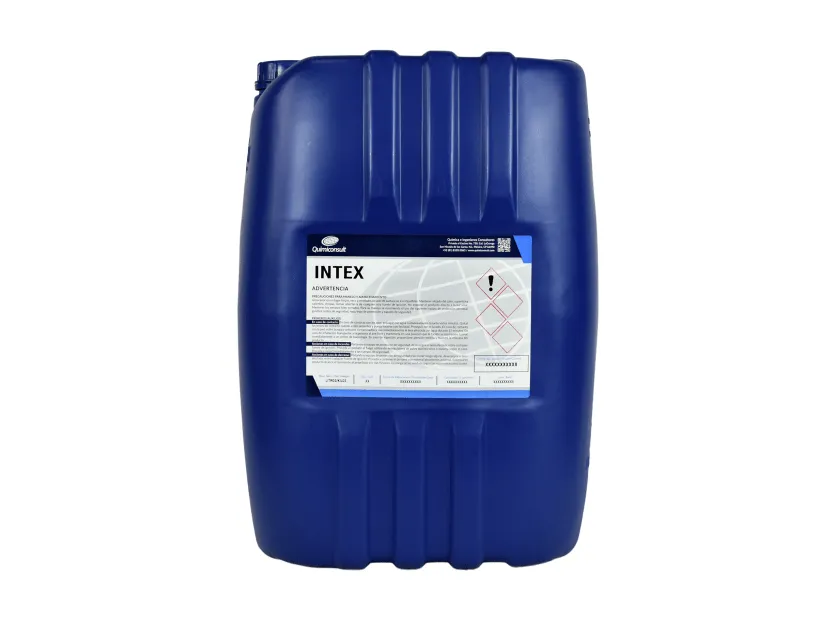
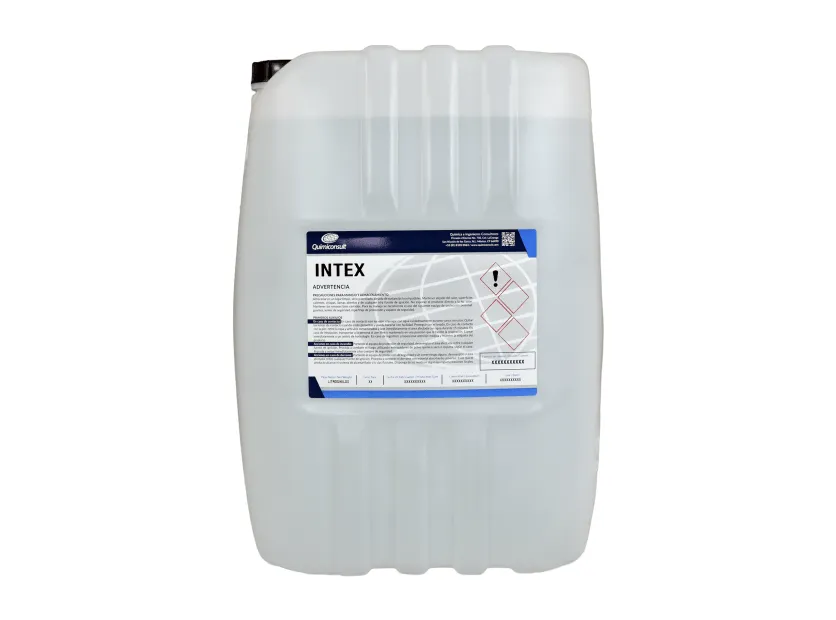
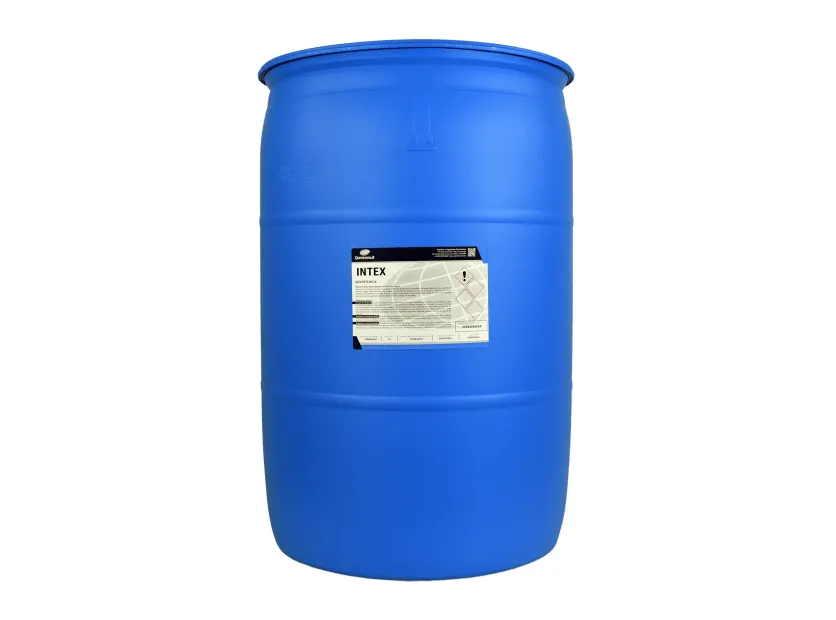
Presentations: Intex is available in 20 kg blue and natural jerrycans, 50 kg blue and natural jerrycans, 200 kg blue drums and 1,000 kg natural containers (IBC/tote), as well as laboratory samples for technical evaluation and compatibility testing, with bilingual (ES-EN) documentation for each presentation.
Storage: keep in the original closed container, at a controlled temperature (ideally between 5 and 35 °C), in a dry, cool place protected from direct sunlight. Avoid prolonged exposure to temperatures above 40 °C to preserve the product's uniformity and flow properties.
Shelf life: the official expiration date and shelf-life conditions are indicated on the original container and in the Certificate of Analysis (CoA) for the corresponding batch.
Intex Safety and Handling
Intex must be handled according to the recommendations of its current Safety Data Sheet (SDS). As general good practice, nitrile or neoprene gloves, eye protection (splash goggles) and appropriate work clothing are recommended when handling the concentrated product in bulk; concentrated anionic surfactants can cause skin irritation with prolonged exposure as well as eye irritation. In case of skin contact, wash with soap and water; in case of eye contact, rinse with plenty of running water for at least 15 minutes and seek medical attention.
GHS classification, hazard statements (H phrases) and precautionary statements: this section is a general handling guide. The complete classification under the Globally Harmonized System (GHS), hazard statements, precautionary statements, first aid and labeling in accordance with NOM-018-STPS-2015 must be taken from the product's current Safety Data Sheet (SDS), which is provided with every shipment. Always consult the updated SDS before use.
Frequently Asked Questions about Intex
What is Intex and what is it used for?
Intex is an anionic wetting agent for agrochemical use, formulated as a blend of anionic surfactants and manufactured by Quimiconsult. It reduces the surface tension of formulations and spray solutions (down to 25 – 26.5 dynes/cm) to improve leaf wettability, active ingredient penetration and uniform coverage. It is used as a wetting agent in agrochemical formulations (SC, WP, EC, SL), in seed coating and as a tank adjuvant, as well as in industrial applications such as emulsion polymerization, industrial cleaning and textile auxiliaries.
What is an anionic wetting agent and how does it differ from a non-ionic one?
An anionic wetting agent ionizes in solution with a negative charge, which gives it high surface tension reduction activity and good leaf wettability. Non-ionic agents carry no charge and are more compatible with active ingredients of any charge (including cationics) and highly tolerant of hard water, but have lower surface tension reduction activity at the same concentration. Intex (anionic) is preferred when maximum surface tension reduction is sought; non-ionics (Celerad, Celerad LC) when compatibility with the active's charge is the priority.
Is Intex an alternative to Nouryon's Lankropol® 4500?
Intex is a Mexican-made alternative with the same type of function as Nouryon's Lankropol® 4500 (anionic sulfosuccinate wetting agent, surface tension reducer), with a comparable physicochemical profile. Lankropol® is a registered trademark of Nouryon, cited only for reference purposes and as a functional similarity, without implying equivalent performance; results must be verified in the laboratory or in the field through your own testing before any substitution decision.
What dose of Intex is recommended for a systemic herbicide such as glyphosate?
As a starting point, on the order of 0.1 to 0.3% of the total formulation weight for technical or generic formulations without additional surfactant, adjusting by measuring the surface tension of the formulated spray solution and, where possible, with efficacy trials. As a tank adjuvant in the field, 0.05 to 0.2% of the spray volume.
Is Intex compatible with contact fungicides such as mancozeb?
Yes, it is compatible with mancozeb and other dithiocarbamate fungicides under typical formulation conditions. As with any combination, a laboratory-scale compatibility test is recommended (mix in the final proportions and observe for 24 – 48 hours for color changes, precipitation, phase separation or pH variations).
Does Intex tolerate hard water?
Yes. It has good tolerance of calcium and magnesium, making it suitable for regions with very hard water, where many lower-quality anionic surfactants lose activity or precipitate.
Does it foam in the mixing tank?
Intex is characterized by a low risk of foam instability: despite its high surfactant activity, it maintains a controlled level of foam that does not interfere with mixing or with the operation of application equipment.
Is it safe to handle?
It should be handled with the recommended PPE (nitrile or neoprene gloves, eye protection). The complete GHS classification, hazard statements and first aid must be taken from the product's current SDS.
Where can I buy Intex in Mexico, and in what presentations?
Intex is available from Quimiconsult stock in Monterrey, Nuevo León, with shipping throughout Mexico, in 20 kg and 50 kg jerrycans, 200 kg drums and 1,000 kg containers, as well as laboratory samples. We are direct manufacturers, with complete technical documentation (TDS, SDS, CoA per batch). Request a quote or a sample at +52 (81) 8105 0063.
Other Names and Search Terms Related to Intex
Intex is a Quimiconsult brand. The product type and its function are known by various technical, commercial and search names:
Intex, Intex wetting agent, Intex anionic wetting agent, Intex anionic wetting agent for agrochemical use, anionic wetting agent, agrochemical wetting agent, wetting agent for agrochemicals, wetting agent for agriculture, anionic surfactant, agrochemical anionic surfactant, blend of anionic surfactants, surface tension reducer, agricultural wetting agent, low surface tension wetting agent, wetting agent for herbicides, wetting agent for glyphosate, wetting agent for fungicides, wetting agent for seed coating, anionic adjuvant, anionic spray adjuvant, sulfosuccinate, sulfosuccinate wetting agent, dioctyl sulfosuccinate, alternative to Lankropol 4500, Lankropol 4500 alternative, Lankropol-equivalent wetting agent, industrial wetting agent, penetrating agent, anionic dispersing agent, anionic emulsifier, co-surfactant, hydrotrope, wetting agent for emulsion polymerization, wetting agent for latex resins, wetting agent for industrial cleaning, wetting agent for textiles, wetting agent for leather tanning, wetting agent for paints and coatings, wetting agent for paper, wetting agent for mining, dust control, Intex price, buy Intex, Intex Mexico, anionic wetting agent Mexico, anionic surfactant Mexico, wetting agent manufacturer Mexico, surfactant supplier Monterrey.
These variations help agrochemical formulators, agronomists, input distributors, R&D departments and industrial buyers locate Intex within Quimiconsult's line of wetting agents and surfactants.
Why Buy Intex from Quimiconsult?
Quimiconsult is a Mexican company with more than 30 years of experience in specialty chemicals and inputs for agrochemical and industrial formulation in Mexico. When you buy Intex from Quimiconsult, you get:
- An in-house manufactured product, with an R&D laboratory, internal quality control and batch-to-batch consistency.
- An anionic wetting agent with very low surface tension (25 – 26.5 dynes/cm) and high performance at low doses.
- Good hard water tolerance, water-based and solvent-based compatibility, and low foam risk.
- A Mexican manufacturer in Monterrey: timely delivery throughout Mexico, with no exchange-rate risk.
- Technical formulation support: compatibility assessment with active ingredients, surface tension measurement and advice on the optimal order of addition.
- Complete technical documentation (CoA per batch, TDS, SDS), in bilingual ES-EN format for customers with export operations.
Request Your Intex Quote or Sample
Does your agrochemical formulation plant, seed coating operation, emulsion polymerization process, industrial cleaner formulation or crop protection program need an anionic wetting agent with maximum surface tension reduction and high performance? Contact us and we will be happy to analyze your application, recommend the optimal dose and point of incorporation, evaluate compatibility with your active ingredients, and help you compare Intex (anionic) with the non-ionic adjuvants Celerad and Celerad LC to choose the right product. We provide complete technical documentation and a CoA per batch, and coordinate delivery throughout Mexico. We manufacture in Mexico with domestic production, our own inventory and short lead times. Call us at +52 (81) 8105 0063 or visit us at Privada El Encino No. 750, Col. LaGrange, San Nicolás de los Garza, N.L., CP 66490.
Related products
- Celerad (100% trisiloxane-based superwetter, non-ionic) — the highest superwetting performance in the line, non-ionic.
- Celerad LC (high-effectiveness non-ionic superwetting compound) — the non-ionic option with the best cost-benefit ratio.
- pH regulators / water conditioners for agrochemicals — to correct the pH and hardness of the mixing water.
- Dispersants and emulsifiers for agrochemical formulation — for developing SC, EC, WG and ME formulations.
- AF365 and the defoamer line — for foam control in the manufacture of agrochemical dispersions.
Related categories: Inputs for industrial and institutional cleaning · Textile and tanning auxiliaries · Additives for paints, coatings and paper.
Not sure which wetting agent is right for your formulation? Contact us and we will help you select the right product, ionic charge, dose and point of incorporation for your active ingredient, your mixing water and your process.