Spanish
 English


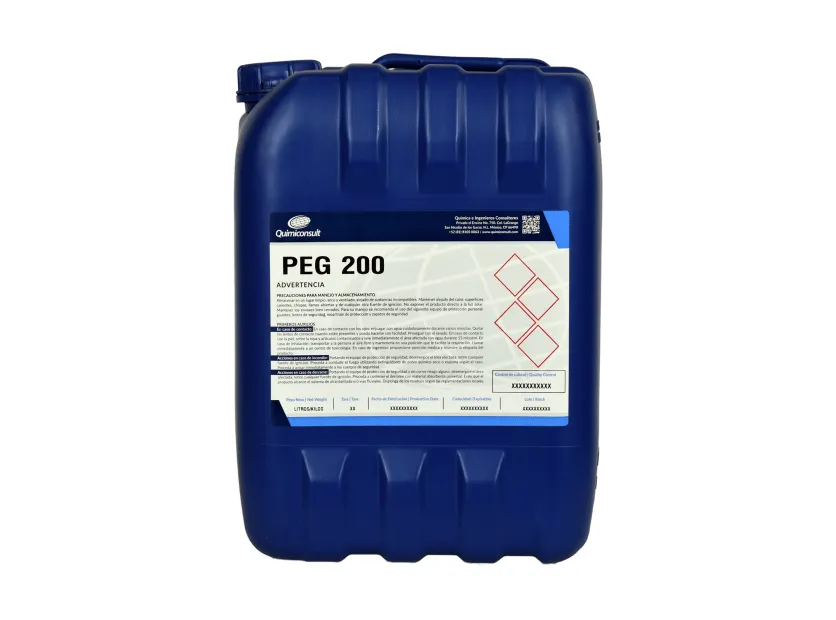
PEG 200 POLYETHYLENE GLYCOL
View All Prices
| Quantity | Unit Price |
|---|---|
| kg | |
| 1 - 99 | USD 2.49 |
| 100 - 199 | USD 2.45 |
| 200 - 499 | USD 2.42 |
| 500 - 999 | USD 2.39 |
| 1000 - 4999 | USD 2.36 |
| 5000 - 9999 | USD 2.33 |
| 10000 - 17999 | USD 2.30 |
| 18000+ | USD 2.27 |
We'll send you a single e-mail as soon as it's back in stock. No spam.
PEG 200 Description — Industrial Grade Polyethylene Glycol 200, the Most Fluid Liquid PEG in the Family
At Quimiconsult we offer PEG 200, also known as Polyethylene Glycol 200, Poly(ethylene oxide) 200, PEG-200, PEG-4 (cosmetic INCI nomenclature, for its approximately 4 ethylene oxide units) or macrogol 200, a multifunctional product widely used in the cosmetics, chemical, textile, ceramics, metalworking, industrial personal care, chemical formulation and manufacturing industries for its unique combination of properties: the highest fluidity and lowest viscosity in the liquid PEG family, excellent solvency for polar substances, high hygroscopicity, complete water miscibility, broad chemical compatibility, stability under normal conditions and a safe industrial handling profile. It is a clear, colorless to slightly yellowish, virtually odorless liquid of low viscosity, completely miscible in water, with an average molecular weight in the range of 190 to 210 g/mol, a hydroxyl value of 535 to 590 mg KOH/g (the highest among standard commercial liquid PEGs, consistent with its lower molecular weight and higher relative concentration of terminal hydroxyl groups), a pH of the 5% aqueous solution in the range of 4.5 to 7.5, a density of 1.11 to 1.14 g/mL at 25 °C, a maximum free ethylene oxide content of 10 ppm, and a total free ethylene glycol and diethylene glycol content less than or equal to 0.25%, parameters that ensure consistent quality and predictable performance in industrial formulation.
PEG 200 belongs to the chemical family of polyethylene glycols (PEG), a series of linear polymers obtained by polymerizing ethylene oxide with water or ethylene glycol as the initiator, whose general structure follows the formula HO-(CH₂CH₂O)ₙ-H, where "n" represents the average number of repeating ethylene oxide units that defines the molecular weight of the specific grade. In the case of PEG 200, "n" has an average value close to 4 ethylene oxide units, making it the lowest molecular weight liquid PEG in the standard commercial family. This characteristic gives it its unique profile: it is the most fluid liquid PEG, with the lowest viscosity in the group (which makes pumping, fine dosing and mixing easy without heating), the highest hygroscopicity (superior ability to absorb ambient moisture), the greatest solvent power for polar substances per unit of mass (thanks to its higher relative concentration of hydroxyl groups) and maximum miscibility with water, alcohols and other polar solvents.
The CAS number of polyethylene glycol is 25322-68-3 (common to the entire PEG family, differentiated by average molecular weight). In INCI nomenclature (International Nomenclature of Cosmetic Ingredients) for cosmetic applications, the ingredient is identified as PEG-4 (approximate correspondence of PEG 200 to 4 ethylene oxide units), although in industry it is much more common to refer to the product by its average molecular weight (PEG 200, PEG 300, PEG 400, etc.) than by the numeric INCI nomenclature. PEG 200 is widely recognized in international technical literature, in industrial regulations and in raw material specifications across many manufacturing sectors.
Industrial grade PEG 200 is characterized by behaving as a highly efficient cosolvent and carrier thanks to its combination of low viscosity (which facilitates intimate contact with other components) and high density of hydroxyl groups (which maximizes molecular interactions with polar substances and water). This makes it the preferred option when maximum solubilizing power is required without imparting significant body or viscosity to the formulation, a characteristic that sets it apart from PEG 300 (intermediate) and PEG 400 (which does add noticeable body and viscosity). In addition, its high hygroscopicity makes it especially useful as a humectant in formulations that require maximum water retention, in ambient humidity control applications and as an aid in processes that need to maintain a specific water activity.
At Quimiconsult, located in San Nicolás de los Garza, Nuevo León, we distribute industrial grade PEG 200 with nationwide coverage, technical formulation support, certificates of analysis per lot, and up-to-date technical data sheets (TDS) and safety data sheets (SDS), serving industrial grade cosmetic formulators, textile plants, ceramics and technical porcelain factories, foundry and molding shops, industrial chemical manufacturers, surface treatment plants, formulators of aqueous lubricants and hydraulic fluids, manufacturers of waterborne inks, adhesives and coatings, development laboratories and R&D technical departments throughout Mexico.
Industrial Grade PEG 200 Technical Specifications and Physicochemical Properties
The PEG 200 we sell meets a consistent lot-to-lot quality profile, verifiable through a Certificate of Analysis (CoA), which ensures predictable functional performance in industrial formulation. The certified technical properties are as follows:
- Appearance: clear, colorless to slightly yellowish liquid, of low viscosity and high fluidity.
- Odor: virtually odorless, very mild and characteristic.
- Average molecular weight range: 190 to 210 g/mol.
- Hydroxyl value: 535 to 590 mg KOH/g (the highest in the liquid PEG family, a parameter that confirms the concentration of terminal hydroxyl groups and, by extension, the lower average molecular weight).
- Solubility in water at 20 °C: complete, in all proportions (total miscibility).
- pH (5% aqueous solution): 4.5 to 7.5 (slightly acidic to neutral).
- Density at 25 °C: 1.11 to 1.14 g/mL.
- Free ethylene oxide: maximum 10 ppm (residual from the polymerization process, a critical purity parameter).
- Total free ethylene glycol and diethylene glycol: maximum 0.25% (a purity parameter that limits the presence of low molecular weight oligomers).
Beyond these basic parameters, PEG 200 has a set of functional and handling properties that truly determine its value in industrial formulation:
- Very low viscosity at room temperature: the lowest in the liquid PEG family, it makes pumping, fine dosing, mixing with other components and transfer between tanks easy without heating or special equipment.
- Universal solubility in polar substances: completely miscible in water, ethanol, methanol, isopropanol, acetone, propylene glycol, glycerin, ethylene glycol, dimethyl sulfoxide (DMSO), dimethylformamide (DMF), aldehydes, ketones and many polar organic solvents. Partially soluble in ethers and aromatics. Immiscible with saturated aliphatic hydrocarbons, mineral oils and vegetable oils (although it can act as a cosolvent to create semi-miscible systems).
- High hygroscopicity: the highest among commercial liquid PEGs, it captures ambient moisture effectively, a useful property as a humectant but one that requires careful container handling (airtight sealing) to preserve specifications.
- Thermal stability: stable up to typical processing temperatures; it can be handled at 150-200 °C in short processes without significant degradation; under extreme conditions of prolonged heating in air, it may undergo slow oxidation at high temperatures.
- Chemical stability: stable at pH 4 to 10 at room temperature; resistant to hydrolysis under normal conditions of use.
- Low volatility: very low vapor pressure at room temperature; it virtually does not evaporate under normal conditions (unlike shorter glycols such as ethylene glycol or propylene glycol).
- Non-flammable under normal conditions (high flash point, typically above 170 °C).
- Low acute oral toxicity documented for the PEG family in international toxicological literature, with a safe handling profile under good industrial practices.
- Broad chemical compatibility with most surfactants, water-soluble polymers, salts, weak acids and bases, pigments, dyes and industrial additives.
- Lubricity: the ability to reduce friction on surfaces, leveraged in aqueous lubrication, mold release and textile processing applications.
- Function as a pure cosolvent: it modulates properties without significantly altering viscosity, ideal when the formulation requires solvency and humectancy but viscosity must remain low.
- Function as a high-capacity humectant: it attracts and retains moisture better than any other liquid PEG thanks to its higher density of terminal hydroxyl groups per unit of mass.
Synonyms, Chemical Names and Search Terms Related to PEG 200
In the industrial cosmetics, chemical, textile, ceramics and manufacturing markets, PEG 200 is known by multiple chemical names, trade names and regulatory nomenclatures depending on the region and application. The most widely used terms include PEG 200, PEG-200, PEG-4 (cosmetic INCI nomenclature), polyethylene glycol 200 (polietilenglicol 200), polyethylene glycol 200 (polietilén glicol 200), poly(ethylene glycol) 200 (the dominant English name in international technical literature), polyethylene glycol 200, macrogol 200 (the historical European and pharmacopoeial name, although here we refer to the industrial grade), polyglycol 200, low-viscosity liquid PEG, short PEG, polyethylene oxide 200, carbowax 200 (historical trade name), and in some contexts polyethylenic glycol 200. On finished product labels it usually appears as "PEG 200" or "PEG-4" depending on the applicable regulatory format.
Likewise, in industrial purchasing, sourcing, formulation and product development processes it is common to see searches such as PEG 200 price, buy PEG 200, PEG 200 Mexico, bulk polyethylene glycol 200, industrial grade PEG 200, cosmetic PEG 200, PEG 200 textile, PEG 200 ceramics, PEG 200 lubricant, PEG 200 solvent, PEG 200 cosolvent, PEG 200 humectant, PEG 200 supplier Monterrey, low-viscosity liquid PEG, most fluid PEG supplier Mexico, industrial polyethylene glycol, PEG 200 vs PEG 300, PEG 200 vs PEG 400, difference between PEG 200 300 400 600, PEG 200 safety data sheet, PEG 200 technical data sheet, PEG 200 price per kilo, PEG 200 heat transfer, industrial short PEG, carbowax 200 Mexico, industrial macrogol 200, PEG 200 industrial cosmetics or low molecular weight polyethylene glycol. These variations are especially relevant for cosmetic formulators, industrial chemists, textile technologists, technical ceramics formulators, plant engineers, chemical manufacturers, industrial buyers and product developers who need to identify the specific PEG grade for their formulations.
The Polyethylene Glycol (PEG) Family at Quimiconsult — Selection by Molecular Weight and Application
Quimiconsult distributes a family of liquid and semi-solid polyethylene glycols (PEG) covering the most widely used industrial options, so each formulator can select the optimal grade based on the required molecular weight, the desired physical state in the final formulation, the target viscosity and the specific application. Each PEG grade has characteristic properties determined by its average molecular weight, which directly defines its physical state, viscosity, hygroscopicity, lubricity and behavior in formulation:
- PEG 200 (average molecular weight 190-210 g/mol) — the product described on this page: the most fluid, lowest-viscosity liquid PEG in the standard commercial family, with the highest hygroscopicity, maximum water solubility and maximum solvent power for polar substances per unit of mass. A clear, low-viscosity liquid at room temperature, with a very high hydroxyl value (535-590 mg KOH/g). Ideal as a pure cosolvent without significant viscosity contribution, carrier for hydrophilic actives, high-capacity humectant, low molecular weight plasticizer, heat transfer agent in specific applications, and maximum-efficiency industrial solvent for polar substances.
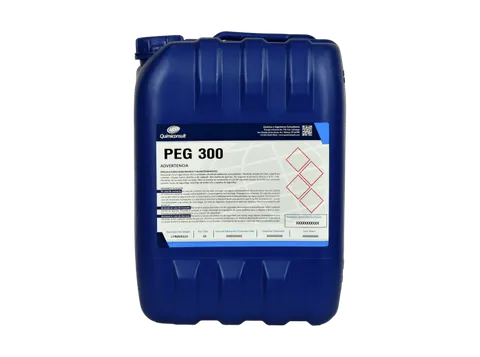
- PEG 300 (average molecular weight 285-315 g/mol): a liquid PEG of low-to-intermediate viscosity, with an optimal balance of fluidity, solvency, hygroscopicity and functional properties. It is one of the most versatile and highest-volume industrial PEG grades worldwide, with applications in mold lubrication and release, fibers and textile processing, industrial cosmetics, technical ceramics, chemical product formulations, pigment and dye carriers, humectants and plasticizing agents.
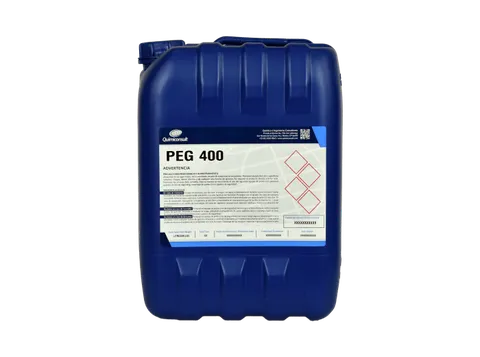
- PEG 400 (average molecular weight 380-420 g/mol): a medium-viscosity liquid PEG, widely used in cosmetics and industrial formulations for its balance of viscosity, humectant capacity and sensory properties. It is one of the most popular grades in industrial cosmetics for its pleasant feel and compatibility with a wide range of ingredients. Ideal in industrial creams and lotions, hair products, higher-viscosity aqueous lubricants, polymer plasticizers, carriers in industrial chemical formulations and plasticization of ceramics and agglomerates.
- PEG 600 (average molecular weight 570-630 g/mol): sits on the boundary between liquid and semi-solid PEG at room temperature (its melting point is in the 17-22 °C range, which means it is a viscous liquid in warm climates and may solidify in temperate or cold climates). Higher viscosity, lower hygroscopicity and a greater ability to add body and consistency to formulations. Ideal for formulations that require more consistency, high-viscosity lubricants, polymer plasticizers, carriers in pastes and gels, cosmetic formulations with body, coatings and applications that call for a PEG with properties between liquid and solid.
The choice between these PEG grades depends fundamentally on three factors: the physical state required in the formulation (liquid, semi-solid), the target viscosity of the formulated product and the balance between hygroscopicity, lubricity and sensory properties to be achieved. It is common practice in industrial formulation to combine two or more PEG grades to reach specific intermediate properties (for example, mixing PEG 200 with PEG 400 to obtain maximum solvency with moderate viscosity, or PEG 200 with PEG 600 to combine fluidity in one portion with body in another). For technical advice on selecting the optimal PEG grade for your specific formulation, contact our support team.
How Does PEG 200 Work in Formulation? — Functional Mechanisms
Unlike ingredients that serve a single function, PEG 200 delivers its value in formulation through several simultaneous mechanisms that make it the industrial polyol of choice when maximum solvent efficiency with minimal viscosity build is required:
Maximum-efficiency solvency and cosolvency: the chemical structure of PEG 200, with its short chain of hydrophilic ethylene oxide units and higher relative concentration of terminal hydroxyl groups per unit of mass (hydroxyl value 535-590 mg KOH/g), maximizes the ability to solvate polar substances (salts, sugars, glycerin, alcohols, weak acids, soluble pigments) per gram of polyol used. This makes it the most efficient option when maximum solvency at minimum dosage is sought, acting as a molecular solubilization bridge that makes it possible to formulate systems where incompatible ingredients can coexist in a single homogeneous phase.
Superior humectancy and hygroscopicity: the many polar groups in the PEG chain (oxygen atoms of the ether bond) have a high affinity for water molecules through hydrogen bonding, and PEG 200 has the highest density of these groups per unit of mass in the liquid PEG family. This allows it to capture ambient moisture more efficiently than any other commercial PEG and retain it in the formulation, as well as maintain hydration on treated surfaces (textiles, ceramics, skin in industrial cosmetics).
Heat transfer in aqueous systems: the low viscosity of PEG 200, combined with its excellent water miscibility and high heat capacity, makes it functionally useful as a component of water-based heat transfer fluids in specific applications that require modulating the freezing point, improving the fluid’s thermal conductivity and preventing the corrosion associated with using pure water.
Low molecular weight plasticization: PEG 200 inserts itself between the polymer chains of rigid matrices (resins, thermoplastic polymers, green ceramics, starches, agglomerates), physically separating the chains and reducing intermolecular interactions. Because of its lower molecular weight, it penetrates dense matrices more easily and imparts flexibility and workability at a lower dosage than higher molecular weight PEGs.
Water activity modulation and freezing point depression: a high concentration of PEG 200 in an aqueous formulation reduces the water activity of the system (with an auxiliary preservation effect in some applications) and depresses the freezing point of water, a property leveraged in formulations that must stay liquid in cold climates or in industrial antifreeze systems.
Carrying hydrophilic actives: in systems where a hydrophilic active ingredient (dye, surfactant, cosmetic ingredient, chemical additive) must be transported to a surface or released gradually, PEG 200 acts as a maximum-efficiency transfer carrier, thanks to its fluidity (which facilitates intimate contact with the surface) and its solvency (which stabilizes the active in solution).
Stabilization of aqueous systems and fine rheological modulation: although PEG 200 does not increase viscosity dramatically (its rheological effect is moderate), it allows fine adjustments of rheological properties, stabilization of dispersions and modulation of sensory properties in liquid formulations without drastically altering other properties.
Industrial Applications of Industrial Grade PEG 200
PEG 200 is one of the most versatile industrial polyols, with specific applications extending across many manufacturing sectors that take advantage of its unique combination of maximum fluidity, high solvency, high hygroscopicity and broad chemical compatibility. The main fields of application are detailed below.
Mold Lubricants, Release Agents and Foundry
In molding, casting, injection and part-forming operations, PEG 200 works as a release agent and interfacial lubricant, with the advantage of low viscosity that makes application by fine spray, brush or dipping easy:
- Release of plastic, rubber and elastomer parts: applied to the mold surface before the operation, it forms a thin film that facilitates release of the finished part without sticking.
- Mold lubrication for metal casting: especially in aluminum, zinc and low-melting-point alloy foundries, where its lower viscosity facilitates uniform application in complex molds.
- Release of green ceramic and refractory parts: facilitates release without leaving viscous residues.
- Thermoforming and blow molding operations: as a processing aid.
- Lubrication of dies and punches in stamping and forming operations.
- Spray applications that require a PEG that can be atomized easily without clogging nozzles.
Textile Industry and Fiber Processing
In the textile industry, PEG 200 is a processing aid used especially when low-viscosity liquid formulations with maximum fiber penetration are required:
- Sizing and lubrication of synthetic and natural fibers: during spinning, winding and weaving, where its low viscosity ensures uniform distribution over the fiber.
- Dyeing auxiliaries and textile finishes: as a carrier for dyes and finishing agents, improving deep penetration into the fiber thanks to its low viscosity.
- Wetting and antistatic agents in the processing of synthetic fibers prone to static charge buildup.
- Aid in textile printing operations as a viscosity modulator without significantly altering the body of the paste.
- Pre-weaving and post-weaving treatments that require uniform, deep wetting.
- Low-viscosity textile sizing and softener formulations.
Industrial Cosmetics and Industrial Grade Personal Care Products
In industrial cosmetics (industrially manufactured cosmetic products, high-volume personal care products, mass-market formulas), industrial grade PEG 200 is a common ingredient as a humectant, cosolvent without viscosity contribution, carrier for hydrophilic actives and low molecular weight plasticizer:
- Industrial fluid body lotions: as a humectant where a light, non-greasy texture is sought.
- Facial toners and liquid cosmetic solutions: as a humectant and cosolvent.
- Low-viscosity hair products (leave-in conditioners, hair tonics, industrial aerosols): a cosolvent that does not add body.
- Industrial liquid soaps and body washes: as a carrier for hydrophilic additives.
- Industrial perfumes and fragrances: as a cosolvent that helps homogenize phases.
- Liquid antiperspirant and deodorant products: as a humectant and carrier for actives.
- Liquid shaving products: as a humectant and sensory modifier.
- Industrial liquid makeup bases: as a carrier and fluidity modifier.
Note: for cosmetic applications that require pharmaceutical or USP grade, check the availability of the specific grade with our technical team. This product is industrial grade.
Ceramics, Technical Porcelain and Refractories Industry
In technical ceramics, porcelain, refractories and agglomerated materials, PEG 200 performs key functions in the forming and processing stages prior to sintering:
- Plasticizer in ceramic pastes: improves workability in extrusion, pressing or molding, with the advantage of penetrating deep into dense matrices thanks to its low viscosity.
- Temporary binder in green ceramic bodies: provides green mechanical strength before firing and is removed by evaporation or pyrolysis during the thermal cycle, leaving no residue.
- Lubricant in isostatic and uniaxial pressing operations: reduces internal friction and improves the homogeneity of the compact.
- Carrier for ceramic colorants and glazes: improves dispersion and uniform application.
- Aid in spray granulation processes (spray drying) of ceramic powders.
- Applications in technical porcelain, ceramic electrical insulators, tiles, sanitaryware and refractories, especially when a maximum-efficiency plasticizer at minimum dosage is required.
Chemical Industry and Chemical Product Manufacturing
In the chemical industry and the manufacture of formulated chemical products, PEG 200 has many applications:
- Industrial solvent and cosolvent in formulations that require maximum solvency with low volatility and relatively low toxicity compared with traditional organic solvents.
- Carrier in specialty chemical formulations (surface treatments, industrial cleaning products, maintenance formulations).
- Raw material in chemical synthesis: a precursor for producing functionalized PEG derivatives (esters, ethers, low molecular weight PEGylated surfactants).
- Wetting agent in industrial agrochemical formulations (subject to specific regulatory verification).
- Carrier for industrial inks, pigments and dyes.
- Additive in aqueous adhesive and sealant formulations.
- Property modifier in analytical reagent and industrial laboratory formulations.
Heat Transfer Fluids and Industrial Antifreezes
One of the applications that sets PEG 200 apart from other PEGs is its use in heat transfer systems:
- Water-based heat transfer fluids in specific industrial applications.
- Component of antifreeze formulations for specialized applications.
- Fluids for industrial thermostatic baths and thermal control systems.
- Specialized water-soluble hydraulic fluids with freezing point depression.
Water-Soluble Industrial Lubricants
PEG 200 is one of the base components of water-soluble industrial lubricants, where its low viscosity provides specific advantages:
- Water-soluble cutting and machining fluids: as a lubricating additive in formulations for machining, milling, drilling and grinding, especially where a low-viscosity fluid is sought for high-speed operations.
- Chain and conveyor lubricants in specific industrial applications.
- Lubricants for cold forming processes: stamping, deep drawing, wire drawing.
- Aqueous lubricants for parts that come into contact with water or humid environments.
- Additives in water-soluble hydraulic fluids.
Applications in Inks, Adhesives, Coatings and Polymers
- Industrial and printing inks: as a pigment wetting agent, fine viscosity modulator and maximum-efficiency carrier.
- Industrial inkjet inks and digital printing applications where low viscosity is critical.
- Waterborne adhesives: as a temporary plasticizer and rheology modifier.
- Waterborne coatings and paints: as an auxiliary coalescent and humectant.
- Polymer agglomerates: low molecular weight internal plasticizer.
- Encapsulation and microencapsulation: as a soluble polymer matrix in specific applications.
Additional Applications in Other Industries
- Paper industry: as a humectant and processing aid, especially in applications that require low viscosity.
- Leather industry: in finishing and softening stages.
- Electronics industry: as a carrier in conductive paste and ceramic dielectric formulations, and as an aid in precision cleaning processes.
- Industrial water treatment: as an auxiliary dispersant in specific formulations.
- Concrete and construction additives industry: as an auxiliary plasticizer.
Features and Competitive Advantages of Industrial Grade PEG 200
The preference for PEG 200 over other industrial polyols and solvents rests on a combination of technical, handling and economic properties that make it the liquid PEG of choice when maximum solvent efficiency without significant viscosity contribution is required:
- Maximum fluidity and minimum viscosity in the standard liquid PEG family, making pumping, dosing, mixing, spray application and industrial handling easy without heating.
- Maximum solvent power per unit of mass for polar substances within the liquid PEG family, thanks to its higher relative concentration of terminal hydroxyl groups (hydroxyl value 535-590 mg KOH/g).
- Maximum hygroscopicity among commercial liquid PEGs, an advantage in humectant applications.
- Complete water miscibility in all proportions at any temperature.
- Liquid physical state at room temperature, with the easiest handling of the entire PEG family.
- Low volatility: very low vapor pressure at room temperature; it virtually does not evaporate during processing or storage.
- Non-flammable under normal conditions (high flash point), supporting safe handling at the plant.
- Low acute toxicity documented for the PEG family in international toxicological literature, with a safe handling profile under good practices.
- Broad chemical stability: stable at pH 4-10, resistant to hydrolysis under normal conditions.
- Broad chemical compatibility: compatible with most surfactants, water-soluble polymers, salts, weak acids and bases, pigments and industrial additives.
- Freezing point depression capability: a useful property in antifreeze and heat transfer applications.
- Effective plasticization at a lower dosage than higher molecular weight PEGs.
- Relatively low cost compared with specialty polyols or organic solvents.
- Global availability and broad industrial backing: a standard raw material available worldwide with established supply chains.
- Partial biodegradability under suitable environmental conditions, a better environmental profile than many traditional organic solvents.
PEG 200 vs PEG 300 vs PEG 400 vs PEG 600 — Which One to Choose?
One of the most frequent questions in industrial formulation with polyethylene glycols is selecting the optimal grade for the application. This is a technical selection guide for the four most widely used liquid and semi-solid grades:
Choose PEG 200 (the product described here) when: you need the lowest possible viscosity among liquid PEGs, maximum water solubility per unit of mass, maximum hygroscopicity for demanding humectant applications, maximum solvent power for polar substances, minimal body added to the formulation, or when you want the most fluid PEG for intensive pumping, fine dosing, spray application, heat transfer in aqueous systems, antifreeze formulations, or as a pure cosolvent without significant viscosity modulation. It is the option when the PEG must be "rheologically invisible" and serve only solvency, humectancy and chemical modulation functions.
Choose PEG 300 when: you need an optimal balance of fluidity, solvency, hygroscopicity and functional contribution, with low-to-intermediate viscosity that allows easy industrial handling without losing functionality. It is the most versatile grade with the highest volume use, ideal for mold lubricants, textile fibers, technical ceramics, industrial cosmetics, chemical formulations, pigment carriers and the vast majority of applications that need neither the extremes of PEG 200 (maximum fluidity) nor of PEG 600 (semi-solid consistency).
Choose PEG 400 when: you need more viscosity and body than PEG 300 without reaching the semi-solid state of PEG 600, a better sensory feel in cosmetic applications, greater humectant power with lower ambient hygroscopicity (more stable under variable storage conditions), or when the specific application has historically been optimized for PEG 400 (many industrial cosmetic formulations and polymer plasticization use PEG 400 as the standard).
Choose PEG 600 when: you need a PEG with more consistency and body, properties at the liquid/semi-solid boundary at room temperature (its melting point is around 17-22 °C), lower hygroscopicity, and a greater ability to add structure and consistency. Ideal for high-viscosity lubricants, plasticizers for more rigid polymers, carriers in firm pastes and gels, formulations with more body.
Recommended combinations: it is common practice in industrial formulation to blend two or more PEG grades to obtain specific intermediate properties. For example:
- PEG 200 + PEG 400 for systems with high solvency and moderate viscosity, combining the maximum solvent efficiency of 200 with the body of 400.
- PEG 200 + PEG 600 to combine fluidity in one portion of the formulation with body and consistency in another, useful in multiphase systems.
- PEG 200 + PEG 300 for systems that require maximum fluidity with a slight contribution of body.
- PEG 300 + PEG 400 for cosmetic applications with a specific sensory profile.
For technical advice on selecting and combining PEG grades for your specific formulation, contact our technical support team.
PEG 200 Use, Dosage and Incorporation Recommendations
To get maximum functionality from PEG 200 in industrial formulations, we recommend following a suitable incorporation protocol:
How to incorporate: PEG 200 is a low-viscosity liquid at room temperature, which makes direct incorporation by pumping, volumetric dosing or weighing easy. It is typically added to the aqueous phase of the formulation (its hydrophilic nature favors this route), although it can be added to mixed hydroalcoholic or glycolic phases without any problem. In systems with a significant oil phase, PEG 200 is added to the aqueous phase before the emulsification process. Its low viscosity facilitates fine spraying, atomization or misting in applications that require it (spray release agents, textile sizing).
Incorporation temperature: no preheating is required in virtually all applications. For systems processed hot, it can be added at 40-70 °C without affecting its functionality. For processes at temperatures above 150 °C, avoid prolonged exposure to air to prevent slow oxidation.
Typical concentrations in the final formulation by industrial application:
- Mold lubricants and industrial release agents: 5 to 30% (can be used neat or diluted in water depending on the lubricant design, with the advantage of easy atomization).
- Textile sizing and processing aids: 1 to 10% of the formulation, depending on fiber type and operation.
- Ceramic pastes and agglomerates (plasticizer / binder): 0.3 to 2% of ceramic powder weight (a lower dosage than higher PEGs due to its greater efficiency per unit of mass).
- Industrial cosmetics (fluid lotions, toners, liquid products): 1 to 10% depending on the desired function.
- Industrial liquid hair products: 1 to 5% of the formulation.
- Industrial liquid soaps, shampoos and bath products: 1 to 8% of the formulation.
- Cutting fluids and water-soluble lubricants: 2 to 20% of the concentrate.
- Industrial inks and printing formulations: 2 to 15% of the formulation, especially in low-viscosity inks and industrial inkjet inks.
- Waterborne adhesives (temporary plasticizer): 0.5 to 5% of the formulation.
- Waterborne coatings and paints: 0.5 to 3% of the formulation.
- Water-based heat transfer fluids: 20 to 60% of the final formulation, depending on the target freezing point and the thermal properties required.
- Chemical synthesis and reaction medium: according to process design.
Mixing: PEG 200 is incorporated with standard moderate agitation (paddle or anchor agitator at medium speed). Its low viscosity allows rapid homogenization without high shear. To disperse solids or pigments in PEG 200, moderate-shear agitation can be helpful to ensure fine dispersion.
Performance verification: once the product is formulated, stability testing of the finished product is recommended (accelerated stability, temperature cycling, validation of viscosity and functional properties) to confirm the performance of PEG 200 in the specific formulation before scaling up to production.
PEG 200 Compatibilities and Incompatibilities
PEG 200 is compatible with most industrial ingredients: water and aqueous solutions in all proportions; alcohols (ethanol, methanol, isopropanol, butanol); other glycols (propylene glycol, butylene glycol, ethylene glycol, glycerin); other PEG grades (blends with PEG 300, 400 and 600 are widely used); anionic, nonionic and cationic surfactants in most combinations; water-soluble polymers (PVA, PVP, carboxymethylcellulose, hydroxyethylcellulose, natural and modified gums); organic and inorganic salts at moderate concentrations; weak acids and bases within the chemical stability range; mineral and organic pigments; water-soluble dyes; aldehydes and ketones in specific formulations; water-soluble flavors and fragrances; standard preservatives (parabens, phenoxyethanol, isothiazolinones at regulated concentrations).
It requires special precautions or considerations with:
- Strong mineral acids at high concentration and elevated temperature: they can catalyze oxidative degradation or chain scission of the PEG.
- Strong bases at high temperature: extreme conditions can cause side reactions.
- Strong oxidizing agents (concentrated hydrogen peroxide, high-concentration hypochlorites, peracetic acid, peroxysulfates): they can oxidize PEG chains, generating unwanted by-products and reducing functionality. PEG 200 is especially susceptible to oxidation due to its lower molecular weight and higher relative reactivity; consider using antioxidants in formulations with oxidizing actives.
- Transition metals at high concentrations (especially Fe, Cu, Mn): they can catalyze slow oxidation of PEG during prolonged storage, especially at high temperature. Consider using auxiliary antioxidants (tocopherols, BHT) in critical formulations.
- Pure aliphatic hydrocarbons, pure mineral oils and pure vegetable oils: PEG 200 is immiscible or only partially miscible with these phases. Formulations combining PEG 200 with oils require suitable surfactants and emulsification processes.
- Unprotected high-temperature atmospheres: prolonged exposure to air at temperatures above 150 °C can cause gradual oxidation; working under an inert atmosphere (nitrogen) or with antioxidants is advisable in prolonged thermal processes.
- Prolonged high ambient humidity: given the high hygroscopicity of PEG 200, prolonged exposure to humid air can alter specifications through water absorption. Seal containers between uses.
- Some plastic materials: certain polymers (especially some elastomers) can swell or be partially affected by prolonged contact with PEG; check the compatibility of gaskets and seals before prolonged storage or transfer.
PEG 200 Storage, Packaging and Shelf Life
Industrial grade PEG 200 is offered in package sizes suited to different scales of industrial consumption, including drums, IBC containers (totes) and bulk tanker deliveries for large consumers, with smaller sizes available for development, formulation and pilot trials. Specific package sizes, container formats and capacities are available on request from our sales team.
To ensure product integrity and performance, it is recommended to store it in its original closed container, in a cool, dry, well-ventilated place with controlled temperature (ideally 15-30 °C), away from heat sources, direct sunlight, incompatible materials and atmospheres with prolonged high relative humidity. PEG 200 is highly hygroscopic (the highest hygroscopicity in the liquid PEG family) and efficiently absorbs ambient moisture if left exposed to air, which can gradually alter its specifications, especially hydroxyl value and water content. This characteristic calls for special care in handling: once the container is opened, it must be properly and hermetically sealed between uses to preserve specifications.
For prolonged storage in hot or humid climates, or when purity is critical, a reinforced airtight seal is recommended and, in critical applications, consider storage under an inert nitrogen atmosphere to prevent slow oxidation and moisture absorption.
The shelf life of the product under these storage conditions is typically 24 months from the date of manufacture, according to the supplier’s specification and lot. The official expiration date is shown on the original container and on the Certificate of Analysis for the corresponding lot. For lots stored for extended periods, we recommend checking critical parameters (color, hydroxyl value, water content) before use in critical applications.
Safety, Handling and Regulatory Considerations
PEG 200 is a substance with a very low toxicological profile, documented in international toxicological literature for the entire PEG family, with a long history of safe industrial use. Typical GHS safety classifications for industrial grade PEG 200 indicate minimal hazards under normal handling conditions: it is not corrosive, not flammable at room temperature, causes mild eye and skin irritation on prolonged direct contact, and respiratory tract irritation from inhaling mists at high concentrations.
The recommended personal protective equipment (PPE) during industrial handling includes safety glasses to prevent eye contact, chemical-resistant gloves (nitrile, neoprene) to prevent prolonged skin contact, appropriate work clothing, a mask during operations that generate mists or aerosols (especially relevant with PEG 200 because of its frequent use in spray applications), and work in areas with adequate ventilation. In high-temperature operations, appropriate thermal PPE.
Spill handling: PEG 200 spills are slippery (high inherent lubricity, especially accentuated by its low viscosity, which helps it spread over surfaces) and pose a significant risk of falls. Collect with inert absorbents (vermiculite, sand, diatomaceous earth) and dispose of in accordance with current waste legislation. Wash the area with water and detergent to remove slippery residues.
Handling of empty containers and waste: dispose of in accordance with current waste legislation. Under most regulations, PEG waste is not classified as hazardous in typical commercial quantities, although it may require treatment before final disposal.
From a regulatory standpoint (general considerations for industrial grade):
- PEG family: widely recognized as a standard industrial raw material, with a documented safety profile.
- Industrial applications: industrial grade PEG 200 is suitable for the uses described on this page (lubricants, textiles, ceramics, industrial cosmetics, industrial chemical formulation, heat transfer, industrial antifreezes). It is not suitable for pharmaceutical use, direct food use for human consumption, or injectables, applications that require specific USP/pharmacopoeia grades not covered on this page.
- REACH regulation (European Union): polyethylene glycol is registered under REACH as an industrial chemical substance.
- GHS labeling: according to the lot’s safety data sheet (SDS).
For applications that require pharmaceutical grade (USP/NF), food grade (FCC) or additional specific certifications, check the availability of the appropriate grade with our technical team, as the grade described on this page is strictly industrial.
Certifications and Regulatory Compliance
The industrial grade PEG 200 we distribute comes with a Certificate of Analysis (CoA) per lot documenting the critical parameters: average molecular weight, hydroxyl value, water solubility, aqueous solution pH, density, residual free ethylene oxide and free ethylene glycol and diethylene glycol content. Where applicable to the specific lot and supplier, supplementary documentation is offered, such as declarations of origin, statements of absence of specific substances, safety data sheets (SDS) and technical support for integration into customer operational and quality files.
Formulators, technical departments, quality assurance departments, purchasing departments and product developers can request the complete technical documentation: technical data sheet (TDS), safety data sheet (SDS), certificate of analysis (CoA) per lot, specific technical statements, and technical support for integration into supplier approval files and operational records.
Frequently Asked Questions about Industrial Grade PEG 200
What is PEG 200 and what is it used for?
PEG 200 (Polyethylene Glycol 200) is a liquid polymer from the polyethylene glycol family, with an average molecular weight between 190 and 210 g/mol, the lowest molecular weight of the standard commercial liquid PEGs. It is widely used in the industrial cosmetics, textile, ceramics, chemical, manufacturing, industrial lubrication, ink and adhesive formulation, waterborne coatings, foundry and molding, heat transfer fluid and industrial antifreeze industries as a maximum-efficiency cosolvent, high-capacity humectant, mold lubricant and release agent, low molecular weight plasticizer, viscosity modulator without significant body contribution, carrier for pigments and hydrophilic actives, and hygroscopic agent. It is the preferred option when maximum solvency and humectancy with minimum viscosity are required.
What is the difference between PEG 200 and PEG 300?
The main difference lies in the average molecular weight, which translates into different functional properties:
- PEG 200 (190-210 g/mol): a more fluid liquid, lower viscosity, higher hygroscopicity, higher hydroxyl value (535-590 mg KOH/g), which means a higher concentration of terminal hydroxyl groups per unit of mass and therefore greater solvency for polar substances.
- PEG 300 (285-315 g/mol): a liquid of low-to-intermediate viscosity, more body than PEG 200, lower hygroscopicity, hydroxyl value 356-394 mg KOH/g, and greater versatility for applications that require a PEG with moderate body.
Choose PEG 200 when you need maximum fluidity, maximum solvency and minimum viscosity contribution; choose PEG 300 when you need a balance between fluidity and functional contribution. It is common practice to blend both grades to obtain specific intermediate properties.
Is PEG 200 soluble in water?
Yes, PEG 200 is completely miscible in water in all proportions, at room temperature (20 °C) and above. It is one of the products in the PEG family with the highest water solubility due to its lower molecular weight and maximum relative concentration of polar hydroxyl groups. It is also soluble in alcohols, other glycols, acetone, DMSO and many polar organic solvents. It is immiscible with saturated aliphatic hydrocarbons, pure mineral oils and pure vegetable oils, but can coexist with these phases in emulsified systems.
Why does PEG 200 have a higher hydroxyl value than PEG 300 or PEG 400?
Because the hydroxyl value is inversely proportional to molecular weight: the lower the average molecular weight, the higher the relative concentration of terminal hydroxyl groups (-OH) per unit of mass. Each PEG chain has exactly two terminal hydroxyl groups (one at each end of the chain), regardless of length. Since PEG 200 has shorter chains (average molecular weight 200 g/mol vs 300, 400 or 600 g/mol), there are more chains (and therefore more hydroxyl groups) per gram of product. This is the chemical reason why PEG 200 has greater solvency, higher hygroscopicity and greater chemical reactivity per unit of mass than higher molecular weight PEGs.
Does PEG 200 evaporate? Is it volatile?
It is not volatile. PEG 200 has a very low vapor pressure at room temperature and virtually does not evaporate under normal processing or storage conditions. This is a significant advantage over traditional volatile organic solvents (ethanol, isopropanol, acetone) in formulations where evaporation losses would affect yield, cost and emissions. At elevated temperatures (>150 °C in thermal processes), slow evaporation and oxidation may occur; in these cases, an inert atmosphere or antioxidants are recommended.
Is PEG 200 safe?
The PEG family in general, including PEG 200, has a history of safe industrial use documented over decades and a low toxicological profile in industrial applications under good handling practices. International regulatory authorities have repeatedly evaluated the safety of PEGs, particularly USP/pharmacopoeia grades for human applications. The industrial grade PEG 200 we distribute is intended for industrial applications (lubrication, textiles, ceramics, industrial cosmetics, chemical formulation, heat transfer), where its safety profile under standard industrial handling is well known. For applications involving human oral use, pharmaceutical applications or USP/FCC requirements, check the availability of the appropriate specific grade.
Can PEG 200 be used as an antifreeze?
Yes, PEG 200 has the ability to depress the freezing point of water when used at significant concentrations, a property leveraged in industrial antifreeze fluid formulations and water-based heat transfer fluids. Its advantage over ethylene glycol (the traditional antifreeze) is its lower relative toxicity, although it also offers less freezing point depression per unit of mass than ethylene glycol. For specific antifreeze or heat transfer applications, we recommend a dedicated formulation combining PEG 200 with other additives (corrosion inhibitors, biocides, pH modifiers) to optimize fluid performance.
Why are free ethylene oxide and free glycols in the specification?
Ethylene oxide and short glycols (ethylene glycol, diethylene glycol) are residual by-products of the polymerization process that produces PEG. The specification of maximum 10 ppm free ethylene oxide and maximum 0.25% ethylene glycol + diethylene glycol are standard purity parameters in the PEG industry that ensure the product meets quality criteria for industrial applications. These limits are well below typical industrial safety thresholds for these compounds. For applications that require stricter limits (pharmaceutical, food grade), special grades with more rigorous specifications exist; check availability.
Can PEG 200 be mixed with other PEG grades?
Yes, without any problem, and in fact it is common practice in industrial formulation. Blends of different PEG grades (for example PEG 200 + PEG 400, PEG 200 + PEG 600, PEG 200 + PEG 300) make it possible to obtain specific intermediate properties that no single grade provides: adjusted viscosity, hygroscopicity/consistency balance, a specific sensory profile, modulation of any functional parameter. The different PEG grades are chemically compatible with each other and blend without separation. For advice on specific combinations, contact our technical team.
How is PEG 200 used as a release agent or mold lubricant?
PEG 200 is used as a release agent and interfacial lubricant by applying it to the mold surface before the molding, casting or forming operation. Because of its low viscosity, it is especially suitable for spraying, atomization and misting, forming thin, uniform layers in molds with complex geometry. It can be applied neat or diluted in water at typical concentrations of 5-30% depending on the specific lubricant design. It forms a thin film that facilitates release of the finished part without sticking, reduces surface defects and extends mold life. For specific applications, we recommend a dedicated formulation that may include PEG 200 combined with other components (other PEGs, surfactants, defoamers, preservatives).
Is PEG 200 hygroscopic? How should it be stored?
Yes, PEG 200 is highly hygroscopic (the highest hygroscopicity among commercial liquid PEGs), which means it efficiently absorbs ambient moisture if left exposed to air. This can gradually alter its specifications (especially hydroxyl value and water content). To preserve quality, it is stored in its original, hermetically sealed container, in a cool, dry, well-ventilated place at 15-30 °C, away from prolonged high ambient humidity. A reinforced airtight seal is especially important for this grade. Once opened, seal between uses. For applications where purity is critical, consider storage under an inert nitrogen atmosphere. Typical shelf life: 24 months from the date of manufacture under proper conditions.
What is the difference between industrial grade PEG 200 and USP PEG 200?
Industrial grade PEG 200 (the product we distribute on this page) meets purity and quality specifications appropriate for industrial applications: mold lubricants, textiles, ceramics, industrial cosmetics, chemical formulation, manufacturing, heat transfer. USP PEG 200 is a pharmaceutical grade that complies with the USP (United States Pharmacopeia) monograph, with stricter specifications for purity, impurity control, microbiology and traceability, required for pharmaceutical or medical applications or wherever regulations demand it. Industrial grade is not a substitute for USP grade in regulated applications. If your application requires USP grade, check availability with our technical team to identify the right product.
Where can I buy PEG 200 in Mexico and at what price?
At Quimiconsult we distribute industrial grade PEG 200 with availability from our warehouse in San Nicolás de los Garza, Nuevo León, serving customers throughout Mexico. We offer package sizes from laboratory samples, industrial drums and IBC containers to bulk tanker deliveries for large consumers, with complete technical documentation (TDS, SDS, CoA per lot) and technical formulation support. We also distribute PEG 300, PEG 400 and PEG 600 from the same family for formulators who need the complete line or specific blends. The price of industrial grade PEG 200 depends on volume, packaging and specification. Request a personalized quote stating your estimated volume, application sector and required specifications through our website or by phone at +52 (81) 8105 0063.
Request Your Quote for Industrial Grade PEG 200 or the Complete PEG Line
Does your industrial cosmetics plant, textile mill, ceramics or technical porcelain plant, foundry or molding shop, chemical manufacturing plant, lubricant and industrial fluid manufacturer, ink, adhesive and coating manufacturer, heat transfer or industrial antifreeze fluid plant, or any industry that requires a fluid polyol with maximum solvent and humectant efficiency need to incorporate industrial grade PEG 200 into its processes or formulations? We also offer PEG 300, PEG 400 and PEG 600 from the same family so you can select the optimal grade or develop specific blends that combine the properties of several grades. Contact us and we will gladly analyze your specific application, recommend the optimal grade, the right dosage and the most efficient combination for your formulation, provide technical support for formulation and handling, and deliver a comprehensive solution that includes complete technical documentation, incorporation advice and timely delivery anywhere in Mexico.
Related Products and the Polyethylene Glycol Family
Discover our complete family of polyethylene glycols (PEG) and other complementary industrial polyols for industrial cosmetic, textile, ceramic, chemical, lubricant and manufacturing formulation:
- PEG 300 — intermediate-viscosity liquid polyethylene glycol, an optimal balance between fluidity and functional contribution
- PEG 400 — medium-viscosity liquid polyethylene glycol, the standard in industrial cosmetics
- PEG 600 — polyethylene glycol at the liquid/semi-solid boundary, with more consistency and body
- Industrial Propylene Glycol — a simple low-viscosity glycol, cosolvent and humectant
- Industrial Glycerin — a humectant triol with high water retention capacity
- Industrial Ethylene Glycol — a low molecular weight glycol for specific applications
- Butylene Glycol — a longer-chain glycol with a humectant and solvent profile
- Sorbitol — a solid humectant polyol for specific applications
Related categories:
- Category: Polyethylene Glycols (PEG Family)
- Category: Industrial Glycols and Polyols
- Category: Industrial Solvents and Cosolvents
- Category: Humectants and Plasticizers
- Category: Raw Materials for Industrial Cosmetics
- Category: Textile Processing Aids
- Category: Additives for Ceramics and Refractories
- Category: Industrial Lubricants and Release Agents
- Category: Heat Transfer Fluids and Industrial Antifreezes