Spanish
 English


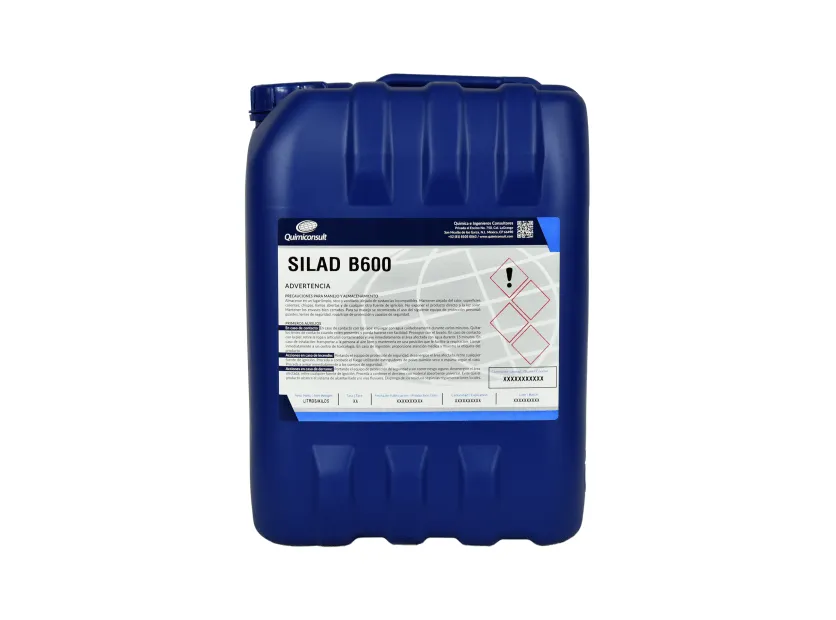
SILAD B600 DEFOAMER 20% EMULSION SILICON BASED
View All Prices
| Quantity | Unit Price |
|---|---|
| kg | |
| 1 - 99 | USD 6.47 |
| 100 - 199 | USD 6.36 |
| 200 - 499 | USD 6.26 |
| 500 - 999 | USD 6.16 |
| 1000 - 4999 | USD 6.06 |
| 5000 - 9999 | USD 5.96 |
| 10000 - 17999 | USD 5.87 |
| 18000+ | USD 5.79 |
Silad B600 Description — Very Low Viscosity Silicone Antifoam Emulsion for Industrial Applications
At Quimiconsult we manufacture Silad B600, a very low viscosity, cost-effective, general-purpose silicone (polydimethylsiloxane, PDMS) antifoam emulsion that successfully eliminates and prevents foam formation in a wide variety of industrial processes. Silad B600 is a very stable, easy-to-handle antifoam that excels in applications with anionic and nonionic surfactants requiring excellent durability, delivering superior performance under neutral, slightly alkaline or acidic conditions. With an active ingredient content of 20% by weight and a remarkably low viscosity (100 – 250 cP), Silad B600 disperses, pumps and doses with extreme ease, making it ideal for automatic dosing systems and for applications where maximum ease of incorporation is sought. As direct manufacturers with our own R&D laboratory and more than 30 years of experience in specialty chemicals, we guarantee batch-to-batch consistency, with availability from our plant in Monterrey, Nuevo León, and shipping throughout Mexico.
Foam is one of the most costly and underestimated operational problems in industry: it reduces the usable capacity of tanks, reactors, columns and evaporators; causes overflows, losses and shutdowns; interferes with pumps, sensors and control systems; lowers oxygen transfer and gas-liquid contact efficiency; and compromises the quality and stability of cleaning, formulation and separation processes. Silad B600 controls foam through the characteristic mechanism of silicone antifoams: PDMS droplets, with low surface tension and insoluble in the foaming medium, enter the bubble walls, destabilize the film that holds them together and cause them to rupture, eliminating existing foam (defoaming action) and preventing its formation (antifoam action). Its very low effective dose, excellent durability and —especially distinctive— very low viscosity make it a cost-effective, reliable and exceptionally easy-to-handle foam control option.
For anyone looking for how to eliminate foam in an industrial process, a very low viscosity silicone antifoam emulsion, an antifoam for easy automatic dosing, an antifoam for alkaline cleaners and heavy-duty detergents, an antifoam for amine and glycol dehydrators, an antifoam for water treatment, an antifoam for agrochemicals and crop protection agents, an antifoam for textile finishing and auxiliaries, an antifoam for oil, gas and petrochemicals or a cost-effective, general-purpose PDMS defoamer, Silad B600 is the technical answer from the Quimiconsult catalog, backed by in-house manufacturing, complete regulatory documentation and advice on dosing and product evaluation in each process.
Dimethicone, PDMS and dimethylpolysiloxane: are they the same?
Yes. The terms dimethicone, PDMS, dimethylpolysiloxane and polydimethylsiloxane designate the same linear-chain silicone polymer (CAS 63148-62-9). The difference is only one of nomenclature depending on the context: dimethicone is the INCI name used in cosmetics and pharmaceuticals; PDMS is the technical abbreviation (polydimethylsiloxane); dimetilpolisiloxano is the chemical name in Spanish; and Silad B600 is the trade name of the 20%, very low viscosity emulsion developed and produced by Quimiconsult. Whatever term your process or formulation uses to identify the ingredient, Silad B600 is the source of that active in a ready-to-use aqueous emulsion format, with a dimethicone (PDMS) content of 20% by weight. It is an industrial grade product designed as a process antifoam; for dimethicone uses with cosmetic or pharmaceutical finished product requirements, check with our technical team for the appropriate grade and documentation.
Silad B600 within the silicone antifoam family
Silad B600 belongs to the category of silicone (PDMS) emulsion antifoams emulsified in water with a nonionic emulsifier, one of the most established and effective technologies for foam control in industrial aqueous systems. Compared with organic antifoams based on vegetable oils, fatty acids or esters, silicone antifoams offer decisive advantages for industrial processes: greater potency per unit of mass, longer-lasting antifoam action, thermal stability suitable for conventional processes, and broad compatibility with the surfactants used in industrial formulations and cleaning.
Within this category, Silad B600 stands out for its very low viscosity (100 – 250 cP) and its neutral to slightly alkaline pH profile (pH 5.0 – 8.0), a balance designed to offer cost-effective, reliable foam control with maximum ease of dispersion and dosing. Its fluidity makes it especially suitable for injection and automatic dosing systems, for fast and even distribution in the medium, and for process systems in the neutral to alkaline pH range. It is the Silad family option for anyone looking for a very easy-to-handle, versatile silicone emulsion with an excellent cost-benefit ratio.
The Silad family at Quimiconsult — silicone, organic-based and powder antifoams
Quimiconsult offers the Silad family of antifoams, covering the main foam control technologies, concentrations and formats so that each plant can select the optimal product for its system, working viscosity, pH range and regulatory grade:
- Silad B600 (silicone emulsion, 20% active, very low viscosity) — the product described on this page: a very low viscosity (100 – 250 cP), neutral to slightly alkaline pH (5.0 – 8.0), general-purpose silicone antifoam emulsion that is cost-effective and exceptionally easy to dose.
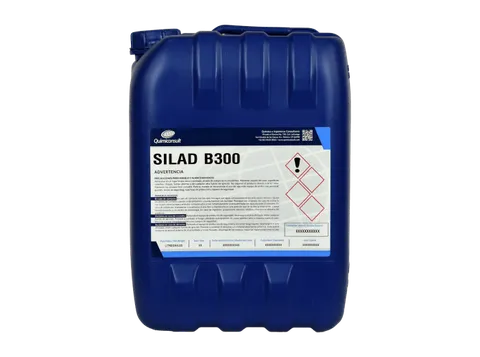
- Silad B300 (silicone emulsion, 20% active, low viscosity) — a low viscosity (1,000 – 2,500 cP), acidic to neutral pH (3.5 – 5.0) silicone antifoam emulsion, complementary to B600 within the 20% emulsion range.
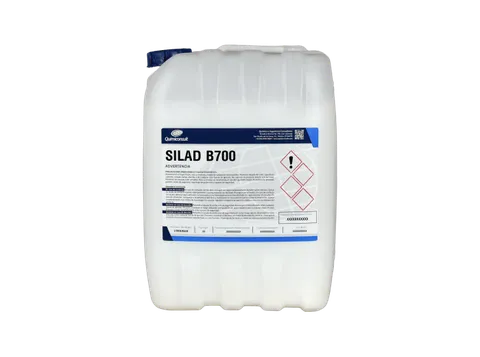
- Silad B700 (silicone, 100% active) — a 100% active concentrated silicone (PDMS) antifoam for wastewater treatment, alkaline cleaners, industrial CIP, recirculation systems and silicone emulsion formulation.
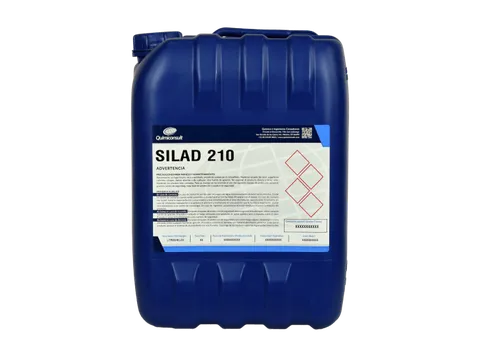
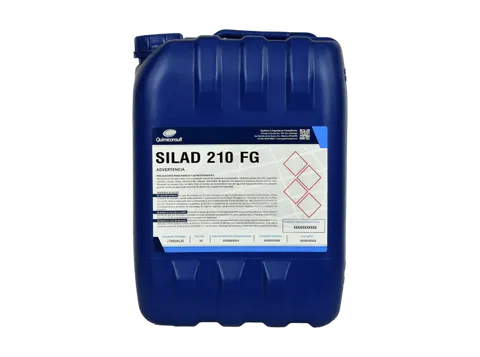
- Silad 210 and Silad 210 FG (silicone emulsion, 10% active) — silicone emulsion foam controllers for aqueous systems; the 210 FG version is food grade and kosher, manufactured in an SQF plant.
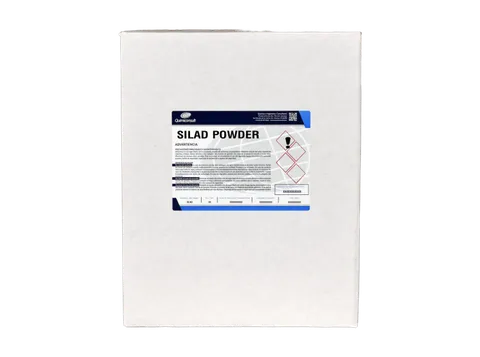
- Silad Powder FG (silicone powder, food grade) — a food grade powder antifoam for dry blends and food processes.
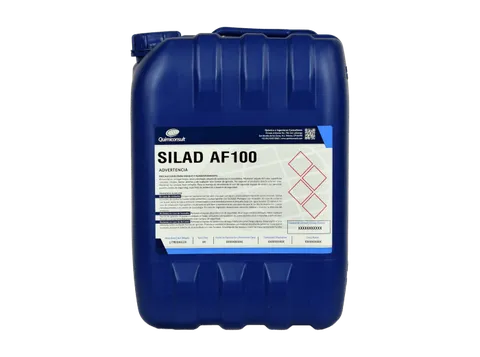
- Silad AF100 (organic-based, silicone-free) — a concentrated organic antifoam for applications where the absence of silicone is required or preferred (paints, inks, adhesives, silicone-sensitive processes).
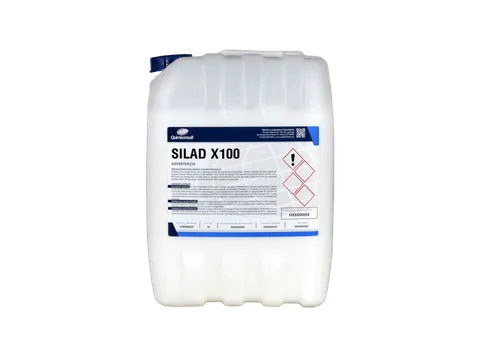
- Silad X100 and Silad X700 (for non-aqueous / oil systems) — concentrated antifoams for non-aqueous systems and oil applications.
Silad B600 vs. Silad B300 — which 20% silicone emulsion should you choose?
Silad B600 and Silad B300 are 20% active silicone (PDMS) antifoam emulsions, very close in antifoam efficiency and applications, but with two technical differences that guide the selection:
- Viscosity: Silad B600 has a very low viscosity (100 – 250 cP), while Silad B300 has a low viscosity but more body (1,000 – 2,500 cP). B600 is noticeably more fluid, which makes pumping, metering, fast dispersion and automatic dosing as easy as possible; B300, with more body, may be preferred when a more consistent emulsion is sought.
- pH profile: Silad B600 has a pH (1% solution) of 5.0 – 8.0 (neutral to slightly alkaline), ideal for neutral and alkaline systems; Silad B300 has a pH of 3.5 – 5.0 (acidic to neutral), ideal for acidic and neutral systems.
In practice, Silad B600 is the choice for neutral to alkaline systems where maximum ease of dispersion and dosing is sought (alkaline cleaners and detergents, water treatment, amine/glycol dehydrators, automatic dosing), and Silad B300 for acidic to neutral systems or where a higher-body emulsion is preferred. If you need a 100% silicone concentrate, consider Silad B700; for food contact, the food grade versions (210 FG, Powder FG); and if the process does not tolerate silicone, Silad AF100 (organic-based). If in doubt, our technical team can guide you and support laboratory evaluation.
How does Silad B600 work? — Mechanism of action of the silicone antifoam
Silicone emulsion antifoams such as Silad B600 work through a highly efficient, durable and selective physical mechanism that ruptures foaming films.
When foam forms, gas bubbles are stabilized by thin liquid films (lamellae) reinforced by the surfactants present. When dosed and dispersed in the system —which happens very quickly thanks to its very low viscosity— the Silad B600 emulsion releases fine droplets of polydimethylsiloxane (PDMS) that migrate to the air-liquid interface of the bubbles, attracted by the low surface tension of silicone (~20-21 mN/m) compared with that of foaming surfactant solutions (~30-40 mN/m). As it inserts itself into the lamella, the silicone —incompatible with the foaming surfactants and with a very different surface tension— locally breaks the film that kept the bubble stable. The lamella thins rapidly due to capillary forces until it collapses mechanically, releasing the trapped gas.
Since the silicone is not chemically consumed during this process, it remains available to suppress new foam formation in cascade for extended periods after the initial dose, which explains the greater durability and lower dosage of Silad B600 compared with organic antifoams. The product's nonionic emulsifier prevents unfavorable interactions with the anionic surfactants common in industrial formulations and cleaners, maintaining effectiveness in the presence of detergents and process surfactants, and the polydimethylsiloxane chain does not undergo significant hydrolysis in the neutral to slightly alkaline pH range typical of its applications.
Silad B600 features and benefits
- Excellent foam control: suppresses existing foam and prevents its formation, with fast and lasting action.
- Very low viscosity (100 – 250 cP): the most distinctive feature of B600; it pumps, meters and disperses with extreme ease, ideal for automatic dosing and fast, even distribution.
- Cost-effective for anionic and nonionic surfactant-based systems: excellent cost-benefit ratio with the most widely used surfactants in industry.
- High stability and durability over a wide pH range: reliable performance under neutral, slightly alkaline and acidic conditions, with a product profile (pH 5.0 – 8.0) ideal for neutral to alkaline systems.
- High resistance to alkalis and acids: suitable for applications where pH control is critical, maintaining antifoam performance in both alkaline and acidic media.
- Stable dispersions even in high viscosity formulations: makes it possible to obtain homogeneous, stable dispersions even when incorporated into high viscosity products.
- Easy dispersion and handling: incorporates simply into aqueous systems and remains stable in the medium.
- Dilutable in water, PPG or PEG: dilution flexibility that extends its use to systems containing glycols.
- No impact on the final product: PDMS (dimethicone) is chemically inert with a mild odor; when dosed correctly, it does not transfer taste, color or odor to the processed product.
- Dual defoaming and antifoam action: breaks existing foam and prevents new foam formation with prolonged activity.
- 20% active content: a concentration designed for efficient industrial dilution and dosing.
- In-house manufacturing with quality control: batch-to-batch consistency and supporting documentation (COA per batch, TDS, SDS).
Silad B600 industrial applications
Silad B600 is a versatile, general-purpose silicone antifoam, with applications covering numerous industrial sectors where foam is an operational problem. Suitability and dosage for each case must be validated under the customer's specific conditions; our technical team can support the trials.
Specialty chemical formulations: alkaline cleaners and heavy-duty detergents
Thanks to its neutral to slightly alkaline pH profile and very low viscosity, Silad B600 is an especially suitable antifoam additive in industrial alkaline cleaner formulations, heavy-duty detergents and cleaning solutions, where it controls excess foam generated by surfactants during production and use, improving rinsing, recirculation and cleaning system performance. Its compatibility with anionic and nonionic systems and its stability in alkaline media make it an outstanding option for this type of formulation. These characteristics also make it useful in household and cleaning solutions —multipurpose cleaners, degreasers, automatic washing detergents and institutional hygiene products— where foam must be kept within equipment operating limits without affecting detergency or rinsability.
Industrial water treatment
In industrial water treatment systems, wastewater treatment plants, aeration tanks, recirculation systems and cooling towers, Silad B600 controls foam generated by surfactants, proteins and organic matter, which reduces oxygen transfer efficiency, causes overflows and hinders operation. Its very low viscosity makes continuous, precise dosing easy. For water treatment and chemical processing, the recommended initial evaluation is just 20 to 50 ppm of product as received.
Oil, gas and petrochemicals
Silad B600 controls foam in oil, gas and petrochemical industry processes: amine dehydrators and glycol dehydrators, gas scrubbing and petrochemical processes involving surfactants. In amine absorption columns (H₂S and CO₂ removal) and in glycol dehydration systems (TEG/DEG), foam causes solvent carryover, loss of gas-liquid contact efficiency, column flooding and costly shutdowns. Its ability to be diluted in PPG or PEG, as well as water, is particularly convenient in these glycol-containing systems. Its resistance to alkalis and acids makes it suitable for process streams where pH is critical.
Coolant lubricants and mineral oil-based fluids
Silad B600 is used to control foam in mineral oil-based coolant lubricants and in process fluids where recirculation, high-speed pumping and the presence of additives generate foam that reduces tank capacity, causes overflows and compromises lubrication and cooling.
Food and beverages (processes)
On food and beverage processing lines, foam generation can stop equipment, carry over product and reduce tank capacity. Silad B600 is used for foam control in process operations, with no organoleptic impact at use doses. Important: Silad B600 is an industrial grade antifoam; for applications with direct or indirect food contact, the food grade versions of the family must be used (Silad 210 FG or Silad Powder FG, manufactured in an SQF, kosher plant). Suitability for each food application depends on the applicable regulations, end use and use concentration; our technical team evaluates each case and recommends the correct grade.
Agrochemical formulations and crop protection agents
Foam control in agrochemicals is one of the star applications of Silad B600, which acts effectively in the three critical stages: production (foam control during mixing, wet milling, filling and packaging of emulsifiable concentrates, suspension concentrates, suspoemulsions and solutions), dilution and application (incorporated into the final crop protection formulation to prevent excessive foam when the product is diluted in the farmer's spray tank). Its compatibility with the anionic and nonionic surfactants typical of agricultural formulations, and its resistance to alkalis and acids, make it an ideal component for crop protection products and agricultural solutions in general.
Textile finishing and auxiliaries
Silad B600 is an effective antifoam for combating foam in textile auxiliaries and finishing processes, where auxiliary surfactants, wetting agents, leveling agents and dyes generate foam that affects process uniformity and efficiency. It is used in dyeing and finishing baths, preparatory washing (scouring), bleaching and in textile auxiliary formulations, helping to maintain process and finished product quality.
Polymer dispersions, monomer separation and dispersion conversion
Silad B600 is used in the production and processing of polymer dispersions: foam control during emulsion polymerization (manufacture of latex and aqueous dispersions), in the separation and removal of residual monomers from dispersions (stripping/degassing stages) and in the conversion of dispersions into derivatives (subsequent transformation or drying stages). In these processes, agitation and degassing generate foam that reduces the usable capacity of reactors and can cause carryover; foam control with Silad B600 stabilizes the operation and protects yield.
Pigments, coatings and adhesives
Silad B600 is used in the production of pigments, coatings and adhesives where the presence of surfactants and dispersants generates foam during mixing, milling and packaging. (For coatings and systems sensitive to silicone-induced surface defects, also evaluate the silicone-free option Silad AF100).
Construction, plastics and rubber
In construction chemistry (concrete and mortar additives, grouts, latex-based systems), in plastics production and in the rubber industry (emulsion polymerization, latex compounds), Silad B600 controls foam and entrained air during the process, improving density, quality and operating efficiency.
Other process applications
Thanks to the versatility of silicone antifoams, Silad B600 can be evaluated in industrial fermentation processes (production of enzymes, organic acids and non-food bio-inputs), textile processing (dyeing and finishing baths, washing and bleaching), pulp and paper, the sugar industry and its derivatives, and in general any aqueous industrial process, particularly with neutral to alkaline pH, where foam is an operational problem. Validation under the customer's specific conditions is always recommended.
Recommendations for use, dosage and incorporation
Method of application: Silad B600 can be used as received (direct dosing) or prediluted with water, PPG or PEG (the recommended method for better distribution and cost-effectiveness). To prepare the dilution, mix 1 part antifoam with 3 to 10 parts diluent, stirring gently until a uniform mixture is obtained. For long-term volume stability of dilutions below 4% active, care must be taken with the dilution formulation; gentle agitation during intermediate storage is recommended.
Suggested initial evaluation doses:
- General initial evaluation: 200 to 500 ppm of product as received on the foaming system.
- Wastewater and chemical processing: 20 to 50 ppm of product as received.
- Adjustment: adjust use levels according to observed performance, starting at the low end of the range and increasing progressively until the desired foam control is achieved, optimizing dosage and cost.
The exact dose depends on the foaming intensity of the process, the type and concentration of surfactants present, temperature, pH and residence time.
Point of addition: to maximize effectiveness and cost-effectiveness, the antifoam should be dosed in advance, at a stage before intense foam formation (preventive dosing), rather than added reactively once foam has formed.
Dosing equipment and good practices: standard diaphragm, peristaltic or piston metering pumps; for continuous dosing on process lines, flow-controlled injection systems help maintain a constant concentration. The very low viscosity of Silad B600 particularly facilitates pumping, precise metering and use in automatic dosing systems. The use of low-shear pumps is recommended so as not to affect emulsion stability. If preparing a dilution, preferably use cold water (ratio 1:1 to 1:10); diluted emulsions have lower storage stability, so they should be used as soon as possible. Silad B600 allows stable dispersions to be obtained even in high viscosity formulations; in low viscosity products, preliminary compatibility and stability tests in the system to be defoamed are recommended.
Silad B600 technical specifications
The Silad B600 we manufacture meets a consistent batch-to-batch quality profile, verifiable through a Certificate of Analysis (COA):
Chemical nature:
Silicone emulsion — polydimethylsiloxane (PDMS)
CAS number:
63148-62-9
Other names:
PDMS, dimethylpolysiloxane, dimethicone
Appearance:
Milky white emulsion, opaque liquid (mild odor)
Active ingredient content:
20% by weight
Specific gravity at 25 °C:
0.90 – 1.05
Viscosity at 25 °C:
100 – 250 cP (50 rpm, spindle 1)
Suitable diluent:
Water (also dilutable in PPG or PEG)
Emulsifier type:
Nonionic
pH (1% solution) at 25 °C:
5.0 – 8.0
Every delivery of Silad B600 comes with its Certificate of Analysis (COA) per batch, Technical Data Sheet (TDS), Safety Data Sheet (HDS/SDS) and additional regulatory documentation as required by the customer for audit and supplier approval processes.
Compatibilities and considerations
Silad B600 is compatible with water and aqueous systems, with nonionic and anionic surfactants at typical process concentrations, with moderate bases and dilute acids, and with most ingredients and additives in waterborne industrial formulations. Its nonionic emulsifier ensures stability and effectiveness in the presence of detergents and process surfactants, and its pH profile makes it especially suitable for neutral to slightly alkaline systems.
It requires precautions or specific verification with: cationic surfactants at high concentration (they can alter the stability of the nonionic emulsion); extreme temperatures during prolonged storage (excessive heat or freezing can cause reversible separation of the emulsion); strong oxidizing agents at high concentration; and very intense, prolonged shear. In coatings and systems sensitive to silicone-induced surface defects, evaluate the dosage level or consider the silicone-free alternative (Silad AF100).
Packaging, storage and shelf life
Packaging: Silad B600 is available in 20 L and 50 L jugs and 200 L drums, and in bulk on request for large industrial consumption.
Storage: to ensure product quality, the container must remain tightly closed when not in use. Store in a dry, ventilated place at controlled room temperature (ideally between 5 and 40 °C), away from direct heat sources and sunlight, and avoid prolonged exposure to extreme heat or freezing, which can cause reversible separation of the product. Do not freeze; in case of accidental freezing, thaw at room temperature, stir gently to reincorporate the phases and check visual stability before use. Reversible separation does not compromise performance once homogenized.
Shelf life: under proper storage conditions, the typical shelf life is 12 months from the date of manufacture. The official expiration date is shown on the original container and on the Certificate of Analysis (COA) for the corresponding batch. If the product has been standing for long periods, gently shake the container before use to restore the homogeneity of the emulsion.
Safety, handling and regulatory considerations
Silad B600 must be handled following the recommendations of its current Safety Data Sheet (HDS/SDS). As general good industrial handling practice, the use of personal protective equipment (PPE) is recommended: chemical safety goggles, industrial gloves (nitrile or equivalent), appropriate work clothing and work in areas with adequate ventilation. Wash hands and arms after handling the product.
Spill handling: antifoam spills are slippery and present a slip hazard. Contain with inert absorbents (vermiculite, sand, absorbent pads), collect and dispose of in accordance with current waste legislation, and wash the area with water and detergent to remove residues.
GHS classification, hazard statements (H phrases) and precautionary statements: this section is only a general handling guide. The complete classification under the Globally Harmonized System (GHS), hazard statements, precautionary statements, first aid and labeling in accordance with NOM-018-STPS-2015 must be taken from the product's current Safety Data Sheet (SDS), which is delivered with every supply. Always consult the updated SDS before use.
Silad B600 compared with other antifoams — selection guide
Silad B600 (silicone emulsion, 20% active, very low viscosity) vs. organic antifoams: silicone antifoams such as Silad B600 offer greater efficiency at very low doses, fast and persistent action, and excellent stability over a wide range of pH and temperature. Organic antifoams usually require higher doses and offer less durability, although they are the option when the system does not tolerate silicone (Silad AF100).
Silad B600 vs. Silad B300: both are 20% silicone emulsions; B600 has a very low viscosity (100 – 250 cP) and pH 5.0 – 8.0 (neutral to alkaline), ideal for maximum ease of dispersion/dosing and neutral to alkaline systems; B300 has more body (1,000 – 2,500 cP) and pH 3.5 – 5.0 (acidic to neutral).
Silad B600 vs. Silad B700 (silicone, 100% active): B600 is a ready-to-use emulsion with very low viscosity and extremely easy dosing; B700 is a 100% active silicone concentrate that goes further per unit of mass and serves as a base for preparing custom dilutions and emulsions.
Silad B600 vs. generic antifoams without specifications: Silad B600 guarantees specified active content, viscosity, pH and density, batch-to-batch consistency, in-house manufacturing and complete regulatory documentation, compared with generic products of variable quality and traceability.
Frequently asked questions about Silad B600
What is Silad B600 and what is it used for?
Silad B600 is a very low viscosity, general-purpose silicone (PDMS) antifoam emulsion manufactured by Quimiconsult that suppresses and prevents foam in industrial processes: alkaline cleaners and heavy-duty detergents, water treatment, amine and glycol dehydrators, mineral oil-based coolant lubricants, food and beverages (processing), agrochemical formulations, pigments, coatings and adhesives, construction, and plastics and rubber.
What is the difference between Silad B600 and Silad B300?
Both are 20% active silicone emulsions. The main difference is viscosity and pH range: Silad B600 has a very low viscosity (100 – 250 cP) and pH 5.0 – 8.0 (neutral to slightly alkaline), ideal for maximum ease of dispersion/automatic dosing and for neutral to alkaline systems; Silad B300 has more body (1,000 – 2,500 cP) and pH 3.5 – 5.0 (acidic to neutral). Antifoam efficiency is comparable; the choice depends on your system and your dosing equipment.
What is a silicone / PDMS-based antifoam?
It is an agent that, because of its low surface tension and insolubility in the foaming medium, enters the bubble walls and destabilizes the film that holds them together, breaking existing foam and preventing its formation. Polydimethylsiloxane (PDMS) is the most widely used silicone active in antifoams because of its high efficiency at low doses.
What pH range does Silad B600 work in?
Silad B600 offers high stability and durability over a wide pH range, with high resistance to both alkalis and acids, making it suitable for applications where pH control is critical. Its product profile (pH 5.0 – 8.0) is especially suited to neutral and slightly alkaline systems, with good performance under acidic conditions as well.
How is Silad B600 dosed?
For a general initial evaluation, 200 to 500 ppm of product as received is recommended; for wastewater and chemical processing, 20 to 50 ppm. The use level should be adjusted according to the performance observed in each process.
Can it be used diluted?
Yes. It can be used as received or diluted in water, PPG or PEG, mixing 1 part antifoam with 3 to 10 parts diluent and stirring gently until a uniform mixture is obtained. For dilutions below 4% active, care must be taken with the long-term stability of the dilution.
Why is the very low viscosity of Silad B600 important?
A very low viscosity (100 – 250 cP) makes pumping, precise metering and fast, even dispersion of the antifoam easy, which makes it especially convenient for automatic dosing systems and for achieving uniform distribution in the medium with minimal effort.
Is it suitable for amine and glycol dehydrators?
Yes. Silad B600 controls foam in amine and glycol dehydrators, where foam causes solvent carryover, column flooding and loss of efficiency. Its ability to be diluted in PPG or PEG, as well as water, is convenient in these glycol systems.
Is Silad B600 food grade?
No. Silad B600 is an industrial grade silicone antifoam. For applications with direct or indirect food contact, the food grade versions of the family must be used (Silad 210 FG or Silad Powder FG).
What happens if Silad B600 separates during storage?
Separation can occur if the product is exposed to prolonged extreme temperatures. In that case: if frozen, thaw at room temperature; gently stir the contents to reincorporate the phases; use as usual. Reversible separation does not compromise performance once homogenized.
Is it safe to handle?
It should be handled with the recommended PPE (gloves, chemical goggles and suitable clothing) and good ventilation. The complete GHS classification, hazard statements and first aid must be taken from the product's current SDS.
What packaging is it sold in and where to buy Silad B600 in Mexico?
Silad B600 is sold in 20 L and 50 L jugs, 200 L drums and in bulk on request. At Quimiconsult we are direct manufacturers, with availability from our plant in Monterrey, Nuevo León, and shipping throughout Mexico. We offer complete technical documentation (TDS, SDS, COA per batch) and application technical support. Request a quote or a sample at +52 (81) 8105 0063.
Is Silad B600 compatible with effluent treatment systems?
Polydimethylsiloxane (PDMS) is generally recognized as a polymer with low aquatic toxicity and, dosed within the recommended ranges, does not usually cause significant interference in activated sludge processes. To verify exact compatibility with your treatment plant, we recommend running tests (for example, respirometry) or requesting advice from our technical team.
Is it available in concentrations other than 20%?
Silad B600 is our standard formulation with 20% active dimethicone (PDMS). Thanks to our custom formulation capabilities and our own R&D laboratory, we can develop higher or lower concentration versions, with different emulsifier bases or with an adjusted pH profile for specific applications. Contact our laboratory to evaluate the technical and commercial feasibility of a custom formulation.
Other names and search terms related to Silad B600
Silad B600 is a Quimiconsult brand. The active and product type are known under various chemical names and functional descriptions:
silicone antifoam, silicone-based antifoam, silicone antifoam emulsion, antiespumante de silicón (Spanish), PDMS, polydimethylsiloxane, dimethylpolysiloxane, polidimetilsiloxano, dimethicone, dimethicone antifoam, dimethicone emulsion, silicone antifoams, silicone emulsion antifoam, 20% silicone emulsion antifoam, 20% silicone antifoams, silad b600, silad b600 antifoam, antifoam silicone, emulsion antifoam, low viscosity antifoam, very low viscosity antifoam, concentrated antifoam, silicone defoamer, foam suppressor, foam controller, foam control agent, antifoaming agent, industrial defoamer, antifoam for alkaline cleaners, antifoam for detergents, antifoam for water treatment, antifoam for wastewater, antifoam for amine dehydrators, antifoam for glycol dehydrators, antifoam for gas plants, antifoam for coolant lubricants, antifoam for agrochemicals, antifoam for crop protection agents, antifoam for agricultural solutions, antifoam for textile finishing, antifoam for textile auxiliaries, antifoam for oil and gas, antifoam for petrochemicals, antifoam for polymer dispersions, antifoam for monomer separation, antifoam for emulsion polymerization, antifoam for household and cleaning solutions, antifoam for pigments and coatings, antifoam for adhesives, antifoam for construction, antifoam for plastics and rubber, antifoam for automatic dosing, alkali- and acid-resistant antifoam, Silad B600 price, buy Silad B600, Silad B600 Mexico, silicone antifoam Mexico, buy silicone antifoam emulsion, antifoam supplier Monterrey, antifoam manufacturer Mexico, Silad antifoam, antifoam Silad.
These variations help buyers, formulators, process engineers, plant managers, quality departments and R&D departments find Silad B600 within Quimiconsult's antifoam line.
Why buy Silad B600 from Quimiconsult?
Quimiconsult is a Mexican company with more than 30 years of experience in specialty chemicals for the food, pharmaceutical, cosmetic, animal nutrition, agricultural and industrial sectors. When you buy Silad B600 from Quimiconsult you get:
- An in-house manufactured product, with an R&D laboratory and internal quality control, and batch-to-batch consistency.
- A very low viscosity, general-purpose silicone antifoam emulsion that is cost-effective and extremely easy to dose.
- Direct technical support from the manufacturer, with advice on dosing, point of addition and product evaluation in your process.
- Complete regulatory documentation (COA per batch, TDS, SDS) for audits and supplier approval.
- Capability to develop custom silicone emulsions and antifoam formulations.
- Availability from Monterrey, Nuevo León, in 20 L and 50 L jugs, 200 L drums and bulk, with shipping throughout Mexico.
Request your Silad B600 quote or sample
Does your cleaner and detergent production, gas treatment process, water treatment plant, agrochemical formulation, pigment, coating or adhesive production, coolant lubricant process, or any industrial process —particularly with neutral to alkaline pH— that requires a very low viscosity, easy-to-dose silicone antifoam emulsion need to incorporate Silad B600? We also offer the complete Silad antifoam line (silicone concentrate, organic-based, food grade, powder and for non-aqueous systems). Contact us and we will gladly analyze your application, recommend the optimal dosage and point of addition, guide you on which product in the family fits your process, and deliver a comprehensive solution with complete technical documentation, application advice and timely delivery anywhere in Mexico. We manufacture in Mexico with domestic production, our own inventory and short lead times, and we serve the entire country —including Monterrey, Mexico City, Guadalajara, Puebla, Querétaro, San Luis Potosí, Saltillo, Chihuahua and the Bajío region—. Call us at +52 (81) 8105 0063 or visit us at Privada El Encino No. 750, Col. LaGrange, San Nicolás de los Garza, N.L., CP 66490.
Related products and the Silad antifoam family
- Silad B300 — low viscosity (1,000 – 2,500 cP), acidic to neutral pH (3.5 – 5.0) silicone antifoam emulsion (20% active), complementary to B600.
- Silad B700 — 100% active concentrated silicone (PDMS) antifoam for water treatment, alkaline cleaners, CIP and recirculation systems.
- Silad 210 / Silad 210 FG — silicone emulsion foam controllers; the 210 FG version is food grade and kosher, manufactured in an SQF plant.
- Silad Powder FG — food grade powder antifoam for dry blends and food processes.
- Silad AF100 — silicone-free, organic-based concentrated antifoam for silicone-sensitive processes and products.
- Silad X100 / Silad X700 — antifoams for non-aqueous systems and oil applications.
Related categories: Inputs for industrial cleaning solutions · Inputs for industrial water treatment · Inputs for gas treatment · Additives for fluids and lubricants · Inputs for pigments, coatings and adhesives.
Not sure which Silad antifoam is right for your system? Contact us and we will help you select the right technology (silicone, organic-based or powder), concentration, viscosity and format according to your pH, temperature, process type and silicone tolerance.

SILAD B700 CONCENTRATED DEFOAMER DISPERSIBLE IN WATER BASED SYSTEM