Spanish
 English


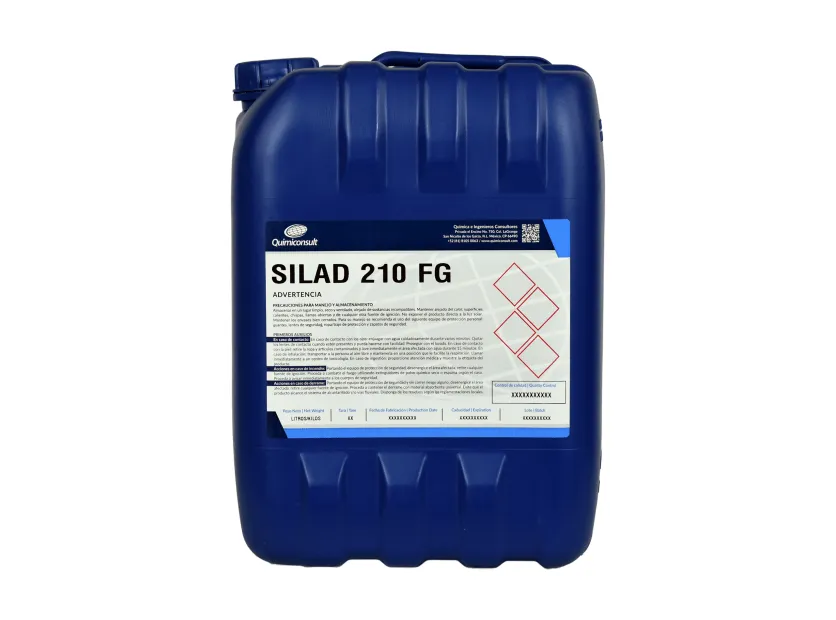
SILAD 210 FG FOOD GRADE DEFOAMER 10% EMULSION SILICON BASED
View All Prices
| Quantity | Unit Price |
|---|---|
| kg | |
| 1 - 99 | USD 3.27 |
| 100 - 199 | USD 3.16 |
| 200 - 499 | USD 3.05 |
| 500 - 999 | USD 2.95 |
| 1000 - 4999 | USD 2.86 |
| 5000 - 9999 | USD 2.78 |
| 10000 - 17999 | USD 2.70 |
| 18000+ | USD 2.63 |
We'll send you a single e-mail as soon as it's back in stock. No spam.
Silad 210 FG Description — Food-Grade Foam Control Agent for High-Purity Aqueous Systems
At Quimiconsult we offer Silad 210 FG, a food-grade defoamer formulated as a low-viscosity, water-based silicone emulsion, designed specifically for effective foam control in food, beverage, meat processing, food product washing and sanitizing, supplement manufacturing, plant protein processing and condiment manufacturing processes, where regulatory compliance, purity, food safety and traceability are non-negotiable requirements. It is a homogeneous, stable, easy-to-handle and cost-effective foam control agent that excels in applications with nonionic and anionic surfactants, delivering superior performance under neutral, slightly alkaline or acidic pH conditions and effectively withstanding a wide process pH range. It is supplied as a homogeneous creamy white emulsion, with an active ingredient content of 10% by weight, specific gravity of 0.90 to 1.10 at 25 °C, viscosity of 1,000 to 2,500 cP (measured with spindle No. 63 at 100 rpm), 1% solution pH in the range of 3.5 to 4.50, and it is fully dilutable in water. It is kosher and is manufactured in a plant certified under the SQF (Safe Quality Food) scheme, recognized by the Global Food Safety Initiative (GFSI) as one of the most rigorous food safety management systems internationally, ensuring traceability, process control and consistent quality in every batch produced.
Silad 210 FG belongs to the category of polydimethylsiloxane (PDMS) defoamers emulsified in water with a nonionic emulsifier, one of the most established and effective technologies for foam control in aqueous systems. Silicone defoamers are widely recognized worldwide as the technical solution of choice when you need high efficiency at very low dosage (typically 50 to 500 ppm on the foaming system), long-lasting defoaming action (they are not used up quickly like other defoamers), compatibility with food systems (in the case of food grades such as Silad 210 FG), chemical stability under process conditions (including heat treatments such as pasteurization and cooking) and organoleptic neutrality (they do not transfer flavor, color or odor to the finished product). Silad 210 FG's aqueous emulsion form, rather than pure silicone, makes it easier to incorporate uniformly into the foaming system, improves distribution of the active in the aqueous medium and allows precise dosing with standard metering pumps.
Unlike organic defoamers based on vegetable oils, fatty acids, fatty alcohols or esters, silicone defoamers such as Silad 210 FG offer decisive advantages for the modern food industry: greater potency per unit of mass (which reduces the required dosage and therefore the cost per kilo of processed product), greater stability over time without rapid degradation in the process, no contribution to off-flavors or rancidity that vegetable oil–based defoamers can cause over time, resistance to the high temperatures typical of food processes (pasteurization, cooking, sterilization), compatibility with virtually all surfactants used in CIP cleaning and process formulations, and a solid regulatory profile for use in food and processing applications under specific certified grades.
In addition, Silad 210 FG is designed to deliver high production yield in food applications: by effectively controlling foam formation during critical operations (mixing, filling, agitation, transfer, evaporation, fermentation, washing), it makes it possible to maximize the usable volume of tanks and equipment (foam takes up volume without adding product), reduce downtime caused by overflows or extra cleaning, improve filling and dosing accuracy, protect sensors and control devices that can be affected by persistent foam, and maintain stable process conditions throughout full production shifts.
At Quimiconsult, located in San Nicolás de los Garza, Nuevo León, we distribute Silad 210 FG with nationwide coverage, application technical support, batch certificates of analysis, and up-to-date technical data sheets (TDS) and safety data sheets (HDS/SDS), serving food and beverage plants, meat and poultry processors, juice and soft drink plants, canned goods, jam and jelly factories, food cleaning solution manufacturers, fruit, vegetable and seafood washing plants, dietary supplement manufacturers, condiment and flavoring plants, soy protein processors, pet food plants, and production, quality and development departments throughout Mexico.
Silad 210 FG Technical Specifications and Physicochemical Properties
The Silad 210 FG we manufacture meets a consistent quality profile batch after batch, verifiable through a Certificate of Analysis (CoA) issued by the manufacturing plant certified under the SQF scheme, ensuring predictable functional performance in food applications. The certified technical properties are as follows
- Appearance: homogeneous creamy white emulsion.
- Active ingredient content: 10% by weight (standard concentration for emulsified silicone defoamer, optimized for industrial dilution and dosing).
- Specific gravity at 25 °C: 0.90 to 1.10.
- Viscosity (spindle No. 63, 100 rpm): 1,000 to 2,500 cP.
- Suitable diluent: water (in any proportion).
- Emulsifier type: nonionic (key to its compatibility with the anionic and nonionic systems typical of food processes).
- pH (1% solution): 3.5 to 4.50 (slightly acidic).
Beyond these basic parameters, Silad 210 FG has a set of functional properties that are what really determine its value in industrial food applications:
- High defoaming efficiency at very low dosage: typical recommended starting doses are 50 to 500 ppm on the foaming system, which translates into a very competitive cost per kilo of processed product.
- Long-lasting defoaming action: silicone defoamers remain active for extended periods compared with traditional organic defoamers, which are used up more quickly.
- Compatibility with virtually all surfactants, especially nonionic and anionic ones, which are widely used in food formulations, CIP, product washing and process operations.
- Stability over a wide pH range: reliable performance under neutral, slightly alkaline and acidic conditions, covering virtually all conventional food processes.
- Thermal stability: adequate resistance to typical food processing temperatures (pasteurization, cooking, mild sterilization), although prolonged storage at extreme temperatures (excessive heat or freezing) that can separate the emulsion should be avoided.
- Water dilutability: complete, which makes it easy to prepare dilutions for continuous dosing (typically 1 part defoamer in 3 to 10 parts water or process liquid).
- Organoleptic compatibility: it adds no detectable flavor, color or odor to the finished product at use concentrations, a critical property in food applications where sensory quality is a priority.
- Suitable for continuous dosing: designed to be pumped and injected continuously into process lines with standard dosing equipment.
- Storage stability: the product maintains homogeneity and specifications throughout its shelf life when stored under proper conditions; in the event of partial separation due to exposure to extreme temperatures, it is easily restored by gently agitating the container.
- Safe handling profile: food-grade silicone defoamer emulsions are widely recognized as substances with a low toxicological profile under recommended use conditions, with a long history of safe use in the food industry worldwide.
Synonyms, Names and Search Terms Related to Food-Grade Defoamers
In the industrial food, beverage, meat processing and food manufacturing market, silicone emulsion defoamers are known by many technical and trade names and application categories depending on the region and sector. The most widely used terms include food defoamer, food-grade defoamer, food grade antifoam, antifoam food grade, food antifoam, food grade silicone antifoam, silicone defoamer emulsion, silicone antifoam emulsion, silicone defoamer for food, food-grade PDMS defoamer, food foam controller, foam control agent food grade, food foam control agent, food-grade foam breaker, kosher defoamer, defoamer for food processes, defoamer for beverages, defoamer for juices, defoamer for meat products, antifoam for food CIP, and in industrial formulation also defoamer food grade or food defoamer. In regulatory labeling and technical specifications, the main active in this type of product is typically polydimethylsiloxane (PDMS) emulsified in water with nonionic emulsifiers.
Likewise, in purchasing, sourcing and selection of food-grade defoamers it is common to see searches such as Silad 210 FG, Silad 210 FG price, buy Silad 210 FG, Silad 210 FG Mexico, food defoamer Mexico, food-grade defoamer Monterrey, food defoamer supplier, defoamer for the food industry, defoamer for industrial beverages, defoamer for meat products, defoamer for soy processing, defoamer for jams, defoamer for canned goods, defoamer for vegetable washing, defoamer for supplements, antifoam food grade Mexico, buy silicone defoamer emulsion, food defoamer dosage, kosher defoamer Mexico, SQF plant defoamer, 10 percent active defoamer, food-grade PDMS defoamer, defoamer for seafood, defoamer for animal feed, antifoam for condiments or defoamer for flavorings. These variations are especially relevant for production and quality departments at food plants, process engineers, finished product formulators, CIP technicians, plant managers, shift supervisors, industrial buyers and R&D departments in the food industry.
The Silad Family at Quimiconsult — Food-Grade and Industrial Defoamers
Quimiconsult offers the Silad family of silicone emulsion defoamers, covering the two most in-demand industrial application categories so each plant can select the optimal product according to the regulatory grade required by the end application:
- Silad 210 FG (Food Grade) — the product described on this page: a 10% active silicone emulsion defoamer, food grade, kosher, manufactured in a plant certified under the SQF scheme. Designed for all applications that require a defoamer suitable for food contact, food and beverage processing, food product washing, CIP in food plants and supplement manufacturing. Compatible with nonionic and anionic surfactants. Wide effective pH range (neutral, slightly alkaline, acidic).
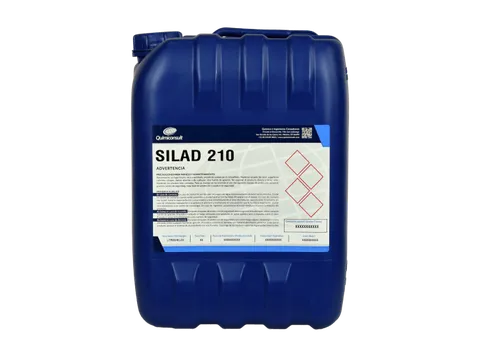
- Silad 210 (industrial grade): a silicone emulsion defoamer with a technical profile similar to Silad 210 FG in defoaming efficiency, but intended for non-food industrial applications where food safety regulations do not apply. Ideal for industrial chemical processes, treatment of industrial water not intended for human consumption, industrial cleaning product formulations, chemical, paper, textile, paint and coating manufacturing processes, agrochemical formulations and industrial applications in general where efficient foam control is required without the need for food certification. This option can offer a cost advantage over the food grade when the end application does not require it.
Key selection criterion between Silad 210 FG and industrial Silad 210: if your process involves direct or indirect contact with food products intended for human or animal consumption (including processes where the defoamer may come into contact with food even as a processing aid, food product washing, CIP in food plants, supplement manufacturing), the FG (Food Grade) version, Silad 210 FG, must be used. If the process is strictly industrial with no food contact, the industrial version Silad 210 can be used to optimize cost. If in doubt about which version applies to your application, using the food-grade version is always recommended (Silad 210 FG) to ensure regulatory compliance and traceability. Contact our technical team for specific advice on your case.
How Does Silad 210 FG Work? — Mechanism of Action of the Silicone Defoamer
Unlike traditional organic defoamers (vegetable oils, fatty alcohols, fatty acids, esters), which act mainly by partially dissolving in the foaming phase, silicone emulsion defoamers such as Silad 210 FG work through a physical mechanism that ruptures foam films and is highly efficient, long-lasting and selective:
The active reaches the air-liquid interface: once dosed and incorporated into the foaming system with gentle agitation, the Silad 210 FG emulsion releases fine droplets of polydimethylsiloxane (PDMS) that migrate to the air-liquid interface of the foam bubbles. This migration occurs because silicone has a very low surface tension (typically 20-21 mN/m) compared with that of water (72 mN/m) and foaming surfactant solutions (typically 30-40 mN/m), so the silicone is thermodynamically driven out of the aqueous phase toward the interface.
Insertion into the foam film and local destabilization: on reaching the interface, the silicone droplets insert themselves into the thin film of the foam bubble (lamella). Because silicone is incompatible with organic foaming surfactants and has a very different surface tension, it locally breaks the surfactant film that keeps the bubble stable.
Thinning and mechanical rupture of the bubble: once the surfactant film has broken locally at the point of contact with the silicone, the bubble lamella thins rapidly due to capillary forces (reverse Marangoni effect) until it reaches a critical thickness at which the film ruptures mechanically and the bubble collapses. The gas in the bubble is released and the liquid drains back into the bulk phase.
Cascade effect: the silicone droplets released after a bubble collapses are available to attack adjacent bubbles, creating a cascade effect of foam breaking that spreads rapidly through the entire foaming system.
Persistence and durability: since the silicone is not chemically consumed during the process (unlike organic defoamers, which can be metabolized or solubilized by surfactants), it remains available in the system to suppress new foam formation for an extended period after the initial dose. This explains the greater durability and lower dosage required of silicone defoamers compared with organic alternatives.
Surfactant compatibility: formulating Silad 210 FG with a nonionic emulsifier avoids unfavorable interactions with the anionic surfactants common in food and CIP cleaning formulations, maintaining defoaming efficacy in the presence of detergents and process surfactants.
Stability over a wide pH range: the polydimethylsiloxane chain does not undergo significant hydrolysis under normal food pH conditions (acidic to slightly alkaline), ensuring consistent performance in processes as diverse as acidic beverages (juices, soft drinks), vegetable washing (neutral pH), alkaline CIP (high pH) and meat processing (near-neutral pH).
Industrial Applications of Silad 210 FG in the Food Industry
Silad 210 FG is one of the most versatile food-grade defoamers, with applications covering virtually every sector of the food, beverage, meat processing, food product washing, dietary supplement, condiment and flavoring, and plant protein processing industries. The main fields of application are detailed below.
Food and Animal Feed Manufacturing
In the manufacture of processed foods and balanced animal feed, Silad 210 FG is used during critical stages where foam formation reduces efficiency, tank capacity and product quality:
- Mixing ingredients in agitated tanks: especially when adding protein ingredients, gums, emulsifiers, natural surfactants or ingredients that foam under intensive agitation.
- Transfer operations between tanks and lines: where turbulent agitation can generate persistent foam.
- Evaporation and concentration processes: where foam reduces the usable capacity of the evaporator and can cause product carryover.
- Container filling: where foam affects dosing accuracy and causes losses.
- Controlled industrial fermentations: yeast, lactic acid bacteria and other fermentations that generate foam during microbial growth.
- Manufacture of liquid and semi-liquid feeds for animal nutrition.
Meat and Poultry Processing
In the meat, poultry and processed products industry, Silad 210 FG controls foam in multiple operations:
- Meat injection brines: where soluble proteins, phosphates and other functional ingredients generate foam during mixing and injection.
- Brine pumping and transfer systems: where foam reduces pumping efficiency and injection accuracy.
- Cooking and scalding tanks for meat and poultry products: where soluble proteins released from the product generate persistent foam.
- Post-cooking cooling and spray systems.
- Depressurization operations in vacuum packaging where residual foam can form.
- CIP cleaning of meat processing equipment: controls foam in detergent and rinse circuits.
Beverages, Juices and Sauces
One of the highest-volume applications for Silad 210 FG:
- Fruit and vegetable juice production: where foam is generated during extraction, pressing, pulping, agitation and pumping.
- Non-carbonated beverages, nectars, sports drinks and functional beverages.
- Soy beverages, plant-based beverages and cereal-based beverages: where proteins and polysaccharides generate intense foam during processing.
- Beverage pasteurization and sterilization processes: controls foam at high temperatures in heat exchangers and tanks.
- Beverage filling: improves accuracy and reduces losses from overflow.
- Industrial liquid and semi-liquid sauces: ketchup, pasta sauces, meat sauces, dressings.
- Homogenization of beverages and sauces: where intense shear generates persistent foam.
Canned Goods, Jams and Jellies
In the sweet and savory canned goods industry:
- Cooking and concentration of jams, jellies, fruit pastes and fruit sweets: where the combination of sugars, pectins, agitation and temperature generates intense foam.
- Manufacture of canned vegetables: pickled chiles, vegetables in brine, pickled vegetables.
- Evaporation of sugary products: where foam can take up the usable volume of the evaporator.
- Hot filling of canned goods: improves accuracy and reduces defects from foam carried into the container.
Component of Food Cleaning and CIP Solutions
In food detergent formulations, CIP (Clean-in-Place) solutions and sanitizers:
- Alkaline CIP detergents: controls foam generated by surfactants and organic residues during cleaning.
- Acid detergents for mineral scale removal: maintains foam control in circuits.
- Intermediate and final rinse solutions.
- Controlled-foam sanitizers: where a balance is needed between application foam and defoaming during recovery.
- Equipment cleaning solutions in the dairy, brewing, soft drink, meat and poultry industries.
Vegetable, Fruit and Produce Washing
In washing and disinfection operations for produce intended for fresh or industrial processing:
- Immersion wash tanks with chlorine, peroxide, peracetic acid or other sanitizers.
- Spray systems and wash showers.
- Continuous wash tunnels on process lines.
- Hydraulic conveying systems for produce: carrots, potatoes, apples, citrus, leafy greens.
- Grain and seed washing.
Dietary Supplement Manufacturing
In the manufacture of nutritional supplements, protein powders, protein drinks and nutraceuticals:
- Liquid supplement mixing tanks: where proteins, gums and emulsifiers generate foam.
- Homogenization and high-shear mixing operations.
- Manufacture of ready-to-drink (RTD) protein beverages: where whey, casein, soy or plant proteins generate persistent foam.
- Liquid granulation processes for powdered supplements.
- Manufacture of liquid enteral formulas and specialized clinical nutrition.
Condiment and Flavoring Manufacturing
In the manufacture of liquid condiments, flavorings, extracts and food aromas:
- Mixing liquid flavorings based on water, alcohol or glycols.
- Manufacture of industrial sauces: soy, oyster, Worcestershire, industrial hot sauces.
- Aqueous extraction of spices and aromatics.
- Evaporation and concentration systems for extracts.
Seafood and Fish Product Washing
In the processing of fish, shellfish and seafood products:
- Washing and disinfection tanks for shellfish and fish.
- Spray thawing systems.
- Brining and marinating processes.
- Cooking operations for shellfish and prepared products.
Soy Protein and Plant Protein Processing
In the manufacture of soy isolates, concentrates and textured proteins, as well as other plant proteins (pea, rice, chickpea):
- Alkaline aqueous extraction tanks: where protein solubilization generates intense foam.
- Isoelectric precipitation and washing of protein curds.
- Neutralization and proteinate formation operations.
- Spray drying tanks — the preceding liquid phase.
- Manufacture of soy beverages and plant-based dairy analogues.
Additional Applications in Other Food Processing Operations
- Dairy industry: pasteurization, standardization, milk blending, dairy formulas, fermented products (with specific verification of the final product).
- Brewing and fermented beverage industry: foam control in specific operations unrelated to the final serving foam.
- Sugar and derivatives processing: evaporation, crystallization, centrifugation.
- Edible oils and fats industry: aqueous refining, neutralization and washing processes.
- Liquid egg and egg products industry: mixing and pasteurization.
- Food plant wastewater treatment: foam control in bioreactors and aeration tanks.
Features and Competitive Advantages of Silad 210 FG
The widespread preference for Silad 210 FG over other food defoamers rests on a combination of technical, regulatory and economic properties that position it as one of the solutions of choice for modern food plants:
- Kosher food grade: meets kosher requirements for industries that need this certification in their inputs.
- Manufactured in a plant certified under the SQF scheme (Safe Quality Food), one of the food safety management schemes recognized by the Global Food Safety Initiative (GFSI), ensuring traceability and consistency.
- High defoaming efficiency at very low dosage (typically 50 to 500 ppm), reducing cost per kilo of processed product.
- Long-lasting defoaming action: it is not used up quickly, maintaining foam control for extended periods.
- Compatibility with all surfactants, especially nonionic and anionic ones, the most widely used in food and CIP formulations.
- Efficacy over a wide pH range: reliable performance under acidic, neutral and slightly alkaline conditions, covering virtually all conventional food processes.
- Adds no detectable flavor, color or odor to the finished product at use concentrations, preserving organoleptic quality.
- Thermal stability suitable for typical pasteurization, cooking and food processing operations.
- Complete water dilutability, making it easy to prepare dosing solutions and reducing the equipment needed.
- Continuous dosing with standard metering pumps, with no need for specialized equipment.
- Universal application in virtually every food processing operation that generates foam.
- Safe handling profile under good food handling practices.
- Extended storage stability under proper conditions; easy recovery in the event of partial separation due to exposure to extreme temperatures.
- Versatile packaging: 200 kg drums for regular operations, bulk available on request for large consumers.
- Established supply chain and nationwide availability from Quimiconsult with specialized technical support.
Silad 210 FG vs Silad 210 (Industrial Grade) — Selection Guide
One of the most frequent technical questions is how the food grade (Silad 210 FG) differs from the industrial grade (Silad 210). This is the selection guide:
Choose Silad 210 FG (food grade, kosher, SQF plant) — the product described here — when:
- Your process involves direct or indirect contact with food products intended for human or animal consumption.
- You operate a food, beverage, meat, dairy, juice, canned goods, supplement, condiment or plant protein processing plant.
- You carry out food product washing (vegetables, fruit, seafood, grains).
- You apply the defoamer in CIP operations in food plants where residues may contact finished product.
- You require kosher certification for your inputs because of your target market or customer strategy.
- Your food safety management system (HACCP, FSSC 22000, BRC, SQF, IFS) requires documented traceability of processing aids.
- Your customer or destination regulations require food-grade defoamers.
Choose Silad 210 (industrial grade) when:
- Your process is strictly industrial with no food contact.
- You operate plants for industrial chemicals, paper, textiles, paints, coatings, non-food agrochemicals, treatment of industrial water not intended for human consumption, or industrial manufacturing processes.
- You want to optimize cost when the application does not require food grade.
Practical decision rule: if your application has any point of contact, transfer or assistance on a food line, use Silad 210 FG. The cost difference between food grade and industrial grade is marginal compared with the risk of regulatory non-compliance, product recall or customer complaints for using a non-certified defoamer. If in doubt about which one applies to your application, contact our technical team for specific advice.
Recommendations for Use, Dosage and Incorporation of Silad 210 FG
To get maximum defoaming efficacy from Silad 210 FG, we recommend following the manufacturer's usage protocol:
Pre-mixing: the emulsion should be gently mixed before use to ensure uniformity. In drums that have been standing for a long time, gently agitate or recirculate before dosing.
Method of application: Silad 210 FG can be used in two ways:
- As a concentrate: direct dosing of the 10% active emulsion at the point of application.
- Diluted in water or process liquid (the recommended form for maximum cost-effectiveness and better distribution): mix 1 part Silad 210 FG with 3 to 10 parts of the selected diluent (process water or process liquid), stirring gently until a uniform mixture is obtained.
Continuous mixing of the dilution: it is recommended to keep the diluted defoamer under gentle, continuous agitation during intermediate storage to ensure uniformity and prevent separation during long intervals between doses.
Point of incorporation: to maximize cost-effectiveness and efficacy, the defoamer should be pre-diluted and added continuously at a processing stage before the stage where foam forms (preventive dosing). This practice is more efficient than reactive dosing (adding defoamer after foam has already formed), since it prevents foam from forming rather than eliminating it once formed.
Suggested starting concentrations: 50 to 500 ppm of Silad 210 FG on the foaming system (not on the diluent). The exact range within this window depends on:
- Intensity of foam formation in the specific process.
- Type and concentration of surfactants present in the system.
- Operating temperature and pH.
- Residence time of the product in the foaming tank or equipment.
- Target result (total foam suppression vs partial control).
It is recommended to start with the lowest dose in the range (50-100 ppm) and adjust upward progressively until the desired foam control is achieved, optimizing dosage and cost.
Dosing equipment: standard diaphragm, peristaltic or piston metering pumps are suitable. For continuous dosing on process lines, flow-controlled injection systems help maintain a constant concentration.
Performance verification: once the dosage has been set, we recommend monitoring the system's behavior visually or with foam sensors during the first weeks of use, fine-tuning the dosage according to actual process conditions.
Silad 210 FG Compatibilities and Incompatibilities
Silad 210 FG is compatible with: water and aqueous solutions in any proportion; nonionic surfactants (ethoxylated alcohols, ethoxylated esters, ethoxylated alkylphenols — where applicable — food-grade-compatible polysorbates); anionic surfactants (sulfates, sulfonates, soaps, at typical process concentrations); dilute organic and inorganic acids (citric, ascorbic, phosphoric and lactic acid — common in the beverage and food industry); moderate bases (sodium hydroxide at alkaline CIP concentrations, carbonates); organic and inorganic salts at typical concentrations; proteins, starches, hydrocolloids and other food ingredients; standard food preservatives (sorbates, benzoates, parabens where applicable); flavors, colorants and food additives.
It requires special precautions or considerations with:
- Cationic surfactants at high concentration: they can alter the stability of the nonionic emulsion. In applications that combine Silad 210 FG with cationic sanitizers (quaternary ammonium compounds), verify compatibility with a specific test.
- Extreme temperatures during prolonged storage: excessive heat (>40 °C prolonged) or freezing can cause the emulsion to separate. If separation occurs, thaw if frozen, gently agitate the contents and use normally. Avoid prolonged exposure to extreme temperatures during storage.
- Strong oxidizing agents at high concentration: concentrated hydrogen peroxide, highly concentrated hypochlorites or peracetic acid can affect the stability of the emulsion and its functionality. In washing and sanitizing systems with these agents, verify proper dosing and compatibility under the specific conditions.
- Very intense, prolonged shear: although the product is stable under normal agitation, extreme shear over long periods can affect emulsion stability. For diluted preparations, gentle agitation is preferable to high shear.
- Packaging materials and equipment: compatible with stainless steel, glass, polyethylene (HDPE, LDPE), polypropylene, PVC and standard food-grade plastics. Verify compatibility with the specific elastomers of gaskets and seals in specific applications.
Silad 210 FG Storage, Packaging and Shelf Life
Silad 210 FG is available in 200 kg drums for regular operations and in bulk on request for large industrial consumers and plants with dedicated defoamer storage tanks.
To ensure the quality and performance of the product throughout its shelf life, we recommend:
- Store in the original, tightly closed container when not in use. A tight seal prevents contamination, evaporation of water from the emulsion and absorption of external odors.
- Store at controlled room temperature (ideally 15-30 °C).
- Avoid prolonged exposure to extreme temperatures of heat (>40 °C sustained) or freezing, which can cause separation of the emulsion.
- If separation occurs due to exposure to extreme temperatures: if frozen, first thaw at room temperature; gently agitate the contents to reincorporate the phases; use as usual. Reversible separation does not compromise product performance once homogenized.
- Keep away from direct sunlight, heat sources, incompatible materials and strong odors.
- Rotate inventory using a FIFO system (first in, first out) to use older batches before newer ones.
The shelf life of the product under proper storage conditions is typically 12 to 18 months from the date of manufacture, according to the supplier's specification and batch. The official expiration date is shown on the original container and on the Certificate of Analysis of the corresponding batch.
Safety, Handling and Regulatory Considerations
Silad 210 FG is a food-grade silicone emulsion with a well-characterized toxicological profile, widely recognized as a low-hazard substance under normal conditions of industrial food use. Food-grade emulsified polydimethylsiloxane (PDMS) defoamers have a long history of safe use in the food industry worldwide under the regulations of the main health authorities.
The recommended personal protective equipment (PPE) during industrial handling includes safety glasses to avoid eye contact with splashes, gloves for industrial food use (nitrile or equivalent suitable for the food industry) to avoid prolonged skin contact, appropriate work clothing according to plant protocols, and work in areas with adequate ventilation. No specialized PPE for hazardous substances is required under normal handling conditions.
Spill handling: Silad 210 FG spills are slippery and pose a fall hazard. Contain with inert absorbents (vermiculite, sand, industrial absorbent pads), collect with shovels or vacuum, and dispose of in accordance with current waste legislation. Wash the area with water and detergent to remove slippery residues. Report significant spills according to plant protocols.
Handling of empty containers and waste: dispose of in accordance with current waste legislation. Under most regulations, food-grade silicone defoamer emulsion waste is not classified as hazardous in typical commercial quantities, although it may require treatment before final disposal depending on volume and local regulations.
From a regulatory standpoint (general considerations for the food-grade product):
- Food grade: Silad 210 FG is formulated for use in food applications at the recommended dosages and under the regulations of each destination country.
- Kosher: the product holds kosher certification for industries that require this certification in their inputs. Specific documentation is available on request.
- Manufactured under the SQF scheme: the manufacturing plant is certified under the SQF (Safe Quality Food) scheme, recognized by the Global Food Safety Initiative (GFSI), which ensures batch traceability, documented process control and consistent quality in every production run.
- Additional regulatory documentation: food compliance statement, allergen statement, GMO statement, kosher certificates and other specific documentation are available on request for inclusion in regulatory files and quality audits (HACCP, FSSC 22000, BRC, SQF, IFS, kosher).
- Local regulations: in Mexico, COFEPRIS regulates the safety of food inputs; food-grade defoamers are recognized as processing aids under the applicable regulations. Verify specific requirements according to the final product and destination market.
For customers who require supplementary regulatory documentation (specific compliance statements, halal certificates, non-GMO statements, allergen statements), check availability with our technical team.
Certifications and Regulatory Compliance
Silad 210 FG is backed by the following certifications and compliance statements:
- Food Grade: product formulated for use in food applications at the recommended dosages.
- Kosher certification: documentation available on request.
- Manufactured in a plant certified under the SQF (Safe Quality Food) scheme: a food safety management system recognized by the GFSI (Global Food Safety Initiative).
- Batch Certificate of Analysis (CoA): documents the appearance, active ingredient content, specific gravity, viscosity, emulsifier type and pH of each production run.
- Up-to-date technical data sheet (TDS) and safety data sheet (HDS/SDS).
Quality, regulatory, production and purchasing departments can request the complete technical documentation: TDS, HDS/SDS, batch CoA, kosher certification, statement of manufacture in an SQF plant, specific food compliance statements, allergen statements, GMO statements and other documentation relevant to their operating files, customer audits and plant certifications (HACCP, FSSC 22000, BRC, SQF, IFS).
Frequently Asked Questions about Silad 210 FG
What is Silad 210 FG and what is it used for?
Silad 210 FG is a food-grade defoamer formulated as a low-viscosity silicone emulsion with 10% active ingredient in a water base. It is used to control foam formation during food processing operations in the food, beverage, juice, sauce, canned goods, jam, meat, poultry, seafood, dietary supplement, condiment, flavoring, food cleaning solution, vegetable washing, and soy and other plant protein processing industries. It holds kosher certification and is manufactured in a plant certified under the SQF (Safe Quality Food) scheme, recognized by GFSI.
What is the difference between Silad 210 FG and Silad 210 (industrial grade)?
The fundamental difference lies in the regulatory grade and intended use. Silad 210 FG is food grade, kosher, manufactured in an SQF-certified plant and designed for applications with direct or indirect food contact. Silad 210 is industrial grade, formulated for industrial applications without food contact (industrial chemicals, paper, textiles, paints, coatings, non-food industrial water treatment). The defoaming efficiency profile is similar for both, but the food grade includes traceability, certifications and manufacturing controls specific to food safety. If your process involves food contact, the FG version must be used.
At what concentration is Silad 210 FG used?
The suggested starting concentration is 50 to 500 ppm of Silad 210 FG on the foaming system (that is, on the product or process that generates the foam, not on the diluent). It is recommended to start with the lowest dose in the range (50-100 ppm) and gradually adjust upward until the desired foam control is achieved, optimizing dosage and cost. The exact concentration depends on the foaming intensity of the process, type of surfactants present, temperature, pH and residence time.
How is Silad 210 FG diluted and applied?
Silad 210 FG can be used in two ways: as a concentrate (direct dosing at 10% active) or diluted in water or process liquid (the recommended form for maximum cost-effectiveness). Dilution is done by mixing 1 part defoamer with 3 to 10 parts diluent (water or process liquid), stirring gently until a uniform mixture is obtained. It is recommended to keep the dilution under gentle, continuous agitation during intermediate storage to preserve uniformity. For maximum efficacy, dose it continuously at a stage before foam forms (preventive rather than reactive dosing).
Is Silad 210 FG kosher?
Yes, Silad 210 FG holds kosher certification. Specific documentation (current kosher certificate, certifying agency) is available on request for your regulatory files and customer audits.
In what type of plant is Silad 210 FG manufactured?
Silad 210 FG is manufactured in a plant certified under the SQF (Safe Quality Food) scheme, one of the most rigorous food safety management systems internationally, recognized by the Global Food Safety Initiative (GFSI). This certification ensures documented batch traceability, systematic control of manufacturing processes, allergen management, microbiological verification and consistent quality in every production run. It is the same level of rigor that applies to manufacturers of food ingredients and finished foods destined for regulated international markets.
Does Silad 210 FG work with detergents and CIP cleaners?
Yes, Silad 210 FG is compatible with virtually all surfactants, especially nonionic and anionic ones, which are the most common in food detergent formulations and CIP (Clean-in-Place) solutions. It is widely used in CIP circuits in food, meat, dairy, soft drink and brewing plants to control foam generated by surfactants during cleaning and rinsing. It works over a wide pH range (acidic, neutral, slightly alkaline), making it suitable for both acid CIP (mineral scale removal) and alkaline CIP (organic soil removal).
Does it add flavor, odor or color to the finished product?
No, at the recommended use concentrations (50-500 ppm), Silad 210 FG adds no detectable flavor, color or odor to the finished product. This property is one of the fundamental reasons food-grade silicone defoamers are preferred over organic defoamers (based on vegetable oils), which can contribute rancid flavors over time. Organoleptic neutrality is especially critical in applications such as beverages, juices, dairy, jams and supplements, where the sensory profile is a priority.
What pH range does Silad 210 FG work in?
Silad 210 FG is effective over a wide pH range, delivering superior performance under neutral, slightly alkaline and acidic conditions. This covers virtually all conventional food processes: acidic beverages (citrus juices, soft drinks), vegetable washing (neutral pH), alkaline CIP (high pH), meat processing (near-neutral pH), canned goods and jams (acidic pH). The polydimethylsiloxane chain (the main active) does not undergo significant hydrolysis under normal food pH conditions.
What happens if Silad 210 FG separates during storage?
Emulsion separation can occur if the product is exposed to prolonged extreme temperatures (excessive heat or freezing) during storage. If separation occurs: if the product is frozen, first thaw it at room temperature; gently agitate the contents to reincorporate the phases until a homogeneous appearance is obtained; use as usual. Reversible separation does not compromise product performance once homogenized. To prevent separation, store at controlled room temperature (15-30 °C) in a tightly closed container.
How long does Silad 210 FG keep in storage?
In the original, tightly closed container, stored at controlled room temperature (15-30 °C) away from extreme heat, freezing, direct sunlight and strong odors, Silad 210 FG has a typical shelf life of 12 to 18 months from the date of manufacture, according to the batch specification. The official expiration date is always shown on the original container and on the Certificate of Analysis of the corresponding batch.
What is the active ingredient in Silad 210 FG?
Food-grade silicone emulsion defoamers such as Silad 210 FG are typically based on polydimethylsiloxane (PDMS) as the active ingredient, emulsified in water with food-grade nonionic emulsifiers. The active ingredient content is 10% by weight, a value optimized for industrial dilution, dosing and application. The detailed composition of the product is available in the safety data sheet (HDS/SDS) and the complete technical data sheet.
What pack sizes is Silad 210 FG sold in?
Silad 210 FG is available in:
- 200 kg drums for regular food plant operations.
- Bulk on request for large industrial consumers with dedicated storage tanks.
For specific pack sizes or non-standard volume requirements, check availability with our sales team.
Where can I buy Silad 210 FG in Mexico and at what price?
At Quimiconsult we distribute Silad 210 FG with availability from our warehouse in San Nicolás de los Garza, Nuevo León, serving customers throughout Mexico: food plants, beverage plants, meat processors, supplement manufacturers, canned goods and jam plants, condiment and flavoring manufacturers, plant protein processors, food cleaning solution manufacturers and every industry that requires a kosher food-grade defoamer manufactured in an SQF plant. We offer 200 kg drums and bulk delivery on request, with complete technical documentation (TDS, SDS, batch CoA, kosher certification) and application technical support. We also distribute industrial-grade Silad 210 for non-food applications. The price of Silad 210 FG depends on volume, pack size and purchase frequency. Request a personalized quote indicating estimated volume, specific application and documentation requirements through our website or by phone at +52 (81) 8105 0063.
Request Your Quote for Silad 210 FG or the Complete Silad Defoamer Line
Does your food plant, beverage plant, meat or poultry processor, canned goods and jam factory, juice and sauce plant, dietary supplement manufacturer, condiment and flavoring factory, plant protein processor, fruit, vegetable and seafood washing plant, or food business that requires a kosher-certified food-grade defoamer manufactured in an SQF plant need to incorporate Silad 210 FG into its processes? We also offer industrial-grade Silad 210 for non-food applications where cost optimization is the goal. Contact us and we will gladly analyze your specific application, recommend the right dosage and the optimal point of incorporation, advise you on regulatory compliance and the documentation you need for your audits, and deliver a complete solution that includes full technical documentation, kosher certification, a statement of manufacture in an SQF plant, application advice and timely delivery anywhere in Mexico.
Related Products and Defoamer Family
Discover our Silad defoamer family and other complementary ingredients for the food, beverage and processing industries:
- Silad 210 (industrial grade) — silicone emulsion defoamer for non-food industrial applications
- Organic food-grade defoamers — ester- and alcohol-based alternatives for specific applications (subject to availability)
- Potassium Sorbate — food preservative for acidic systems
- Sodium Benzoate — complementary food preservative
- Citric Acid — universal food acidulant
- Xanthan Gum — food thickener and stabilizer
- Carrageenan — food gelling agent and stabilizer
- Soy Lecithin — natural food emulsifier
- Glycerin USP / Food Grade — food humectant and carrier
Related categories:
- Category: Defoamers and Foam Control Agents
- Category: Inputs for the Food and Beverage Industry
- Category: Inputs for Meat Processing
- Category: Food Processing Aids
- Category: Inputs for Food Cleaning and CIP Solutions
- Category: Inputs for Dietary Supplements and Nutrition
- Category: Inputs for Plant Protein Processing
- Category: Food Preservatives and Additives

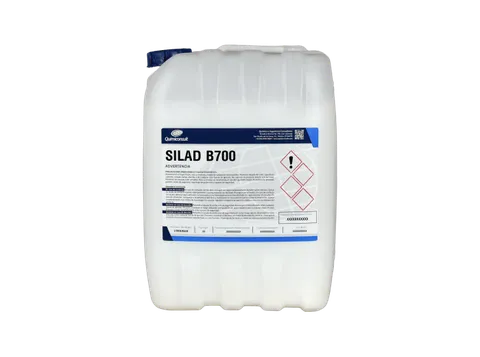
SILAD B700 CONCENTRATED DEFOAMER DISPERSIBLE IN WATER BASED SYSTEM