Spanish
 English


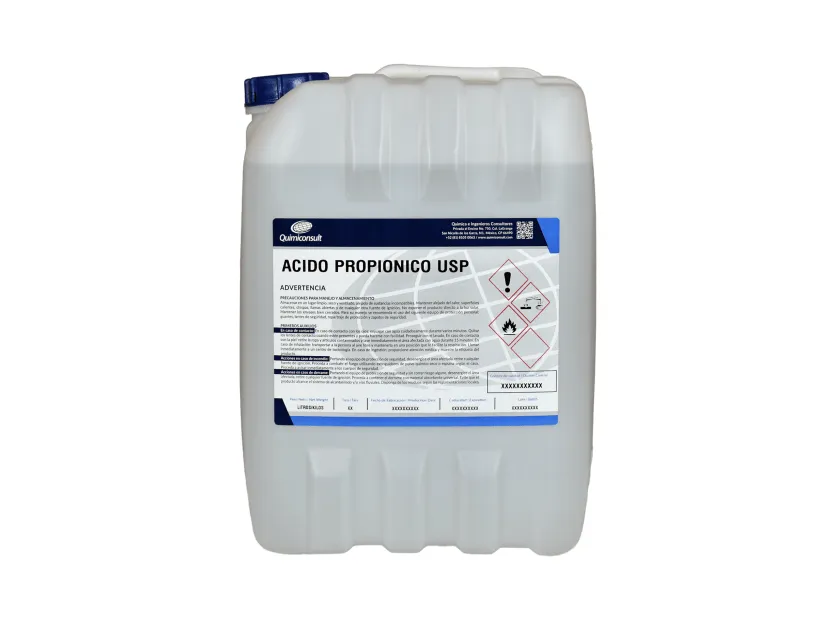
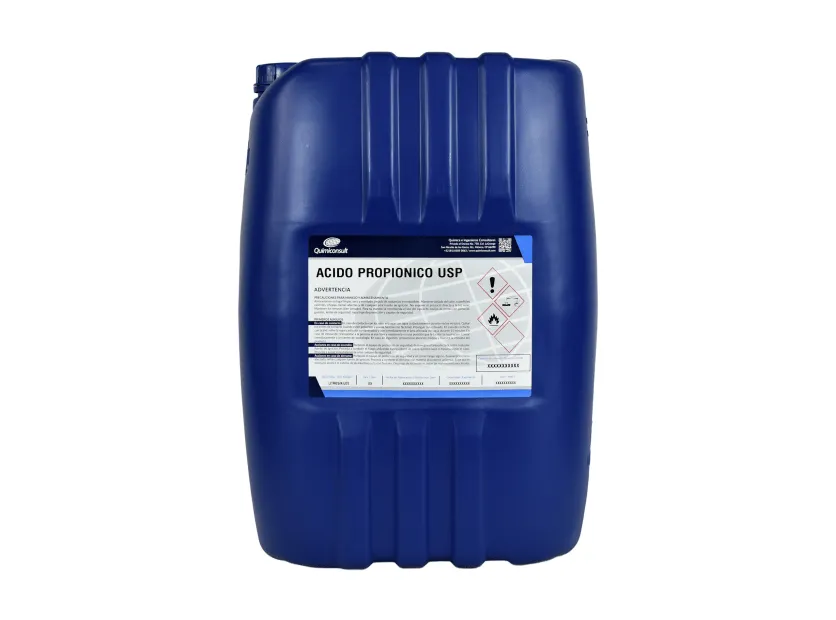
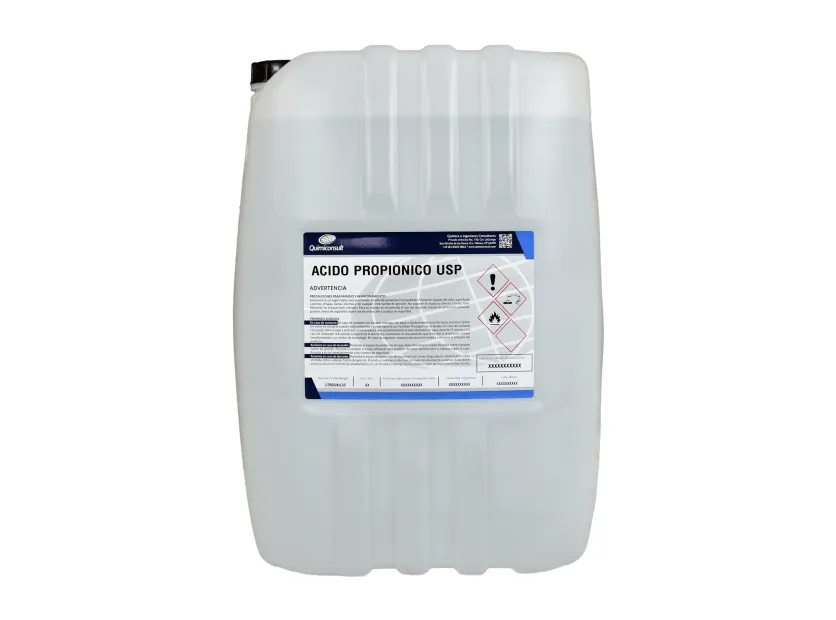
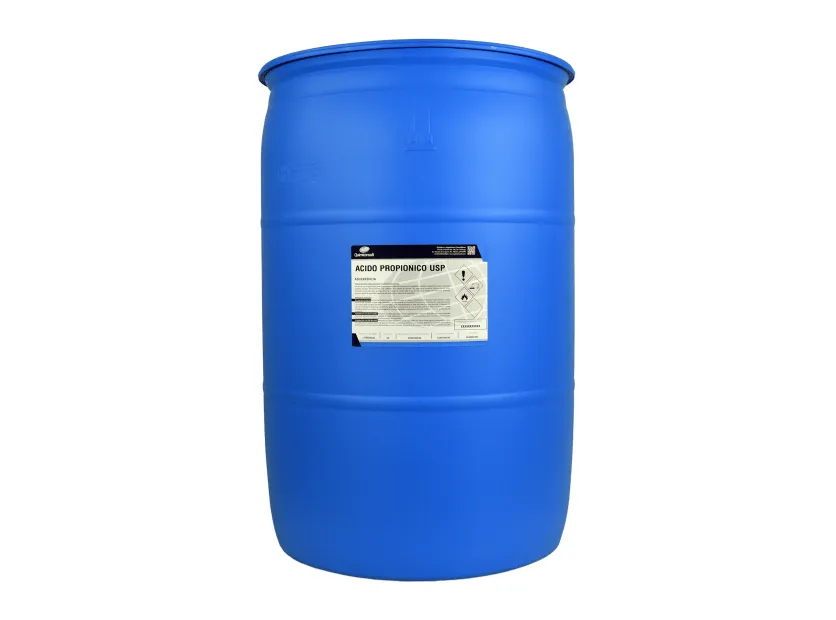
PROPIONIC ACID USP GRADE
View All Prices
| Quantity | Unit Price |
|---|---|
| kg | |
| 1 - 99 | USD 1.98 |
| 100 - 199 | USD 1.95 |
| 200 - 499 | USD 1.93 |
| 500 - 999 | USD 1.90 |
| 1000 - 4999 | USD 1.88 |
| 5000 - 9999 | USD 1.86 |
| 10000 - 17999 | USD 1.83 |
| 18000+ | USD 1.81 |
Propionic Acid USP Description: Short-Chain Antimicrobial Preservative
At Quimiconsult we offer USP grade Propionic Acid, a clear, colorless liquid with a minimum purity of 99.5%, produced under the strict standards of the United States Pharmacopeia (USP). It is a short-chain organic fatty acid with powerful antimicrobial properties, widely used as a preservative, acidulant and antifungal agent in the food, beverage, pharmaceutical and animal feed industries.
Its mechanism of action is based on the ability of the molecule, in its undissociated form, to penetrate the cell membrane of fungi, molds and certain bacteria, interfering with their metabolism and stopping their proliferation. This action is especially effective in products with a pH between 4.0 and 6.0, the typical range of breads, cheeses, cured meats and processed foods. Unlike other synthetic preservatives, propionic acid is a compound that occurs naturally in certain fermented foods, which positions it favorably in formulations with a clean label and natural-origin focus.
Thanks to its moderate volatility and complete solubility in water, ethanol and ether, propionic acid disperses evenly in aqueous and alcoholic mixtures, making it easy to incorporate into continuous manufacturing processes without additional treatment. Its classification as additive E280 makes it eligible for use in food and beverages sold in the European Union and internationally regulated markets.
Compliance with USP grade ensures that the product meets the purity requirements, impurity limits and quality controls established by the United States Pharmacopeia, making it suitable for pharmaceutical, cosmetic and food applications that demand the highest traceability and regulatory documentation.
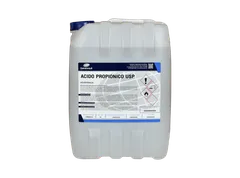
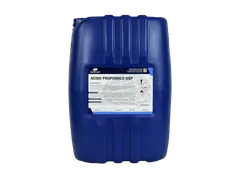
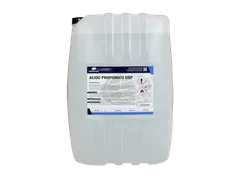
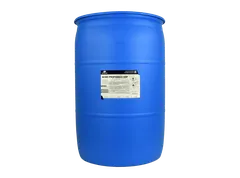
Available in Monterrey, with shipping throughout Mexico. Packaging from 20 L jerrycans up to 1,000 L industrial totes for any production scale.
Technical Specifications and Physicochemical Properties of Propionic Acid USP
The Propionic Acid USP/FG we distribute at Quimiconsult meets specifications verified by a certificate of analysis for every lot, ensuring consistency and performance with every delivery.
Chemically, it is identified as Propanoic Acid, with CAS number 79-09-4. It is a clear, colorless liquid at room temperature, with a flash point of 49°C, which means it requires controlled storage and handling conditions to avoid the risk of ignition in the presence of heat sources or sparks.
Its minimum active content is 99.5%, which classifies it as a very high-purity product within the category of organic acids for industrial and pharmaceutical use. The maximum APHA color of 10 ppm ensures that the product adds no perceptible color to the formulations it is incorporated into. The maximum aldehyde content (as propionaldehyde) is 0.05%, a critical parameter for food applications, where aldehydes can produce unwanted flavors and odors in the finished product.
As for its impurity profile, heavy metals such as lead are limited to a maximum of 10 ppm, arsenic to a maximum of 3 ppm, non-volatile residue to a maximum of 0.01% and water content to a maximum of 0.15%. These strict limits ensure product safety in applications where contaminant traceability is audited by FSSC 22000, BRC or FDA quality systems.
From a functional standpoint, propionic acid has high solubility in water, ethanol and ether, which makes it easy to incorporate into both aqueous and alcoholic matrices. Its moderate volatility allows it to distribute effectively over the surface and throughout the mass of the products where it is applied, enhancing its preservative action. It is stable under normal process conditions and incompatible with strong oxidizing agents and bases, conditions that must be avoided during handling and storage. Kosher certification extends its eligibility to markets with specific religious requirements.
Applications of Propionic Acid USP, Uses by Industry Sector
USP grade propionic acid is one of the most versatile and effective preservatives available for the food, pharmaceutical and agro-industrial industries. Below are its main applications, detailed by sector:
Bakery and Baked Goods
The most widespread application of propionic acid worldwide is in the baking industry, where it acts as a specific inhibitor of mold and filamentous bacteria responsible for surface spoilage and bacterial "rope" in breads and baked goods. It is added directly to the dough or to surface toppings to prevent the growth of Aspergillus, Penicillium and Bacillus subtilis, the main causes of spoilage in sliced bread, sweet rolls, cakes, donuts and pastry products.
Its effectiveness is especially notable in high-moisture breads and extended shelf-life products, where refrigeration is not enough to control microbial growth. Unlike calcium propionate (its derived salt), free propionic acid offers greater availability of the active undissociated form, making it more efficient at lower concentrations in formulations where the pH of the final product is between 5.0 and 6.5.
Cheese, Dairy and Meat Products
In the dairy industry, propionic acid is used as a surface preservative in ripened and processed cheeses, where it inhibits the growth of unwanted molds on the rind without affecting starter cultures or the organoleptic characteristics of the product. It is especially valued in gouda, edam and cheddar-type cheeses and in fresh cheeses packed under vacuum or modified atmosphere.
In meat products such as hams, sausages, cooked cured meats and cold cuts, propionic acid is added to marinades, brines or coatings to control surface pH and inhibit bacterial growth during storage and distribution. Its compatibility with brine systems and injection solutions makes it easy to integrate into existing meat production lines.
Animal Nutrition, Feed and Forage
Propionic acid is widely used in the animal nutrition industry as an antimicrobial agent, acidifier and preservative for grains, feed and forage. Applied to corn, wheat, sorghum, soybeans and moist hay, it prevents the development of toxigenic fungi such as Aspergillus flavus (an aflatoxin producer) and Fusarium during storage, protecting both the nutritional quality of the feed and the health of the animals that consume it.
In diets for poultry, swine and ruminants, propionic acid also acts as an intestinal acidifier, lowering the pH of the digestive tract and creating an unfavorable environment for pathogens such as Salmonella and E. coli, helping to improve feed conversion and reduce the need for antibiotics in animal production.
Pharmaceutical Industry and Organic Chemistry
In the pharmaceutical sector, USP grade propionic acid is used as a raw material and reagent in organic synthesis for the production of sodium, calcium and potassium propionates and propyl esters used as flavorings and fragrances, and as an intermediate in the synthesis of herbicides, fungicides and pharmaceutical actives. Its USP purity ensures the traceability and specifications required for processes regulated under GMP (Good Manufacturing Practices).
It is also used as a vehicle and pH control agent in topical dermatological formulations and in the production of certain products where the propionyl group improves the bioavailability or absorption characteristics of the active ingredient.
Beverages, Sauces and Condiments Industry
In fermented beverages, sauces, dressings and condiments with a pH between 3.5 and 5.5, propionic acid contributes as an acidulant and complementary preservative, often in combination with potassium sorbate or sodium benzoate to achieve a broader antimicrobial spectrum. Its neutral organoleptic profile at permitted use levels (typically 0.1–0.3%) does not interfere with the characteristic flavor of the product.
Chemical and Agrochemical Industry
As a synthesis reagent, propionic acid is the raw material for the production of vinyl propionate, used in polymers and coatings, and of aryloxypropanoic acid herbicides such as dichlorprop and mecoprop. It is also used in the manufacture of fragrances and flavors (propyl esters with alcohols such as isoamyl or benzyl alcohol) for the cosmetics and food industries.
Propionic Acid USP Packaging and Availability
Propionic Acid USP is available in multiple package sizes to suit each customer's volumes and process requirements, from development laboratories to continuous-production industrial plants.
For laboratories, small-scale formulations and process validations, we offer 20 L jerrycans, ideal for application trials, dosage adjustments and line start-ups where flexibility in handling volume is required. For production operations in the food industry and mid-sized industrial bakeries, we have 50 kg jerrycans that make manual handling and inventory control easy in plants with weekly or biweekly production. Continuous industrial manufacturing lines and mid-scale production are served with 200 kg drums, the standard format in the chemical industry for its balance between volume, ease of handling and logistics cost per kilogram. For large industrial consumers, high-volume food manufacturers, regional distributors and feed producers, we offer 1,000 kg totes or IBC containers, which significantly optimize unit cost and reduce restocking frequency on continuous production lines.
The product is kept in permanent stock in Monterrey, Nuevo León, with shipping throughout Mexico. Every delivery includes complete documentation: certificate of analysis per lot, technical data sheet and safety data sheet in Spanish and English.
Safe Storage and Handling of Propionic Acid USP
Storage Conditions
Propionic acid should be stored in airtight or tightly closed containers protected from direct sunlight. It must be kept in a cool, dry, well-ventilated place, with controlled temperature and away from heat sources, sparks, open flames and hot surfaces, since its flash point is 49°C (flammable liquid, GHS Category 3). No smoking is mandatory in storage and handling areas.
Due to its moderate volatility, the storage area must have adequate exhaust ventilation to prevent vapor buildup. Containers must be grounded to prevent electrostatic discharge during transfer. Contact with strong oxidizing agents and bases, which can cause hazardous reactions, must be avoided. Keep the container out of reach of unauthorized persons and store it locked up in areas reserved for chemicals.
Required Personal Protective Equipment (PPE)
Handling propionic acid requires the use of full personal protective equipment given its hazard classification. For eye protection, safety goggles with chemical splash protection are required; for prolonged exposure or in confined spaces, a full face shield over the goggles is recommended. For hand and body protection, wear impermeable gloves resistant to organic acids (nitrile or neoprene), a chemical-resistant apron or work suit and closed safety footwear. For respiratory protection, use protection with an organic vapor filter when adequate exhaust ventilation is not available or in confined spaces, since the vapors may irritate the respiratory tract (H335). It is recommended to use the product only outdoors or in spaces with active mechanical ventilation.
Other Names, Synonyms and Search Terms
Propanoic acid is the systematic IUPAC name of propionic acid, corresponding to CAS number 79-09-4. This name is used mainly in scientific literature, regulatory documentation submitted to COFEPRIS and the FDA, toxicological data sheets and chemical synthesis studies where precise chemical identification of the compound is required.
USP propionic acid is the most widely used commercial and regulatory name in the pharmaceutical, food and chemical industries for this high-purity grade certified to United States Pharmacopeia standards. This term appears in requests for quotation, purchase orders, ingredient specifications and supplier audits where USP certification is a contractual requirement.
Propionic acid USP is the English name used in international trade, import and export documentation, certificates of analysis, specification sheets for multinational customers and global B2B trading platforms. It is the standard reference term in transactions with companies operating in both Spanish- and English-speaking markets.
E280 is the food additive code assigned to propionic acid within the European additive classification system. This designation is essential in the labeling of food sold in the European Union, in ingredient lists of products exported to Europe and in the regulatory specifications of markets that follow EU-harmonized regulations.
Bakery preservative is the functional term under which propionic acid is identified in the industrial baking, pastry and sweet-roll industry. Under this name, the product is sought by master bakers, baking-mix formulators and purchasing managers at companies producing sliced bread, artisan bread, cakes and baked goods that require extended shelf life.
Food mold inhibitor is the name used by quality and production managers in the dairy, meat and processed food industries to refer to propionic acid in its specific role of controlling fungi and molds on the surface and throughout the mass of products. Under this term it is sought as an alternative or complement to potassium sorbate in formulations that require an antimicrobial profile specifically targeted at filamentous fungi.
Propionic acid for feed or grain preservative is the name used in the animal feed and grain storage industry to refer to propionic acid as an antifungal agent that prevents mycotoxins in corn, wheat, sorghum and moist forage. It is the predominant search term among animal nutritionists, balanced feed manufacturers and storage silo operators.
Short-chain fatty acid is the scientific term under which propionic acid is classified, together with acetic acid and butyric acid, in biochemistry, microbiology and animal nutrition. This name appears frequently in research on the gut microbiome, ruminal fermentation and microbiota modulation, where propionate (the salt of propionic acid) plays a recognized physiological role.
Propionic acid suppliers Mexico is the most frequent search term among industrial buyers in Mexico who need to find local distributors with available stock, complete regulatory documentation and specialized technical support. Quimiconsult serves this market from Monterrey with permanent inventory and delivery capability throughout the country.