Spanish
 English


PROPYLENE GLYCOL USP GRADE
View All Prices
| Quantity | Unit Price |
|---|---|
| kg | |
| 1 - 99 | USD 2.33 |
| 100 - 199 | USD 2.29 |
| 200 - 499 | USD 2.26 |
| 500 - 999 | USD 2.24 |
| 1000 - 4999 | USD 2.21 |
| 5000 - 9999 | USD 2.18 |
| 10000 - 17999 | USD 2.15 |
| 18000+ | USD 2.13 |
USP Grade Propylene Glycol Description
At Quimiconsult we offer USP propylene glycol, a pharmaceutical-grade organic compound with the chemical formula C₃H₈O₂, also known as 1,2-propanediol or by its food additive code E1520. It is a clear, colorless, slightly viscous and virtually odorless liquid, with a minimum purity of 99.5% and complete miscibility in water and alcohol. Its CAS number is 57-55-6 and its molecular weight is 76.09 g/mol.
USP propylene glycol stands out as an exceptionally versatile solvent capable of dissolving organic substances that are not soluble in water, making it an ideal carrier for flavors, colorants, active pharmaceutical ingredients and cosmetic fragrances. Its hygroscopic nature allows it to attract and retain moisture from the environment, a property that makes it work as a humectant in foods, cosmetics and pharmaceutical formulations, preserving the texture, consistency and shelf life of the products it is added to.
Unlike ethylene glycol, which is toxic for human consumption, propylene glycol is recognized as GRAS (Generally Recognized as Safe) by the U.S. FDA and is approved as a food additive in the European Union under the designation E1520. This safety classification is what allows its direct use in products intended for human and animal consumption, as well as in pharmaceutical and cosmetic formulations that come into contact with the skin and mucous membranes.
Propylene glycol is used across a wide range of industries, including food and beverages, pharmaceuticals, cosmetics and personal care, veterinary, HVAC systems, the tobacco industry and specialized industrial formulations. Its combination of properties as a solvent, humectant, antifreeze, emulsion stabilizer and active-ingredient carrier positions it as one of the most widely used ingredients worldwide in food-grade and pharmaceutical-grade formulations.
For those searching for what propylene glycol is used for or where to buy USP propylene glycol, Quimiconsult offers a certified product with technical support, certificates of analysis for each batch and an efficient supply chain. USP grade propylene glycol is available in Monterrey, Nuevo León, with shipping throughout Mexico.
Propylene Glycol Details and Properties
The USP grade propylene glycol we distribute meets the parameters established by the United States Pharmacopeia (USP), guaranteeing a level of purity and impurity control suitable for the most demanding applications in the food, pharmaceutical and cosmetic industries. Our product's technical specifications include a pH of 6.0 to 7.0 in 1% solution, specific gravity of 1.030 to 1.037 g/cm³ at 25°C, maximum water content of 0.2%, color less than or equal to 10 on the Pt-Co scale, acidity as acetic acid less than or equal to 0.005%, chlorides below 70 mg/kg, sulfates below 60 mg/kg, heavy metals (as Pb) below 5 mg/kg and residue on ignition below 70 mg/kg.
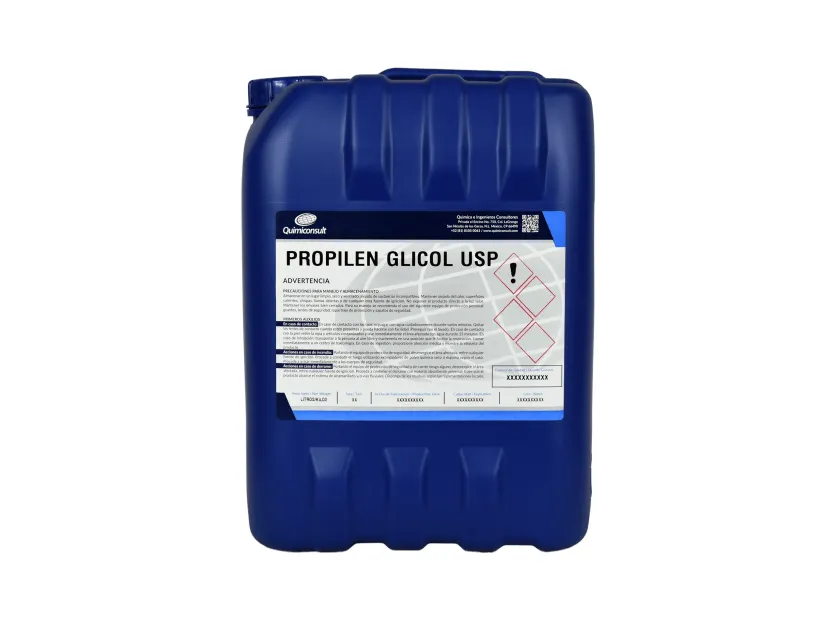
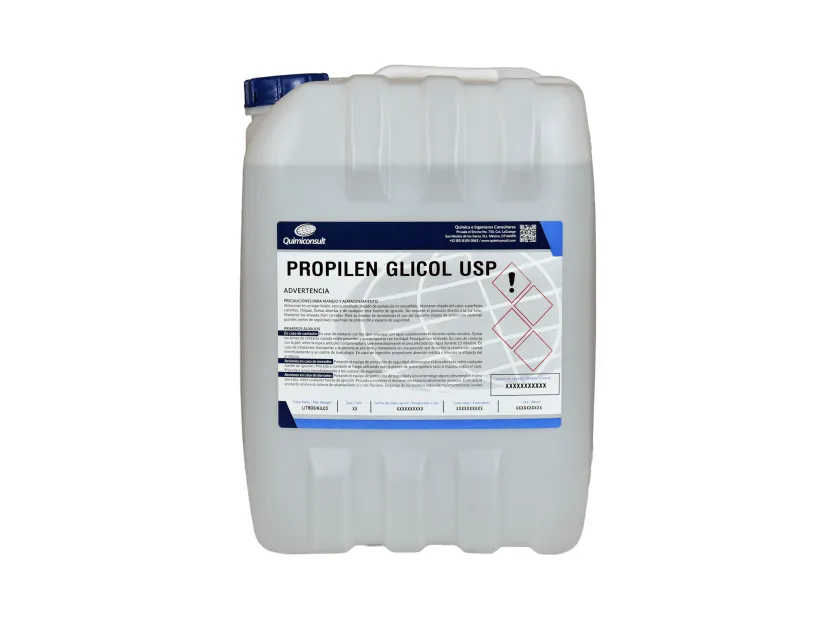
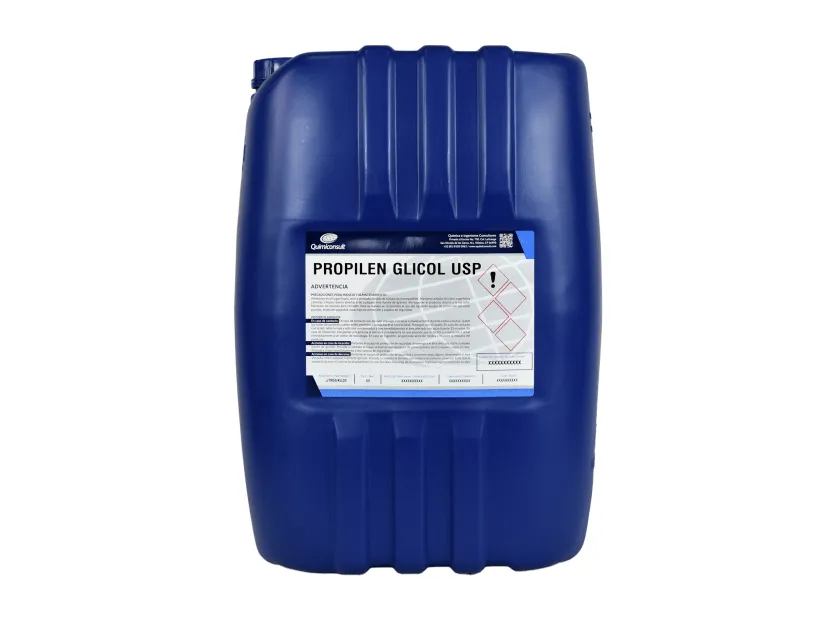
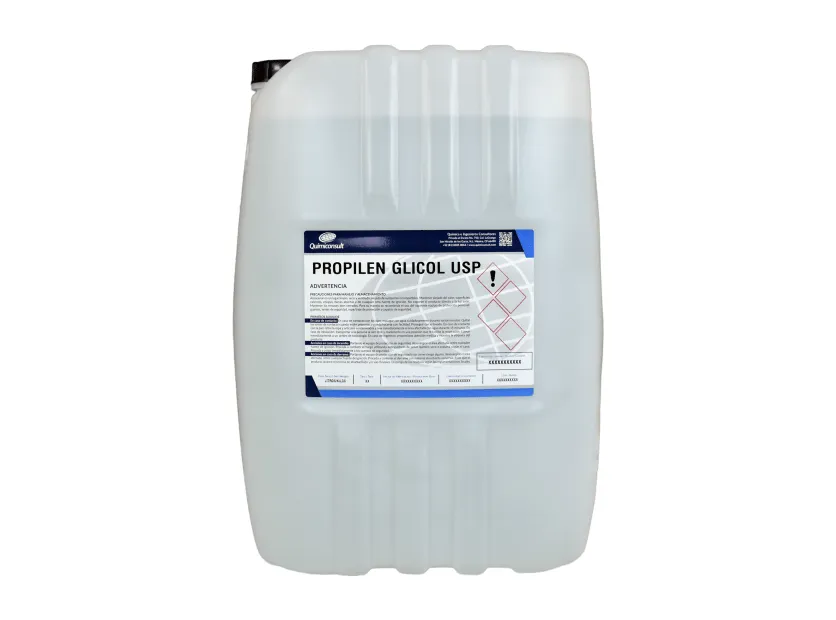
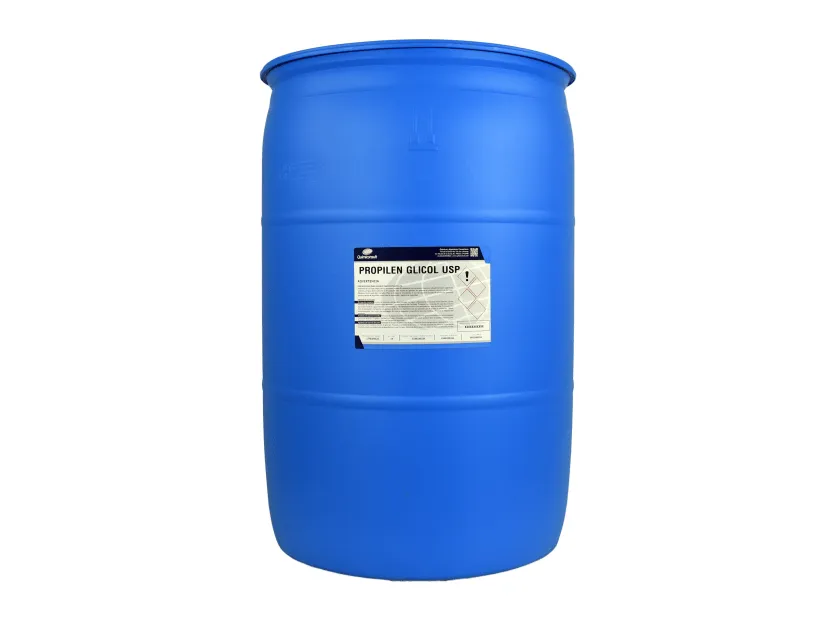
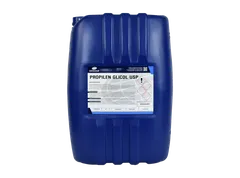
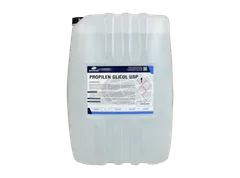
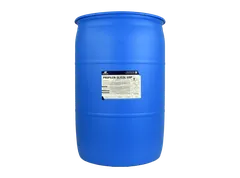
Our presentations are designed to suit different consumption volumes: 20-liter jerrycans, 50- and 200-liter drums, as well as 1000-liter totes (IBC). All batches come with certificates of analysis and the product is Kosher certified, broadening its use in production lines that must comply with this standard.
Physicochemical properties of propylene glycol
Propylene glycol is a slightly viscous liquid with a high boiling point (approximately 188°C) and low volatility, which makes it especially useful in processes that require thermal stability and minimal evaporation during formulation or storage. Its freezing point is approximately -59°C, a characteristic that explains its widespread use as an antifreeze in systems where food safety is a requirement, since, unlike ethylene glycol, an accidental propylene glycol leak in a refrigeration system does not pose a toxic risk.
Propylene glycol is completely soluble in water in all proportions, making it possible to prepare solutions at any concentration without phase separation problems. It is also miscible with alcohol, acetone, chloroform and numerous organic solvents, giving it exceptional compatibility with a wide variety of active ingredients and excipients used in industry.
Its hygroscopic nature is one of its most valued properties in food and cosmetic applications. Propylene glycol attracts water molecules from the environment and retains them in the product matrix, acting as a humectant that prevents drying and loss of texture in baked goods, confectionery, creams, lotions and other formulations where moisture retention is critical to the quality of the final product.
Propylene glycol also acts as a freezing-point depressant in aqueous solutions, as a stabilizer in emulsions where it helps maintain homogeneity between aqueous and oil phases, as a plasticizer in edible films and coatings, and as a heat-transfer medium in closed HVAC systems. This multifunctionality explains the presence of propylene glycol in such a broad range of industrial sectors.
From a safety standpoint, propylene glycol has a favorable toxicological profile. The oral LD50 in rats is 20,000 mg/kg, which classifies it as a low-toxicity substance. Under the GHS classification, it is categorized only as an eye irritant category 2 (H319), with no acute oral, dermal or inhalation toxicity classifications at typical use concentrations. This is one of the reasons it has been accepted globally as a safe ingredient for food contact and for use in topical formulations.
Propylene Glycol Applications and Key Uses
Propylene glycol is one of the most widely used multifunctional ingredients in industry thanks to its combination of properties as a solvent, humectant, active-ingredient carrier, antifreeze and stabilizer. Its USP grade allows its use in applications where contact with food, skin or mucous membranes requires a proven safety profile.
In the food and beverage industry, propylene glycol is used as a solvent to dissolve and evenly distribute flavors, colorants and vitamins that are not water-soluble. It is a common component of flavor extracts, color concentrates and beverage emulsions. It also works as a humectant in baked goods, sliced bread, cakes, cookies and confectionery, where it retains moisture and prevents premature staling. In the production of ice cream and frozen desserts, propylene glycol helps control ice crystal formation, improving the texture of the final product. In addition, it is used as a plasticizer in edible coatings and films applied to fruits, cheeses and meat products to extend their shelf life.
In the pharmaceutical industry, propylene glycol is a widely used excipient in the formulation of syrups, oral suspensions, soft gelatin capsules, injectable solutions and topical preparations. Its ability to dissolve poorly water-soluble active ingredients makes it an essential co-solvent in formulations where the drug's bioavailability depends on its complete solubilization. In dermatological preparations such as creams, ointments and gels, propylene glycol acts simultaneously as a solvent for the active and as a skin penetration enhancer, helping the active ingredient pass through the outer layers of the skin to reach its site of action.
In the cosmetics and personal care industry, propylene glycol is found in a wide variety of products, including moisturizing creams, body lotions, facial serums, deodorants, toothpastes, mouthwashes, shampoos, conditioners and makeup products. Its main function in these formulations is to act as a humectant that keeps both the product and the skin hydrated, as a solvent for fragrances and cosmetic actives, and as a carrier that improves the application feel and absorption of the product.
In the veterinary and animal nutrition industry, USP grade propylene glycol is used as an energy supplement for dairy cattle, particularly for cows in the transition period around calving, when negative energy balance can lead to ketosis, a metabolic condition that affects milk production and animal health. Propylene glycol is administered as an oral drench and is metabolized as a source of glucogenic energy, helping to stabilize blood glucose levels and prevent excessive accumulation of ketone bodies.
In HVAC and refrigeration systems, propylene glycol is used as a heat-transfer fluid and as an antifreeze in closed loops where incidental contact with food or drinking water is possible. Unlike ethylene glycol, propylene glycol is non-toxic, making it mandatory in food industry facilities, hospitals, pharmaceutical processing centers and buildings where safety is a priority. Propylene glycol solutions in water at different concentrations protect systems against freezing in cold climates without compromising safety in the event of leaks.
In the tobacco and vaping industry, propylene glycol is one of the two base components (together with vegetable glycerin) of e-cigarette liquids. It acts as a carrier for flavor and nicotine and contributes to the "throat hit" sensation that simulates the experience of smoking. Its low viscosity makes vaporization easier at relatively low temperatures, which is a technical requirement for vaping devices to work.
In specialized industrial applications, propylene glycol is used as a solvent in the manufacture of inks, resins and coatings, as a plasticizer in plastic films, as a component in aircraft de-icing fluids and as an antistatic agent in textile processes. It is also used to produce artificial smoke or fog for special effects at events, in theater and in audiovisual production, where propylene glycol and water solutions are vaporized by fog machines to create the desired visual effect.
For more information about our complementary solutions, visit our internal pages for Humectants, Food & Beverages, Personal Care & Cosmetics, Pharmaceutical & Wellness and Antifreezes.
Propylene Glycol vs. Ethylene Glycol: Differences and Which to Choose
One of the most frequent comparisons in industry is between propylene glycol and ethylene glycol, since both are glycols with antifreeze and heat-transfer properties. However, their differences in toxicity completely determine which applications each can be used in.
Ethylene glycol (C₂H₆O₂, CAS 107-21-1) is highly toxic to humans and animals. Ingesting relatively small amounts can cause acute kidney failure and death. For this reason, its use is restricted to closed industrial applications where there is no possibility of contact with food, drinking water or people, such as car radiators and non-food industrial refrigeration systems.
Propylene glycol (C₃H₈O₂, CAS 57-55-6), on the other hand, has a very low toxicity profile and is recognized as GRAS by the FDA. This makes it suitable for refrigeration systems in food plants, hospitals, HVAC systems in commercial buildings and any application where a leak could result in contact with food or people. Although propylene glycol has slightly lower heat-transfer efficiency than ethylene glycol at the same concentration, this difference is easily offset by adjusting the system design or the solution concentration.
The general rule in industry is clear: if there is any possibility of contact with food, drinking water, people or animals, propylene glycol is the only acceptable option. If the system is completely closed and isolated, with no possibility of incidental contact, ethylene glycol may be considered for its lower cost and higher thermal efficiency, always in compliance with local safety regulations.
At Quimiconsult we offer USP grade propylene glycol for all applications that require an antifreeze and heat-transfer fluid that is safe for incidental food contact.
Propylene Glycol Storage and Handling
To preserve the quality and specifications of USP propylene glycol, it must be stored in its original, tightly closed container in a cool, dry and well-ventilated place, protected from direct sunlight and away from heat sources. Due to its hygroscopic nature, propylene glycol absorbs moisture from the environment when left exposed, which can dilute the product and change its effective concentration. Keeping containers closed when not in use is essential to preserve the product's purity.
Propylene glycol is stable under normal storage conditions and is not flammable under typical conditions, although it has a flash point of approximately 99°C (closed cup), so it must be kept away from ignition sources and strong oxidizing materials, which are the only incompatible materials identified in its safety data sheet.
During handling, gloves and splash goggles are recommended as basic personal protective equipment. Although propylene glycol is not toxic when ingested in small amounts and does not pose significant risks from brief skin contact, it can cause eye irritation (GHS classification H319). In case of eye contact, rinse immediately with water for at least 20 minutes while holding the eyelids open, and seek medical attention. Washing with soap and water after each handling and avoiding prolonged skin contact is recommended.
Propylene glycol is not classified as dangerous goods for transport under United Nations regulations, which simplifies its logistics and distribution.
Frequently Asked Questions about Propylene Glycol
What is propylene glycol and what is it used for?
Propylene glycol is a liquid organic compound with the formula C₃H₈O₂ that works as a solvent, humectant, antifreeze and active-ingredient carrier. It is used to dissolve flavors and colorants in foods, as an excipient in medicines, as a humectant in cosmetics, as a safe antifreeze in food refrigeration systems, as an energy supplement for dairy cattle and as a base for vaping liquids, among many other applications. Its USP grade guarantees that it is suitable for food contact and pharmaceutical use.
Is propylene glycol safe?
Propylene glycol is recognized as GRAS (Generally Recognized as Safe) by the FDA and approved as food additive E1520 in the European Union. Its oral LD50 in rats is 20,000 mg/kg, indicating very low toxicity. At typical use levels in foods, cosmetics and pharmaceutical products, it poses no significant risks to human health. It should not be confused with ethylene glycol, which is toxic. The only relevant precaution during industrial handling is to avoid eye contact, as it can cause irritation.
What is the difference between USP grade and industrial grade propylene glycol?
USP grade propylene glycol meets United States Pharmacopeia specifications for purity (minimum 99.5%), impurity limits (heavy metals, chlorides, sulfates) and analytical methods. It is designed for applications where the product will come into contact with food, skin or mucous membranes. Industrial grade may have similar purity but lacks the documentation, traceability and impurity control required by pharmaceutical and food regulations. If your application involves food, cosmetics, pharmaceutical products or refrigeration systems with incidental food contact, USP grade is required.
Can propylene glycol be mixed with water?
Yes. Propylene glycol is completely miscible with water in all proportions, which means it can be mixed with water at any concentration without phase separation. This property is essential for its use as an antifreeze (where it is mixed with water at concentrations of 20 to 60% depending on the freeze protection required), as a diluent in flavor and colorant solutions, and as a component in aqueous pharmaceutical and cosmetic formulations.
Where can I buy USP propylene glycol in Mexico?
At Quimiconsult we offer Kosher-certified USP grade propylene glycol, with certificates of analysis for each batch and technical support. We are located in Monterrey, Nuevo León, and ship throughout Mexico. Our presentations include 20-liter jerrycans, 50- and 200-liter drums and 1000-liter totes, suited to laboratories, formulation plants and industrial operations of different volumes.
Other Names and Synonyms for Propylene Glycol
Propylene glycol is also known by various names depending on the context of use and the industry. These variations are important both for the technical identification of the product and for making it easier to find in purchasing and sourcing processes.
1,2-propanediol is the IUPAC name (systematic chemical nomenclature) of propylene glycol and is the name used in technical documentation, certificates of analysis and chemical databases. It refers to its molecular structure: a propane with two hydroxyl groups at positions 1 and 2 of the carbon chain.
E1520 is the food additive code assigned to propylene glycol by the European Union. This designation appears on the ingredient labels of food products and is the identifier consumers and regulators use to track its presence in processed foods.
Propylene glycol (propilenglicol) is the English name, widely used in technical data sheets, international safety data sheets, foreign trade documentation and purchasing specifications for export markets.
Isopropylene glycol is a name that occasionally appears in the pharmaceutical and cosmetic industries to refer to this diol as an excipient and humectant, although its use is less standardized.
Methyl ethyl glycol is an alternative name used in technical formulations and chemical processes to distinguish propylene glycol from other glycols such as ethylene glycol, diethylene glycol or butylene glycol.
Propilengicol is a misspelling of the Spanish name that frequently appears in purchase requests, work orders and online searches, caused by a letter being dropped from the product name.
Likewise, in purchasing and sourcing processes it is common to see searches such as propylene glycol price, buy propylene glycol, USP propylene glycol Mexico, food grade propylene glycol or propylene glycol for vaping, where variations in the product description or its specific application are used to find options available on the market. These variations help you, as purchasing, formulation and quality managers, identify the product within the market for pharmaceutical-grade and food-grade raw materials