Spanish
 English


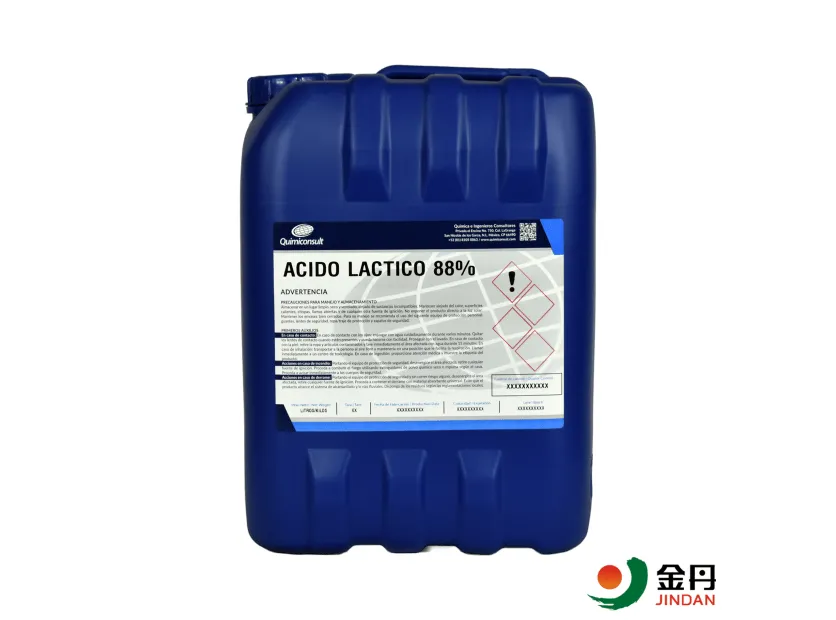
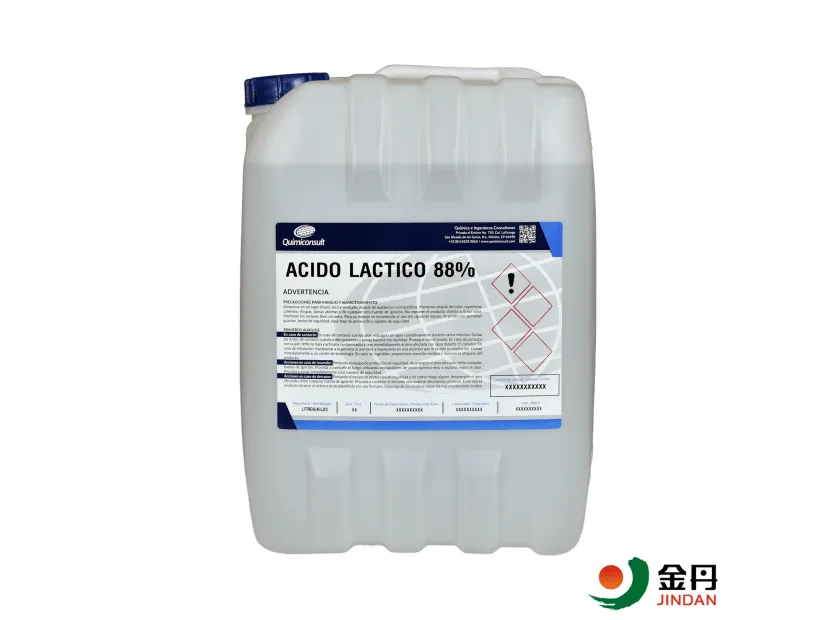
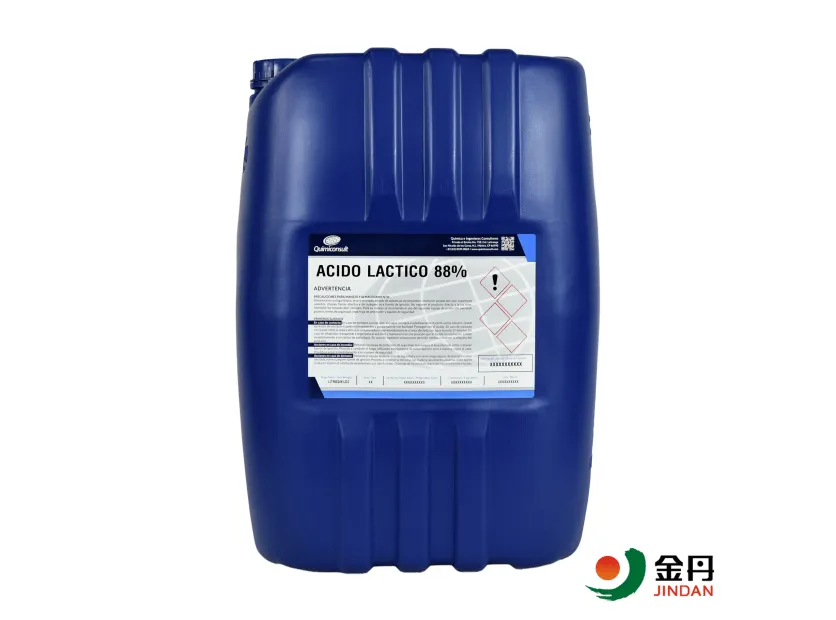
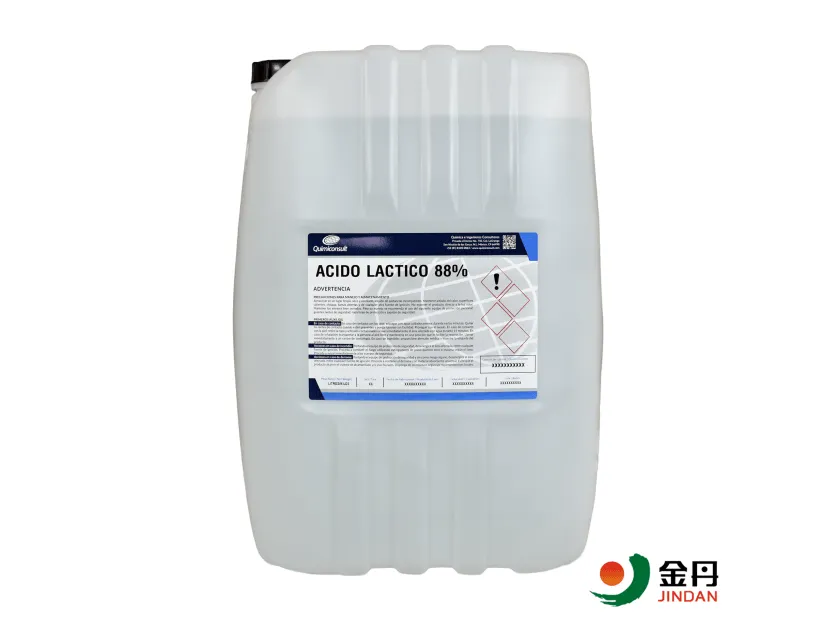
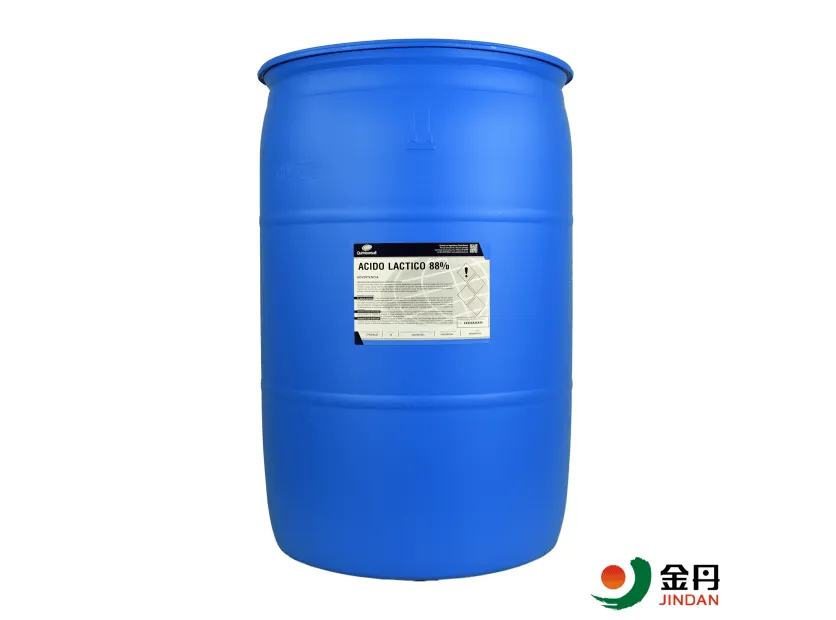
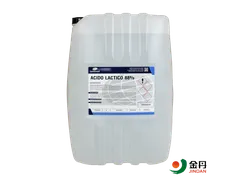
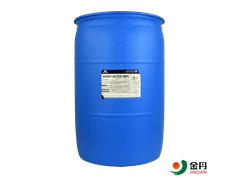
LACTIC ACID 88% HENAN JINDAN LACTIC ACID® FOOD GRADE
View All Prices
| Quantity | Unit Price |
|---|---|
| kg | |
| 1 - 99 | USD 2.23 |
| 100 - 199 | USD 2.20 |
| 200 - 499 | USD 2.17 |
| 500 - 999 | USD 2.14 |
| 1000 - 4999 | USD 2.11 |
| 5000 - 9999 | USD 2.09 |
| 10000 - 17999 | USD 2.06 |
| 18000+ | USD 2.04 |
Lactic Acid 88%: High-Purity Natural Preservative
At Quimiconsult we offer food grade Lactic Acid 88%, manufactured by Henan Jindan, one of the most recognized lactic acid producers worldwide. It is a colorless to light yellowish translucent liquid, produced through the controlled fermentation of natural carbohydrates, which gives it a bio-based profile, high biodegradability and compatibility with modern formulations that demand cleaner, more natural ingredients.
With a guaranteed purity between 87.5% and 88.5% (w/w), this organic acid acts as a pH regulator, antimicrobial preservative, flavor enhancer and texture control agent in a wide variety of food, cosmetic and pharmaceutical matrices. Its hygroscopic nature, odorless character and complete solubility in water and alcohol make it versatile and easy to incorporate into continuous industrial processes.
Unlike synthetic preservatives, lactic acid is a compound that the human body naturally produces and metabolizes, making it a preferred choice in formulations with "clean label", free of artificial preservatives and natural origin claims.
Available in Monterrey, with shipping throughout Mexico. Presentations from 20 kg up to 1,000 L totes for industrial needs of any scale.
Technical Specifications and Physicochemical Properties of Lactic Acid 88%
Henan Jindan Lactic Acid 88% FG meets the highest standards of the food and pharmaceutical industries, with specifications verified by a certificate of analysis for each batch.
Chemically, it is identified as 2-Hydroxypropanoic Acid, CAS number 50-21-5. It is a clear-looking liquid with a maximum APHA color of 50, ensuring it does not impart unwanted tints to the formulations it is added to.
Its lactic acid purity ranges from 87.5% to 88.5% (w/w), with a density at 20°C of 1.20 to 1.22 g/mL and a pH in 1% aqueous solution of 1.0 to 2.0, confirming its high effective acidity and its ability to adjust the pH of complex systems precisely and in a controlled way. It is completely soluble in water and alcohol, enabling homogeneous incorporation into liquid, semi-solid and alcoholic matrices without additional dispersion processes.
In terms of its purity and safety profile, impurities are kept well below international regulatory limits: arsenic max. 1 mg/kg, heavy metals max. 5 mg/kg, lead max. 0.5 mg/kg, mercury max. 1 mg/kg, iron max. 5 mg/kg, chlorides max. 10 mg/kg, sulfates max. 10 mg/kg and sulfated ash max. 0.05% (w/w). This purity profile makes it suitable for applications where contaminant traceability is audited, such as pharmaceutical manufacturing, certified cosmetics and processed foods under FSSC 22000 or BRC standards.
From a functional standpoint, lactic acid is hygroscopic and odorless, which means it does not interfere with the sensory profile of the finished product or alter the aroma, flavor or color of formulations. Its pKa of 3.86 makes it a highly efficient acidulant in the pH range of 3.0 to 4.5, where its undissociated form exerts the greatest antimicrobial activity. Its origin in the controlled fermentation of natural carbohydrates, with no petrochemical synthesis, makes it eligible for formulations with clean label, natural and bio-based claims. Finally, its complete biodegradability and full metabolism in the human body ensure that it leaves no toxic residues or accumulation in tissues, clearly setting it apart from synthetic acidulants.
Applications of Food Grade Lactic Acid 88%: Industrial and Specialty Uses
Lactic acid is one of the most versatile functional ingredients available to the food, beverage, cosmetic and pharmaceutical industries. Below we detail its main applications by sector:
Food and Beverage Industry
Lactic acid is widely used as an acidulant, preservative and pH regulator in the production of processed foods. Its ability to lower pH in a controlled way inhibits the growth of pathogenic and spoilage microorganisms, significantly extending product shelf life.
- Meat products and sausages: Used as an acidulant in marinades, brines and surface coatings to lower pH and control the growth of Listeria monocytogenes and other pathogenic bacteria. Applied as a spray or dip on carcass and cut surfaces.
- Beverages and juices: Balances the acidity of fruit juices, fermented beverages, ciders, teas and functional drinks. Provides clean acidity without bitterness, with a smooth organoleptic profile that complements fruity notes.
- Dairy: Controls pH in the production of fresh cheeses, yogurts, sour cream and fermented dairy drinks. Helps regulate protein coagulation and improves the final texture of the product.
- Bakery and pastry: Improves crumb texture, regulates yeast activity and extends shelf life in artisanal and industrial breads and pastry products. Also used as a partial substitute for vinegar in dough formulations.
- Sauces, dressings and condiments: Acts as a preservative and pH stabilizer in mayonnaise-type sauces, vinaigrettes, ketchup, salad dressings and mustards. Prevents phase separation and microbiological spoilage.
- Canned goods and pickles: In combination with other preservatives (such as potassium sorbate), it boosts antimicrobial activity by lowering the pH of the medium. Ideal for cucumbers, jalapeños, pickled vegetables and processed olives.
- Confectionery and chewing gum: Provides mild, balanced acidity in gums, gummies, hard candies and sour sweets. Compatible with natural colorings and flavorings.
- Fermented products: Naturally present in yogurt, kefir, sauerkraut, kimchi and kombucha; also added externally to standardize acidity levels between batches.
Cosmetics and Personal Care Industry
In cosmetic formulations, lactic acid acts as a chemical exfoliant (AHA), humectant and pH regulator, and is one of the most studied and widely used alpha hydroxy acids (AHAs) in dermatology and advanced cosmetics.
- Chemical exfoliant: Acts on the bonds between corneocytes in the stratum corneum, promoting cell renewal and improving skin texture, radiance and evenness. Used at concentrations of 5–30% in serums, masks and toners.
- Moisturizer and humectant: Stimulates ceramide production in the skin and acts as a humectant by drawing water molecules into the stratum corneum. Ideal for formulations treating dry, flaking and aging skin.
- pH regulator in emulsions: Adjusts the pH of creams, lotions, gels and serums to the optimal physiological range (4.5–5.5), supporting the stability of the skin microbiome and the efficacy of other actives.
- Hyperpigmentation treatment: At therapeutic concentrations (10–30%), it reduces dark spots, melasma and dyschromia by interfering with melanin synthesis and accelerating cell renewal.
- Hair care products: Regulates the pH of conditioners, hair masks and post-color treatments to seal the cuticle and improve shine and manageability.
- "Clean beauty" compatibility: Its natural fermentation origin makes it eligible for formulations with natural and organic certification.
Pharmaceutical and Wellness Industry
Pharmaceutical grade and food grade lactic acid has multiple applications in the healthcare sector:
- Parenteral solutions and fluids: Used as a buffer in lactated Ringer's solution and other intravenous fluids to maintain acid-base balance.
- Topical dermatological formulations: Present in creams for the treatment of ichthyosis, hyperkeratosis, psoriasis and severe dry skin at concentrations of 5–12% under medical prescription.
- Pharmaceutical vehicle: As a pH-regulating excipient in oral liquid formulations, ophthalmic solutions and topical preparations where precise acidity control is required.
- Polylactic acid (PLA) production: Raw material for the synthesis of biodegradable polymers used in absorbable sutures, resorbable implants and controlled drug-release systems.
- Supplements and sports drinks: Present in muscle recovery drinks and amino acid supplements, where it contributes to electrolyte balance and palatability.
Industrial and Agro-Industrial Applications
- Production of biodegradable polymers (PLA): Lactic acid is the base monomer of polylactic acid, a bio-based, compostable plastic used in packaging, food containers, textiles and agriculture.
- Cleaning and disinfection industry: Formulations of surface cleaners, degreasers and sanitizers for the food, hospital and household sectors, taking advantage of its antimicrobial capacity at acidic pH.
- Leather tanning and treatment: An eco-friendly tanning agent that partially replaces formic acid in vegetable and mineral tanning processes.
- Water and effluent treatment: Acidulant in biological treatment systems where pH adjustment is required to optimize microbial activity.
To discover other related additives and solutions, visit our Food & Beverages, Preservatives, pH Regulator, Personal Care & Cosmetics and Pharmaceutical & Wellness categories.
Lactic Acid 88% Presentations and Availability
Food grade Lactic Acid 88% is available in multiple presentations to suit each customer's volumes and process requirements, from formulation laboratories to large-scale industrial plants.
For laboratories, small-scale formulations and production samples, we offer sealed 20 kg containers, ideal for process validations, line start-ups and customers working with controlled volumes. For food industry operations and cosmetic formulators, we have 50 L jerrycans that make manual handling and inventory control easier in mid-sized plants. Continuous industrial production lines and mid-scale manufacturing are served with 200 L drums, the most widely used format in the chemical industry thanks to its balance of volume, ease of handling and logistics cost. For large industrial consumers, regional distributors and large-scale manufacturing, we offer 1,000 L totes or IBC containers, which optimize the cost per kilogram and reduce restocking frequency.
All containers are made of materials compatible with organic acids and comply with applicable regulations for the transport and storage of food grade chemicals, ensuring product integrity from origin to point of use.
The product is kept in permanent stock in Monterrey, Nuevo León, with shipping throughout Mexico. Every delivery includes complete quality documentation: certificate of analysis for each batch, technical data sheet and safety data sheet in Spanish and English.
Safe Storage and Handling of Lactic Acid 88%
Storage Conditions:
- Keep in the original container, tightly closed and protected from direct light.
- Store in a cool, dry and well-ventilated place at room temperature.
- Keep away from bases, oxidizing agents and sources of intense heat.
- Due to its hygroscopic nature, avoid prolonged exposure to air to prevent moisture absorption and dilution.
- Store in areas dedicated to acids, separate from bases and alkaline materials.
Required Personal Protective Equipment (PPE):
- Eye protection: Safety glasses with side shields; for continuous exposure, a full face shield over safety glasses.
- Hand protection: Impermeable acid-resistant gloves (nitrile or neoprene).
- Body protection: Chemical-resistant apron or workwear; closed-toe safety shoes.
- Respiratory protection: Not required under normal ventilation conditions; use a respirator with an organic vapor filter when working in confined spaces or when the product is heated.
Other Names, Synonyms and Search Terms
Henan Jindan Lactic Acid 88% is the trade name used by the manufacturer to identify this concentrated lactic acid formulation. Henan Jindan is one of the most recognized lactic acid producers worldwide, with a presence in markets across Asia, Europe and the Americas.
Lactic acid 88% is the technical English expression that appears on certificates of analysis, specification sheets, customs documentation and export regulations. It is the standard reference term in supplier audits, ISO quality management systems and purchasing specifications at multinational companies operating in Mexico.
Food grade lactic acid (ácido láctico grado alimenticio) is the functional name most commonly used in the food and beverage industry in Mexico to refer to any lactic acid presentation suitable for direct food contact. It is the term most frequently found in requests for quotation, purchasing tenders and ingredient sheets from manufacturers of processed foods, beverages, dairy and meat products.
2-Hydroxypropanoic acid is the IUPAC systematic name of lactic acid, corresponding to CAS number 50-21-5. This name is used mainly in scientific literature, regulatory documentation submitted to COFEPRIS and the FDA, toxicological data sheets and formulation studies where precise chemical identification of the compound is required.
Lactic acid food grade is the English term equivalent to "ácido láctico grado alimenticio", widely used in import and export searches, international B2B trading platforms and technical specifications from companies operating simultaneously in Spanish- and English-speaking markets.
Food pH regulator is the generic functional term under which lactic acid is classified in food formulations where precise acidity control is critical to the stability, microbiological safety and organoleptic characteristics of the finished product.
Natural food preservative is the name aimed at clean label markets and formulations with natural ingredient declarations, where lactic acid stands out for its origin in carbohydrate fermentation and its complete metabolism in the human body, setting it apart from chemically synthesized preservatives.
AHA lactic acid for cosmetics is the technical term used in dermatology and advanced cosmetics to identify lactic acid as an alpha hydroxy acid (AHA), distinguishing it from other chemical exfoliants such as glycolic acid or mandelic acid. It is the most frequent search term among cosmetic formulators and skincare brands working with cell-renewal actives.
Lactic acid suppliers Mexico is the search term most used by industrial buyers and purchasing managers in Mexico who need to identify local distributors with available stock, regulatory documentation and specialized technical support, avoiding the time and costs of direct importing.