Spanish
 English


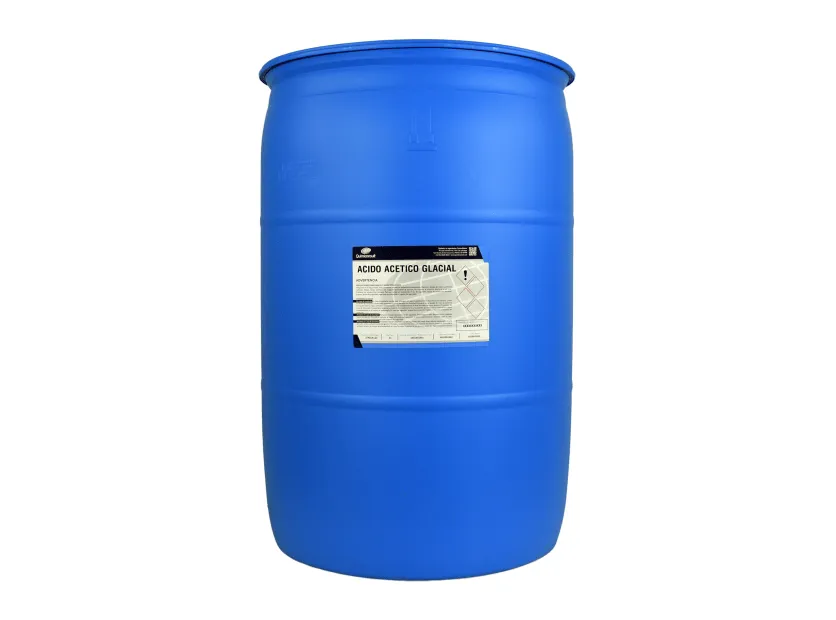
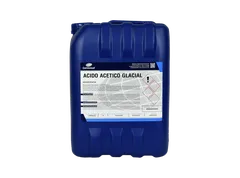
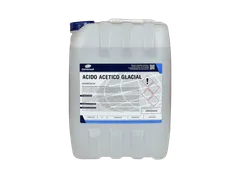
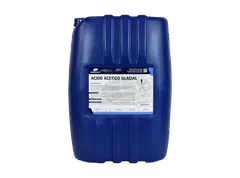
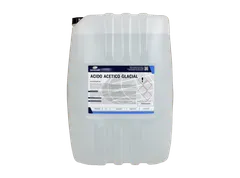
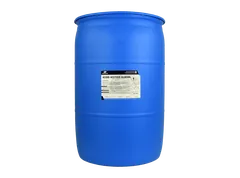
GLACIAL ACETIC ACID FOOD GRADE
View All Prices
| Quantity | Unit Price |
|---|---|
| kg | |
| 1 - 99 | USD 1.67 |
| 100 - 199 | USD 1.65 |
| 200 - 499 | USD 1.63 |
| 500 - 999 | USD 1.61 |
| 1000 - 4999 | USD 1.59 |
| 5000 - 9999 | USD 1.57 |
| 10000 - 17999 | USD 1.55 |
| 18000+ | USD 1.53 |
Glacial Acetic Acid Description: Maximum-Concentration Natural Acidulant
At Quimiconsult we offer food grade Glacial Acetic Acid, a clear, colorless liquid with a minimum acetic acid content of 99.8% by weight, produced to Food Chemicals Codex (FCC) standards and Kosher certified. It is the most concentrated and pure form of acetic acid, commonly known as the active ingredient in vinegar, obtained through distillation and purification processes that remove virtually all residual water. Hence the term "glacial," which refers to its tendency to solidify at temperatures close to 16.7°C when it reaches maximum purity.
Glacial acetic acid is one of the most versatile short-chain organic acids available to the food, meat, pickling, bakery, sauce and industrial cleaning industries. Its mechanism of action as a preservative is based on lowering the pH of the medium to levels that inhibit the growth of bacteria, molds and yeasts, combined with the direct antimicrobial action of the undissociated acetic acid molecule, which is especially effective in the pH range of 3.0 to 5.0. Its natural origin as a component of vinegar positions it favorably in formulations with clean label, natural-origin and no-artificial-preservative claims.
Thanks to its high solubility in water and alcohol, its density of 1.10–1.055 g/cm³ at 20°C and its maximum moisture content of 0.15%, glacial acetic acid blends homogeneously and in a controlled way into aqueous and alcoholic matrices, enabling precise dosing in continuous industrial processes. Its strong, pungent, characteristic vinegar odor is significantly reduced in the finished product when used at the recommended concentrations, leaving no perceptible residual flavor or color.
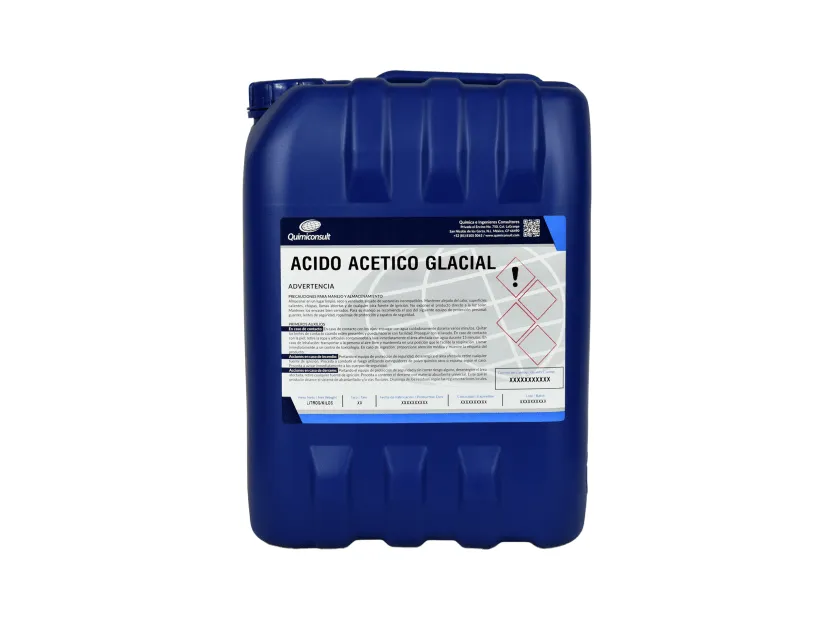
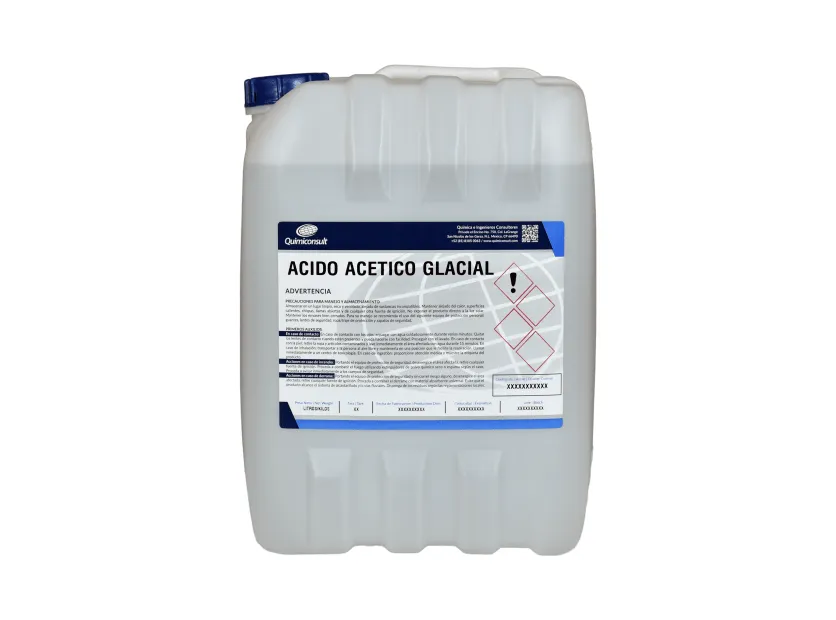
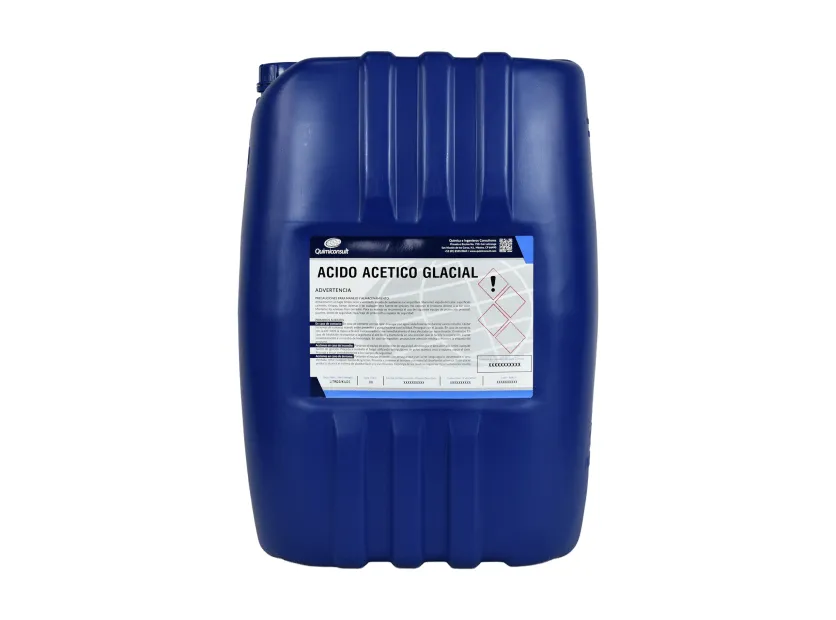
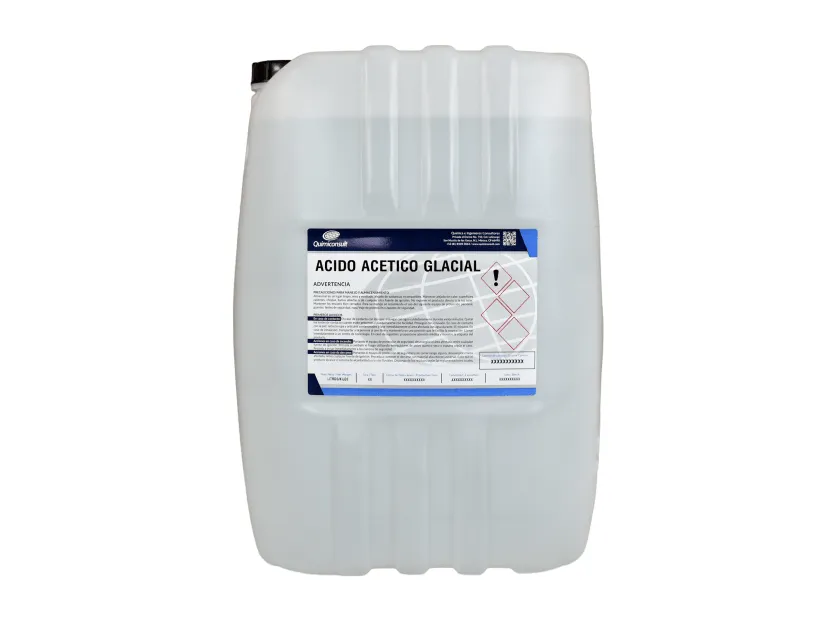
Available in Monterrey, with shipping throughout Mexico. Supplied in 20, 25 and 50 kg polyethylene containers, as well as 1,000 kg totes for industrial volumes. Shelf life of 12 months under proper storage conditions.
Glacial Acetic Acid Technical Specifications and Physicochemical Properties
The food grade Glacial Acetic Acid distributed by Quimiconsult meets the specifications of the Food Chemicals Codex (FCC), the international reference standard for food ingredients and additives in the food and beverage industry.
Chemically, it is identified as Ethanoic Acid or Methanecarboxylic Acid, CAS number 64-19-7. It is a clear, colorless liquid, free of suspended matter, with a strong, pungent characteristic vinegar odor that is inherent to its chemical nature and serves as a sensory indicator of the product’s identity.
Its minimum acetic acid content is 99.80% by weight, verified by FCC methodology, which makes it the highest-purity form of this compound available for industrial and food use. The maximum moisture content is 0.15% by weight, a critical parameter that ensures the product’s stability during storage and its effectiveness in formulations where precise control of the active acid concentration determines the final result. The density at 20°C ranges from 1.055 to 1.10 g/cm³, an essential figure for calculating volumes in weight- or volume-based dosing systems in continuous production plants.
As for its safety profile, heavy metals such as lead are limited to a maximum of 0.5 ppm and arsenic to a maximum of 3 ppm, levels well below international regulatory limits, ensuring its safety in applications involving direct contact with food and beverages. These values are verified by FCC methodology with full traceability for each production lot.
From an industrial handling standpoint, glacial acetic acid is a corrosive, volatile liquid with an occupational exposure limit of 15 ppm or 37 mg/m³ (OEL), which requires facilities with adequate mechanical ventilation. Its corrosive nature makes it incompatible with strong oxidizers, alkaline materials and halogenated materials, conditions that must be considered when designing storage and process areas. The product is stable under the recommended storage conditions and does not undergo decomposition reactions under normal conditions of use.
Glacial Acetic Acid Applications — Uses by Industry
Food grade glacial acetic acid is one of the most widely used acidulants and preservatives in the food, beverage, cleaning and chemical industries. Below are its main applications by sector:
Meat and Processed Meat Industry
In the processed meat industry, glacial acetic acid acts as a preservative, marinade acidulant and surface microbial control agent in hams, sausages, cooked sausages, cold cuts and charcuterie products. Its use in injection brines and marinades lowers the pH of the meat, inhibiting the growth of pathogenic bacteria such as Listeria monocytogenes, Salmonella and E. coli, the main microbiological risks in ready-to-eat meat products.
In surface decontamination of carcasses in slaughterhouses and processing plants, diluted acetic acid solution (1–3%) is applied by spray or immersion to reduce the surface microbial load without affecting the color, texture or aroma of the final product. It is one of the few acidulants approved for this use in plants certified under USDA standards and their Mexican equivalents.
Canned Goods, Pickles and Vegetables in Vinegar
The most classic and well-known application of acetic acid is the production of pickles, canned vegetables and products in vinegar. In preserving olives, gherkins, jalapeños, pearl onions, carrots, chiles and pickled vegetable mixes, acetic acid combined with salt creates a low-pH environment (generally between 2.5 and 4.0) that effectively inhibits the growth of all spoilage and pathogenic microorganisms, producing shelf-stable products at room temperature for up to 24 months without refrigeration.
Unlike commercial vinegar (which contains between 4% and 8% acetic acid in water), glacial acetic acid allows manufacturers to precisely control the final acid concentration in the covering brine, adjusting the acidity, flavor and preservation profile to the specifications of each product and the applicable regulatory requirements.
Bakery, Pastry and Baked Goods
In the baking industry, glacial acetic acid is used as a pH regulator in doughs, where it helps control the acidity of the system, improve crumb texture and modulate the activity of yeasts and lactic acid bacteria in controlled fermentations. Adding it to toppings and fillings for baked goods helps extend shelf life by inhibiting mold growth on the surface of the finished product.
In industrial pastry making, it is used as a controlled substitute for vinegar in formulations that require precise acidity, reproducible from lot to lot, a significant advantage over vinegar, whose acetic acid concentration can vary between suppliers and production lots.
Sauces, Dressings, Condiments and Beverages
Glacial acetic acid is the base acidulant in the industrial production of tomato sauces, ketchup, Tabasco-style hot sauces, vinaigrette-style salad dressings, industrial mustards and mayonnaise, where it provides the characteristic acidity while acting as a preservative and pH stabilizer. It allows products to be formulated with the desired acidity profile reproducibly and at a significantly lower cost than the equivalent commercial vinegar.
In flavored beverages, mineral waters and functional drinks, it acts as a pH regulator and flavor enhancer, contributing to microbiological stability and to the perception of freshness and acidity characteristic of certain sensory profiles. At low concentrations (0.05–0.2%), it is not organoleptically perceptible and complements other acidulants such as citric acid or lactic acid in buffered systems.
Chemical and Pharmaceutical Industry and Organic Synthesis
As a synthesis reagent, USP/FCC grade glacial acetic acid is the raw material for producing ethyl acetate, butyl acetate and other esters used as solvents in paints, coatings, adhesives and inks. It is also a precursor in the synthesis of acetic anhydride, used in the pharmaceutical industry, and of acetylsalicylic acid (aspirin) and other pharmaceutical actives in which the acetyl group is the key functional group of the active ingredient.
In topical pharmaceutical formulations, diluted acetic acid is used to treat external ear infections and as a pH adjuster in ophthalmic solutions and dermatological preparations. Its FCC/USP grade classification ensures the traceability and purity required for these regulated uses.
Glacial Acetic Acid Packaging and Availability
Food grade Glacial Acetic Acid is available in multiple package sizes to suit each customer’s volumes and process requirements, from artisanal operations to large-scale industrial plants.
For formulation laboratories, process trials and customers with controlled volumes, we offer 20 kg polyethylene containers, ideal for dosing validations, line start-ups and small-scale production. Plants with higher-volume continuous production are served with 50 kg containers, which reduce restocking frequency and optimize logistics cost per kilogram of product. For large industrial consumers, large-scale canners, regional distributors or plants with automatic dosing systems, we have 1,000 kg totes, which maximize operational efficiency and minimize the unit cost of the product.
All containers are made of high-density polyethylene, a material compatible with corrosive organic acids that ensures product integrity during storage and transport. The product is permanently in stock in Monterrey, Nuevo León, with shipping throughout Mexico. Each delivery includes a certificate of analysis per lot, a technical data sheet and a safety data sheet in Spanish and English. Shelf life is 12 months under proper storage conditions.
Safe Storage and Handling of Glacial Acetic Acid
Storage Conditions
Glacial acetic acid should be stored in high-density polyethylene containers, tightly closed and labeled, in a dry, ventilated place protected from direct sunlight. It must be kept away from heat sources, sparks, open flames and hot surfaces, since it is classified as a Category 3 flammable liquid (H226) with flammable vapors that can form explosive mixtures with air. The vapors are heavier than air and can travel along the floor to distant ignition sources, which makes mechanical ventilation mandatory in storage and transfer areas.
Contact with strong oxidizers, alkaline materials and halogenated compounds must be avoided, as they can cause hazardous reactions. Containers must be grounded to prevent electrostatic discharge during transfer, and only non-sparking tools should be used in the handling area. In the event of a spill, neutralize with sodium carbonate, sodium bicarbonate or lime to pH 7 before absorbing with inert material and classifying it as hazardous waste.
Required Personal Protective Equipment (PPE)
Handling glacial acetic acid requires full protective equipment given its corrosivity profile. For eye and face protection, chemical safety goggles with side shields and a full face shield are required, since the product can cause severe damage to eye tissue, risk of blindness and persistent corneal opacity (H314, GHS Category 1). For hand and body protection, wear neoprene gloves, an acid-resistant apron, a chemical suit and safety boots, since the product is corrosive on contact with skin and can cause burns to mucous membranes. For respiratory protection, use a respirator with an acid vapor cartridge when ambient concentrations exceed the permissible limit of 15 ppm (37 mg/m³ OEL), especially in confined or poorly ventilated spaces; the vapors can cause severe respiratory tract irritation (H332).
Other Names, Synonyms and Search Terms
Glacial acetic acid (ácido acético glacial) is the technical and industrial term that distinguishes the concentrated, virtually anhydrous form of acetic acid (≥99.5%) from its diluted forms such as vinegar. The term "glacial" refers to its tendency to solidify into ice-like crystals at temperatures close to 16.7°C, a behavior that only occurs at very high concentrations and serves as a visual indicator of purity. It is the standard name in technical data sheets, purchase orders and industrial specifications worldwide.
Ethanoic acid (ácido etanoico) is the systematic IUPAC name corresponding to CAS number 64-19-7, used mainly in scientific literature, regulatory documentation for COFEPRIS and the FDA, international chemical substance databases such as PubChem and ChemSpider, and formulation studies that require precise chemical identification of the compound. It is also the name that appears on safety data sheets as the official alternative name.
Methanecarboxylic acid and methylcarboxylic acid are alternative chemical names for acetic acid used in specialized organic chemistry contexts and in some European regulatory documentation. Although less common in trade, they appear in substance management systems and scientific databases where systematic nomenclature is mandatory.
Ethylic acid is another alternative name listed on the product’s SDS, occasionally used in technical documentation of European origin and in certain laboratory chemical catalogs, although it is a less common name in industrial trade.
Vinegar is the common name by which acetic acid is known to the general public and in the culinary industry. Commercial vinegar is essentially an aqueous solution containing between 4% and 8% acetic acid, obtained through alcoholic and acetic fermentation of sugary raw materials. Glacial acetic acid is the pure, concentrated form of the same compound, used industrially to prepare solutions of controlled, reproducible concentration, with significant advantages in cost, stability and precision over vinegar as an industrial raw material.
E260 is the food additive code assigned to acetic acid in the European classification system, identifying it as an authorized preservative and acidulant in foods and beverages sold in the European Union and in markets that follow regulations harmonized with European standards. This designation is essential for manufacturers who export or must comply with European or FAO/WHO Codex Alimentarius labeling requirements.
Glacial acetic acid is the English name used in international import and export transactions, certificates of analysis, specification sheets for multinational customers and global B2B trade platforms. It is the standard reference term in customs documentation, supplier audits and ISO quality management systems at companies operating in both Spanish- and English-speaking markets.
Acetic acid food grade is the English term used in import searches for acetic acid suitable for food use, common on international B2B trade platforms and in the technical specifications of companies supplying both domestic and export markets.
Pickling preservative or canning acidulant are the functional terms under which producers of olives, gherkins, jalapeños, pickled chiles and pickled vegetables identify acetic acid in their formulation sheets. Under these names, the product is sought by purchasing managers at canneries, food contract manufacturers and artisanal producers who need the active component of vinegar in concentrated form to prepare their own covering brines.
Glacial acetic acid suppliers Mexico is the most frequent search term among industrial buyers in Mexico who need to identify local distributors with available stock, complete regulatory documentation, technical support and the ability to deliver throughout the country without import lead times.