Spanish
 English


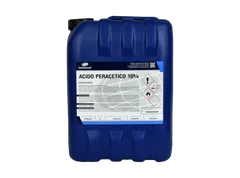
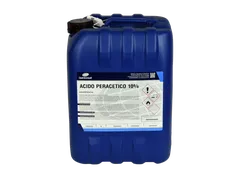
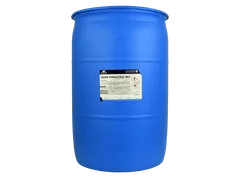
ANTICEL PERACETIC ACID 10%
View All Prices
| Quantity | Unit Price |
|---|---|
| kg | |
| 1 - 99 | USD 3.18 |
| 100 - 199 | USD 3.03 |
| 200 - 499 | USD 2.89 |
| 500 - 999 | USD 2.76 |
| 1000 - 4999 | USD 2.65 |
| 5000 - 9999 | USD 2.54 |
| 10000 - 17999 | USD 2.45 |
| 18000+ | USD 2.36 |
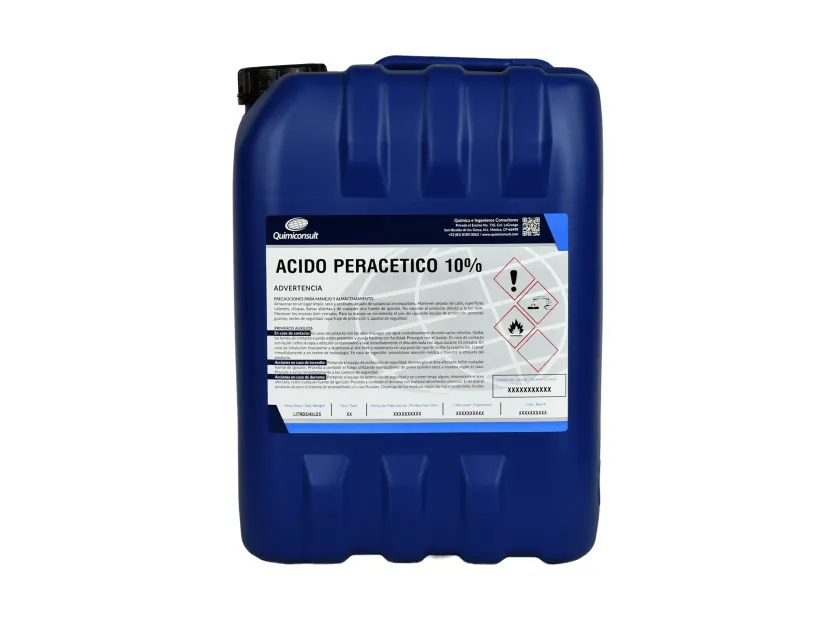
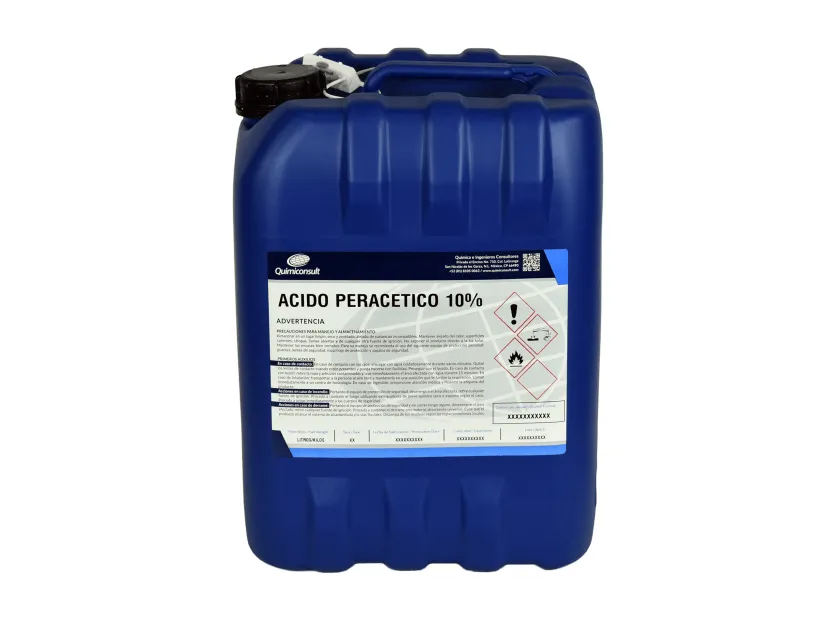
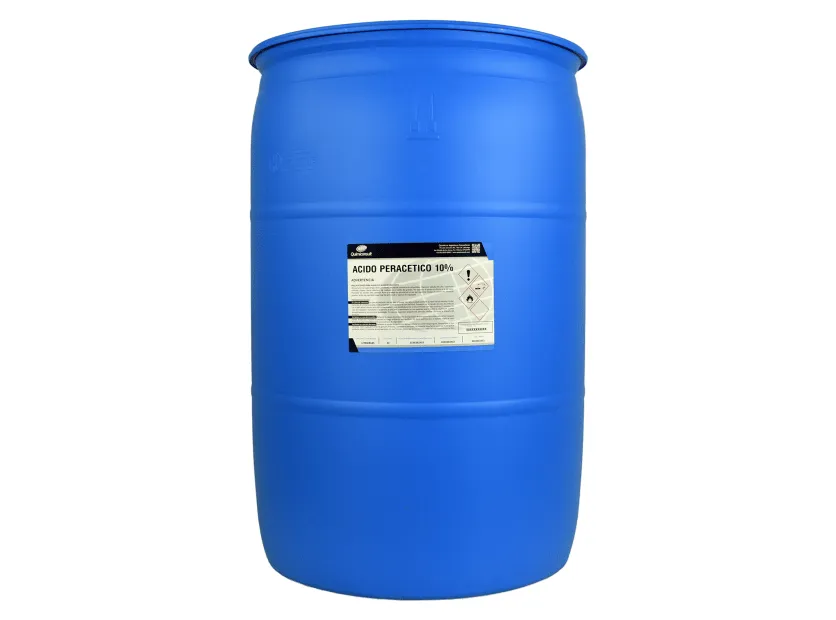
Product description: Anticel Peracetic Acid 10%, industrial disinfectant
At Quimiconsult we manufacture Anticel Peracetic Acid 10%, a broad-spectrum biocide formulated with a minimum peracetic acid concentration of 10%, designed for professional disinfection applications in the food, livestock, agro-industrial, pharmaceutical and water treatment industries. As the direct manufacturer of this sanitizer, we have full control of the production process, from raw material selection to final packaging, ensuring consistency in every lot delivered.
Anticel Peracetic Acid 10% acts instantly on contact with the protective cell structures of microorganisms, simultaneously attacking the cell wall and the cell membrane and deactivating basic cellular metabolic functions involved in protein synthesis. Its performance is proven against Gram-negative and Gram-positive bacteria, fungi, yeasts, viruses and resistant structures such as bacterial endospores and mold spores. Its mechanism of action is based on oxidation of the outer cell membrane through electron transfer: the stronger the oxidizing agent, the faster electrons are transferred to the microorganism and the faster it is inactivated and killed.
Unlike chlorine-based disinfectants, which generate potentially harmful organochlorine by-products, Anticel Peracetic Acid 10% breaks down naturally into oxygen, water and acetic acid (vinegar), components that pose no risk to the environment and leave no toxic residues on treated surfaces or on the foods that come into contact with them. This makes peracetic acid the preferred option for food plants, slaughterhouses, packing houses and agro-industries seeking to meet food safety standards without compromising environmental safety or the health of end consumers.
Anticel Peracetic Acid 10% is a highly water-soluble formulation, which makes it easy to dose and to prepare use solutions in any type of application system, whether manual or automated. Its 10% concentration makes it a versatile, easy-to-handle option within Quimiconsult’s Anticel line, especially suited to operations seeking an optimal balance between biocidal power, ease of handling and operating cost per liter of prepared solution.
Benefits of Anticel Peracetic Acid 10% as an industrial sanitizer
One of the main benefits of Anticel Peracetic Acid 10% is its proven microbiological performance. The product passes the 99.99% reduction microbial challenge for Staphylococcus aureus ATCC 6538, Escherichia coli ATCC 11229 and Salmonella typhimurium ATCC 14028 under analytical method NMX-BB-040-SCFI-1999. It also passes the 99.99% reduction challenge for Escherichia coli O157:H7 ATCC 43890 with a contact time of just 30 seconds under analytical method 960.09, demonstrating a speed of action that few sanitizers on the market can match.
The biocidal efficiency of Anticel Peracetic Acid 10% remains stable even under conditions that normally reduce the effectiveness of other disinfectants. The product retains its antimicrobial capacity against a wide range of microorganisms in very hard water, whether cold or warm, which makes it especially valuable in regions where process water quality is variable or where plants operate with water sources with high mineral content.
Anticel Peracetic Acid 10% is a no-rinse disinfectant when used at the concentrations specified in regulation 21 CFR 178.1010, meaning no additional water rinse step is needed after disinfection, significantly reducing water consumption, process time and the labor required for each sanitization cycle. This benefit has a direct impact on operational efficiency and cost per unit produced, particularly in high-volume plants where every minute saved translates into greater productivity.
Because it breaks down exclusively into oxygen, water and acetic acid, Anticel Peracetic Acid 10% is a phosphorus-free product that does not contribute to eutrophication of receiving water bodies, a growing problem associated with industrial effluents high in phosphates. This makes it easier to comply with increasingly strict environmental regulations governing industrial wastewater discharges, including the Mexican official standards NOM-001 and NOM-002.
Product stability is another relevant benefit for logistics and storage. Anticel Peracetic Acid 10% retains its properties for a minimum of 1 year under normal storage conditions, allowing purchasing managers to schedule larger-volume purchases for better commercial terms without worrying about premature degradation of the active ingredient.
Anticel Peracetic Acid 10% applications in industry
Food and beverage industry
Anticel Peracetic Acid 10% is a food-grade sanitizer authorized for use in the food and beverage processing industry. Its main applications include cleaning and disinfecting CIP (Clean In Place) piping, and washing and disinfecting equipment, surfaces and facilities where food is processed. As a no-rinse disinfectant at the concentrations established by the FDA (21 CFR 178.1010), it allows production lines to resume operations immediately after disinfection, minimizing downtime and maximizing plant productivity.
In the beverage industry, Anticel Peracetic Acid 10% is particularly effective for disinfecting fermentation tanks, packaging lines, fillers and direct-contact equipment. Craft and industrial breweries, water bottling plants, juice and soft drink producers and wineries use peracetic acid as a core part of their sanitization programs because of its rapid action and the absence of residual flavors or odors that could affect the organoleptic characteristics of the final product.
Meat and poultry industry
In the meat industry, Anticel Peracetic Acid 10% is used to decontaminate beef, goat, pork and other carcasses by direct spray application, at concentrations of 90 to 220 ppm as established in 21 CFR 173.370, with no subsequent rinse required. This application significantly reduces the surface microbial load on carcasses, helping to meet the microbiological standards required by health authorities and by international buyers of Mexican meat.
In the poultry industry, the product is used to disinfect chicken carcasses in both the PreChiller and the Chiller. Recommended concentrations are 10 to 20 ppm in the PreChiller and 30 to 40 ppm in the Chiller, doses that effectively reduce pathogens such as Salmonella and Campylobacter without affecting the appearance or texture of the carcass. In high-volume poultry plants, where thousands of carcasses pass through the chilling system every hour, the speed of action of peracetic acid (30 seconds for E. coli O157:H7) is a decisive operational advantage.
Post-harvest disinfection of fruits and vegetables
Anticel Peracetic Acid 10% is widely used to disinfect fruit and vegetable rinse water at concentrations of 60 to 80 ppm, in accordance with 21 CFR 173.315. This application is essential in fresh produce packing houses, where cross-contamination through wash water is one of the most significant microbiological risks. Peracetic acid maintains the microbiological quality of process water throughout the workday, unlike chlorine, which quickly loses effectiveness in the presence of organic matter.
Post-harvest disinfection with peracetic acid is compatible with organic production programs approved by the NOP (National Organic Program), allowing organic fruit and vegetable growers and packers to use this sanitizer without losing their organic certification. This compatibility is a key differentiator compared with other disinfectants that lack this approval.
Livestock industry
Anticel Peracetic Acid 10% is recommended for disinfecting livestock facilities, including plants, slaughterhouses, hatcheries, poultry houses, barns, warehouses, equipment, cages, drinkers, feeders and livestock vehicles. Its instant action makes it an effective tool for biosecurity programs that require rapid disinfection between production batches or during sanitary emergencies.
On pig and poultry farms, disinfection with peracetic acid between production cycles helps control the persistence of pathogens such as Salmonella, E. coli, Newcastle disease virus, avian influenza and porcine circovirus in the facilities, reducing infection pressure on new batches of animals and improving mortality and feed conversion indicators.
Water treatment
Anticel Peracetic Acid 10% is used to treat agricultural irrigation water, industrial cooling water, oilfield process water and wastewater. In drip irrigation systems, peracetic acid prevents emitter clogging caused by bacterial biofilm and algae, maintaining irrigation uniformity and system efficiency. In cooling towers and water recirculation systems, it controls the growth of Legionella, biofilm and biofouling even in the presence of ammonia, a condition that inhibits the action of many other biocides.
In wastewater treatment, peracetic acid is gaining ground as an alternative to chlorine for disinfecting the final effluent before discharge. Unlike chlorination, disinfection with peracetic acid does not generate trihalomethanes (THMs) or other organochlorine disinfection by-products regulated by water quality standards, and its rapid biodegradability means it does not affect aquatic life in the receiving water body.
Pulp and paper industry
In the pulp and paper industry, Anticel Peracetic Acid 10% is used to control microbial slime and biofouling in process water systems, white water circuits and headboxes. The formation of biofilm and bacterial slime in these systems reduces the quality of the paper produced, causes sheet breaks, generates unpleasant odors and increases maintenance costs. As a fast-acting oxidizer, peracetic acid penetrates and destroys the extracellular matrix of biofilm more efficiently than non-oxidizing biocides.
Pharmaceutical and medical device industry
In the pharmaceutical sector, peracetic acid is used as a cold sterilization agent for equipment and surfaces that cannot undergo heat sterilization, including surgical instruments, endoscopes and heat-sensitive medical equipment. Disinfecting cleanrooms, isolators and aseptic filling lines with peracetic acid is an established practice in pharmaceutical and medical device plants, where the elimination of bacterial spores is an unavoidable regulatory requirement.
Coatings and paint industry
In the coatings, paint and pigment industry, Anticel Peracetic Acid 10% is used for microbiological control of aqueous pigment dispersions and waterborne coatings, where bacterial contamination can cause viscosity changes, gas generation, unpleasant odors and degradation of the finished product.
Oil and petrochemical industry
In oilfields and drilling operations, peracetic acid is used to control sulfate-reducing bacteria (SRB) in injection water and process water. SRB generate hydrogen sulfide (H₂S), which causes severe corrosion in pipelines, downhole equipment and surface facilities, representing both a safety risk and a significant maintenance cost. The efficacy of peracetic acid against SRB, combined with its rapid biodegradability, positions it as an alternative to conventional biocides such as glutaraldehyde and THPS.
Shock application to eliminate fungi and Listeria
Anticel Peracetic Acid 10% can be used in shock applications at high concentrations to eliminate fungi and Listeria monocytogenes in facilities where persistent contamination has been detected. These corrective disinfection applications are particularly important in ready-to-eat (RTE) food plants, cheese plants, sausage plants and establishments where Listeria represents a critical risk to the safety of the final product and to public health.
Peracetic acid variants available at Quimiconsult
At Quimiconsult we understand that each industry and each process has specific disinfection requirements, so we have developed a complete line of peracetic acids in different concentrations and formulations tailored to particular needs. Anticel Peracetic Acid 10% is a versatile formulation that offers an excellent balance of strength, ease of handling and economy, but we have a broad portfolio that makes it possible to select the optimal option for each application.
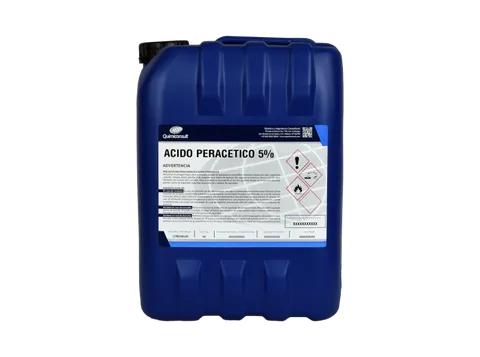
Anticel Peracetic Acid 5% is our lowest-concentration product, ideal for applications that require low doses and simpler handling by operating staff. With a lower concentration of active ingredient, this variant reduces the risks associated with handling concentrated product and is especially practical for operations without automated dosing systems or where usage volume is moderate.
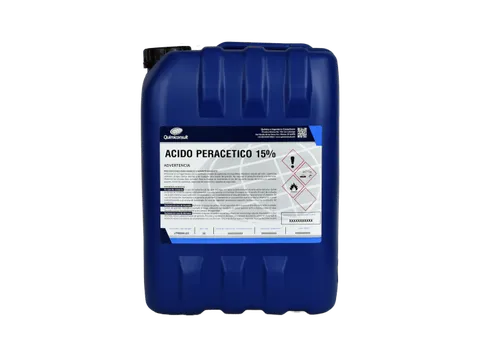
Anticel Peracetic Acid 15% is our most versatile and most certified formulation in the portfolio, with a minimum peracetic acid concentration of 15%. It holds NSF, Kosher and OMRI certifications and SADER registration, making it the preferred option for plants that require broad regulatory compliance, including organic production and export markets with specific certification requirements.
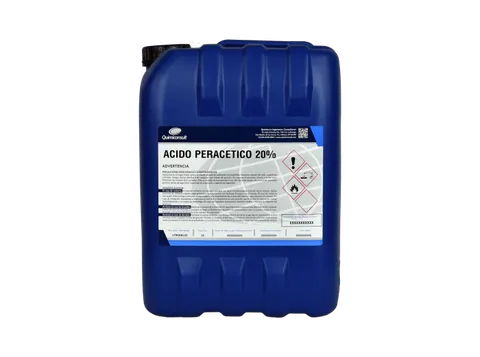
Anticel Peracetic Acid 20% is our highest-concentration formulation, designed for large-scale industrial operations seeking maximum yield per kilogram of product purchased. Its high concentration makes it possible to prepare a significantly larger volume of use solution per unit, optimizing logistics and storage costs in plants with high sanitizer consumption.
Anticel PRO is a specialized variant designed specifically for disinfection in direct contact with food, with particular emphasis on meat and poultry applications. One of the distinguishing features of Anticel PRO is its ability to reduce over-coloring effects in bruised and damaged areas that frequently occur during processing, a problem that conventional peracetic acids can accentuate.
We also have formulations aimed mainly at disinfecting equipment and facilities, where the emphasis is on removing biofilm and disinfecting indirect-contact surfaces, CIP systems, tanks, piping and process equipment. Along the same lines, we offer complementary products such as fourth-generation quaternary ammonium compounds that provide a prolonged residual bacteriostatic effect, complementing the immediate oxidizing action of peracetic acid for a comprehensive sanitization program.
The availability of this complete line of concentrations and formulations allows sanitation managers to select the most suitable variant for each point of application within their plant, optimizing both disinfection efficacy and operating cost. Our technical team can advise on selecting the most appropriate concentration and formulation based on the specific conditions of each process, production volume, applicable regulations and available budget.
H2: Anticel Peracetic Acid 10% directions for use and dilutions
Anticel Peracetic Acid 10% can be applied by three main methods: injection into process water, direct spray onto surfaces or food, and immersion of parts, equipment or products in a prepared solution. The choice of method depends on the type of application, the geometry of the surfaces to be disinfected and the infrastructure available at the plant.
For sanitizing surfaces without a subsequent rinse, a concentration of 100 to 200 ppm is recommended in accordance with FDA regulation 21 CFR 178.1010. This is the most common application in food plants for disinfecting work tables, conveyor belts, utensils, molds and any food-contact surface that requires fast, effective disinfection without an additional rinse step.
For disinfecting surfaces that require more intensive action, concentrations of 220 to 400 ppm are used, followed by a rinse. These higher concentrations are used when there is a high microbiological load, known presence of biofilm, or when surfaces have a higher level of residual soil.
For carcass decontamination in the meat industry, the recommended concentrations range from 90 to 220 ppm in accordance with 21 CFR 173.370, with no subsequent rinse required. For the poultry industry specifically, 30 to 40 ppm is recommended in the Chiller and 10 to 20 ppm in the PreChiller. These doses have been validated to achieve significant pathogen reductions without affecting the visual quality or organoleptic properties of the carcasses.
For fruit and vegetable rinse water, the recommended concentration is 60 to 80 ppm in accordance with 21 CFR 173.315. It is important to note that Anticel Peracetic Acid 10% does not require pH control to achieve effective microbial control, as it remains effective at both acidic and slightly alkaline pH, considerably simplifying sanitization operating procedures.
The exact dose should be adjusted taking into account factors such as the organic load of the process water, operating temperature, available contact time and the specific microbiological requirements of each plant’s sanitization program. Quimiconsult’s technical team can help determine the optimal doses for each particular application.
Anticel Peracetic Acid 10% physicochemical properties
Anticel Peracetic Acid 10% is a colorless liquid with a characteristic acetic acid odor. Its minimum peracetic acid concentration is 10%, together with hydrogen peroxide in a range of 4.0% to 6.0% and acetic acid at a concentration below 30%, components that act synergistically in the biocidal oxidation mechanism. The relative density of the product is in the range of 1.00 to 1.15 g/mL, and the pH of a 1.0% solution is between 2.5 and 3.5.
The product is highly biodegradable and 100% soluble in aqueous media, making it easy to incorporate into any water-based dosing system. These physicochemical properties ensure homogeneous distribution of the active ingredient in use solutions and rapid, safe environmental degradation after it has fulfilled its biocidal function.
The product’s composition includes acetic acid (CAS 64-19-7), peracetic acid (CAS 79-21-0) and hydrogen peroxide (CAS 7722-84-1). This peroxide-acid equilibrium mixture is the basis of the formulation, providing both the primary oxidizing capacity of peracetic acid and the complementary synergistic effect of hydrogen peroxide.
Anticel Peracetic Acid 10% certifications and registrations
Anticel Peracetic Acid 10% is registered with SADER (Secretaría de Agricultura y Desarrollo Rural, Mexico’s Ministry of Agriculture and Rural Development), the Mexican authority responsible for regulating inputs used in the agri-food and livestock industries. This registration confirms that the product complies with applicable national regulations for use in food processing establishments, livestock facilities, slaughterhouses and other environments regulated by this agency. For operations in Mexico that process food of animal or plant origin under SENASICA supervision, a sanitizer registered with SADER is a fundamental requirement that Anticel Peracetic Acid 10% fully satisfies.
The product is suitable for sanitization in organic production as approved by the NOP (National Organic Program), allowing its use in packing houses and processors operating under organic certification without compromising their status. This compatibility with organic production broadens the product’s range of applications in a market segment that is growing steadily both in Mexico and in export markets.
Quimiconsult manufactures Anticel Peracetic Acid 10% in facilities operating under rigorous quality and traceability standards, so our customers can rely on the consistency of every lot received. For operations that require additional certifications such as NSF, Kosher or OMRI, we recommend checking the availability of our Anticel Peracetic Acid 15% variant, which holds the broadest portfolio of certifications in the Anticel line.
These registrations and certifications position Anticel Peracetic Acid 10% as a reliable sanitizer for industries operating under national and international regulatory frameworks, and reinforce Quimiconsult’s commitment to quality, safety and regulatory compliance.
Anticel Peracetic Acid 10% hazard classification and safety
Anticel Peracetic Acid 10% is classified and labeled according to the Globally Harmonized System (GHS), in accordance with NOM-018-STPS-2015, with the signal word Danger. The product has the following classifications: organic peroxides Type F, skin corrosion Category 1, serious eye damage Category 1, and specific target organ toxicity, single exposure, Category 3.
The associated hazard statements include: H242 (heating may cause a fire), H314 (causes severe skin burns and eye damage), H318 (causes serious eye damage) and H335 (may cause respiratory irritation). The product’s NFPA rating is 3 for health hazard, 2 for flammability and 4 for reactivity, indicating a product that requires professional handling with appropriate personal protective equipment.
For safe handling of Anticel Peracetic Acid 10%, personal protective equipment should be used, including chemical splash goggles (or a face shield over goggles for prolonged exposure), impermeable chemical-resistant gloves, protective footwear and clothing suitable for the risk of exposure, and a full-face respirator if ventilation conditions require it.
The product is a strong oxidizing agent and highly reactive. It must be kept away from heat sources, sparks, open flames and hot surfaces. It must not be mixed with bleach or other chlorine-treated products, as this combination produces chlorine gas, which is extremely dangerous. Incompatibilities include acids, bases, metals, heavy metal salts, powdered metal salts, reducing agents, organic materials and flammable materials.
For transport information, Anticel Peracetic Acid 10% is classified as UN number 3109, proper shipping name: Organic peroxide type F, liquid (Peracetic acid), hazard class 5.2 (8), packing group II.
Anticel Peracetic Acid 10% storage and handling
Proper storage of Anticel Peracetic Acid 10% is essential to maintain the active ingredient concentration, prevent hazardous situations and ensure the product retains its properties throughout its shelf life. The product should be stored in a cool, well-ventilated place, within a temperature range of -15°C to 40°C, in its original container, which has a vented seal specifically designed to release in a controlled manner the gases naturally generated by the gradual decomposition of the peroxide.
The container must be kept tightly closed when product is not being dispensed and must be stored away from other materials and protected from direct sunlight. It is essential to keep the product separate from reducing agents, combustible materials, metals, acids, bases and any organic material that could react with the oxidizer. Do not pressurize, cut, weld or drill containers or expose them to heat sources. Product drying on clothing or other combustible materials may cause a fire.
In the event of an accidental leak or spill, eliminate all ignition sources from the area and use appropriate personal protective equipment. Do not touch or walk through spilled material. For containment and cleanup, use non-combustible absorbent material such as sand or earth, placing the contaminated material in a suitable container for disposal. Prevent spilled material from coming into contact with soil and surface water.
In case of skin contact, immediately remove all contaminated clothing and wash with plenty of soap and water, seeking immediate medical attention. In case of eye contact, rinse cautiously with water for several minutes, remove contact lenses if present, and seek immediate medical attention. In case of inhalation, move the person to fresh air and keep them at rest in a position comfortable for breathing. In case of ingestion, rinse the mouth, do not induce vomiting, and seek immediate medical attention.
In the event of a fire, use water spray (fog), foam, dry chemical or carbon dioxide as extinguishing media. It is important to bear in mind that the product may reignite on its own after the fire has been extinguished, and that liquid residues seeping into sewers can create a fire or explosion hazard.
It is an essential requirement that everyone who handles this product receives training on the recommendations in the Safety Data Sheet. Following these good handling and storage practices ensures safe and effective use of the product, protecting both operating personnel and the integrity of Anticel Peracetic Acid 10% throughout its shelf life.
Other names and synonyms for Anticel Peracetic Acid 10%
Anticel Peracetic Acid 10% may also be identified simply as Anticel or Anticel PAA 10%, terms widely used in industrial settings to refer to this sanitizing solution. These names frequently appear in technical documentation, sanitization programs, SSOP (Sanitation Standard Operating Procedures), purchase specifications and maintenance work orders.
In some contexts, the product may be described as 10% peracetic acid sanitizer, peracetic acid disinfectant, PAA sanitizer, peracetic acid biocide, peracetic acid 10%, PAA 10%, oxidizing food sanitizer or no-rinse disinfectant for the food industry. These terms refer to its role in sanitization programs and help categorize the product by mechanism of action and type of application.
Within the broader category of peracetic acid-based disinfectants, Anticel Peracetic Acid 10% stands out for being manufactured directly by Quimiconsult, which guarantees full control over the formulation, complete traceability of every lot and direct technical support from the manufacturer. Peracetic acid sanitizers are a family of disinfection chemicals that have gained prominence in recent decades as an alternative to chlorine-based disinfectants, driven both by their superior microbiological efficacy and by their favorable environmental profile, since they break down into harmless components.
Likewise, in purchasing and sourcing processes it is common to see searches such as peracetic acid price, peracetic acid 10%, peracetic acid 10 percent, PAA sanitizer, peracetic acid for food, no-rinse sanitizer, chicken disinfectant, peracetic acid for slaughterhouses, fruit and vegetable sanitizer, meat industry disinfectant, peracetic acid for CIP, livestock sanitizer or industrial oxidizing biocide, where functional descriptions are used to find options available on the market. These variations help purchasing, quality and sanitation managers identify the product within the broad market of industrial sanitizers used in professional disinfection programs.