Spanish
 English


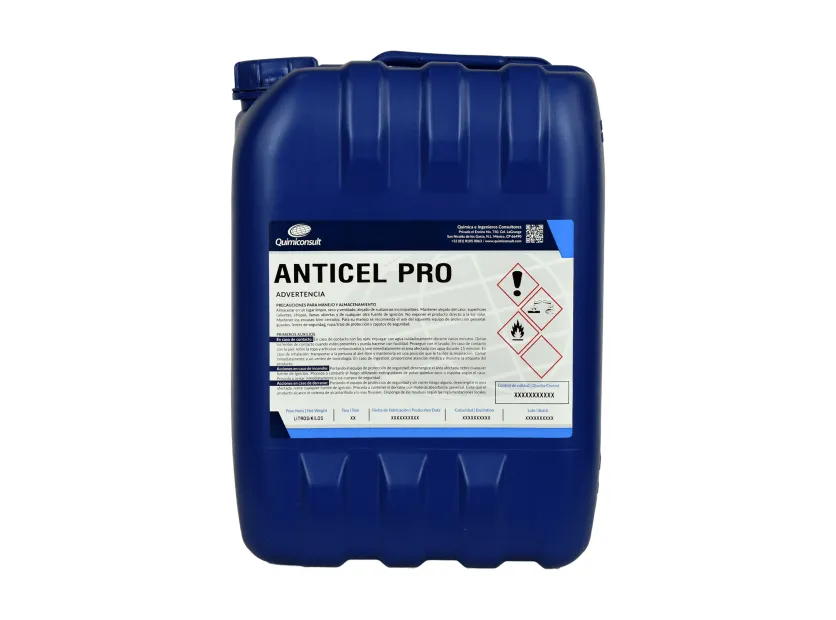
ANTICEL PRO PERACETIC ACID 15% FOR DIRECT USE IN FOOD
View All Prices
| Quantity | Unit Price |
|---|---|
| kg | |
| 1 - 99 | USD 3.02 |
| 100 - 199 | USD 2.90 |
| 200 - 499 | USD 2.78 |
| 500 - 999 | USD 2.68 |
| 1000 - 4999 | USD 2.58 |
| 5000 - 9999 | USD 2.50 |
| 10000 - 17999 | USD 2.42 |
| 18000+ | USD 2.34 |
Product description, Anticel® Food peracetic acid disinfectant for the meat and poultry industry
At Quimiconsult we produce Anticel® Food, a specialized 15% peracetic acid formulation designed specifically for disinfection applications in direct contact with food, with a particular focus on the meat and poultry industry. Unlike conventional peracetic acids, Anticel® Food incorporates acidity self-regulation technology in aqueous media that solves one of the most common and costly problems faced by meat and poultry processing plants: the over-coloring and discoloration of carcasses in areas with bruises and hematomas caused by the action of standard peracetic acid.
Anticel® Food is a broad-spectrum biocide with excellent performance against Gram-negative and Gram-positive bacteria, fungi, yeasts, viruses and resistant structures such as endospores and mold spores. Its action is instantaneous on contact with the protective cell structures of microorganisms, including the cell wall and cell membrane, and it also deactivates elementary functions of cell metabolism involved in protein synthesis. The mechanism of action is based on oxidation of the outer cell membrane through electron transfer: the stronger the oxidizing agent, the faster electrons are transferred to the microorganism and the faster it is inactivated and dies.
What sets Anticel® Food apart from other peracetic acids on the market is its ability to self-regulate the acidity of the system when diluted in water. This self-regulation is what allows the product to disinfect with the same microbiological effectiveness as a conventional peracetic acid, but without causing the excessive oxidation reactions on animal tissue that lead to darkening, greening or staining of carcasses in areas where the meat shows bruises, hematomas or contusions from the slaughter process. For processing plants, this translates directly into fewer rejections for appearance, less need for trimming rework and better presentation of the finished product, which positively impacts its commercial value.
Anticel® Food breaks down into completely harmless byproducts: oxygen, water and acetic acid (vinegar), making it a no-rinse disinfectant when used within the concentrations established by FDA 21 CFR regulations. It does not generate halogenated byproducts or trihalomethanes, and its use eliminates Total Coliforms, E. Coli and Salmonella from treated surfaces, the three microbiological groups most closely monitored by health authorities in the meat and poultry industry.
Anticel® Food is highly soluble in water, phosphorus-free and maintains its effectiveness against a wide range of microorganisms even in very hard water, whether cold or warm. With a minimum concentration of 15% peracetic acid, a density of 1.05 to 1.10 g/cc and high biodegradability, Anticel® Food combines the disinfecting power of peracetic acid with the formulation intelligence needed to protect the appearance of both meat and poultry products and fruits and vegetables during the disinfection process. Its acidity self-regulation benefits not only animal tissue but also plant tissue, where the excessive oxidation of a conventional peracetic acid can cause browning, loss of firmness and accelerated deterioration of appearance in sensitive products such as lettuce, strawberries, avocado, mango and other post-harvest fruits and vegetables.
Benefits of Anticel® Food as a specialized disinfectant
Anticel® Food offers a set of technical and operational advantages that clearly distinguish it from conventional peracetic acids, positioning it as the preferred disinfection solution for meat and poultry processing plants seeking maximum microbiological effectiveness without compromising the visual quality of their products.
The most distinctive benefit of Anticel® Food is the reduction of over-coloring on carcasses. When conventional peracetic acid is used to disinfect beef, pork, goat or other carcasses, and chicken carcasses, it is common to see areas where the animal has bruises, hematomas or contusions take on a darker, greenish or stained color as a result of the oxidative reaction of peracetic acid with the hemoglobin and myoglobin accumulated in the damaged tissue. This effect causes rejections at visual inspection, forces trimming that reduces carcass weight and yield, and in severe cases can lead to downgrading the product to categories of lower commercial value. Thanks to its acidity self-regulating formulation, Anticel® Food significantly minimizes this effect, allowing disinfection to fulfill its microbiological function without altering the product's appearance beyond what is commercially acceptable.
The microbiological effectiveness of Anticel® Food is validated through standardized microbial challenges. The product passes the 99.99% reduction for Staphylococcus Aureus ATCC 6538, Escherichia Coli ATCC 11229 and Salmonella Typhimurium ATCC 14028 under analytical method NMX-BB-040-SCFI-1999. It also passes the 99.99% reduction challenge for Escherichia Coli O157:H7 ATCC 43890 with a contact time of just 30 seconds under analytical method 960.09. This last strain is particularly relevant for the meat industry, since E. Coli O157:H7 is one of the pathogens most closely monitored by health authorities in beef and its byproducts, and its presence can result in product recalls, temporary plant shutdowns and serious regulatory penalties.
Its status as a no-rinse disinfectant is another high-impact operational benefit. Because it breaks down exclusively into oxygen, water and acetic acid, Anticel® Food leaves no toxic residues or compounds that could contaminate the meat or poultry or alter its organoleptic properties of taste, smell or texture. On meat and poultry production lines where processing volumes are high and the time between slaughter and refrigeration is critical, eliminating the rinse step after disinfection represents significant savings in water, time and labor.
The product's stability for a minimum of 1 year under normal storage conditions allows plants to maintain inventories without worrying about degradation of the active ingredient, ensuring consistent dosing and predictable results over time. This makes it easier to validate sanitation procedures in quality and food safety audits such as FSSC 22000, SQF, BRC and HACCP.
Anticel® Food is OMRI certified for organic production, allowing its use in plants that process certified organic meat and poultry without compromising their certification status. With the sustained growth of the organic animal protein market, this certification significantly broadens the product's commercial possibilities.
In addition, Anticel® Food is phosphorus-free and maintains its effectiveness in very hard water, both cold and warm, eliminating the need for water pretreatment and allowing plants located in any geographic region to obtain the same disinfection results regardless of the quality of their water supply.
A benefit that is often underestimated but highly valued by fruit and vegetable packers is that Anticel® Food's acidity self-regulation also protects plant tissue during post-harvest disinfection. Conventional peracetic acids can cause accelerated enzymatic browning, loss of firmness, surface bleaching or chemical burns on sensitive products such as lettuce, spinach, strawberries, blueberries, avocado, mango, papaya and other highly sensitive products. Anticel® Food minimizes these effects by regulating the oxidative aggressiveness of the solution, which translates into longer shelf life for the disinfected product, less shrinkage due to deterioration in appearance and better presentation at the point of sale. For the fresh-cut produce industry (ready-to-eat pre-cut salads and fruits), where visual appearance is a determining factor in the consumer's purchase decision, this feature makes Anticel® Food a disinfection tool that not only protects food safety but also preserves the product's commercial value.
Industrial applications of Anticel® Food
Although Anticel® Food was formulated with a primary focus on the meat and poultry industry, its versatility as a broad-spectrum biocide makes it suitable for a wide range of industrial applications. Its acidity self-regulation, which is its main differentiator in meat applications, also brings advantages in other contexts where the aggressiveness of conventional peracetic acid may be undesirable.
In the meat industry, Anticel® Food is the formulation of choice for decontaminating cattle, goat, pig and other carcasses. Applied by spray onto freshly slaughtered carcasses, it provides uniform coverage that significantly reduces the surface microbial load, controlling pathogens such as E. Coli O157:H7 and Salmonella, without causing the discoloration that conventional peracetic acids produce in areas with bruises and hematomas. Use concentrations range from 90 to 220 ppm in accordance with 21 CFR 173.370, with no subsequent rinse required. This application is especially critical at the final inspection point, where the visual appearance of the carcass is evaluated and any abnormal coloring can result in a downgrade of the product's grade.
In the poultry industry, Anticel® Food is used to disinfect chicken carcasses at multiple points in the process. In the Final Wash before entering the chilling system, it is applied to reduce the microbial load before the carcasses come into contact with the chiller water. In the PreChiller, a concentration of 10 to 20 ppm is recommended to begin the chilling process with sanitized water that prevents cross-contamination between carcasses. In the main Chiller, it is used at concentrations of 30 to 40 ppm to maintain microbiological control throughout the chilling cycle. Anticel® Food's acidity self-regulation is particularly valuable at these stages, since chicken carcasses frequently show hematoma areas from the slaughter and defeathering process that would be visually accentuated by a conventional peracetic acid, affecting the USDA or NOM grading of the pieces.
In post-harvest disinfection of fruits and vegetables, Anticel® Food is one of the most recommended formulations in our line because its acidity self-regulation protects plant tissue in the same way it protects animal tissue. When applied to freshly harvested or processed fruits and vegetables, conventional peracetic acids can cause excessive oxidation that shows up as surface browning, loss of shine, premature softening or visible chemical burns, especially in thin-skinned or highly sensitive products such as lettuce, baby spinach, strawberries, raspberries, blueberries, avocado, mango, papaya, tomato and fresh herbs. Anticel® Food minimizes these effects by modulating the oxidative intensity of the solution, achieving the same microbiological effectiveness but with significantly less visual impact on the treated product.
Concentrations for fruit and vegetable rinse water are 60 to 80 ppm in accordance with 21 CFR 173.315. In packing houses and fresh-cut processing plants (pre-cut salads, ready-to-eat fruits, fresh vegetable mixes), choosing Anticel® Food over a standard peracetic acid can make the difference between a product that keeps its attractive appearance throughout its shelf life and one that shows signs of premature visual deterioration that the consumer rejects at the point of sale. This benefit translates directly into less shrinkage, longer commercial shelf life and a better return on the investment in the post-harvest sanitation process.
As a food-grade disinfectant for general use, Anticel® Food is applied for cleaning piping in CIP (Clean in Place) systems and for washing and disinfecting equipment, surfaces and facilities in food and beverage processing plants. For surface sanitizing without a subsequent rinse, 100 to 200 ppm is recommended in accordance with 21 CFR 178.1010. For disinfection with a subsequent rinse, 220 to 400 ppm. Applications include disinfection of direct-contact equipment, shock application to eliminate fungi and Listeria, and corrective disinfection.
The product is suitable for sanitizing in organic production as approved by the NOP (National Organic Program), allowing its use in certified organic plants that process animal proteins as well as fruits, vegetables and other organic foods.
In the livestock and poultry sector, Anticel® Food is recommended for disinfecting livestock facilities, plants, slaughterhouses, hatcheries, poultry houses, stables, warehouses, equipment, cages, drinkers, feeders and livestock vehicles. Its instant action and breakdown into harmless byproducts make it suitable for environments where animals will be in contact with the treated surfaces shortly after application.
In irrigation water treatment, Anticel® Food is used to control the microbial load in irrigation systems, with the precaution that the concentration must not exceed 80 ppm in accordance with 21 CFR Part 173 D.
Beyond the food industry, Anticel® Food shares the industrial applications of peracetic acid in general: treatment of cooling and recirculation water in cooling systems (even in the presence of ammonia), oilfield process water and wastewater, slime and biofouling control in the pulp and paper industry, agricultural irrigation, microbiological control of dispersed pigments in the coatings industry, and industrial wastewater treatment. In all these applications, the self-regulated formulation of Anticel® Food offers an alternative when a peracetic acid with lower oxidative aggressiveness on sensitive substrates is sought.
Peracetic acid variants available at Quimiconsult
At Quimiconsult we have developed a complete line of peracetic acids in different concentrations and formulations to meet the specific needs of each industry and process. Anticel® Food is our specialized formulation for direct food contact in meat and poultry applications, but it is part of a broader portfolio.
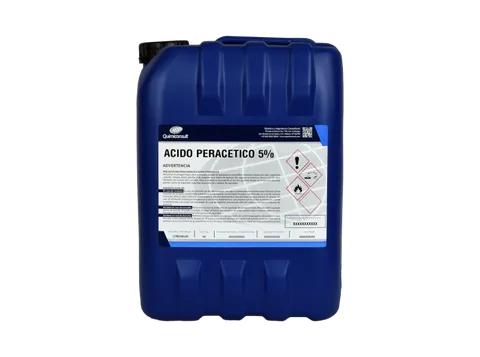
Anticel Peracetic Acid 5% (SKU INPTF017) is our lowest-concentration presentation, ideal for applications that require low dosing and simpler handling by operating staff. Its lower concentration reduces handling risks and is practical for operations without automated dosing systems.
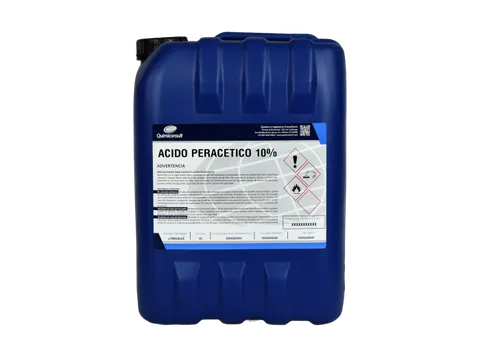
Anticel Peracetic Acid 10% (SKU INPTF018) offers a middle ground between dosing capacity and ease of handling. It is often chosen by plants that need flexibility in their sanitation programs without resorting to the highest concentrations.
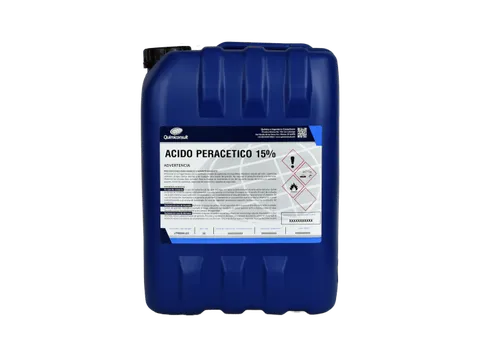
Anticel Peracetic Acid 15% (SKU INPTF020) is our most requested reference for general disinfection applications in the food, livestock and agro-industrial sectors. It holds OMRI, NSF Nonfood Compounds, Kosher Pareve Pessach and SADER certifications, the broadest regulatory backing in our line. For plants that use peracetic acid at multiple application points, Anticel 15% covers general disinfection needs for surfaces, equipment and CIP systems, while Anticel® Food is reserved for points of direct contact with carcasses where over-coloring is a risk.
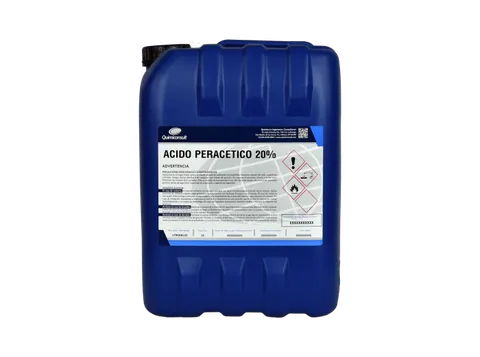
Anticel Peracetic Acid 20% is our highest-concentration formulation, designed for large-scale operations where high sanitizer consumption makes efficiency per kilogram of product a deciding factor. It is especially valued in high-volume poultry plants, wastewater treatment and applications in the pulp and paper industry.
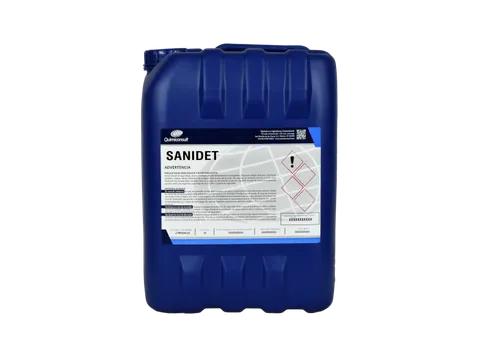
Our portfolio also includes complementary products such as SANIDET (SKU INPTF027), a base disinfectant that complements the sanitation program, and fourth-generation quaternary ammonium compounds (SKU INMPQ084), which provide residual disinfection with a prolonged bacteriostatic effect for applications where this feature is desirable.
Our technical team can advise on selecting the most appropriate formulation for each application point, considering that many plants use multiple variants of our Anticel line at different stages of their process: Anticel® Food where there is direct contact with carcasses, Anticel 15% for general surfaces and equipment, and Anticel 5% or 10% for lower-demand applications or where simpler handling is desired.
H2: Anticel® Food directions for use and dosage
Anticel® Food can be applied by three main methods: injection into process water, spraying or immersion. The choice of method depends on the type of product to be disinfected, the point in the process where it is applied and the specific characteristics of the operation.
When applied by spray on meat carcasses, Anticel® Food is delivered through spray systems that uniformly cover the carcass surface immediately after slaughter or at intermediate points in the deboning process. Recommended concentrations for carcass decontamination range from 90 to 220 ppm in accordance with 21 CFR 173.370, with no subsequent rinse required. Spray pressure and pattern must be calibrated to achieve complete coverage of the surface, including cavities and hard-to-reach areas.
For disinfecting chicken carcasses in the Chiller, a concentration of 30 to 40 ppm maintained continuously throughout the chilling cycle is recommended. In the PreChiller, the recommended concentration is 10 to 20 ppm. These levels are monitored and maintained by dosing systems that inject Anticel® Food into the chiller water based on real-time concentration readings.
For surface sanitizing without a subsequent rinse, 100 to 200 ppm is recommended in accordance with 21 CFR 178.1010. For surface disinfection with a subsequent rinse, 220 to 400 ppm. For fruit and vegetable rinse water, 60 to 80 ppm in accordance with 21 CFR 173.315. In irrigation water, it must not exceed 80 ppm in accordance with 21 CFR Part 173 D.
Dosing should be monitored regularly using test strips or titration kits specific to peracetic acid. In chiller systems where the concentration must be kept constant for long periods, the use of automatic in-line controllers is recommended to adjust dosing according to the organic load of the water, which varies as more carcasses are processed.
It is important to document dosing and monitoring records as part of the plant's SSOP (Sanitation Standard Operating Procedures) and HACCP plan. These records are essential evidence during food safety audits and health authority inspections.
Physicochemical properties of Anticel® Food
Knowing the physicochemical properties of Anticel® Food is essential for its correct handling, storage and dosing in disinfection operations in the meat and poultry industry.
Anticel® Food is a colorless liquid with a characteristic odor. Its minimum peracetic acid concentration is 15%, placing it in the same concentration range as standard Anticel Peracetic Acid 15%, but with the fundamental difference of its acidity self-regulating formulation, which makes it unique for applications in direct contact with carcasses.
The product's density is in the range of 1.05 to 1.10 g/cc. It is 100% soluble in aqueous media, which makes it easy to incorporate into automated dosing systems for chillers, preconditioners and spray equipment. Its high biodegradability ensures that, once its disinfecting function is fulfilled, the breakdown byproducts (oxygen, water and acetic acid) are completely benign for both the treated food and the environment.
Storage and handling conditions for Anticel® Food follow the same precautions that apply to all peracetic acid products: store in a cool, ventilated place, in the original container with a vented seal, separated from combustible materials, reducing agents and chlorinated products. Staff must wear complete personal protective equipment, including goggles, chemical gloves, a protective suit and, if necessary, a full-face respirator. All handling must be carried out in well-ventilated areas.
Anticel® Food certifications
Anticel® Food holds OMRI (Organic Materials Review Institute) certification for organic production, confirming its suitability for use in the organic animal protein industry and in organic food processing plants. OMRI is an internationally recognized independent organization that evaluates inputs used in organic agriculture and food processing, verifying that they meet the standards of the National Organic Program (NOP) of the United States Department of Agriculture (USDA). For organic meat and poultry producers and processors, using OMRI-listed products is a requirement to maintain their certification, and Anticel® Food meets this requirement.
The Quimiconsult production plant where Anticel® Food is manufactured holds SQF (Safe Quality Food) certification, a standard recognized by the GFSI (Global Food Safety Initiative) that audits the entire quality and food safety management system of the manufacturing process. From receipt of raw materials to packaging and distribution, every stage is controlled under a certified management system. For meat and poultry plants audited under GFSI schemes such as FSSC 22000, SQF or BRC, the traceability of their sanitation input suppliers is a point that auditors review, and having a supplier with an SQF-certified plant makes it easier to meet this requirement.
For plants that require additional certifications such as NSF Nonfood Compounds or Kosher for their sanitation products, Quimiconsult offers Anticel Peracetic Acid 15% (SKU INPTF020), which holds this expanded set of certifications and can be used alongside Anticel® Food at application points where these certifications are required.
Other names and synonyms for Anticel® Food
Anticel® Food may also be identified as Anticel® Food peracetic acid, Anticel® Food PAA or simply as peracetic acid for meat and poultry, terms that reflect its positioning as the specialized peracetic acid formulation for the animal protein industry. These names appear in technical documentation, SSOP sanitation programs, HACCP plans, purchase specifications and communications with suppliers.
In the context of the meat and poultry industry, the product may be described as peracetic acid sanitizer for carcasses, chicken carcass disinfectant, peracetic acid for chillers, final wash sanitizer for poultry, non-discoloring disinfectant for the meat industry, self-regulated peracetic acid, or PAA sanitizer for direct food contact. Each of these descriptions refers to a specific application or to the product's differentiating feature, and they are terms industry professionals use when looking for solutions for their processes.
Within the broader family of peracetic acid sanitizers, Anticel® Food stands out for solving the over-coloring problem on carcasses faced by animal protein processing plants. This technical differentiator is what separates Anticel® Food from a standard 15% peracetic acid and justifies its specific selection for the points in the process where there is direct contact with animal tissue.
In purchasing and sourcing it is common to find searches such as peracetic acid for meat, poultry sanitizer, slaughterhouse disinfectant, non-discoloring peracetic acid, PAA for poultry chillers, beef carcass sanitizer, poultry industry disinfectant, peracetic acid for abattoirs, organic sanitizer for meat or no-rinse disinfectant for chicken, where functional descriptions oriented to meat and poultry applications are used. These variations help quality, sanitation and purchasing managers at animal protein processing plants find the specific solution they need for their food safety programs.