Spanish
 English


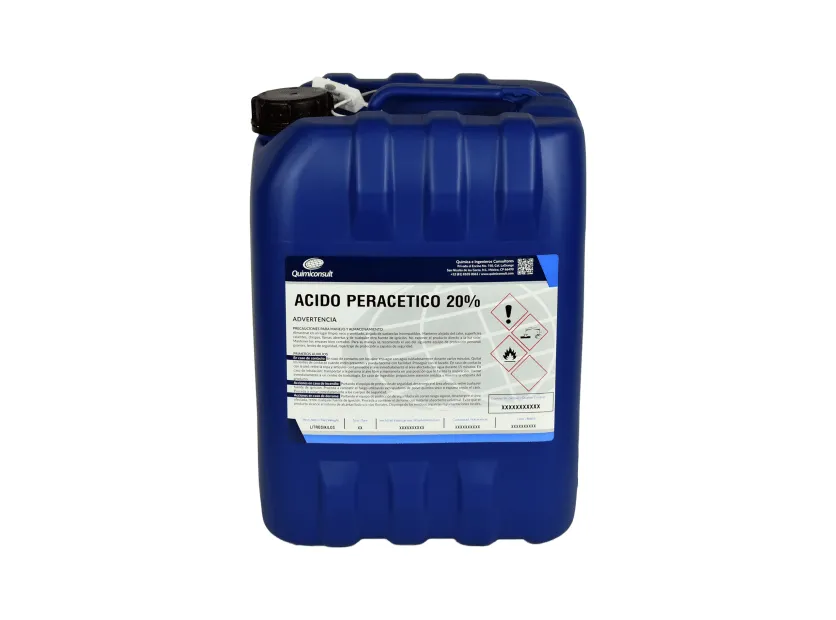
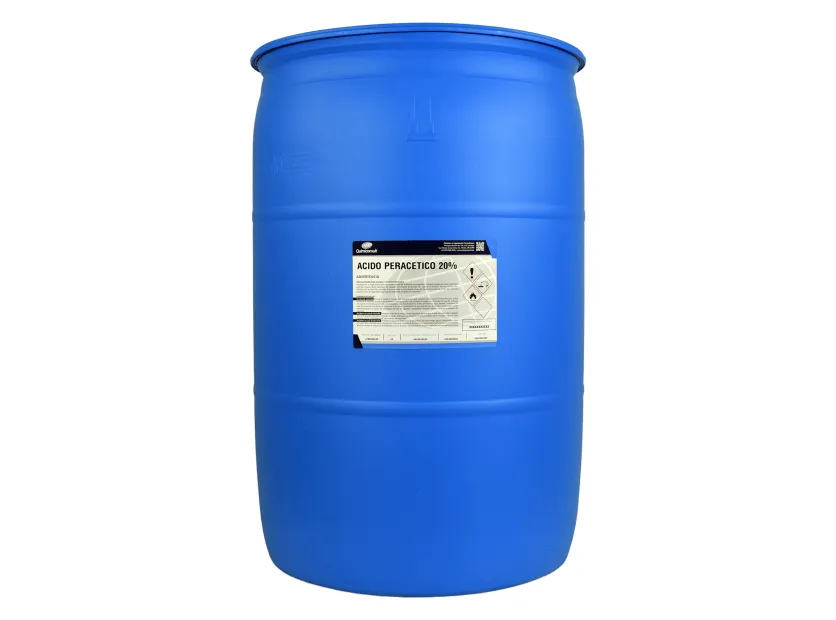
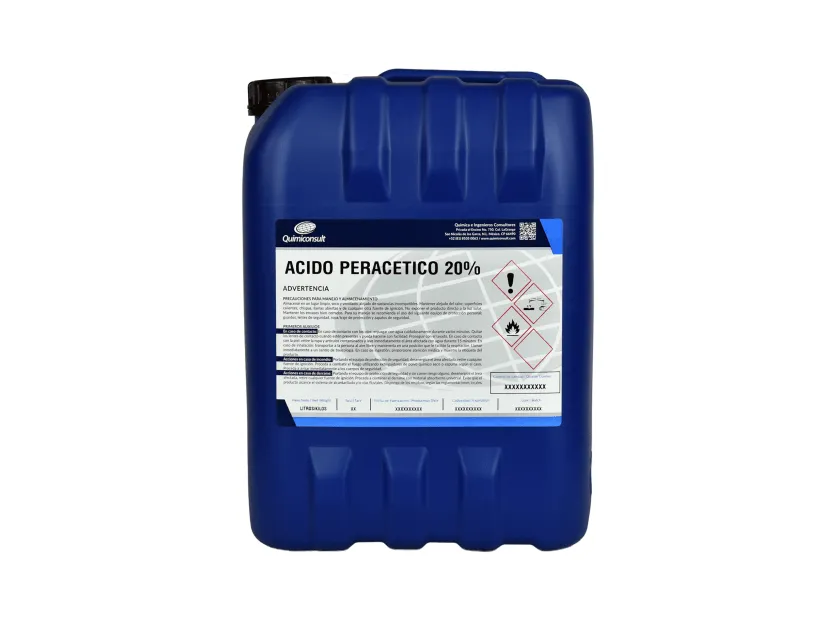
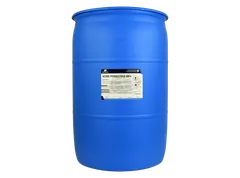
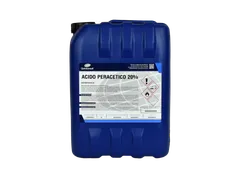
ANTICEL PERACETIC ACID 20%
View All Prices
| Quantity | Unit Price |
|---|---|
| kg | |
| 1 - 99 | USD 2.67 |
| 100 - 199 | USD 2.53 |
| 200 - 499 | USD 2.40 |
| 500 - 999 | USD 2.29 |
| 1000 - 4999 | USD 2.19 |
| 5000 - 9999 | USD 2.10 |
| 10000 - 17999 | USD 2.02 |
| 18000+ | USD 1.95 |
Product description, Anticel Peracetic Acid 20% high-concentration industrial disinfectant
At Quimiconsult we produce Anticel Peracetic Acid 20%, our highest-concentration peracetic acid formulation, designed for large-scale industrial operations that require maximum yield per kilogram of product and superior biocidal capacity. With a minimum concentration of 20% peracetic acid, this direct food contact sanitizer offers the highest dosing efficiency in our Anticel line, allowing a significantly larger volume of use solution to be prepared from each unit purchased compared with lower-concentration formulations.
Anticel Peracetic Acid 20% is a broad-spectrum biocide that acts instantly on contact with the protective cellular structures of microorganisms, including the cell wall and cell membrane, while also deactivating basic cellular metabolic functions involved in protein synthesis. It performs excellently against Gram-negative and Gram-positive bacteria, fungi, yeasts, viruses and resistant structures such as endospores and mold spores. Its mechanism of action is based on oxidation of the outer cell membrane through electron transfer: the stronger the oxidizing agent, the faster electrons are transferred to the microorganism and the faster it is inactivated and dies, which positions peracetic acid as one of the most effective and fastest-acting biocides available to industry.
Like all peracetic acid solutions, Anticel Peracetic Acid 20% breaks down into completely harmless byproducts: oxygen, water and acetic acid (vinegar), making it a no-rinse disinfectant when used within the concentrations established by FDA 21 CFR regulations. This clean breakdown avoids the formation of halogenated byproducts such as trihalomethanes or haloacetic acids that chlorinated disinfectants do produce, a regulatory and environmental advantage that has driven the growing adoption of peracetic acid in industries seeking to reduce their environmental footprint and comply with increasingly strict discharge regulations.
Anticel Peracetic Acid 20% is highly soluble in water and remains effective against a wide range of microorganisms even in very hard water, whether cold or warm. It requires no pH control to achieve effective microbial control, working in both acidic and slightly alkaline conditions. Its composition includes peracetic acid at a minimum concentration of 20%, acetic acid at a concentration below 35% and hydrogen peroxide in a range of 5 to 8%, forming a stable, highly biodegradable equilibrium solution.
The main advantage of choosing the 20% concentration over lower-concentration formulations lies in logistical and operational efficiency: less product volume is needed to reach the same use concentrations, which translates into less storage space, less frequent restocking and lower transport costs per kilogram of active ingredient delivered. This efficiency is particularly valuable in high-volume poultry processing plants, large-scale wastewater treatment operations, pulp and paper facilities with high biocide consumption and, in general, any operation where the volume of sanitizer used is considerable.
Anticel Peracetic Acid 20% is available in Monterrey, Nuevo León, with shipping throughout Mexico, specialized technical assistance and quality documentation for industrial applications.
Benefits of Anticel Peracetic Acid 20% as an industrial disinfectant
Anticel Peracetic Acid 20% offers a set of technical and operational advantages that make it the most efficient option for high-demand industrial disinfection operations. Each of these benefits has been validated through microbiological testing under standardized, internationally recognized methodologies.
The microbiological efficacy of Anticel Peracetic Acid 20% is proven through standardized microbial challenges. The product passes the 99.99% reduction test for Staphylococcus Aureus ATCC 6538, Escherichia Coli ATCC 11229 and Salmonella Typhimurium ATCC 14028 under analytical method NMX-BB-040-SCFI-1999. It also passes the 99.99% reduction challenge for Escherichia Coli O157:H7 ATCC 43890 with a contact time of just 30 seconds under analytical method 960.09. This speed of action is particularly critical on high-volume continuous production lines, where every minute of downtime for sanitizing represents a significant operating cost.
Being a no-rinse disinfectant is another benefit that directly affects productivity. Because it breaks down exclusively into oxygen, water and acetic acid, Anticel Peracetic Acid 20% leaves no toxic residues or compounds that could contaminate food or alter its organoleptic properties. Production lines can return to production more quickly, reducing downtime between shifts and sanitizing cycles, a benefit that is amplified in multi-shift operations where each cleaning cycle is repeated several times a day.
The product's stability for a minimum of 1 year under normal storage conditions allows plants to keep strategic inventories without worrying about premature degradation of the active ingredient. This is especially relevant for the 20% concentration, where volume purchases are more common and batches may stay in the warehouse for longer before being fully used.
Anticel Peracetic Acid 20% is phosphorus-free, which helps with compliance with environmental regulations on industrial effluent discharge. In large-scale operations where the volumes of treated process water are considerable, the absence of phosphorus in the sanitizer prevents contributing to eutrophication in the water bodies that receive the discharges.
Its ability to work efficiently in very hard water, both cold and warm, eliminates the need for costly water pretreatment or dedicated softening systems. For plants located in regions with well water or municipal supplies with high mineral content, this versatility makes it possible to achieve the same disinfection results without additional investment in water treatment infrastructure.
Finally, the higher concentration of Anticel 20% offers a direct economic benefit: because it contains more active ingredient per kilogram, the cost per ppm of prepared use solution is lower than with lower-concentration formulations, provided the plant has trained personnel and suitable dosing equipment to handle high concentrations of peracetic acid safely.
Industrial applications of Anticel Peracetic Acid 20%
20% peracetic acid is the preferred concentration for high-volume industrial operations where sanitizer consumption is high and dosing efficiency is a deciding factor. Anticel Peracetic Acid 20% covers an exceptionally wide range of applications, from direct food contact disinfection to industrial wastewater treatment and microbiological control in non-food processes.
In the food and beverage processing industry, Anticel Peracetic Acid 20% is a food-grade disinfectant used for cleaning piping in CIP (Clean in Place) systems and for washing and disinfecting equipment, surfaces and facilities. Its high concentration allows automated dosing systems to run at lower injection flow rates to reach the same use concentrations, reducing wear on dosing pumps and how often product tanks need refilling. Peracetic acid's ability to eliminate biofilm makes it an indispensable tool in plants where biofilm formation in pipes, tanks and equipment is one of the main microbiological risks, since biofilm can make microorganisms up to 1,000 times more resistant to conventional disinfectants.
In the meat industry, the product is used to decontaminate beef, goat and other carcasses, applied directly to tissue of animal origin at concentrations of 90 to 220 ppm in accordance with 21 CFR 173.370, with no subsequent rinse required. In high-capacity slaughterhouses and meat processing plants, where hundreds or thousands of carcasses are processed per shift, the 20% concentration streamlines sanitizer supply logistics by requiring less product volume to keep dosing tanks stocked throughout the working day.
In post-harvest disinfection of fruits and vegetables, the product controls spoilage and deterioration caused by microorganisms present in process water and on the surface of freshly cut and processed produce. Concentrations for rinse water are 60 to 80 ppm in accordance with 21 CFR 173.315. In high-volume fruit and vegetable packing houses, especially during peak harvest seasons, the 20% concentration ensures a continuous supply of sanitizer without interruptions for container changes.
For surface disinfection, Anticel Peracetic Acid 20% is used as a no-rinse sanitizer at concentrations of 100 to 200 ppm in accordance with 21 CFR 178.1010, and as a disinfectant with a subsequent rinse at concentrations of 220 to 400 ppm. Applications include disinfecting direct contact equipment in food plants, shock treatments to eliminate fungi and Listeria, and corrective disinfection when deviations are detected in regular sanitation programs.
The product is suitable for sanitizing in organic production as approved by the NOP (National Organic Program), allowing its use in certified organic plants without compromising their certification status. This compatibility with organic production broadens the range of applications for growers and processors who need effective sanitizing solutions within the organic program's requirements.
In the livestock and poultry sector, Anticel Peracetic Acid 20% is recommended for disinfecting livestock facilities, plants, slaughterhouses, hatcheries, poultry houses, barns, warehouses, equipment, cages, drinkers, feeders and livestock vehicles. On large-scale poultry and swine farms, where disinfecting houses between production cycles consumes large volumes of sanitizer, the 20% concentration offers significant logistical and economic advantages.
In irrigation water treatment, the concentration must not exceed 80 ppm in accordance with 21 CFR Part 173 D. This application is relevant in intensive greenhouse agriculture and in fertigation systems where recycled water can become a vector for spreading plant pathogens.
Beyond the food industry, Anticel Peracetic Acid 20% has important applications in the pharmaceutical and medical device industry, where peracetic acid is used for cold sterilization of heat-sensitive equipment, disinfection of clean rooms and sterile rooms, and sanitizing of purified water and water-for-injection systems. Its ability to eliminate endospores, including those of Bacillus and Clostridium, positions it as an effective alternative in high-level disinfection processes where sterility is required without residual toxicity.
In the pulp and paper industry, the product is used to control slime and biofouling in process water circuits. Paper mills are one of the industrial sectors where the 20% concentration is most valued, given the high volume of process water circulating through the systems and the continuous biocide consumption needed to keep circuits free of biological buildup that causes blockages, reduced thermal efficiency and defects in the final product.
Treatment of cooling water and recirculating water in cooling systems is another industrial application where Anticel Peracetic Acid 20% demonstrates its versatility. In cooling towers and recirculation circuits, it controls the proliferation of algae, bacteria and biofilm that reduce heat transfer efficiency and accelerate corrosion. A particularly notable advantage is that it remains effective even in the presence of ammonia, a common condition in industrial refrigeration plants that renders many other biocides ineffective.
In the oil industry, peracetic acid is used to treat oilfield process water to control sulfate-reducing bacteria (SRB) that generate hydrogen sulfide and cause microbiologically influenced corrosion (MIC) in pipes and equipment. The 20% concentration is frequently selected in oil operations because of the treatment volumes involved and the remote operating conditions where restocking logistics are a critical factor.
In industrial wastewater treatment, the product is used as a terminal disinfectant in treatment plants where the microbial load of the effluent must be reduced before discharge. In large-capacity municipal and industrial treatment plants, the 20% concentration reduces the volumes of chemical product that must be stored and handled at the treatment facilities.
To learn about other disinfection and sanitizing solutions, visit our Disinfection and sanitizing and Industrial biocides categories, where you will find complementary products for professional hygiene programs.
Peracetic acid variants available from Quimiconsult
At Quimiconsult we understand that every industry and every process has specific disinfection requirements, so we have developed a complete line of peracetic acids in different concentrations and formulations tailored to particular needs. Anticel Peracetic Acid 20% is our highest-concentration formulation, but we have a broad portfolio that makes it possible to select the optimal option for each application and budget.
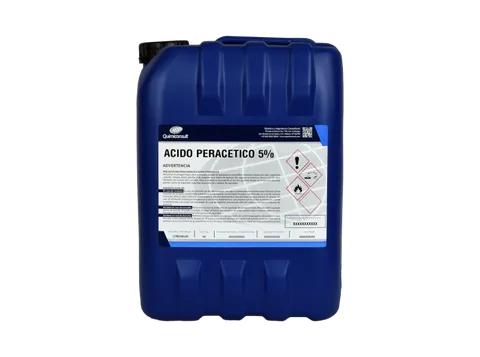
Anticel Peracetic Acid 5% (SKU INPTF017) is our lowest-concentration product, ideal for applications that require low doses and simpler handling by operating staff. With a lower concentration of active ingredient, this variant reduces the risks associated with handling concentrated product and is especially practical for operations without automated dosing systems or where use volume is moderate.
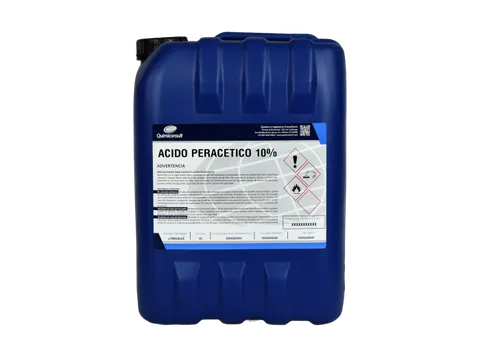
Anticel Peracetic Acid 10% (SKU INPTF018) is the midpoint of our concentration line, offering a balance between dosing capacity and ease of handling. This concentration is often selected by plants that need more flexibility in their sanitation programs without resorting to the highest concentrations.
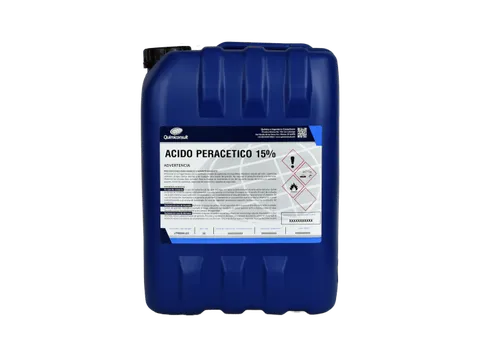
Anticel Peracetic Acid 15% (SKU INPTF020) is our most requested product in the food, livestock and agro-industrial sectors. It holds OMRI, NSF Nonfood Compounds, Kosher Pareve Pessach and SADER certifications, making it the option with the broadest regulatory backing in our line. For plants that specifically require these certifications, Anticel 15% is the right formulation.
Anticel PRO is a specialized variant designed specifically for direct food contact disinfection, with particular emphasis on meat and poultry applications. Its formulation self-regulates the acidity of the system in aqueous media, making it especially recommended for the spray method on meat carcasses to prevent discoloration, as well as for Final Wash and PreChiller in continuous-process disinfection of chicken carcasses. One of its distinguishing features is its ability to reduce over-coloring in bruised and damaged areas, a problem that conventional peracetic acids can make worse.
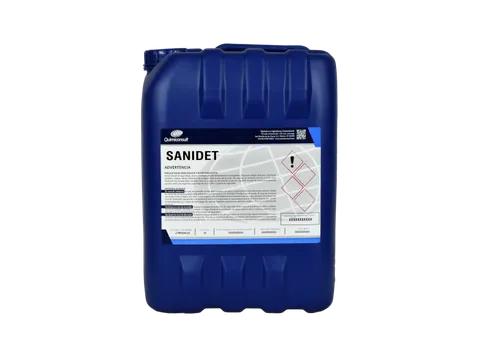
In addition, we offer formulations aimed mainly at disinfecting equipment and facilities, where the emphasis is on eliminating biofilm and disinfecting indirect contact surfaces, CIP systems, tanks, pipes and process equipment. Our portfolio also includes complementary products such as SANIDET (SKU INPTF027), a base disinfectant that complements the sanitation program alongside peracetic acids, as well as fourth-generation quaternary ammonium compounds (SKU INMPQ084) that offer a residual disinfection alternative for applications seeking a prolonged bacteriostatic effect.
The availability of this complete line of concentrations and formulations allows sanitation managers to select the most suitable variant for each application point in their plant, optimizing both disinfection efficacy and operating cost. Our technical team can advise on selecting the most appropriate concentration and formulation for the specific conditions of each process.
Directions for use and dosage of Anticel Peracetic Acid 20%
Anticel Peracetic Acid 20% can be applied by three main methods: injection into process water, spraying or immersion. The choice of application method depends on the type of surface or product to be disinfected, the production volume and the specific characteristics of the process. Because of its higher concentration, the dosing volumes required to reach use concentrations are proportionally smaller than with lower-concentration formulations, which must be taken into account when calibrating dosing equipment.
For no-rinse surface sanitizing, a concentration of 100 to 200 ppm is recommended in accordance with FDA regulation 21 CFR 178.1010. This concentration is suitable for routine disinfection of food contact surfaces at the end of production cycles, at shift changes or as part of sanitation standard operating procedures (SSOP).
For surface disinfection with a subsequent rinse, the concentration is increased to a range of 220 to 400 ppm. This level is appropriate for applications that require more aggressive disinfecting action, such as eliminating established biofilm, corrective disinfection after pathogen detection or shock treatments to control fungi and Listeria.
For carcass decontamination in the meat industry, recommended concentrations range from 90 to 220 ppm in accordance with 21 CFR 173.370, with no subsequent rinse required. For the poultry industry, 30 to 40 ppm is recommended in the Chiller and 10 to 20 ppm in the PreChiller.
For fruit and vegetable rinse water, concentrations are 60 to 80 ppm in accordance with 21 CFR 173.315. In irrigation water, the concentration must not exceed 80 ppm in accordance with 21 CFR Part 173 D.
Dosing should be monitored regularly using test strips, titration kits specific to peracetic acid or automated measuring equipment. Since the 20% concentration involves smaller dosing volumes, measurement accuracy is even more important to avoid underdosing or overdosing. A proper monitoring program is essential to ensure treatment efficacy and to document compliance for food safety audits.
It is important that the staff responsible for preparing use solutions are properly trained in handling 20% peracetic acid, since the higher concentration means a greater risk in the event of accidental contact with skin, eyes or the respiratory tract. Dilution procedures should be documented and be part of the regular training of operating staff.
Physicochemical properties of Anticel Peracetic Acid 20%
Knowing the physicochemical properties of Anticel Peracetic Acid 20% is essential for its correct handling, storage and dosing. These properties determine how the product behaves under different operating conditions and allow sanitation managers to make informed decisions about its application.
The product's density is in the range of 1.05 to 1.10 gr/cc, and its pH in a 1.0% solution is 2.0 to 3.5. It is 100% soluble in aqueous media, making it easy to incorporate into automated dosing systems and to dilute in process water. Its high biodegradability is one of its most valued environmental characteristics, since once its disinfecting job is done, its breakdown byproducts are completely benign to the environment.
The product is a strong oxidizing agent and highly reactive, stable under the recommended storage and handling conditions. It is classified as a Type F organic peroxide, UN number 3109, hazard class 5.2 (8) and packing group II. Under the NFPA classification, it has a health hazard rating of 3, flammability of 2 and reactivity of 4. These classifications reflect that, although the product is safe when handled according to recommendations, it requires strict adherence to established safety protocols.
Certifications of Anticel Peracetic Acid 20%
Anticel Peracetic Acid 20% is registered with SADER (Secretaría de Agricultura y Desarrollo Rural), the Mexican authority responsible for regulating inputs used in the agri-food and livestock industries. This registration confirms that the product complies with applicable national regulations for use in food processing establishments, livestock facilities and other environments regulated by this agency. SADER registration is a fundamental requirement for the legal sale and use of disinfection products in the Mexican food industry, and obtaining it involves the competent authority's evaluation of the product's formulation, efficacy and safety.
The Quimiconsult plant where Anticel Peracetic Acid 20% is manufactured holds SQF (Safe Quality Food) certification, a standard recognized by the GFSI (Global Food Safety Initiative) that audits not only the quality of the final product but the entire quality and food safety management system of the manufacturing process. This means that from receipt of raw materials to packaging and distribution, every stage of the process is controlled under a certified management system, providing a double layer of confidence: a product registered with the regulatory authority and a manufacturing process certified to international standards.
For plants that require additional certifications such as OMRI for organic production, NSF Nonfood Compounds or Kosher, Quimiconsult offers Anticel Peracetic Acid 15% (SKU INPTF020), which holds this expanded set of certifications. The choice between the 15% and 20% concentrations may depend on both certification requirements and each plant's operational and logistical needs.
Storage and handling of Anticel Peracetic Acid 20%
Proper storage and handling of Anticel Peracetic Acid 20% are essential to maintain product integrity, ensure staff safety and comply with applicable regulations. Because it is an organic peroxide with strong oxidizing properties, at its highest available concentration, specific precautions are required that must be understood and rigorously followed by all staff involved in handling it.
The product must be stored in a cool, well-ventilated place, within a temperature range of minus 15°C to 40°C. It is imperative to keep the product only in its original container, which has a vented seal designed to safely release any gas buildup that may form during storage. It must never be transferred to containers without this venting system, since pressure buildup could create a hazardous situation. The container must be kept tightly closed when not in use and protected from direct sunlight.
Anticel Peracetic Acid 20% must be stored separately from reducing agents, combustible materials, acids, bases, metals, heavy metal salts and flammable organic materials. It is particularly important never to mix the product with bleach or other chlorine-treated products, since this combination can generate chlorine gas, a highly toxic compound. The product drying on clothing or other combustible materials can cause fire, so any spill on textiles or organic materials must be dealt with immediately.
For safe handling of the product, staff must wear personal protective equipment including chemical splash goggles (for severe or continuous exposure, a face shield over the goggles), chemical-resistant impermeable gloves, safety shoes and suitable protective clothing. In case of exposure to vapors or mists, a full-face respirator must be used. All handling should be done outdoors or in well-ventilated areas.
Anticel Peracetic Acid 20% is classified as corrosive to skin (Category 1) and causes serious eye damage (Category 1). It may cause respiratory irritation (Category 3) and heating may cause a fire (H242). These classifications under the Globally Harmonized System (GHS) in accordance with NOM-018-STPS-2015 underline the importance of strictly following safety protocols, especially considering that the 20% concentration carries a greater potential for harm in the event of accidental contact compared with lower-concentration formulations.
In case of eye contact, rinse cautiously with water for several minutes, remove contact lenses if easy to do, and seek immediate medical attention. In case of skin contact, immediately remove all contaminated clothing and wash with plenty of soap and water, seeking immediate medical attention. If swallowed, rinse the mouth without inducing vomiting and contact a doctor or poison control center immediately. If inhaled, move the person to fresh air and keep them at rest in a position comfortable for breathing.
In the event of an accidental leak or spill, eliminate all ignition sources, use suitable personal protective equipment and avoid walking through the spilled material. For containment and cleanup, use non-combustible absorbent material such as sand or earth, placing the contaminated material in a suitable container for disposal in accordance with current hazardous waste legislation.
It is an essential requirement that everyone who handles this product receives training on the recommendations in the Safety Data Sheet. The higher concentration of the 20% product makes this training even more critical than with lower-concentration formulations.
Other names and synonyms for Anticel Peracetic Acid 20%
Anticel Peracetic Acid 20% may also be identified as Anticel PAA 20%, Anticel 20% or simply as 20% peracetic acid, terms widely used in industrial settings to refer to this high-concentration sanitizing solution. These names frequently appear in technical documentation, sanitation programs, SSOP (Sanitation Standard Operating Procedures), purchase specifications and work orders in processing plants.
In some contexts, the product may be described as concentrated peracetic acid sanitizer, high-concentration PAA disinfectant, 20% oxidizing biocide, direct food contact sanitizer or high-concentration no-rinse disinfectant. These terms refer to its role within industrial sanitation programs and help categorize the product by its mechanism of action, concentration and type of application.
Within the category of peracetic acid–based disinfectants, the 20% concentration stands out as the formulation with the highest yield per kilogram, aimed at large-scale industrial operations. Peracetic acid sanitizers have gained prominence in recent decades as a superior alternative to chlorinated disinfectants, driven by their microbiological efficacy, favorable environmental profile and the absence of toxic disinfection byproducts.
In purchasing and procurement it is common to see searches such as 20% peracetic acid price, concentrated peracetic acid, PAA 20% for the food industry, peracetic acid for the meat industry, poultry chiller sanitizer, wastewater disinfectant, peracetic acid for water treatment, peracetic acid technical data sheet, peracetic acid safety data sheet, what is peracetic acid used for or peracetic acid hospital use, where functional descriptions and spelling variations are used to find options available on the market. These variations help purchasing, quality, sanitation and process engineering managers identify the product within the broad market of industrial sanitizers.
In transport and regulatory documentation, Anticel Peracetic Acid 20% is also identified by its UN designation as Organic peroxide type F, liquid (Peracetic acid), UN number 3109, hazard class 5.2 (8), packing group II. These references are relevant for logistics and safety departments that manage the transport and storage of the product in accordance with applicable hazardous materials regulations.