Spanish
 English


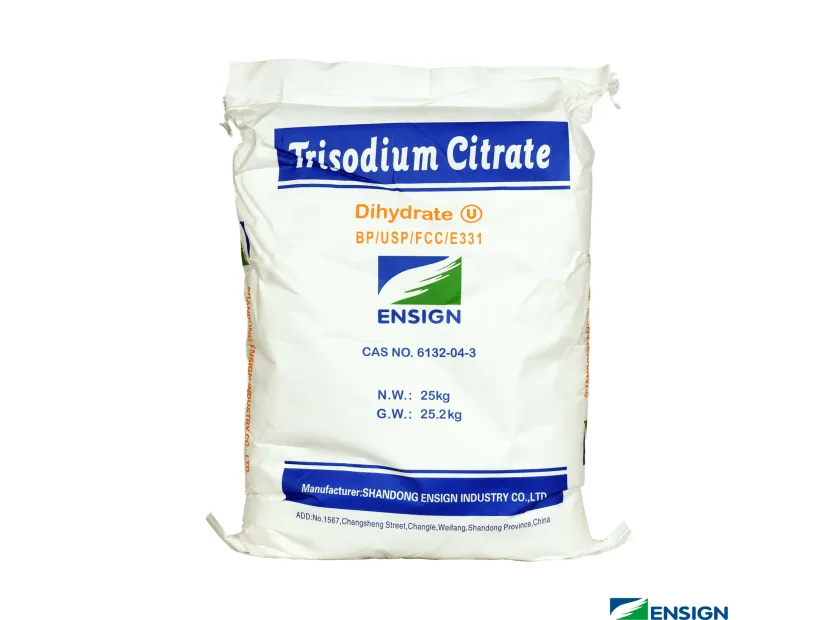
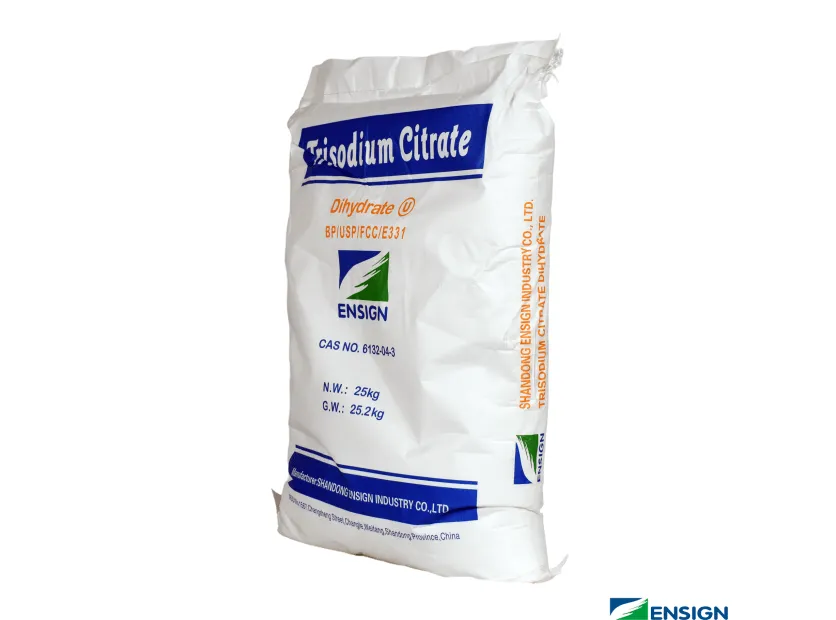
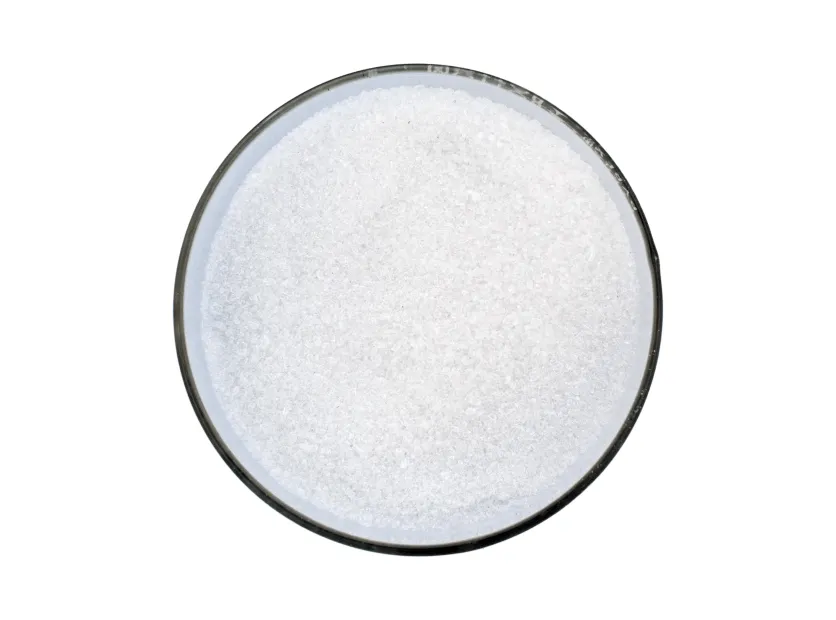

TRISODIUM CITRATE DIHYDRATE ENSIGN® FOOD GRADE
View All Prices
| Quantity | Unit Price |
|---|---|
| kg | |
| 1 - 99 | USD 1.44 |
| 100 - 199 | USD 1.43 |
| 200 - 499 | USD 1.42 |
| 500 - 999 | USD 1.41 |
| 1000 - 4999 | USD 1.40 |
| 5000 - 9999 | USD 1.39 |
| 10000 - 17999 | USD 1.38 |
| 18000+ | USD 1.37 |
Product description: Sodium Citrate, a multifunctional food additive
At Quimiconsult we offer Sodium Citrate (trisodium citrate dihydrate), a sodium salt of citric acid widely used in the food, pharmaceutical, cosmetic and beverage industries as an acidity regulator, emulsifier, preservative and sequestering agent. It comes as a white, odorless crystalline powder with a slightly salty taste and an assay purity of 99.0% to 100.5% that meets the specifications of the United States Pharmacopeia (USP) and the Food Chemicals Codex (FCC), the two most demanding reference standards for food and pharmaceutical ingredients worldwide.
Sodium citrate is characterized by its hygroscopic nature, meaning it readily absorbs and combines with moisture from the air. This property makes it highly soluble in water, making it easy to incorporate into aqueous systems such as beverages, injectable solutions, syrups, sauces and liquid formulations of all kinds. Its ability to act simultaneously as a pH regulator, emulsifier, indirect antioxidant and chelating agent makes it one of the most versatile and in-demand food additives in the food and beverage processing industry.
At Quimiconsult we distribute Ensign brand sodium citrate, from one of the world's most recognized manufacturers of citric acid and its derivatives, ensuring our customers a product of reliable origin, consistent quality and full traceability in every batch. Our inventory available in Mexico, combined with local technical support and documentation in Spanish, gives formulators and purchasing departments access to this essential ingredient without the lead times and logistical complexity of direct importing.
Sodium citrate is chemically identified by CAS number 6132-04-3 and is internationally recognized as food additive E331(iii) in the European nomenclature. Its GRAS (Generally Recognized As Safe) status from the FDA and its inclusion in the USP and FCC monographs make it a trusted ingredient for formulators of foods, beverages, pharmaceutical products and cosmetics that require ingredients with solid regulatory backing.
Ensign, a world-leading manufacturer of citric acid and sodium citrate
The Sodium Citrate we offer at Quimiconsult is manufactured by Ensign, one of the largest and most recognized companies worldwide in the production of citric acid and its derivative salts, including sodium citrate, potassium citrate and calcium citrate. Headquartered in China, with production operations among those with the largest installed capacity in the world, Ensign has established itself as a benchmark supplier to the food, pharmaceutical and beverage industries on five continents.
The value of sourcing sodium citrate from Ensign lies in the quality infrastructure and analytical rigor behind every production batch. Ensign operates under internationally certified quality management systems, including ISO 9001 (quality management), ISO 22000 (food safety) and FSSC 22000, and holds Halal and Kosher certifications for its food grade ingredient lines. Its products meet the specifications of the main international pharmacopeias (USP, BP, EP) and the Food Chemicals Codex (FCC), ensuring that the sodium citrate supplied satisfies the regulatory requirements of the most demanding markets.
Ensign has continuously invested in fermentation, crystallization and purification technology, allowing it to offer sodium citrate with purity, particle size and moisture content profiles optimized for different application segments: food grade for the food and beverage industry, pharmaceutical grade for drug and injectable formulations, and technical grade for industrial applications. This grade-specific specialization ensures that the product supplied is designed for the specific requirements of each industry, eliminating the uncertainty that can arise from using products of unknown origin or without verifiable certifications.
By choosing Ensign sodium citrate through Quimiconsult, our customers gain access to a world-class product with the advantage of inventory available in Mexico, local technical support, regulatory documentation in Spanish (certificates of analysis, technical data sheets, safety data sheets) and application advice that complements the quality of the original manufacturer's product. Quimiconsult has built a stable supply chain with Ensign that allows us to offer continuous availability, competitive prices and flexible purchase volumes, from individual 25 kg bags to full pallets and containers for large-scale operations.
Benefits of Sodium Citrate as a food additive and industrial ingredient
The most notable benefit of sodium citrate is its capacity as an acidity regulator (buffer). Sodium citrate, combined with citric acid, forms one of the most widely used buffer systems in the food and pharmaceutical industries, known as the citrate buffer. This system keeps a product's pH within a specific, stable range throughout its shelf life, even when factors such as temperature, enzymatic activity or the product's natural chemical reactions would tend to change it. This pH-regulating capacity is essential for preserving the flavor, color, texture and microbiological stability of processed foods and beverages.
Its function as an emulsifier makes it possible to prepare and maintain uniform solutions of two immiscible liquids, such as oil and water. In the dairy industry, sodium citrate is an essential component of the emulsifying salts used to make processed cheese, where it acts as an emulsifying agent that disperses milk fat evenly through the protein matrix, achieving the creamy, spreadable, homogeneous texture characteristic of processed cheeses, sliced cheeses and melting cheeses. Without the action of sodium citrate, the fat would separate from the protein during heating, resulting in a defective product.
As an indirect preservative, sodium citrate protects the fats and oils in foods from oxidation and rancidity. Its mechanism of action as an antioxidant is indirect: by chelating (sequestering) metal ions such as iron and copper that catalyze lipid oxidation, sodium citrate significantly slows oxidative rancidity, extending product shelf life and maintaining the organoleptic characteristics consumers expect. This property is particularly valuable in high-fat products such as margarines, mayonnaise, dressings, fried snacks and processed meat products.
Its function as a sequestering agent (chelator) goes beyond antioxidant protection. Sodium citrate forms stable complexes with divalent and trivalent metal ions present in process water and raw materials, preventing unwanted effects such as color changes caused by iron in vegetable products, turbidity in clear beverages, interference with calcium-sensitive gelling agents and thickeners, and acceleration of spoilage reactions catalyzed by transition metals.
The high water solubility of sodium citrate makes it easy to incorporate into any aqueous formulation without heating or special agitation, simplifying production procedures and reducing process times. Its mild, pleasant salty taste, unlike the pronounced sour taste of citric acid, allows it to be used at functional dosages without negatively altering the flavor profile of the finished product — an advantage in applications that require pH regulation without perceptible acidity.
The regulatory versatility of sodium citrate is a benefit that simplifies ingredient management for formulators serving multiple markets. Because it simultaneously meets USP (pharmaceutical), FCC (food), BP and EP (British and European pharmacopeias) specifications, a single sodium citrate inventory can cover formulation needs in foods, beverages, pharmaceutical products, cosmetics and technical applications, reducing the complexity of the raw materials warehouse and supplier management.
Finally, the chemical stability of sodium citrate under normal storage conditions ensures that the product retains its functional properties for long periods when properly stored in dry conditions and protected from moisture, allowing purchasing departments to schedule larger-volume purchases to optimize logistics costs without risk of degradation.
Industrial applications of Sodium Citrate
Carbonated and non-carbonated beverage industry
Sodium citrate is a fundamental ingredient in the formulation of carbonated beverages, soft drinks, flavored waters, isotonic drinks, energy drinks and artificial mineral waters. Its main function in this segment is regulating and stabilizing pH, which directly affects the flavor profile, the perception of freshness and the stability of color and flavorings throughout the product's shelf life. In carbonated beverages, the sodium citrate/citric acid buffer system makes it possible to control perceived acidity independently of the carbonation level, giving the formulator the flexibility to adjust the sour taste without changing the effervescence.
In isotonic and rehydration drinks, sodium citrate also performs a physiological function as a source of sodium and as an alkalizer that helps counteract the metabolic acidosis that occurs during intense exercise, making it a functional ingredient beyond its role as a technological additive. In the growing category of functional beverages, vitamin waters and electrolyte drinks, sodium citrate has become the preferred sodium salt because of its milder taste compared with sodium chloride (table salt) and its buffering effect, which contributes to the stability of vitamins and other pH-sensitive active ingredients.
Dairy industry and processed cheese
In the dairy industry, sodium citrate plays an essential role as an emulsifying salt in the manufacture of processed cheese, cheese spreads, sliced cheese, American-style cheese and cheese dips. As an emulsifying salt, sodium citrate sequesters the calcium ions that hold together the casein network of natural cheese, allowing the proteins to disperse and emulsify the fat evenly when heated, forming the homogeneous, creamy, meltable mass that defines processed cheese. Without emulsifying salts such as sodium citrate, making processed cheese with a consistent texture and predictable melting properties would be practically impossible.
In flavored milks, yogurts, creams and dairy desserts, sodium citrate works as a pH stabilizer that prevents unwanted acid coagulation, syneresis and texture changes during storage. In ice cream and ice cream mixes, it contributes to emulsion stability and improved whipping properties.
Confectionery and candy industry
In the confectionery industry, sodium citrate is used as an acidity regulator in hard candies, gummies, sour candies, chewing gum, lozenges and jellies. Combined with citric acid, it allows candies to be formulated with a controlled, reproducible sour profile, where the intensity of acidity can be precisely adjusted to obtain the target flavor without it changing during the product's shelf life. In the manufacture of gummies and gummy-type candies, sodium citrate also interacts with gelling agents (gelatin, pectin, starch) to optimize gelling conditions and the final texture of the candy.
Prepared foods, preserves and meat products
In prepared foods, canned meats and vegetables, processed meat products, sausages, soups, broths and ready-to-eat meals, sodium citrate acts simultaneously as a pH regulator, metal chelator and flavor enhancer. In meat products such as sausages, hams and mortadella, it contributes to water retention and color stability during thermal processing. In canned vegetables, the chelation of iron by sodium citrate prevents the darkening these ions cause when they react with the natural tannins in vegetables.
In sauces, mayonnaise, mustard, dressings, margarines, jams and prepared spices, sodium citrate works as an emulsion stabilizer, pH regulator and protector against fat oxidation, helping maintain the organoleptic quality and shelf life of these products, which typically need to remain stable for months at room temperature.
Pharmaceutical industry
In the pharmaceutical industry, USP grade sodium citrate is a widely used excipient in oral, parenteral and topical formulations. Its best-known application is as an anticoagulant in blood collection tubes (citrate tubes), where sodium citrate sequesters the calcium ions needed for the coagulation cascade, keeping the blood liquid for analysis in coagulation tests such as prothrombin time (PT) and activated partial thromboplastin time (aPTT).
In oral formulations, sodium citrate is used as a buffer system to keep the pH of syrups, suspensions and oral solutions within the optimal range for active ingredient stability and organoleptic acceptability. In parenteral and intravenous solutions, it acts as an alkalizer and buffer to adjust the pH to physiologically compatible values. In effervescents, chewable tablets and powders for oral solution, sodium citrate is part of the acid-base system that generates effervescence when dissolved in water.
Sodium citrate also has direct application as a therapeutic agent: it is prescribed as a urinary alkalizer for managing renal tubular acidosis, preventing uric acid and cystine kidney stones, and as an adjunct in urinary tract infections where raising urine pH is desired.
Cosmetics and personal care industry
In the cosmetics industry, sodium citrate is incorporated into creams, lotions, shampoos, shower gels, deodorants, toothpastes and skin care products as a pH regulator, chelator and formulation stabilizer. Its buffering function is especially valuable in products containing pH-sensitive active ingredients such as vitamin C (ascorbic acid), retinol, alpha-hydroxy acids (AHAs) and niacinamide, where keeping the pH in the optimal range is critical for the stability and efficacy of the active ingredient.
In shampoos and shower gels, sodium citrate acts as a chelating agent that prevents the formation of insoluble calcium and magnesium soaps in hard water, improving foaming and the cleaning efficacy of the surfactant. In deodorants and antiperspirants, it helps adjust the formulation's pH. In toothpastes, it works as a buffer and chelator that helps prevent tartar (dental calculus) formation.
Cleaning and detergent industry
In detergent formulations, industrial cleaners and household cleaning products, sodium citrate is used as an eco-friendly builder that replaces phosphates, whose use is increasingly restricted by environmental regulations because of their contribution to the eutrophication of water bodies. As a builder, sodium citrate sequesters the calcium and magnesium ions in hard water that interfere with the action of surfactants, boosting the detergent's cleaning efficacy. Being biodegradable and of low toxicity, sodium citrate is a preferred component in eco-friendly cleaner formulations, "green" cleaning products and phosphate-free detergents.
Water treatment industry
In industrial water treatment systems, sodium citrate is used as a chelating agent to control water hardness and prevent calcium carbonate scale in piping, boilers and heat exchange equipment. In cleaning and passivation of stainless steel equipment, sodium citrate is used as a complexing agent that facilitates the removal of iron oxides and metallic contaminants from surfaces without the aggressiveness of strong mineral acids.
Coatings and construction industry
In the construction industry, sodium citrate is used as a set retarder in cement and concrete mixes, where its ability to chelate the calcium ions in Portland cement slows the hydration reactions, providing longer workability. This application is particularly useful in hot climates, where accelerated setting can make placing and finishing concrete difficult, and in large-volume pours where the mix must remain workable for extended periods.
Directions for use and dosage recommendations for Sodium Citrate
Sodium citrate is incorporated into formulations by dissolving the powder directly in water or in the aqueous medium of the formulation under moderate agitation. Thanks to its high water solubility (approximately 425 g/L at 25°C), it dissolves quickly without heating or high-speed agitation, simplifying production procedures. In formulations that require a sodium citrate/citric acid buffer system, both components can be added separately to the aqueous medium or prepared in advance as a concentrated buffer solution that is dosed into the main formulation.
Typical use concentrations vary by application and desired function. In carbonated and non-carbonated beverages, typical dosages range from 0.1% to 0.5% in combination with citric acid to reach the target pH and desired flavor profile. In processed cheese, emulsifying salts (a blend of sodium citrate with other citrates and phosphates) are used at concentrations of 1% to 3% of the cheese weight. In confectionery, dosages range from 0.3% to 2% depending on the target acidity. In pharmaceutical formulations, concentrations are determined by the specific buffering requirements of each formulation and are defined in the corresponding monograph.
Keep in mind that sodium citrate is hygroscopic, so dosing should be done quickly to minimize the powder's exposure to ambient moisture, especially in environments with high relative humidity. Use dry scoops and containers, and close the container immediately after each use.
To determine the optimal dosage in a specific formulation, we recommend small-scale laboratory trials evaluating the impact of sodium citrate on the product's pH, flavor, texture, stability and shelf life before scaling up to industrial production. The Quimiconsult technical team can provide guidance on reference dosages for each type of application.
Physicochemical properties of Sodium Citrate
Sodium Citrate is a white, odorless crystalline powder with a mild, pleasant salty taste. Its assay is in the range of 99.0% to 100.5%, meeting the purity specifications required by the USP (United States Pharmacopeia) and the FCC (Food Chemicals Codex). The product's water content is between 11.0% and 13.0%, corresponding to the two molecules of water of crystallization in trisodium citrate dihydrate (Na₃C₆H₅O₇·2H₂O).
The product tests positive for sodium and citrate ion identification and passes the alkalinity tests specified by both USP and FCC, confirming the product's conformity with both reference standards. The heavy metals (lead) content is a maximum of 5 mg/kg, and the product passes the FCC's specific lead test, ensuring heavy metal contamination levels well below the regulatory limits for food and pharmaceutical ingredients.
Sodium citrate is chemically stable under normal storage conditions and requires no stabilizers. It is highly soluble in water and practically insoluble in alcohol. Its CAS number is 6132-04-3 and its molecular weight is 294.10 g/mol.
Sodium Citrate safety and classification
Sodium Citrate is classified under the Globally Harmonized System (GHS), in accordance with NOM-018-STPS-2015, with the signal word Warning. Hazard classifications include eye irritation Category 2A and hazardous to the aquatic environment Category 2. The associated pictogram is the exclamation mark (GHS07).
The NFPA rating is level 1 for health hazard, level 0 for flammability and level 0 for reactivity, indicating a very low hazard profile. Although it is widely used as a food additive and recognized as safe for human consumption, standard precautions for powdered chemicals should be observed during industrial handling of the powder.
Acute toxicity is low, with an oral LD50 in rats greater than 2,000 mg/kg (OECD 401), a dermal LD50 in rabbits greater than 2,000 mg/kg (OECD 402) and an inhalation LC50 in rats greater than 5 mg/L over 4 hours (OECD 403). No mutagenic, carcinogenic or reproductive toxicity effects are known.
For safe handling, splash-proof safety goggles, protective gloves, work clothing and safety shoes are recommended. In case of eye contact, rinse immediately with water for at least 20 minutes while holding the eyelids open, and consult a physician if irritation persists. Wash hands, arms and nails thoroughly after handling. Provide access to safety showers and emergency eyewash stations in work areas.
The product is not classified as dangerous goods for transport, which simplifies distribution and storage logistics without the need for special permits or carriers authorized for hazardous materials.
Storage and handling of Sodium Citrate
Proper storage of Sodium Citrate is essential to preserve its purity, solubility and functionality throughout its shelf life. The product should be stored in a dry, cool, well-ventilated place, protected from direct sunlight and, above all, from ambient moisture. The hygroscopic nature of sodium citrate is the main factor to consider during storage: if the product absorbs moisture from the air, it can cake, harden and become difficult to dose, and it may also alter the formulation's performance if the effective water content deviates from specifications.
The container should be kept tightly closed when product is not being dispensed. For opened bags, reseal immediately after each use or transfer the remainder to airtight containers. In environments with high relative humidity, particularly common in Mexico's coastal and tropical regions, consider storage in climate-controlled or humidity-controlled areas, or the use of desiccants within the storage area.
The product should be stored away from strong oxidizing agents, the only materials identified as incompatible. Eating, drinking or smoking while handling the product is prohibited. Avoid generating dust clouds during weighing and dosing, and in case of a spill, collect the product with a shovel while avoiding dust dispersion, containing the solid and covering it to prevent it from reaching waterways, given its classification as hazardous to the aquatic environment Category 2.
In case of fire, use dry chemical powder, foam, sand or CO₂ as extinguishing media. Do not use direct water jets. Bear in mind that any airborne organic dust can pose an explosion risk under certain concentration and confinement conditions.
Other names and synonyms for Sodium Citrate
Sodium Citrate can also be identified as trisodium citrate, trisodium citrate dihydrate, sodium citrate dihydrate, citrato de sodio, citrato trisódico or citrato sódico — terms used interchangeably in industrial, academic, pharmaceutical and commercial settings to refer to this salt. These names frequently appear in technical data sheets, certificates of analysis, purchase specifications, formulations, ingredient labels and technical literature across various industries.
In the food industry, the product is also known by its food additive number E331(iii) (European nomenclature), where (iii) indicates that it is the trisodium salt. It is important not to confuse it with monosodium citrate (E331(i)) or disodium citrate (E331(ii)), which are different salts with different solubility and pH properties. In pharmaceutical documentation, it is identified in the monographs of the USP (United States Pharmacopeia), the BP (British Pharmacopoeia) and the EP (European Pharmacopoeia) under the name Sodium Citrate.
Within the broader category of citric acid salts, sodium citrate belongs to the citrate family, which also includes potassium citrate (used as an acidity regulator and potassium supplement), calcium citrate (used as a calcium supplement and fortificant) and magnesium citrate (used as an osmotic laxative and magnesium supplement). Quimiconsult can advise formulators on which of these citrate salts is best suited to each specific application.
Likewise, in industrial purchasing and sourcing it is common to find searches such as sodium citrate price, food grade sodium citrate, USP grade sodium citrate, sodium citrate FCC, sodium citrate food grade (citrato de sodio grado alimentario), trisodium citrate price, sodium citrate for food, sodium citrate for beverages, sodium citrate for cheese, pharmaceutical sodium citrate, cheese emulsifying salt, acidity regulator E331, bulk sodium citrate, sodium citrate supplier Mexico, Ensign sodium citrate or sodium citrate distributor. These variations reflect the different industries, applications and quality grades in which this ingredient is in demand, and help purchasing, research and development, quality and formulation managers find qualified suppliers in the food additives and functional ingredients market.
The most common functional terms associated with sodium citrate include: acidity regulator, buffer, emulsifier, emulsifying salt, sequestering agent, chelator, synergistic antioxidant, detergent builder, pH stabilizer, anticoagulant (in the clinical laboratory context) and pharmaceutical excipient.