Spanish
 English


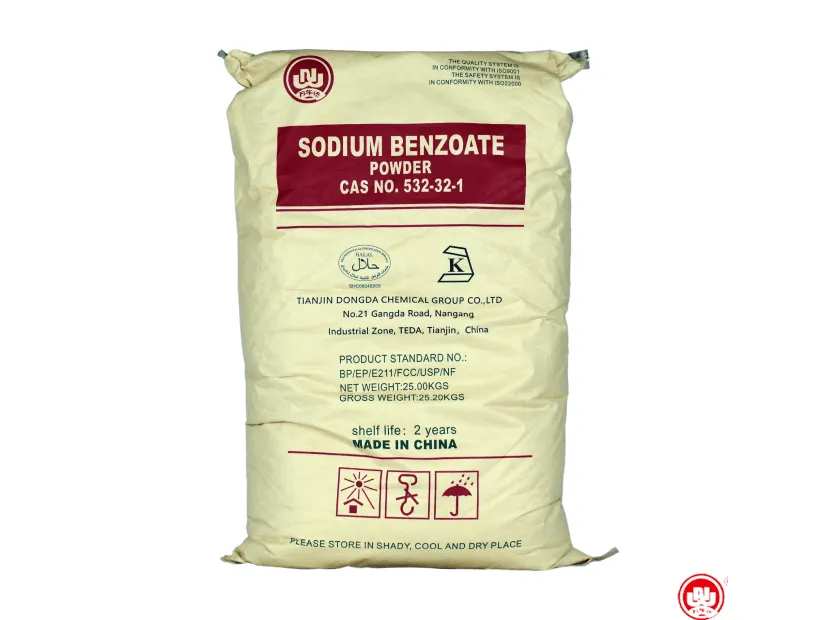
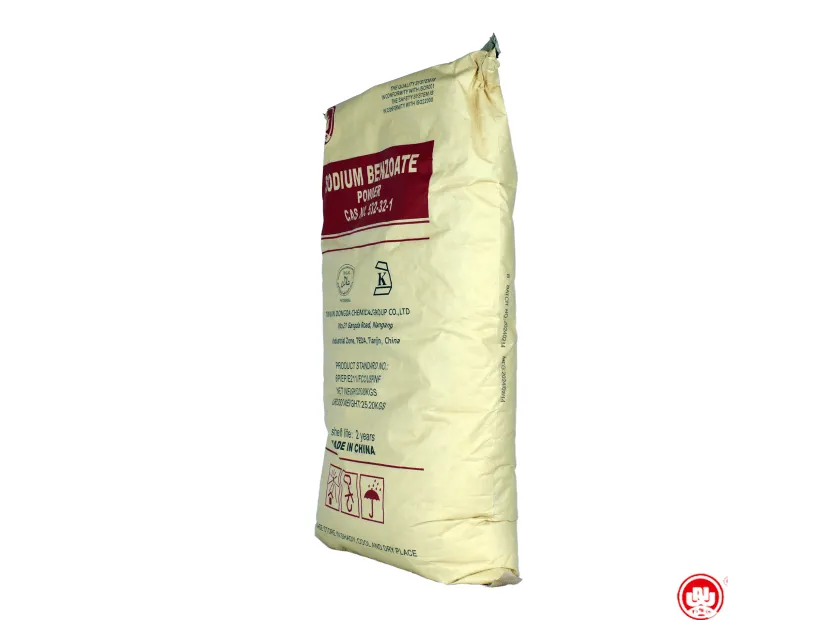
SODIUM BENZOATE TIANJIN DONGDA CHEMICAL GROUP® FOOD GRADE
View All Prices
| Quantity | Unit Price |
|---|---|
| kg | |
| 1 - 99 | USD 1.56 |
| 100 - 199 | USD 1.54 |
| 200 - 499 | USD 1.52 |
| 500 - 999 | USD 1.51 |
| 1000 - 4999 | USD 1.49 |
| 5000 - 9999 | USD 1.48 |
| 10000 - 17999 | USD 1.46 |
| 18000+ | USD 1.45 |
Product description: Food grade sodium benzoate, a high-purity antimicrobial preservative
At Quimiconsult we offer food grade Sodium Benzoate from Tianjin Dongda Chemical Group®, an antimicrobial preservative with a minimum purity of 99% designed to extend the shelf life of foods, beverages, cosmetics and pharmaceutical products. It is a white to slightly cream crystalline powder, highly soluble in water, with a pH between 7.0 and 8.0, a heavy metals content of 10 ppm or less and loss on drying below 1.5% — specifications that guarantee consistent batch-to-batch quality for demanding industrial processes.
Sodium benzoate (chemical formula C₆H₅COONa, CAS number 532-32-1) is the sodium salt of benzoic acid and one of the most widely used food preservatives in the world. Its mechanism of action is based on a fundamental chemical principle: when dissolved in a product with an acidic pH (below 4.5), sodium benzoate is partially converted into undissociated benzoic acid, the molecular form capable of crossing the cell membrane of yeasts, molds and certain bacteria. Once inside the microorganism's cell, benzoic acid interferes with the enzymes responsible for the anaerobic fermentation of glucose and with the citric acid cycle (Krebs cycle), blocking energy production and stopping microbial growth. This mechanism explains why sodium benzoate is especially effective in acidic products such as soft drinks, juices, sauces, dressings, pickles and jams, and why its effectiveness drops significantly in products with a neutral or alkaline pH.
Why sodium benzoate and not benzoic acid directly? Although the active ingredient is benzoic acid, its sodium form (benzoate) offers a decisive practical advantage for industry: solubility. Benzoic acid dissolves poorly in cold water (just 2.9 g/L at 20°C), which makes it very difficult to incorporate into liquid formulations. Sodium benzoate, on the other hand, dissolves easily in water (up to 556 g/L at 20°C), allowing it to be dosed precisely on production lines for beverages, sauces and other liquid products without complicated pre-dilutions or heating. Once incorporated into the acidic product, the benzoate is automatically converted into active benzoic acid thanks to the pH of the medium.
Tianjin Dongda Chemical Group® Sodium Benzoate is distributed from Monterrey, Nuevo León, with shipping throughout Mexico, technical formulation support and complete documentation for food safety audits
About Tianjin Dongda Chemical Group®: Certified quality by batch
Tianjin Dongda Chemical Group® is an internationally recognized manufacturer specializing in the production of high-purity food preservatives and additives. The sodium benzoate manufactured to its standards meets the specifications of the Food Chemicals Codex (FCC), the United States Pharmacopeia (USP) and the Codex Alimentarius guidelines, ensuring its acceptance in quality programs that require traceability, batch certification and documentation for FSSC 22000, SQF, BRC and IFS Food audits.
Batch-to-batch consistency is one of the characteristics most valued by food and beverage manufacturers who work with this supplier: purity, color, particle size and solubility stay within narrow ranges that allow production processes to be standardized without frequent dosing adjustments. At Quimiconsult we provide certificates of analysis (COA) for every batch delivered, backing the quality of the product with verifiable analytical data.
How sodium benzoate works: pH as the key to its preservative efficacy
To use sodium benzoate effectively, it is essential to understand the relationship between the product's pH and the preservative's antimicrobial activity. This is probably the most important technical aspect a formulator or quality manager needs to master before incorporating benzoate into their products.
Sodium benzoate is a "pH-dependent" preservative. In aqueous solution there is an equilibrium between two chemical forms: the benzoate ion (C₆H₅COO⁻), the dissociated form that predominates at high pH, and undissociated benzoic acid (C₆H₅COOH), which predominates at low pH. Only the undissociated form has antimicrobial activity, because it is the only one capable of crossing the lipophilic cell membrane of microorganisms.
The pKa of benzoic acid is 4.2, which means that at pH 4.2 exactly 50% of the benzoate present is in the form of active benzoic acid and the other 50% is inactive benzoate ion. As the pH falls below 4.2, the proportion of active benzoic acid increases: at pH 3.5, approximately 83% of the preservative is in active form; at pH 3.0, more than 94%. Conversely, at pH 5.0 only 14% is in active form, and at pH 6.0, less than 2%.
This relationship has direct practical implications for the formulator: sodium benzoate is highly effective in products with a pH between 2.5 and 4.5, which is precisely the range of most carbonated beverages, fruit juices, ketchup-type sauces and hot sauce, salad dressings, pickles, jellies and jams. In products with a pH above 4.5, the efficacy of benzoate drops significantly and it may be necessary to combine it with other preservatives (such as potassium sorbate) or acidify the product to reach the optimal activity range.
Applications of sodium benzoate in the food and beverage industry
Sodium benzoate in food is one of the most versatile and economical preservatives available to industry. Its applications cover virtually every category of processed food with an acidic pH.
Carbonated beverages and soft drinks. This is the highest-volume application for sodium benzoate worldwide. Soft drinks have a typical pH between 2.5 and 3.5 (due to the presence of phosphoric acid or citric acid), which places benzoate in its zone of maximum efficacy. The usual use concentration is 0.03% to 0.1% (300 to 1,000 ppm), depending on the formulation and the legislation of the target market. Its high solubility allows it to be dosed directly into the syrup preparation line without additional pre-dilution steps.
Fruit juices and nectars. In unpasteurized or mildly heat-treated juices, sodium benzoate acts as an additional antimicrobial barrier that complements temperature control to prevent fermentation and mold growth during shelf life. In lemon, orange, grapefruit, apple, grape and tropical fruit juices, the naturally acidic pH of the product favors the preservative's activity.
Sauces, dressings and condiments. Tomato sauces, ketchup, spicy sauces (hot sauce), salad dressings, mayonnaise, mustard and soy sauce use sodium benzoate as their main preservative or in combination with potassium sorbate. In these applications, benzoate prevents the growth of yeasts and molds that could cause container swelling, flavor changes and visual deterioration of the product.
Jams, jellies and fruit preserves. Products made from fruit cooked with sugar have a pH between 3.0 and 3.5 that favors benzoate activity. Combined with the high sugar concentration (which reduces water activity), benzoate provides a double barrier against microbial growth that extends shelf life without the need for refrigeration.
Pickles and fermented products. Pickles, chiles in vinegar, olives, pickled onions and other products preserved in acidic brine use sodium benzoate to complement the preservative action of vinegar (acetic acid). The typical pH of these products (3.0–3.5) maximizes the efficacy of benzoate.
Industrial bakery and pastry. In fruit fillings for cakes, frostings, toppings and bakery products with moist acidic fillings, benzoate prevents the growth of molds that can develop in the most humid areas of the product.
Pet food. The wet dog and cat food industry uses sodium benzoate as a preservative in formulations with gravy, sauces and broths that accompany canned or pouch-packed meat products.
Applications beyond food: Cosmetics, pharmaceuticals and other industries
Sodium benzoate is not exclusive to the food industry. Its versatility as an antimicrobial preservative makes it valuable in multiple sectors.
Cosmetics and personal care. Shampoos, conditioners, creams, lotions, shower gels, liquid soaps and makeup products use sodium benzoate as part of their preservative system to prevent the growth of bacteria and fungi during the product's shelf life. In cosmetics it is often combined with sorbic acid or potassium sorbate to broaden the antimicrobial spectrum, since sorbic acid has greater antifungal activity while benzoate is more effective against bacteria.
Pharmaceuticals. Syrups, oral suspensions, ophthalmic solutions and liquid pharmaceutical formulations use sodium benzoate as an antimicrobial preservative approved by the international pharmacopeias (USP, EP, BP). Its compatibility with a wide range of active ingredients and excipients makes it a first-line option for pharmaceutical formulators.
Cleaning products and detergents. Liquid detergents, fabric softeners, all-purpose cleaners and household cleaning products incorporate sodium benzoate to prevent microbial contamination of the product during storage, especially in water-based formulations that provide a favorable medium for microbial growth.
Tobacco industry. Sodium benzoate is used as an additive in certain tobacco products, where it acts as a pH regulator and preservative.
Automotive industry. In antifreeze and brake fluid formulations, sodium benzoate works as a corrosion inhibitor for ferrous metals — an application completely different from food use, but one that represents a significant volume of industrial consumption.
Sodium benzoate + potassium sorbate: The most widely used preservative combination in industry
If sodium benzoate is the most widely used individual preservative, its combination with potassium sorbate is the most widespread dual preservative system in the global food industry. Understanding why this combination works better than either component on its own is essential for optimizing the formulation and reducing the total preservative dose required.
Sodium benzoate and potassium sorbate act on different cellular targets in microorganisms. Benzoic acid (the active form of benzoate) mainly interferes with the enzymes of energy metabolism, while sorbic acid (the active form of sorbate) acts on dehydrogenase enzymes and on the cell membrane of molds and yeasts. By combining both preservatives, the microorganism is attacked at multiple points simultaneously, producing a synergistic effect: the blend is more effective than the sum of the individual effects.
In practice, this synergy allows the concentration of each preservative to be reduced by 30% to 50% compared with what would be needed if each were used separately, achieving the same level of microbiological protection with a lower total additive load. For food manufacturers looking for "cleaner" labels (with fewer additives or lower concentrations), this combination is the most effective technical solution without compromising product safety.
The ratio most used in industry is 1:1 (benzoate:sorbate by weight), although it can be adjusted according to the type of product, pH, water activity and target microorganisms. At Quimiconsult we offer both preservatives and technical advice to optimize the preservative system for your specific formulation.
Sodium benzoate dosage: Regulatory limits and use concentrations
The dosage of sodium benzoate is regulated by the health authorities of each country and by international bodies. In Mexico, NOM-218-SSA1 and the Codex Alimentarius guidelines establish the maximum permitted limits by food category.
As a general reference, the most common use concentrations in industry are: for carbonated beverages and soft drinks, between 150 and 600 ppm (0.015%–0.06%); for fruit juices and nectars, between 500 and 1,000 ppm (0.05%–0.1%); for sauces, dressings and condiments, between 500 and 1,000 ppm; for jams and fruit preserves, between 500 and 1,000 ppm; and for pickles, between 500 and 1,000 ppm. In dual systems with potassium sorbate, the concentration of each preservative can be reduced by 30% to 50% from these values.
It is essential for the formulation or quality manager to verify the maximum permitted limits for the specific food category and for each target market, since limits can vary between Mexico, the United States, the European Union and other importing countries. Quimiconsult offers technical support in selecting the optimal dose within the applicable regulatory framework.
In-plant dosing is typically done by dissolving the powdered sodium benzoate in a portion of the formulation water before adding it to the production batch. Thanks to its high solubility (556 g/L in water at 20°C), preparing concentrated stock solutions at 10%–25% is practical and allows precise volumetric dosing with metering pumps or gravimetric systems.
Tianjin Dongda Chemical Group® sodium benzoate technical specifications
Sodium benzoate is a solid white to slightly cream powder. Its active substance content is 99.0% to 100.5% (dry basis), guaranteeing a purity that meets the requirements of the international pharmacopeias and the Food Chemicals Codex. The pH value in solution is between 7.0 and 8.0, the heavy metals content is 10 ppm or less, and loss on drying is 1.5% or less.
The CAS number of sodium benzoate is 532-32-1. Its molecular formula is C₆H₅COONa (also written as C₇H₅NaO₂), with a molecular weight of 144.11 g/mol. Its melting point exceeds 300°C (it decomposes before melting), which gives it excellent thermal stability in pasteurization, sterilization and cooking processes — an important advantage over preservatives that degrade with heat.
The product is chemically stable and requires no stabilizers. It is compatible with most food ingredients, although contact with strong oxidizing agents and ferrous salts — its incompatible materials according to the Safety Data Sheet — should be avoided. Its NFPA rating is 1 (health), 0 (flammability) and 0 (reactivity), and it is not regulated as a hazardous material for transport.
Storage and handling of sodium benzoate
To preserve the quality of sodium benzoate, store it in its original, tightly closed container in a dry, cool place protected from direct sunlight. Moisture is the main factor that can affect the product during storage: being hygroscopic, sodium benzoate can absorb moisture from the air and form lumps that make dosing difficult, although its preservative functionality is not significantly affected if it is handled properly.
Avoid generating dust clouds during handling, as benzoate dust can form dust-air mixtures that could be combustible under specific conditions. Protective gloves, safety glasses and, if dust is generated, particulate respiratory protection (type P1) are recommended. Work in areas with adequate ventilation.
In case of eye contact, rinse with plenty of water for at least 15 minutes. In case of accidental ingestion of significant amounts of the powdered product, drink plenty of water and consult a physician. The product is classified as acute oral toxicity Category 5 (H303: may be harmful if swallowed) and causes serious eye irritation (H319).
Sodium benzoate vs. other preservatives: A selection guide for formulators
Choosing the right preservative depends on the type of product, its pH, water activity, the target microorganisms, the production process and the regulations of the target market. Below is a comparison of sodium benzoate with the most common alternatives.
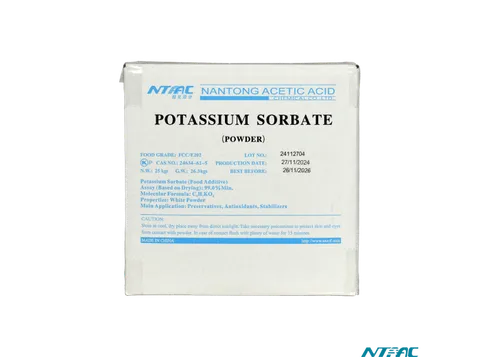
Sodium benzoate vs. potassium sorbate. Benzoate is more effective against bacteria and yeasts, while sorbate has greater antifungal activity (against molds). Benzoate works best below pH 4.2; sorbate is effective up to pH 6.5. The combination of both is synergistic and allows the total dose to be reduced. Benzoate is generally more economical per kilogram.
Sodium benzoate vs. citric acid. Citric acid is an acidulant that lowers the product's pH, creating unfavorable conditions for microorganisms, but it is not a direct antimicrobial preservative. In practice they are used together: citric acid adjusts the pH to the acidic range where benzoate is most effective. They are complementary, not substitutes.
Sodium benzoate vs. calcium/sodium propionate. Propionates are used more in bakery and higher-pH products (4.5–5.5), where benzoate loses efficacy. For acidic products (beverages, sauces), benzoate is significantly more effective and economical.
Sodium benzoate vs. natamycin. Natamycin is a natural antifungal that acts exclusively against molds and yeasts (not bacteria). It is more expensive than benzoate and is used mainly on the surface of cheeses and cured meats. Benzoate offers a broader spectrum at a lower cost.
Sodium benzoate frequently asked questions
What is sodium benzoate and what is it used for? Sodium benzoate is the sodium salt of benzoic acid, used as an antimicrobial preservative in foods, beverages, cosmetics and pharmaceutical products. It inhibits the growth of yeasts, molds and certain bacteria, especially in products with an acidic pH (below 4.5), extending the product's shelf life and preventing microbiological spoilage.
Is sodium benzoate safe for human consumption? Yes, when used within the limits established by health regulations. Sodium benzoate is approved as a food additive by the FDA (United States), EFSA (European Union), COFEPRIS (Mexico) and the Codex Alimentarius (joint FAO/WHO body). Its safety has been extensively evaluated over more than a century of use in the food industry.
At what pH does sodium benzoate work best? Sodium benzoate is most effective in products with a pH between 2.5 and 4.5. Its maximum efficacy is reached below pH 4.2 (the pKa of benzoic acid), where most of the preservative is in its active undissociated form. Above pH 5.0, its antimicrobial activity drops significantly.
How much sodium benzoate should I add to my product? The dosage depends on the food category, pH, combination with other preservatives and the regulations of the target market. As a reference, typical concentrations range from 150 to 1,000 ppm (0.015%–0.1%). Contact us for technical advice on the optimal dose for your specific formulation.
Can sodium benzoate be used in products with a neutral pH? Its effectiveness is very limited above pH 5.0. For neutral or slightly acidic products, potassium sorbate is generally a better option, or acidifying the product to bring the pH into the range where benzoate is effective can be considered.
Where can I buy food grade sodium benzoate in Mexico? At Quimiconsult we distribute food grade Tianjin Dongda Chemical Group® sodium benzoate from Monterrey, Nuevo León, with shipping throughout Mexico. We provide a certificate of analysis for every batch, technical formulation advice and documentation for food safety audits.
What is the price of sodium benzoate? The price varies according to purchase volume and commercial terms. Sodium benzoate is one of the most economical food preservatives on the market in cost per kilogram, which contributes to its position as the most widely consumed preservative in the world. Contact us for a quote.
Other names and synonyms for sodium benzoate
Benzoato de sodio / benzoato sodico / benzoato sódico / sodio benzoato: standard Spanish names used in technical data sheets, ingredient labels and purchasing documentation. All refer to the same compound: the sodium salt of benzoic acid (CAS 532-32-1).
Sodium benzoate: the English name used in international technical documentation, English-language safety data sheets, certificates of analysis from international manufacturers and in Codex Alimentarius nomenclature. It is the term that appears in export specifications for English-speaking markets.
E211: the food additive code assigned to sodium benzoate by the European Union and used on food product labels in Europe and in many Latin American countries that adopt the E-number system.
Benzonato de sodio / bensoato de sodio / benzoato de sofio / bensuato de sodio / bensonato de sodio: common spelling variations and typos (in Spanish) that frequently appear in searches, quotes and purchase orders. All refer to the same product. If you reached this page searching for any of these variations, the product you need is the food grade sodium benzoate we distribute at Quimiconsult.
Food preservative / beverage preservative / antimicrobial preservative / E211 preservative: functional terms that describe the main application of sodium benzoate and are used by production and quality managers when looking for preservation options for their formulations.
Where to buy sodium benzoate / sodium benzoate price / food grade sodium benzoate Mexico: frequent commercial queries from purchasing and formulation managers looking for a reliable supplier of this preservative in the Mexican market. Quimiconsult distributes food grade sodium benzoate with nationwide coverage, batch certification and technical advice.