Spanish
 English


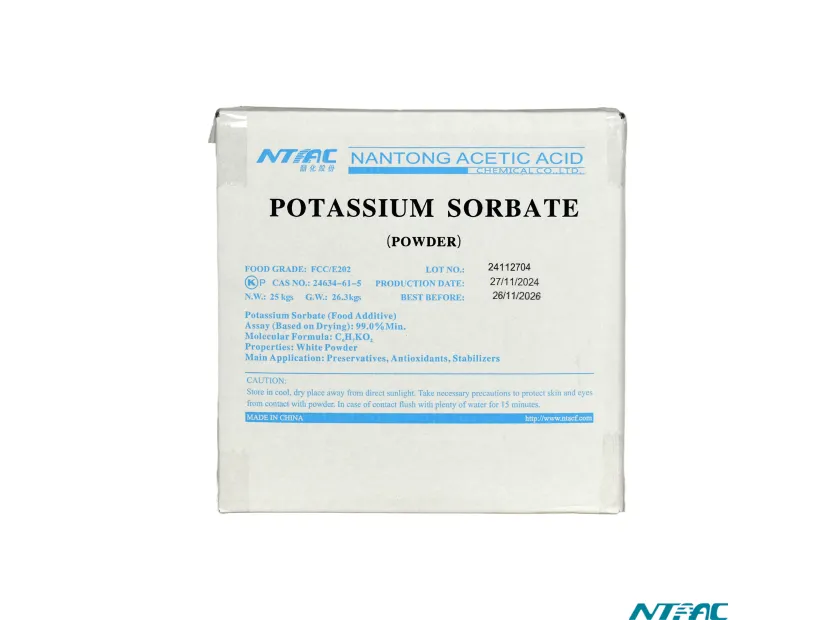
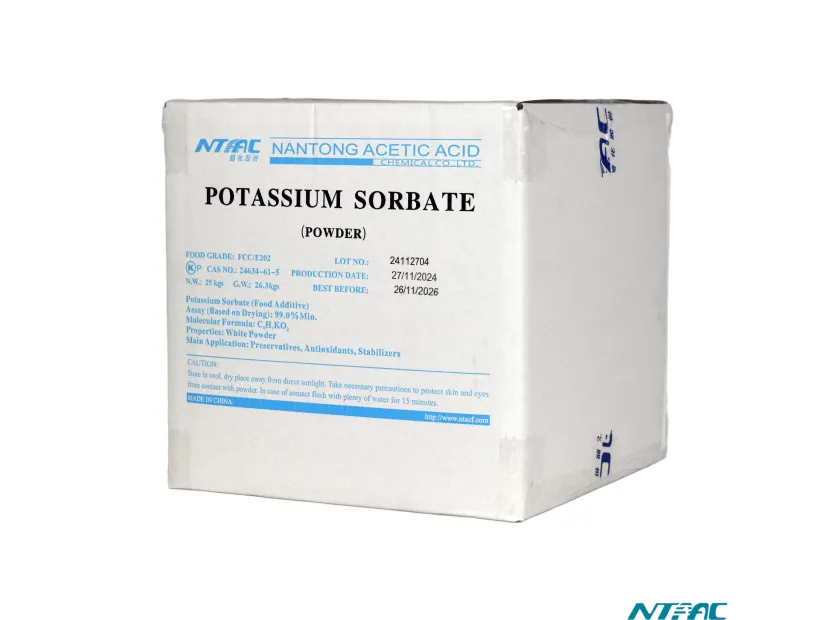
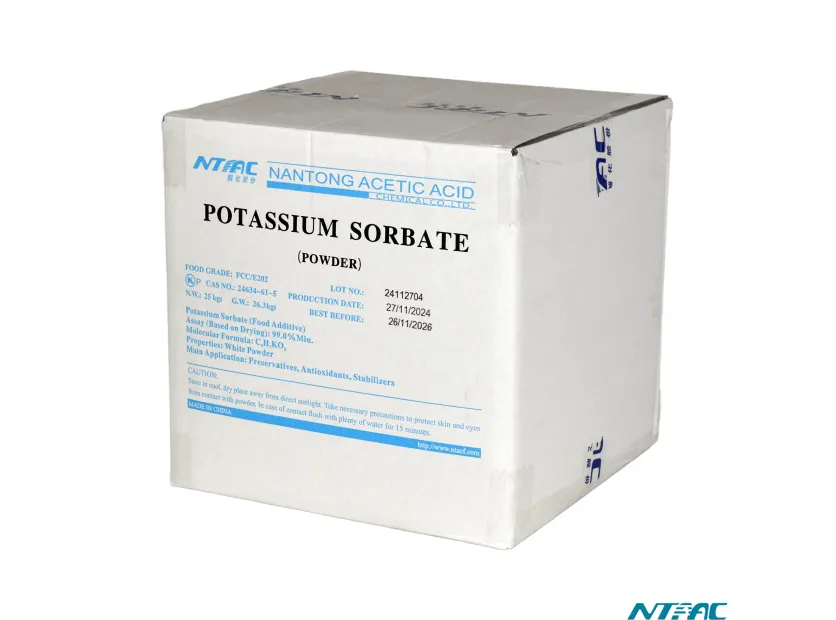
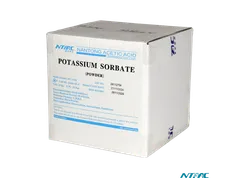
POTASSIUM SORBATE NANTONG ACETIC ACID® FOOD GRADE
View All Prices
| Quantity | Unit Price |
|---|---|
| kg | |
| 1 - 99 | USD 3.21 |
| 100 - 199 | USD 3.18 |
| 200 - 499 | USD 3.15 |
| 500 - 999 | USD 3.13 |
| 1000 - 4999 | USD 3.10 |
| 5000 - 9999 | USD 3.07 |
| 10000 - 17999 | USD 3.05 |
| 18000+ | USD 3.02 |
Description of antimicrobial potassium sorbate
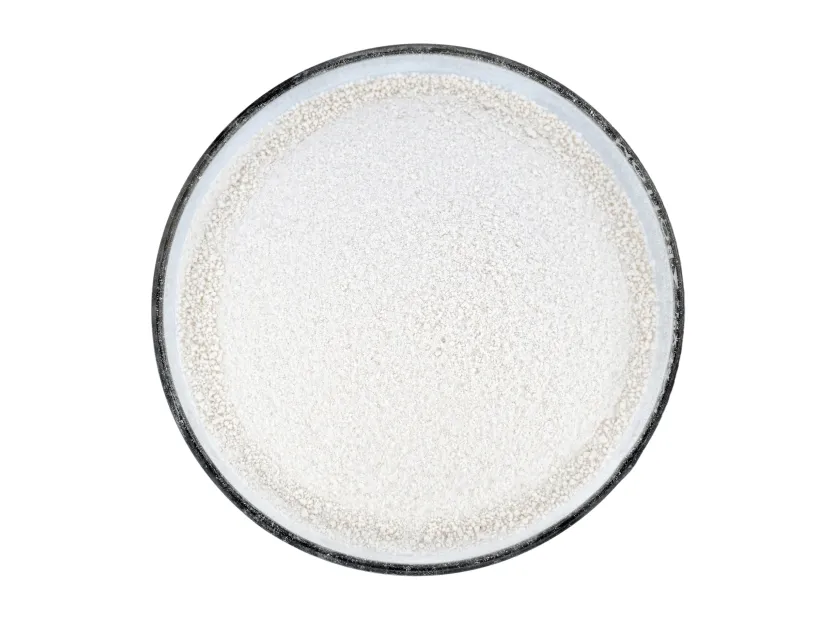
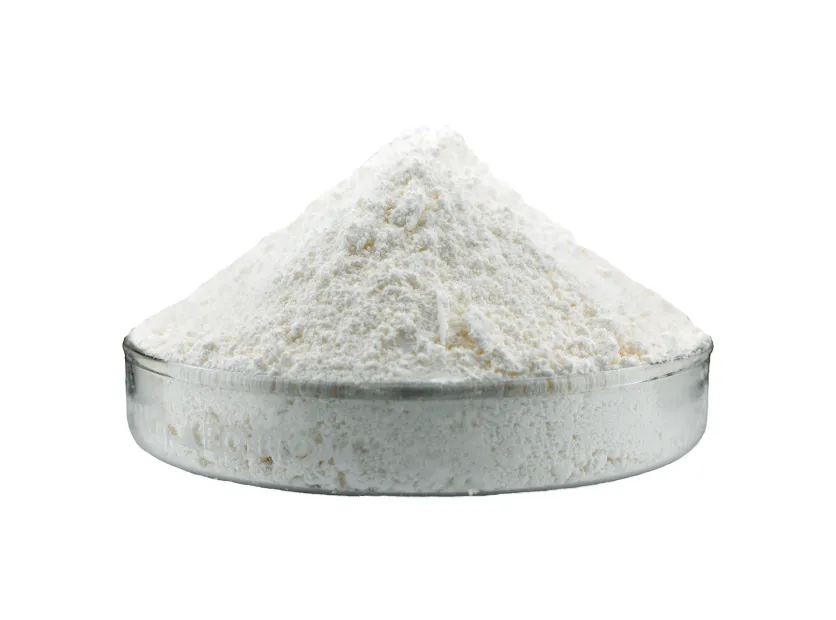
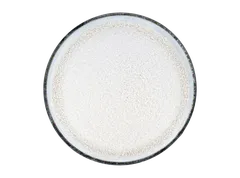
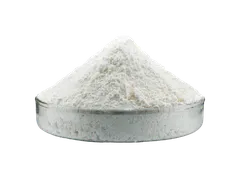
At Quimiconsult we offer food grade Potassium Sorbate, manufactured by Nantong Acetic Acid®, a preservative used worldwide for its high antimicrobial efficacy, chemical stability and compatibility with multiple matrices. It comes as a fine-grained white powder, 100 % active and highly soluble in water, which makes it easy to incorporate evenly into both liquid formulations and dry blends, without leaving residue, causing turbidity or interfering with the production process.
Potassium sorbate acts as a selective antimicrobial agent, effective against molds, yeasts and fungi, particularly in low-pH products, where it performs best. Its mechanism of action inhibits the microbial growth responsible for spoilage, without affecting desirable microorganisms or altering the organoleptic properties of the final product. Thanks to its high purity and stability, potassium sorbate helps extend shelf life, maintain microbiological safety and preserve flavor, aroma, color and texture in applications such as beverages, dairy, baked goods, dressings, jams, preserves, as well as in cosmetics and personal care products.
Nantong Acetic Acid® Potassium Sorbate, food grade, is available in Monterrey, Nuevo León, with shipping throughout Mexico, technical support and quality documentation for use in regulated industrial processes.
About the brand: Nantong Acetic Acid®
Nantong Acetic Acid® is an internationally recognized manufacturer specializing in food grade organic acids, salts and preservatives, with processes aligned to international standards of quality, food safety and traceability. Its experience in producing potassium sorbate ensures strict control of purity, particle size and microbiological performance, essential characteristics for applications in the food, cosmetics and personal care industries.
Nantong Acetic Acid® products meet international regulatory requirements and certifications, allowing their safe integration into audited formulations and supply chains that demand lot-to-lot consistency, long-term stability and regulatory compliance. This combination of technical quality and reliability makes Nantong Acetic Acid® potassium sorbate a solid choice for manufacturers seeking effective antimicrobial protection without compromising the quality of the final product.
Potassium sorbate details and properties
Our food grade potassium sorbate comes as a fine white powder, homogeneous and free of visible impurities, with an active content between 99.0 and 101.0 %, meeting specifications widely accepted in the food and cosmetics industries. Chemically, it is the potassium salt of sorbic acid (CAS number 24634-61-5), one of the most stable and soluble forms of this preservative, which makes precise dosing and uniform dispersion in different systems easy.
In a 5 % aqueous solution, potassium sorbate has a typical pH between 8.0 and 10.5, a condition that favors its stability during storage and its performance once incorporated into acidic formulations, where it exerts its antimicrobial action. The product is completely soluble in water, has low residual moisture and retains its physical and functional properties when stored properly. It is sold in 25 kg white boxes, designed for easy handling, storage and logistics control in production plants.
This potassium sorbate holds Halal, FSSC 22000 and Kosher certifications, which ensure its safe use in food, beverages, cosmetics and personal care products, in addition to meeting the requirements of regulated markets. Under proper storage conditions, the product retains its stability and antimicrobial efficacy for up to 12 months.
Properties
Potassium sorbate is an effective, virtually odorless antimicrobial preservative, designed to inhibit the growth of molds and yeasts by interfering with their cellular metabolism. Its fine particle size promotes rapid dissolution and homogeneous dispersion, preventing lumps and ensuring an even distribution of the preservative in beverages, syrups, emulsions, dry blends and complex food matrices.
Thanks to its sensorially neutral nature, potassium sorbate does not alter the flavor, color or aroma of final products, making it an ideal choice for formulations where consumer perception is critical. It is compatible with a wide variety of ingredients, including sugars, proteins, organic acids and dairy systems. Recognized as additive E202, potassium sorbate is considered safe by international regulatory bodies, since during metabolism and processing it can break down into carbon dioxide and water, without generating toxic residues.
Applications of potassium sorbate in food and other uses
Potassium sorbate is mainly used as an antimicrobial preservative in the food and cosmetics industries, where effective control of microbial growth is required without affecting product quality. In beverages and dairy products, it helps prevent unwanted fermentation and extends the shelf life of juices, ciders, yogurts, cheeses and flavored beverages, maintaining microbiological stability during storage and distribution.
In baked goods, dressings, jams, sauces and preserves, potassium sorbate acts as a mold inhibitor, significantly reducing the risk of surface spoilage and improving long-term stability. It is also used in cosmetics and personal care products, such as lotions, creams and emulsions, where it works as an antifungal preservative compatible with water-based formulations.
The recommended dosages depend on the application and the matrix: in liquid products concentrations of 0.05 % to 0.15 % (500 to 1 500 ppm) are commonly used, while in dry blends the dosage usually ranges between 0.1 % and 0.3 %, always in compliance with applicable regulations. To explore more preservation solutions, see our lines of preservatives for Food & Beverages and Agrochemicals, which bring together complementary ingredients for safe and stable formulations.
Storage and handling of potassium sorbate
To preserve the quality, stability and antimicrobial efficacy of potassium sorbate, it is recommended to store it in its original container, tightly closed and protected from moisture. The product should be kept in a cool, dry, well-ventilated place, away from heat sources and direct sunlight, conditions that help preserve its flowability and prevent premature degradation.
Since potassium sorbate is slightly hygroscopic, it is important to minimize its exposure to air to prevent caking of the powder and allow accurate dosing in industrial processes. During handling, the use of gloves and safety goggles is recommended, along with proper fine-powder handling practices to avoid inhalation or prolonged skin contact. Under proper storage conditions, the product has a shelf life of up to 12 months, during which it retains its performance and efficacy as an antimicrobial preservative.
Other names and synonyms
Potassium Sorbate is the English name used as standard in international trade, technical data sheets, certificates of analysis and regulatory documentation. This name is widely recognized in the food, cosmetics and personal care industries, and allows the preservative to be clearly identified in import, export and global formulation operations, especially in markets that require English nomenclature for audits and regulatory compliance.
The expression sorbic acid salt is a descriptive chemical name, used mainly by formulators, chemists and development technicians to highlight that potassium sorbate is the potassium salt of sorbic acid, the form with the highest water solubility and the best stability for industrial applications. This term usually appears in technical documentation, specialized literature and formulation processes where chemical interactions and the behavior of the preservative in different matrices are analyzed.
The code E202 identifies potassium sorbate within the European food additive system, classifying it as a preservative authorized for food and beverages. This designation is commonly used in labeling, regulatory specifications and ingredient lists, and is key for manufacturers who export or sell products in markets that follow European Union regulations or harmonized food additive standards.
The term food preservative is used generally in the food and beverage industry to describe the main function of potassium sorbate as a mold and yeast growth inhibitor, contributing to microbiological safety and extended shelf life. Under this name, potassium sorbate is incorporated into formulations that aim to preserve quality, freshness and stability without affecting the sensory properties of the final product.
The expressions antifungal preservative and mold inhibitor are common in bakeries, confectioneries, beverage processors and prepared food manufacturers, where its specific action against fungi and molds responsible for surface spoilage is emphasized. These terms are frequently used in operational and technical contexts to distinguish it from preservatives with predominantly bacteriostatic action.
The name cosmetic preservative is used by manufacturers of cosmetics and personal care products, such as creams, lotions, gels and emulsions, to refer to potassium sorbate as an antifungal agent compatible with water-based formulations. This term highlights its ability to extend product shelf life, maintain microbiological stability and meet safety requirements in skin-contact applications.