Spanish
 English


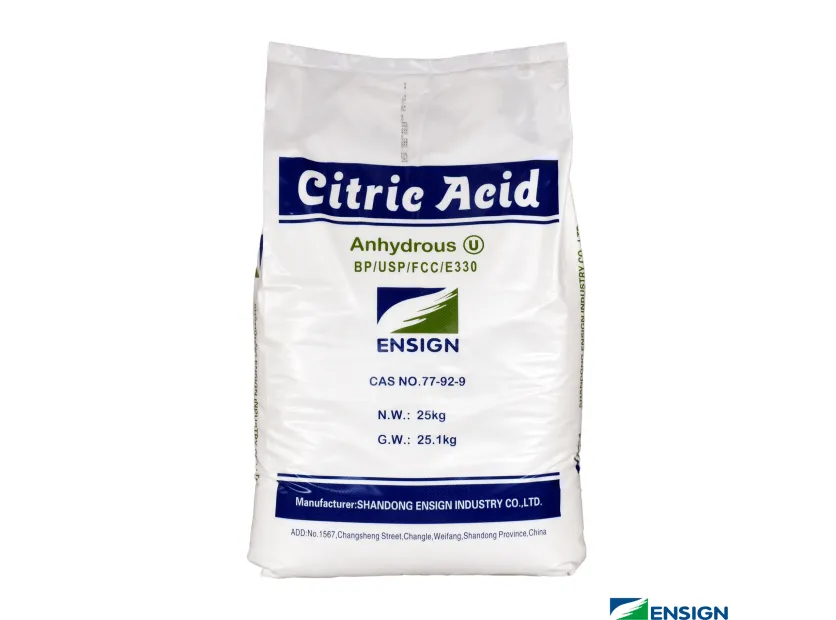
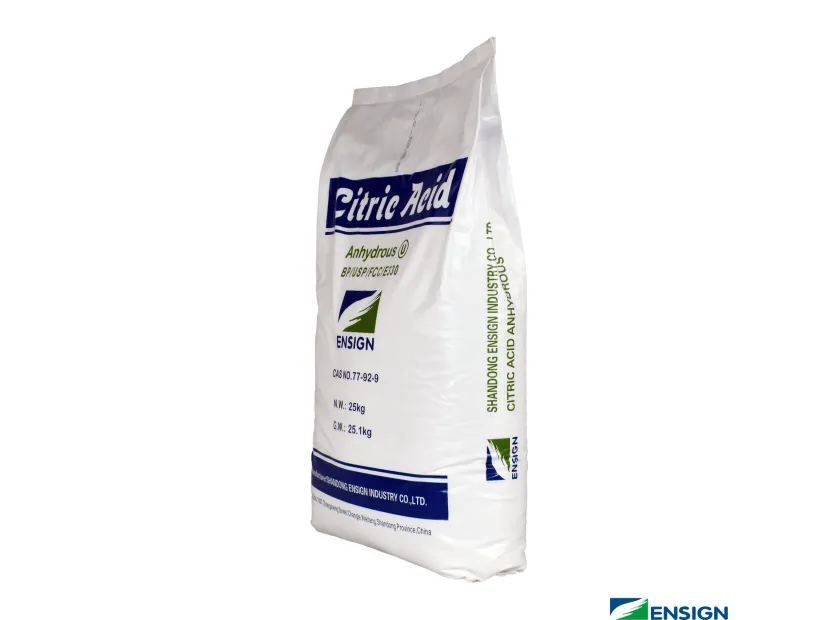
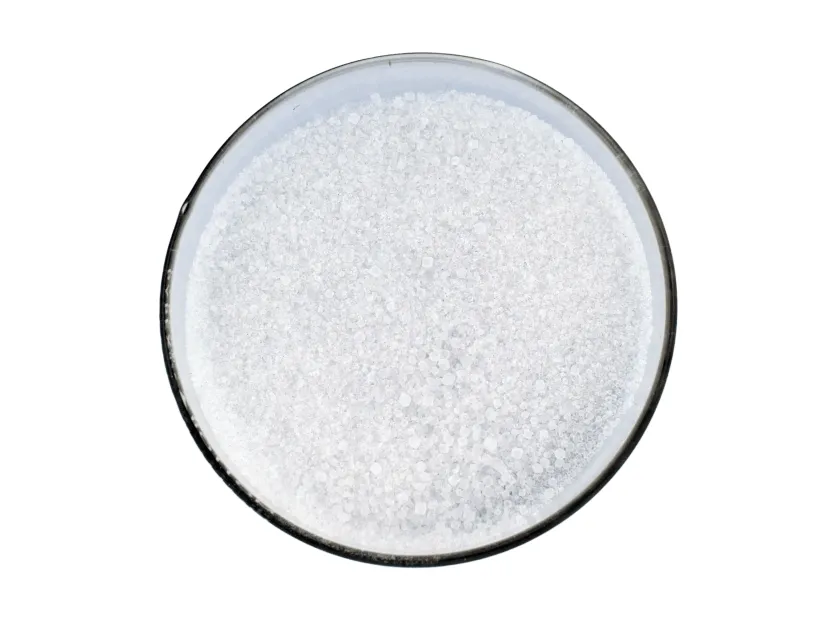
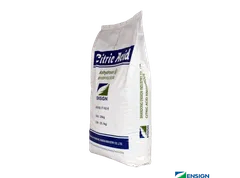
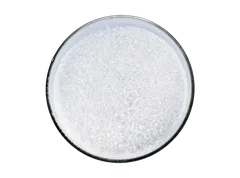
ANHYDROUS CITRIC ACID ENSIGN® FOOD GRADE
View All Prices
| Quantity | Unit Price |
|---|---|
| kg | |
| 1 - 99 | USD 1.55 |
| 100 - 199 | USD 1.53 |
| 200 - 499 | USD 1.52 |
| 500 - 999 | USD 1.51 |
| 1000 - 4999 | USD 1.50 |
| 5000 - 9999 | USD 1.49 |
| 10000 - 17999 | USD 1.47 |
| 18000+ | USD 1.46 |
Product description, high-purity Anhydrous Citric Acid
At Quimiconsult we distribute Anhydrous Citric Acid, a tricarboxylic organic acid widely used in industry, with the chemical formula C₆H₈O₇ and CAS number 77-92-9, considered one of the most versatile and widely used additives in industry worldwide. It is a white crystalline powder with a characteristically sour taste, with a minimum purity of 99.5% on a dry basis, maximum moisture of 0.5%, sulfated ash below 0.05% and strict heavy metal controls (lead max. 0.5 mg/kg, arsenic max. 1.0 mg/kg, mercury max. 1.0 mg/kg, total heavy metals max. 10 mg/kg), parameters that meet the most demanding specifications of the main international pharmacopoeias (USP, BP, EP, JP) and the Food Chemicals Codex (FCC), ensuring its suitability for premium-quality food, pharmaceutical and cosmetic applications.
Anhydrous Citric Acid stands out as the most widely used natural acidulant in the world, functioning simultaneously as a pH regulator, flavoring agent (providing the characteristic sour sensation of citrus fruits), preservative, metal ion sequestrant (chelating agent), indirect antioxidant, antioxidant synergist and sensory profile modulator in an enormous variety of products. Its advantage over other acidulants (lactic, malic, fumaric, tartaric and acetic acid) lies in its clean, fresh taste without residual bitter notes, its high water solubility (more than 1,300 g/L at 20°C), its low documented toxicity (oral LD50 in rats greater than 5,400 mg/kg), its complete biodegradability and its competitive cost thanks to large-scale production by controlled microbial fermentation from renewable substrates such as molasses, corn or tapioca.
Anhydrous Citric Acid is a natural, non-toxic, GRAS (Generally Recognized as Safe) ingredient recognized by the US FDA, approved by the European Union under code E-330, with an official monograph in USP/NF, BP, EP and JP for pharmaceutical use, and classified by FAO/WHO with an ADI (Acceptable Daily Intake) of "not specified," meaning it presents no relevant toxicological risk. In addition, its antimicrobial activity against bacteria is due to interference with cell membrane permeability and uncoupling of the microbial respiratory chain, a property that allows it to act as an auxiliary natural preservative in many food and pharmaceutical formulations, reinforcing microbiological stability without resorting to synthetic preservatives that consumers question.
Anhydrous Citric Acid is used in a wide range of industries including food and beverages (carbonated beverages, juices, nectars, isotonic and energy drinks, jams, jellies, gelatins, confectionery, dairy products, fruit preserves, meat products, bakery, supplements), the pharmaceutical industry (effervescents, syrups, injectable solutions, modified-release formulations), the cosmetics and personal care industry (shampoos, creams, anti-aging products, chemical peels), detergents and cleaning products (descalers, multipurpose cleaners, eco-friendly detergents), industrial water treatment, agriculture and fertilizers, the metalworking industry (metal passivation, rust removal), construction (cement set retarder), the textile industry, leather tanning and specialized industrial applications. For those searching for citric acid price, where to buy citric acid, food grade citric acid, USP citric acid or Ensign citric acid in Mexico, Quimiconsult offers a certified product with technical support, batch certificates of analysis and an efficient supply chain backed by our partnership with the world-leading manufacturer ENSIGN®. Anhydrous Citric Acid is available in Monterrey, Nuevo León, with shipping throughout Mexico.
About the ENSIGN® brand
ENSIGN® is one of the world's leading producers of food grade citric acid, recognized for its commitment to quality, safety and innovation in functional ingredients for the food, pharmaceutical and beverage industries. Its manufacturing process is designed to guarantee superior purity and batch-to-batch consistency, allowing manufacturers to rely fully on the stability and performance of their products. ENSIGN® citric acid stands out for its excellent performance in liquid solutions and dry formulations, providing controlled acidity without altering the final sensory profile of the food.
Thanks to its technical capability and compliance with international regulations, ENSIGN® has established itself as a strategic supplier to the food and beverage industry, especially in formulations that require a versatile, stable and safe acidulant. This reliability makes it a preferred choice for production plants that value efficiency, traceability and functional performance at industrial scale.
Headquartered in China, with production operations among those with the largest installed capacity in the world, ENSIGN® has positioned itself as a benchmark supplier to the food, pharmaceutical and beverage industries on five continents. The value of sourcing citric acid from ENSIGN® lies in the quality infrastructure and analytical rigor that back every production batch. ENSIGN® operates under internationally certified quality management systems, including ISO 9001 (quality management), ISO 22000 (food safety) and FSSC 22000, and holds Halal and Kosher certifications for its food grade ingredient lines. Its products meet the specifications of the main international pharmacopoeias (USP, BP, EP, JP) and the Food Chemicals Codex (FCC), ensuring that the citric acid supplied meets the regulatory requirements of the most demanding markets.
ENSIGN® has continuously invested in fermentation, crystallization and purification technology, allowing it to offer citric acid with purity, particle size and moisture profiles optimized for different application segments: food grade for the food and beverage industry, pharmaceutical grade for drug and injectable formulations, and technical grade for industrial applications. This grade specialization ensures that the product supplied is designed for the specific demands of each industry, eliminating the uncertainty that can arise from using products of unknown origin or without verifiable certifications.
By choosing ENSIGN® Anhydrous Citric Acid through Quimiconsult, our customers gain access to a world-class product with the advantage of inventory available in Mexico, local technical support, regulatory documentation in Spanish (certificates of analysis, technical data sheets, safety data sheets) and application advice that complements the quality of the original manufacturer's product. Quimiconsult has built a stable supply chain with ENSIGN® that allows us to offer continuous availability, competitive pricing and flexible purchase volumes, from individual 25 kg bags to full pallets and containers for large-scale operations.
Details, properties and technical specifications of Anhydrous Citric Acid
The Anhydrous Citric Acid we distribute meets the parameters established by the main international pharmacopoeias and by the Food Chemicals Codex (FCC), guaranteeing a level of purity suitable for the most demanding applications. Technical specifications include an assay on a dry basis of 99.5% to 100.5%, maximum moisture of 0.5%, maximum sulfated ash of 0.05%, maximum sulfates of 150 mg/kg, maximum oxalates of 100 mg/kg, maximum arsenic of 1.0 mg/kg, maximum lead of 0.5 mg/kg, maximum mercury of 1.0 mg/kg and maximum total heavy metals of 10 mg/kg. It is a free-flowing white crystalline powder, readily soluble in water and ethyl alcohol.
Our presentations are designed to suit different consumption volumes: 25 kg bags, 1,000 kg (1 metric ton) bulk bags, full pallets and containers for large-scale operations. All batches come with certificates of analysis and, since this is an ENSIGN® product, can be accompanied by Kosher, Halal, ISO 9001, ISO 22000, FSSC 22000, FCC and USP certificates and additional documentation required for supplier qualification processes and audits.
Physicochemical properties of Anhydrous Citric Acid
Anhydrous Citric Acid has physicochemical properties that explain its broad industrial applicability. It is a free-flowing, odorless white crystalline solid with an intensely sour, clean taste, an approximate density of 1.665 g/cm³, a melting point of 153°C (decomposing above 175°C), exceptional water solubility (approximately 1,330 g/L at 20°C, increasing significantly with temperature), soluble in ethyl alcohol and partially soluble in ethyl ether. Its three dissociation constants (pKa1 = 3.13, pKa2 = 4.76, pKa3 = 6.40) are the basis of its exceptional capacity as a buffer system, especially in the pH 3 to 6 range where most food and pharmaceutical products fall. This triprotic property allows it to form stable buffers with its salts (sodium citrate, potassium citrate, calcium citrate), which are widely used in industrial formulation.
From a toxicological standpoint, Anhydrous Citric Acid has an exceptional safety profile, with an oral LD50 in rats greater than 5,400 mg/kg (OECD 401), placing it in the practically non-toxic category by the oral route. Under GHS it is classified only as Eye Irritant Category 2 (H319) due to the effect of the dust on the eye mucosa, with no other relevant hazardous effects: it is not mutagenic, not carcinogenic, not toxic to reproduction, not bioaccumulative and is readily biodegradable. For transport, it is classified as non-hazardous goods under UN regulations, which simplifies its international logistics. When handling, the use of splash goggles, gloves and a P1 dust mask is recommended to avoid irritation from inhaling fine particles, along with handwashing facilities and an emergency eyewash in the work area.
Antimicrobial mechanism of action of Citric Acid
The antimicrobial activity of Citric Acid is due to the undissociated acid molecules, which are able to cross the microbial cell membrane by passive diffusion. Once inside the cell, because of the neutral intracellular pH, the acid dissociates, releasing protons (H⁺) that acidify the cytoplasm and uncouple the respiratory chain, interfering with ATP generation and essential metabolic processes. In addition, citric acid acts as a chelating agent for divalent cations (calcium, magnesium, iron) that are structural components of the cell membrane and of microbial enzyme cofactors, weakening cell integrity and enhancing the inhibitory effect. This combined activity is particularly effective against gram-positive and gram-negative bacteria and certain yeasts and molds in acidic environments, which is why citric acid functions as an auxiliary natural preservative in juices, beverages, jams, jellies, vegetable preserves and marinated meat products.
Benefits and functions of Anhydrous Citric Acid
Universal acidulant and pH regulator
The main use of Anhydrous Citric Acid at industrial level is as an acidulant and pH regulator. Its triprotic capacity allows it to adjust and maintain a product's pH within a specific range, a critical property for the microbiological stability, enzyme activity, sensory profile, color stability and shelf life of food, pharmaceutical and cosmetic products. In carbonated beverages, juices, nectars and sports drinks, citric acid provides the characteristic refreshing sour sensation that consumers associate with natural citrus flavors (lemon, orange, grapefruit, lime, mandarin), making it the acidulant of choice for its clean taste without residual bitter or astringent notes.
In combination with sodium citrate or potassium citrate, it forms the citrate buffer system, one of the most widely used in the pharmaceutical and food industries, capable of keeping pH stable even when small amounts of acid or base are added during storage or processing. This buffer is especially valuable in injectable solutions, pharmaceutical syrups, functional beverages, flavored milks, sauces and dressings, where pH stability directly determines the quality and shelf life of the final product.
Auxiliary natural preservative
Thanks to its antimicrobial activity against bacteria, molds and yeasts in acidic media, Citric Acid functions as an auxiliary natural preservative in food, pharmaceutical and cosmetic formulations. Although it is not as potent a preservative as parabens or sodium benzoate, its ability to acidify the product to a pH below 4.0 creates an environment hostile to microbial growth, complementing and enhancing the action of specific preservatives. In products such as jams, jellies, fruit preserves, beverages, sauces, pickles, marinated meat products and dressings, combining citric acid with other preservatives such as potassium sorbate or sodium benzoate produces a synergistic effect that significantly increases microbiological stability without raising the individual preservative doses.
Chelating (sequestering) agent for metal ions
Citric Acid is a moderate chelating agent with a particular affinity for iron, copper, calcium, magnesium, manganese and other divalent and trivalent cations. This ability to sequester metal ions has many industrial applications: in food and beverages, it prevents metal-catalyzed oxidation (avoiding color changes, flavor loss and fat rancidity by chelating the iron and copper that catalyze the oxidation of vitamin C, oils and pigments); in cleaning and hygiene products, it acts as a descaler, dissolving calcium carbonate deposits and scale; in cosmetics, it improves color stability and prevents discoloration in creams and lotions containing sensitive ingredients; in water treatment, it sequesters hardness ions, improving detergent efficiency; in the textile industry, it prevents iron stains during dyeing.
Antioxidant synergist and stabilizer
Although citric acid is not a direct antioxidant, it acts as an antioxidant synergist by chelating pro-oxidant metals (iron, copper), removing the catalysts of oxidation reactions. This property makes it valuable in formulations containing oils, fats, fat-soluble vitamins (A, D, E, K), carotenoid pigments, polyphenols and other oxidation-sensitive compounds. It is routinely used in combination with tocopherols, ascorbic acid, BHT, BHA or TBHQ to enhance the oxidative stability of vegetable oils, mayonnaise, dressings, fried foods, high-fat baked goods, dehydrated foods, meat products, cosmetic formulations with vegetable oils and pharmaceutical products.
Sensory modifier and flavor enhancer
Citric acid provides a fresh, clean, bright sour sensation that enhances and balances the flavor profiles of other ingredients. In the beverage and snack industry, it acts as a natural flavor enhancer that heightens the perception of fruit, brings out citrus notes, offsets excess sweetness and provides the sensation of freshness characteristic of premium products. This property is used in flavored beverages, hard and soft candies, gummies, chewing gum, savory snacks, bakery products with fruit fillings, ice cream and sorbets, where small doses on the order of 0.1% to 1% significantly transform the sensory profile of the final product.
Applications of Anhydrous Citric Acid by industry
Food and beverage industry
The food and beverage industry is the largest consumer of citric acid worldwide, accounting for approximately 70% of global consumption. Applications include:
Carbonated beverages and soft drinks (colas, lemon-lime, fruit flavors), where it provides the characteristic acidity at typical doses of 0.15% to 0.30%. Non-carbonated beverages such as flavored waters, nectars, reconstituted fruit juices, isotonic drinks, energy drinks, sports drinks and functional beverages, where it acts as an acidulant, pH regulator and color and flavor stabilizer. Plant-based beverages (flavored plant milks, vegan protein drinks), where it provides the required fresh acidity without altering the nutritional profile. Iced tea, kombucha, probiotic drinks and functional fermented beverages.
Jams, jellies, fruit preserves, compotes and processed fruit products, where it helps standardize pH (ideally between 2.8 and 3.5 for pectin setting and preservation), improves pectin activity during gelling, enhances natural fruit flavor and extends shelf life by inhibiting spoilage microflora. Confectionery including hard candies, soft candies, gummies (gelatin gummies, pectin gummies), chewing gum, effervescent tablets, ice pops and sorbets, where it provides sour flavor, regulates gelling pH and acts as a coating on sour candies.
Dairy products such as fresh and aged cheeses (pH adjustment in brines), flavored yogurts (pH stabilization), flavored milks (prevents protein precipitation), dairy desserts and custards and processed cheeses (in synergy with sodium citrate as an emulsifying salt). Meat products such as cured sausages, hams, marinated products and packaged meats, where it acts as an acidulant, auxiliary preservative and color stabilizer.
Baked goods (dough improver, activator of effervescent leavening agents in baking mixes), canned foods and preserves (vegetables, legumes, fish, fruit in syrup), dressings, sauces, mustards, ketchup, hot sauces, mayonnaise and vinaigrettes, pickles and fermented products, instant soups and concentrated broths, Asian sauces (teriyaki, low-sodium soy sauce) and frozen foods.
Pharmaceutical and supplement industry
In the pharmaceutical industry, Anhydrous Citric Acid is a monograph excipient widely present in solid, liquid and semisolid formulations. Specific applications include:
Effervescent formulations (tablets, granules, powders), where the reaction with sodium bicarbonate or sodium carbonate generates CO₂ to create the characteristic effervescence; the citric acid/bicarbonate stoichiometry is critical for complete dissolution, balanced taste and reproducible behavior. Pediatric and adult syrups as an acidulant, pH regulator and auxiliary preservative. Oral suspensions (antacids, antidiarrheals, pediatric antibiotics), where it regulates pH and improves stability. Injectable and parenteral solutions as a component of citrate buffers for physiological pH adjustment. ACD (Acid-Citrate-Dextrose) and CPD (Citrate-Phosphate-Dextrose) anticoagulants for preserving blood and blood components in blood banks. Topical formulations, dermatological creams and gels. Modified-release formulations, where gastrointestinal pH modulated by citric acid affects the dissolution rate. Ophthalmic preparations as a component of buffer systems. Urinary alkalinizer in combination with sodium citrate and potassium citrate for the prevention of kidney stones. Effervescent dietary supplements (multivitamins, minerals, effervescent vitamin C, effervescent magnesium, electrolytes).
Cosmetics and personal care industry
In cosmetics, citric acid functions as a pH regulator, chelating agent, gentle exfoliant and stabilizer. Typical applications include:
Shampoos, conditioners and hair products, where it neutralizes the residual alkaline pH of cleansing agents and restores the hair's natural pH (4.5-5.5), closes the hair cuticle for shine and softness, and acts as a chelating agent to remove mineral residues from hard water. Facial care products including toners, chemical peels, anti-aging serums, chemical exfoliants (AHA), masks and facial cleansers, where citric acid is used at concentrations of 2% to 10% as an alpha hydroxy acid that gently exfoliates, stimulates cell renewal, lightens dark spots, reduces fine lines and improves skin texture.
Body creams and lotions, anti-aging products, brightening products, bubble baths and effervescent bath salts, deodorants, liquid and bar soaps, intimate care products, hair dyes and coloring products, nail products and effervescent bath bombs (with sodium bicarbonate for the fizzing effect).
Detergents, cleaning products and descalers
In the detergent and cleaning products industry, citric acid has gained prominence as an eco-friendly alternative to phosphates, EDTA and traditional mineral acids. Specific applications include:
Eco-friendly and biodegradable laundry detergents, where it acts as a chelating agent for calcium and magnesium ions (water hardness), boosting surfactant performance and preventing scale buildup. Automatic dishwasher detergents, where in addition to chelating ions it reduces spotting on glassware and cutlery. Limescale and scale removers for coffee makers, kettles, water heaters, washing machines, showers and surfaces with calcareous deposits; here citric acid dissolves calcium carbonate, forming soluble calcium citrate that is easily rinsed away with water. Eco-friendly multipurpose cleaners, mild degreasers, oven and stainless steel cleaners, bathroom and kitchen soaps, eco-friendly disinfectants, industrial descalers for cooling towers, heat exchangers and hot water systems.
Water treatment, agriculture and construction
Citric acid has relevant industrial applications in:
Industrial water treatment, where it acts as a metal ion sequestrant in boiler feedwater, controls scale in heat exchangers and cooling towers, and conditions pH in drinking water systems. Agriculture and fertilizers, where it acts as a chelating agent for micronutrients (iron, zinc, manganese, copper) in liquid foliar fertilizers, facilitating uptake by plants; it is also used as an acidifier for alkaline soils, a root growth stimulant in fertigation and as an ingredient in hydroponic nutrients.
Construction, where it acts as a set retarder in cement and concrete, allowing longer workability on large-scale projects, concrete pumped over long distances, hot climates or complex construction projects. In specialty mortars, plasters and self-adhesive cementitious products, it adjusts setting time to the requirements of the application.
Metalworking, textile and other industrial uses
In the metalworking industry, citric acid is used as a stainless steel passivating agent (an eco-friendly alternative to nitric acid), for rust removal, pickling of metal surfaces, electropolishing of special alloys and removing mineral deposits from industrial equipment. In the textile industry, it acts as a buffering agent in dyeing processes, dye fixative, residual reducing agent and anti-stain treatment. In the leather industry, it is used in tanning, neutralization and acidification of hides. In the paper industry, as an auxiliary in bleaching and neutralization processes. Other applications include oil drilling fluids, special battery electrolytes, bioplastics and biodegradable polymers (citric acid is used as a plasticizer and crosslinker in bio-based formulations), scented candles and industrial bath salts.
Anhydrous Citric Acid vs Citric Acid Monohydrate
A frequent question among buyers and formulators is the difference between anhydrous citric acid and citric acid monohydrate, two forms of the same chemical compound with different crystal structures. Chemically, both are citric acid (C₆H₈O₇), but the monohydrate contains one molecule of water of crystallization for each molecule of citric acid (C₆H₈O₇·H₂O), which represents approximately 8.6% water by weight.
Anhydrous Citric Acid contains 100% pure citric acid without water of crystallization, which means greater acidifying power per unit of weight (approximately 8.6% more effective). This characteristic makes it preferred in formulations where moisture stability is critical: effervescent tablets (where the monohydrate's water of crystallization could start the reaction prematurely), dry powders for instant beverages, pharmaceutical blends, effervescent supplements and anhydrous industrial applications. It is more stable in storage under low-humidity conditions and has a longer shelf life than the monohydrate when handled correctly.
Citric Acid Monohydrate contains water of crystallization, which gives it slightly different properties: larger crystals, lower bulk density, easier initial dissolution in some applications and a lower relative cost per kilogram (due to the water content). It is preferred in liquid applications where the crystal form is not critical: beverages, syrups, preserves, jellies and industrial applications where the acid is dissolved before use.
In most solid formulations and in the pharmaceutical industry, anhydrous is preferred for its stability, consistency and higher effective concentration. At Quimiconsult we can supply both forms (anhydrous and monohydrate) according to the customer's specific needs; our technical team can advise you on selecting the right form for your application.
Frequently asked questions about Anhydrous Citric Acid
What is anhydrous citric acid and what is it used for?
Anhydrous citric acid is a natural organic acid (C₆H₈O₇, CAS 77-92-9) in the form of a white crystalline powder with purity above 99.5%, without water of crystallization. It is used as an acidulant, pH regulator, auxiliary preservative, chelating agent (metal sequestrant), antioxidant synergist and flavor enhancer in virtually every industry: food and beverages, pharmaceuticals, cosmetics, detergents, cleaning, agriculture, construction, textiles and metalworking. It is one of the most widely used additives in the world thanks to its recognized safety (GRAS, E-330), competitive cost, clean taste without bitterness and excellent sensory profile.
Is citric acid safe for human consumption?
Yes. Citric acid is a natural compound found in citrus fruits (lemon, orange, grapefruit) and is produced by the human body itself as part of the Krebs cycle (citric acid cycle), the central metabolic pathway for cellular energy production. It is classified as GRAS by the FDA, approved by the European Union as E-330, has an official monograph in USP/NF, BP, EP and JP, and is recognized by FAO/WHO with an ADI of "not specified" (no intake limit, as it poses no toxicological risk). Its oral LD50 in rats is greater than 5,400 mg/kg, placing it in the practically non-toxic category. The only relevant precaution is to avoid direct eye contact due to mechanical irritation from the dust (GHS category 2).
What is the difference between citric acid and sodium citrate?
Citric acid and sodium citrate are related molecules with complementary functions. Citric acid is the free acid (C₆H₈O₇), with an intense sour taste and low pH in solution (approximately 2.2 at 1%), used mainly as an acidulant. Sodium citrate (Na₃C₆H₅O₇) is the sodium salt of citric acid, with a slightly salty-sour taste and alkaline pH in solution (approximately 8.3 at 1%), used mainly as a pH regulator, emulsifier and emulsifying salt. Together, they form the citrate buffer system, capable of maintaining a stable pH within specific ranges, widely used in pharmaceutical and food formulation. At Quimiconsult we offer both products in USP/FCC grade, backed by ENSIGN®.
Can I use citric acid as a preservative?
Citric acid has moderate antimicrobial activity that allows it to function as an auxiliary preservative, particularly effective against bacteria and fungi in acidic products with a pH below 4.0. However, it is not as potent a preservative as parabens, sodium benzoate or potassium sorbate, so it is generally used in combination with other preservatives to achieve a synergistic effect. In products such as jams, jellies, fruit preserves and acidic beverages, acidification with citric acid is an essential part of the preservation system, combined with pasteurization, hermetic packaging and other specific preservatives.
How much citric acid should I use?
Typical doses vary by application. As a general guide: carbonated beverages: 0.15% to 0.30%; juices and nectars: 0.1% to 0.5%; jams and jellies: 0.2% to 1.0%; gummies and confectionery: 0.5% to 2.5%; dairy products: 0.05% to 0.3%; meat products: 0.05% to 0.3%; effervescent formulations: 30% to 50% of the effervescent system (balanced with bicarbonate); cosmetics: 0.05% to 5% depending on function (from pH adjustment to chemical peels); household limescale cleaners: 3% to 10%; industrial descalers: 5% to 20%. These are reference values; the optimal dose should be determined through pilot tests under the customer's specific conditions, taking into account pH, flavor, stability and compatibility targets with other ingredients.
Is ENSIGN® citric acid Kosher and Halal?
Yes. ENSIGN® citric acid holds current Kosher and Halal certifications, essential attributes for food, beverage, pharmaceutical and cosmetic manufacturers serving markets with religious requirements, exports to observant communities and premium brands that include certification seals as part of their value proposition. In addition, ENSIGN® holds ISO 9001 (quality management), ISO 22000 (food safety) and FSSC 22000 and meets the specifications of USP, BP, EP, JP and FCC, making supplier qualification processes and international audits easier for our customers.
How should anhydrous citric acid be stored?
Anhydrous Citric Acid should be stored in its original, tightly closed container, in a cool, dry place protected from direct sunlight, away from heat sources, excessive moisture and incompatible materials (oxidizing agents, strong bases, concentrated acids). Because it is moderately hygroscopic, containers should be properly closed after each use to prevent absorption of ambient moisture, which could lead to formation of the monohydrate or caking of the powder. Under proper storage conditions (temperature 15-25°C, relative humidity below 65%), it has a shelf life of 2 to 3 years without significant degradation. The sealed container should be kept locked up as recommended in the SDS, and handlers should wear splash goggles, gloves and a P1 dust mask.
Where can I buy citric acid in Mexico?
At Quimiconsult we distribute ENSIGN® Anhydrous Citric Acid in food, pharmaceutical and industrial grades, with batch certificates of analysis, technical support and immediate availability. We are located in Monterrey, Nuevo León, and ship throughout Mexico. Our standard presentations include 25 kg bags, 1,000 kg bulk bags, full pallets and containers for large-scale operations, catering to formulation laboratories, pharmaceutical plants, beverage manufacturers, food processors, cleaning product companies and industrial operations of all sizes. Contact us at +52 (81) 8105 0063 or visit us at Privada El Encino No. 750, Col. LaGrange, San Nicolás de los Garza, N.L., where we will be happy to help you select the presentation best suited to your needs.
How much does anhydrous citric acid cost?
The price of Anhydrous Citric Acid varies depending on global market conditions (particularly supply and demand from China, the main source worldwide), the purchase volume (bag, bulk bag, pallet, container), the required certifications (food, pharmaceutical, Kosher, Halal) and logistics conditions. To obtain a personalized, up-to-date quote, we invite you to contact us directly with your estimated monthly volume, desired presentation and the product's end application, so we can offer you the best price and commercial terms on the market, backed by the consistency and quality of the ENSIGN® product.
Other names and synonyms for Citric Acid
Citric Acid is known by various names depending on the context of use and the industry. These variations are important both for technical identification of the product and for making it easier to find in purchasing and sourcing processes.
2-Hydroxy-1,2,3-propanetricarboxylic acid is the full systematic IUPAC name, used in technical documentation, chemical databases (PubChem, ChemSpider), reference specifications and patents. It describes the molecular structure of the acid: a propane with three carboxyl groups and one hydroxyl group.
E-330 is the food additive code assigned to citric acid by the European Union and the international INS system. This designation appears on the ingredient labels of processed foods and is the identifier that consumers, regulators and buyers use to track its presence in products.
Citric Acid is the English name (ácido cítrico in Spanish), widely used in international technical data sheets, safety data sheets (SDS), foreign trade documentation, pharmacopoeia monographs (USP, BP, EP), scientific publications and purchasing specifications for export markets. Anhydrous Citric Acid refers specifically to the form without water of crystallization.
Anhydrous citric acid vs citric acid monohydrate are the two commercial crystalline forms of citric acid: anhydrous (without water, more concentrated and stable) and monohydrate (with one molecule of water of crystallization, more common in liquid applications).
ACA is the trade acronym occasionally used in purchase lists and internal orders to refer to "Ácido Cítrico Anhidro" (Anhydrous Citric Acid).
CAS 77-92-9 is the Chemical Abstracts Service registry number for citric acid, a unique identifier used in regulatory documentation, SDS, REACH and qualification processes.
Sour salt is an informal English name for citric acid, used in home cooking recipes and baking products.
Likewise, in purchasing and sourcing it is common to find searches such as citric acid price, buy citric acid, citric acid Mexico, food grade citric acid, USP citric acid, FCC citric acid, Ensign citric acid, citric acid for beverages, citric acid for cleaning, citric acid descaler, anhydrous vs monohydrate citric acid, ácido cítrico México, Kosher citric acid, Halal citric acid and citric acid supplier, where variations in the product description or its specific application are used to find options available on the market. These variations help purchasing, formulation, quality and R&D managers identify the product within the market for food, pharmaceutical, cosmetic and industrial grade ingredients.
H2: Anhydrous Citric Acid presentations and availability at Quimiconsult
At Quimiconsult we understand that every industry and every customer has specific volume, technical grade and logistics requirements. That is why we offer ENSIGN® Anhydrous Citric Acid in multiple presentations designed to meet the needs of development laboratories, pilot plants, large-scale industrial operations and manufacturers of all sizes.
Our standard presentations include:
- 25 kg bags, the most common presentation, ideal for laboratories, artisanal manufacturers, compounding pharmacies, low- to medium-scale operations and variable consumption.
- 1,000 kg (1 metric ton) bulk bags, optimized for industrial plants with stable monthly consumption that require more volume per logistics unit.
- Full pallets of 25 kg bags, suited to medium- and large-scale operations.
- Full containers for very high-volume customers, industrial groups, regional distributors and export operations, maximizing logistics efficiency and cost per kilogram.
Each delivery comes with its Certificate of Analysis (COA) for the specific batch, Safety Data Sheet (HDS/SDS), Technical Data Sheet (TDS), Kosher certificate, Halal certificate and, when required, ISO 9001, ISO 22000 and FSSC 22000 documentation, and free sale, non-GMO, allergen-free, origin and composition letters. Our technical team is available to advise on selecting the most suitable grade and presentation, calculating optimal inventory, storage recommendations and support in supplier qualification processes for COFEPRIS, SENASICA, FDA, FSSC 22000 and other regulatory audits.
Why buy Anhydrous Citric Acid from Quimiconsult?
Quimiconsult is a Mexican company with more than 30 years of experience in the distribution and manufacture of raw materials and ingredients for the food, pharmaceutical, cosmetic, animal nutrition, agricultural and industrial sectors. We are the authorized ENSIGN® distributor in Mexico and have a stable supply chain that guarantees continuous availability, competitive pricing and flexible volumes.
When you buy Anhydrous Citric Acid from Quimiconsult, you get:
- ENSIGN® product in food, pharmaceutical and industrial grades, with purity above 99.5% and the backing of the world-leading manufacturer.
- Batch certificates of analysis with all parameters validated according to FCC, USP, BP and EP.
- Current certifications: Kosher, Halal, ISO 9001, ISO 22000, FSSC 22000.
- Immediate availability of inventory at our facilities in Monterrey, Nuevo León.
- Multiple presentations from 25 kg up to full containers.
- Specialized technical support for formulators, product developers and quality teams.
- Efficient logistics with coverage throughout Mexico and competitive delivery times.
- Regulatory advice for qualification processes, COFEPRIS, SENASICA and FDA audits, and international certifications.
- Long-term business relationship with credit terms, preferential volume pricing and support in supply planning.
- Complete documentation in Spanish: COA, TDS, SDS and regulatory letters adapted to the Mexican market.
Does your company need ENSIGN® Anhydrous Citric Acid of guaranteed quality? Contact us today: we will gladly analyze your specific case, review your technical specifications and offer you the most competitive quote on the market, with the backing of the world-leading manufacturer and Quimiconsult's local service.
+52 (81) 8105 0063 | +52 1 (81) 3270 0334 | quimiconsult.com | Privada El Encino No. 750, Col. LaGrange, San Nicolás de los Garza, N.L., CP 66490
Related Products and Categories
Complement your formulations with other specialized products from our catalog that work in synergy with Anhydrous Citric Acid:
Sodium Citrate: sodium salt of citric acid, pH regulator, emulsifier and emulsifying salt, from the same chemical family and complementary in buffer systems
Potassium Citrate: alternative in buffer systems, especially in low-sodium formulations
Lactic Acid 88%: alternative acidulant with a different sensory profile, synergistic in some applications
Malic Acid: acidulant with a longer-lasting fruity taste, complementary in beverages and confectionery
Tartaric Acid: acidulant with winey notes, used in beverages and bakery
Fumaric Acid: high-potency acidulant for dry systems
Sodium Bicarbonate: essential complement in effervescent systems with citric acid
Sodium Benzoate: preservative that works synergistically with citric acid in acidic products
Potassium Sorbate: complementary antifungal preservative
EDTA: more powerful chelating agent for specific industrial applications