Spanish
 English



SANIPLUS
View All Prices
| Quantity | Unit Price |
|---|---|
| kg | |
| 1 - 99 | USD 4.00 |
| 100+ | USD 3.83 |
Saniplus — Livestock Disinfectant with Glutaraldehyde and Fifth-Generation Quaternary Ammonium in Mexico
At Quimiconsult we manufacture Saniplus, a broad-spectrum livestock disinfectant based on glutaraldehyde and fifth-generation quaternary ammonium, developed for biosecurity on farms and livestock facilities in Mexico. Saniplus is a product of our biocide line with virucidal, fungicidal, bactericidal and algicidal action: the combination of glutaraldehyde (more than 22.0%) with a blend of fifth-generation quaternary ammonium compounds (46.0 to 50.0%) delivers excellent performance against the bacteria, mycoplasmas, fungi and viruses responsible for animal diseases.
Saniplus is designed for the disinfection of facilities, equipment, vehicles and footbaths in animal production. It is always applied diluted, by immersion, spraying, atomizing, fogging or thermal fogging, and its technical data sheet indicates it for any type of livestock facility, open or closed. Unlike many oxidizing disinfectants, Saniplus is highly effective in the presence of organic matter and hard water, two conditions that are the rule —not the exception— in poultry houses, pens, barns and animal transport vehicles.
Besides its biocidal action, Saniplus lowers surface tension (wetting) and penetrates the microcracks and micropores of stainless steel, where the biofilm that causes sanitary problems builds up. The concentrate is stable for several years at room temperature in its closed original container and for several months once diluted, which makes it easy to keep working solutions ready in footbaths and disinfection arches. As direct manufacturers from our SQF-certified plant in Monterrey, Nuevo León, we control formulation and production lot by lot. If you are looking for a farm disinfectant, a footbath disinfectant, a virucide for livestock facilities or a Mexican-made glutaraldehyde and quaternary ammonium disinfectant, Saniplus is the technical answer in the Quimiconsult catalog. It is a product for professional use.
Saniplus technical characteristics
Saniplus is a water-soluble liquid concentrate with a characteristic odor, formulated with two complementary families of actives: glutaraldehyde (CAS 111-30-8) at more than 22.0%, and a blend of fifth-generation quaternary ammonium compounds (46.0 to 50.0%) made up of C12-16 alkyl dimethyl benzyl ammonium chloride (CAS 68424-85-1) and didecyl dimethyl ammonium chloride (CAS 7173-51-5). The balance of the formula is water and additives.
Its benefits and characteristics, according to the technical data sheet, are:
- Broad-spectrum disinfectant: virucidal, fungicidal, bactericidal and algicidal.
- Highly effective in the presence of organic matter and hard water.
- Action on fungi throughout their cycle: inhibits germination, spore swelling, mycelium growth and sporulation.
- Stability: for several years at room temperature and for several months after dilution.
- Versatile application: immersion, spraying, atomizing, fogging and thermal fogging.
- Use in any type of livestock facility (open or closed), with animals of any species present, according to the technical data sheet.
- Wetting and penetration: lowers surface tension and penetrates the microcracks and micropores of stainless steel where biofilm lodges.
It is not flammable and is supplied as a concentrate to be diluted in water: use dilutions range from 1:50 (2.0%) to 1:1000 (0.1%) depending on the application, and a 1:1 solution (50% v/v) is prepared for thermal fogging.
Saniplus technical specifications
Description:
Broad-spectrum livestock disinfectant with glutaraldehyde and fifth-generation quaternary ammonium
Action:
Virucidal, fungicidal, bactericidal and algicidal
Appearance:
Liquid with a characteristic odor
Glutaraldehyde:
More than 22.0% (CAS 111-30-8)
Fifth-generation quaternary ammonium blend:
46.0 – 50.0% (C12-16 alkyl dimethyl benzyl ammonium chloride, CAS 68424-85-1; didecyl dimethyl ammonium chloride, CAS 7173-51-5)
Balance:
Water and additives (CAS 7732-18-5)
Solubility:
Soluble in water
Use dilutions:
1:50 to 1:1000 (2.0% to 0.1%) depending on the application; 1:1 (50% v/v) for thermal fogging
Application methods:
Immersion, spraying, atomizing, fogging and thermal fogging
Stability:
Several years at room temperature in its closed original container; several months after dilution
Flammability:
Not flammable (NFPA: health 3, flammability 0, reactivity 0)
Transport:
UN 2922, Corrosive liquid, toxic, n.o.s. (glutaraldehyde, quaternary ammonium compounds); class 8 (subsidiary hazard 6.1); packing group II
Recommended use:
Livestock use: disinfectant for facilities, equipment, vehicles and footbaths; applied diluted. For professional use only
Documentation:
Technical data sheet (TDS) and safety data sheet (HDS/SDS) under NOM-018-STPS-2015 and GHS; certificate of analysis per lot on request
Quimiconsult SKU:
INPTF098
How does Saniplus work? Glutaraldehyde + fifth-generation quaternary ammonium
Saniplus combines two different and complementary mechanisms of action, which is what gives it its broad spectrum:
Glutaraldehyde: protein cross-linking. Glutaraldehyde is a dialdehyde that reacts with the amino groups of the proteins in the cell wall, in enzymes and in the viral capsid, cross-linking and inactivating them. This mechanism does not depend on oxidation, so it is far less affected by organic matter than oxidizing disinfectants, and it also acts on non-enveloped viruses and on the structures of fungi and spores.
Fifth-generation quaternary ammonium: cell membrane disruption. Quaternary ammonium compounds are cationic surfactants: their positive charge adsorbs onto the surface of microorganisms, which carry a negative charge, and their fatty chain disorganizes the cell membrane until the cell contents leak out. The so-called «fifth generation» is the blend of a twin-chain quat (didecyl dimethyl ammonium chloride) with a benzalkonium-type quat (alkyl dimethyl benzyl ammonium chloride); the combination widens the spectrum and improves performance in hard water and under organic load compared with a single quat.
Wetting and biofilm penetration. The surfactant nature of the quats lowers the surface tension of the solution, so it wets the surface evenly and penetrates the microcracks and micropores of stainless steel where biofilm builds up. This lets the glutaraldehyde reach the microorganisms sheltered in those areas.
The result is a disinfectant with virucidal, bactericidal, fungicidal and algicidal action, effective against bacteria, mycoplasmas, fungi and viruses responsible for animal diseases —the technical data sheet includes specific dilutions for parvovirus and adenovirus— that keeps its performance under real farm conditions.
Why a livestock disinfectant with glutaraldehyde and quaternary ammonium?
Disinfection in animal production faces conditions that weaken many disinfectants: organic matter (manure, bedding, feed residues), hard water from wells and rural networks, porous surfaces and a wide variety of pathogens —enveloped and non-enveloped viruses, bacteria, mycoplasmas and fungi. Oxidizing disinfectants such as chlorine products, iodophors or peracetic acid are excellent on clean surfaces, but organic matter consumes part of their oxidizing power.
Pairing glutaraldehyde with quaternary ammonium is one of the most widely used combinations in livestock biosecurity for precisely this reason: glutaraldehyde contributes a broad-spectrum, non-oxidizing mechanism and the quat contributes wetting, membrane action and synergy against bacteria and enveloped viruses. Saniplus is formulated as a high-active concentrate (glutaraldehyde above 22.0% and quats 46.0 – 50.0%), which allows high dilutions in routine use and stronger concentrations when there is an outbreak of a specific disease.
Even so, no disinfectant replaces cleaning: the general biosecurity recommendation is to remove coarse organic matter first, wash, rinse and then disinfect. Saniplus is highly effective in the presence of organic matter and hard water, but gets its best result on surfaces that have been cleaned beforehand.
Saniplus applications
Saniplus is indicated for the disinfection of facilities, equipment, vehicles and footbaths in livestock production. The dilution and method should be chosen according to the goal (routine or disease outbreak) and validated with the Quimiconsult technical team and with the veterinarian responsible for the production unit.
Poultry: houses, hatchers and equipment
Disinfection of broiler and layer houses, incubators and hatchers, feeders, drinkers, cages and handling equipment, both during the downtime between flocks and in routine biosecurity programs. Thermal fogging with a 1:1 solution reaches the air space and hard-to-access surfaces of closed houses, and the action on fungi (germination, mycelium and sporulation) is relevant in hatchery areas and in bedding and feed stores.
Swine: farrowing, nursery and finishing
Disinfection of pens, farrowing crates, floors, walls, feeders and equipment on pig farms. The technical data sheet includes atomizing at 1:50 – 1:100 against specific diseases such as parvovirus and adenovirus, and at 1:200 against bacteria and fungi, for use in cleaning and disinfection programs between batches and during outbreaks.
Cattle: barns, pens and facilities
Disinfection of barns, pens, calf housing, holding areas, chutes, handling equipment and facility surfaces for dairy and beef cattle. Its effectiveness in the presence of organic matter makes it well suited to floors and pens where the organic load is high.
Footbaths, wheel dips and disinfection arches
Saniplus is used at a 1:100 dilution in footbaths, wheel dips and disinfection arches at the entrances to farms, houses and restricted areas. Its stability for several months once diluted and its performance with organic matter and hard water help keep the solution active despite the mud and dirt carried in by boots and tires. Renew the solution when it is visibly dirty or diluted by rain.
Animal, feed and personnel transport vehicles
Disinfection by spraying or through disinfection arches of trucks, crates and trailers used to transport animals, feed vehicles and staff vehicles, one of the critical points of biosecurity between farms.
Disease outbreaks: atomizing, vaporizing and thermal fogging
During an outbreak, the technical data sheet indicates atomizing at 1:50 – 1:100 against specific diseases (parvovirus, adenovirus) and vaporizing over the animals to reduce cross-infection (2 to 4 times a day) at a 1:200 dilution per 100 m³ of air space. Thermal fogging of very fine droplets is done with a 1:1 Saniplus solution (50% v/v). These applications generate mists and aerosols: staff must wear the respiratory protection indicated in the SDS, and the protocol with animals present should be set by the responsible veterinarian.
Stainless steel equipment, warehouses and service areas
Disinfection of stainless steel equipment and surfaces in warehouses and service areas of livestock facilities, where its wetting action lets it penetrate the microcracks and micropores in which biofilm builds up.
Saniplus directions for use and dosage
Saniplus is always applied diluted in water. The technical data sheet sets the following dilutions by type of use:
- Atomizing against a specific disease (parvovirus, adenovirus): 1:50 – 1:100.
- Atomizing against bacteria and fungi: 1:200.
- Immersion in footbaths and disinfection arches: 1:100.
- Vaporizing over the animals to reduce cross-infection during disease outbreaks (2 to 4 times a day): 1:200 per 100 m³ of air space.
- Thermal fogging of very fine droplets: 1:1 Saniplus solution (50% v/v).
Dilution and handling table (percentage of Saniplus · liters of Saniplus : liters of water · mL of Saniplus per liter of water):
- 2.0% · 1:50 · 20 mL/L
- 1.0% · 1:100 · 10 mL/L
- 0.5% · 1:200 · 5 mL/L
- 0.4% · 1:250 · 4 mL/L
- 0.33% · 1:300 · 3.33 mL/L
- 0.25% · 1:400 · 2.5 mL/L
- 0.2% · 1:500 · 2 mL/L
- 0.125% · 1:800 · 1.25 mL/L
- 0.1% · 1:1000 · 1 mL/L
Practical example: to prepare a 1:100 (1.0%) solution for a footbath, add 10 mL of Saniplus per liter of water; for 100 L of solution, 1 L of Saniplus. For atomizing against bacteria and fungi at 1:200 (0.5%), 5 mL per liter of water.
Good practices: remove coarse organic matter and wash surfaces before disinfecting; if you washed with soap or an anionic detergent, rinse thoroughly before applying Saniplus, because soaps and anionic surfactants inactivate quaternary ammonium compounds. Prepare the solution in clean containers, adding the product to the water, wearing the personal protection indicated in the SDS. Do not mix with other chemicals, in particular oxidizers, amines, ammonia or strong bases. Label solution containers and keep them out of reach of unauthorized persons.
Saniplus certifications and backing
Saniplus is supplied with its technical data sheet (TDS) and its safety data sheet (HDS/SDS) prepared under NOM-018-STPS-2015 and classified and labeled according to the Globally Harmonized System (GHS). A certificate of analysis per lot can be requested.
Saniplus is manufactured at our SQF-certified plant in Monterrey, Nuevo León.
Saniplus safety, handling and storage
Saniplus is a corrosive and toxic concentrate, with the signal word «Danger». Its GHS classification according to the SDS is: acute oral toxicity category 3, acute dermal toxicity category 4, acute inhalation toxicity category 4, skin corrosion category 1B, serious eye damage category 1, respiratory sensitization category 1, skin sensitization category 1, specific target organ toxicity (single exposure) category 3, and acute aquatic hazard category 1 and chronic aquatic hazard category 1. See the pictograms on the label and in the current SDS.
Hazard statements:
- H301 Toxic if swallowed.
- H312+H332 Harmful in contact with skin or if inhaled.
- H314 Causes severe skin burns and eye damage.
- H317 May cause an allergic skin reaction.
- H334 May cause allergy or asthma symptoms or breathing difficulties if inhaled.
- H335 May cause respiratory irritation.
- H410 Very toxic to aquatic life with long lasting effects.
Personal protective equipment (PPE): chemical splash goggles and a face shield; nitrile gloves, a single-use chemical protective suit and boots; a half or full face mask with ABEK-P filters, especially during spraying, fogging or thermal fogging. The exposure limit for glutaraldehyde is a ceiling value of 0.05 ppm (NOM-010-STPS). Use only in well-ventilated areas, do not breathe vapors or mists, and do not eat, drink or smoke while handling. Persons sensitized to glutaraldehyde must not handle the product. Wash thoroughly after handling; contaminated work clothing must not leave the workplace.
First aid: if swallowed, rinse the mouth with water, do not induce vomiting, give small amounts of water to drink if the person is conscious and call a doctor or poison center immediately. On skin contact, immediately remove contaminated clothing and shoes and wash with plenty of water for at least 15 minutes; get medical attention if burns occur or irritation persists. On eye contact, flush immediately with plenty of water for at least 15 minutes holding the eyelids apart, remove contact lenses and get medical attention immediately. If inhaled, move to fresh air and keep at rest; if breathing is difficult, trained personnel should give oxygen, and get medical attention immediately.
Incompatibilities: strong oxidizing agents, amines, ammonia, strong bases, anionic surfactants and soaps (the latter inactivate quaternary ammonium compounds). Avoid heat, direct sunlight and high temperatures.
Storage: keep in the original container, tightly closed and labeled, with a tamper-evident seal, in a cool, dry, well-ventilated place, protected from sunlight and physical damage, away from oxidizing agents, amines, ammonia, anionic surfactants and food. Store locked up.
Spills and the environment: evacuate non-essential personnel, ventilate and wear full protection. Contain with inert absorbent material (sand, earth, vermiculite), collect in closed, labeled plastic containers, and wash the area collecting the wash water. Keep the product and use solutions out of drains, sewers, water bodies and soil: it is very toxic to aquatic life with long lasting effects. Leftover product and empty containers are disposed of as hazardous waste through an authorized company.
Fire and transport: the product is not flammable; in a fire it may release carbon and nitrogen oxides, hydrogen chloride and irritating vapors. It is transported as UN 2922, Corrosive liquid, toxic, n.o.s., class 8 with subsidiary hazard 6.1, packing group II.
Saniplus compatibility and comparison
Chemical compatibility: Saniplus must not be mixed with oxidizers (chlorine products, peroxides, peracetic acid), amines, ammonia or strong bases, and its quaternary component is inactivated by soaps and anionic surfactants. If disinfectants are rotated in a biosecurity program, apply them separately and rinse between them. For particular materials or coatings, validate compatibility with a preliminary test and with the Quimiconsult technical team.
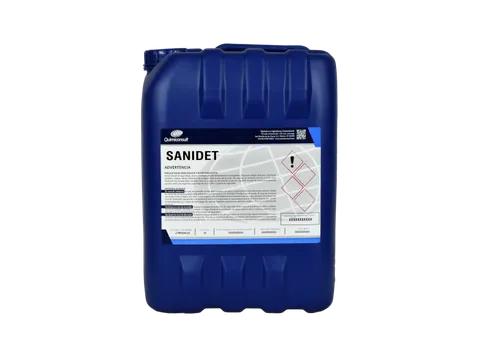
Saniplus vs. a quat on its own (such as Sanidet Diluye): a fifth-generation quaternary disinfectant on its own is an excellent sanitizer for surfaces and facilities, but Saniplus adds glutaraldehyde, a second active with a different mechanism of action; its technical data sheet lists it as virucidal, fungicidal, bactericidal and algicidal, highly effective in the presence of organic matter and hard water.
Saniplus vs. oxidizing disinfectants (chlorine, iodophors, peracetic acid): oxidizers act fast and over a broad spectrum, but organic matter consumes part of their oxidizing power. Saniplus is highly effective in the presence of organic matter and hard water and its concentrate is stable for years, so it fits especially well in footbaths and disinfection arches, floors and pens. Oxidizers remain a good choice for clean surfaces and for rotating active ingredients within the program.
Frequently asked questions about Saniplus
What is Saniplus and what is it used for?
Saniplus is a broad-spectrum livestock disinfectant manufactured by Quimiconsult, based on glutaraldehyde (more than 22.0%) and fifth-generation quaternary ammonium (46.0 – 50.0%). It is used to disinfect facilities, equipment, vehicles and footbaths in animal production, with virucidal, fungicidal, bactericidal and algicidal action.
Which microorganisms does it act on?
According to its technical data sheet, it performs excellently against bacteria, mycoplasmas, fungi and viruses responsible for animal diseases; it includes specific dilutions for parvovirus and adenovirus. On fungi it inhibits germination, spore swelling, mycelium growth and sporulation.
What dilution is used in footbaths?
1:100, that is, 10 mL of Saniplus per liter of water (1.0%). The same dilution applies to disinfection arches.
What dilution is used during a parvovirus or adenovirus outbreak?
The technical data sheet indicates atomizing at 1:50 – 1:100 (20 to 10 mL per liter of water) against specific diseases such as parvovirus and adenovirus, and 1:200 (5 mL/L) against bacteria and fungi.
Can it be thermally fogged?
Yes. For thermal fogging of very fine droplets, a 1:1 Saniplus solution (50% v/v) is used. During fogging and thermal fogging, staff must wear a mask with ABEK-P filters, eye protection and chemical protective clothing.
Does it work with organic matter and hard water?
Yes: the technical data sheet describes it as highly effective in the presence of organic matter and hard water. Even so, for the best result remove coarse dirt and wash before disinfecting.
Can I mix it with soap, chlorine or other disinfectants?
No. Soaps and anionic surfactants inactivate quaternary ammonium compounds, and Saniplus is incompatible with strong oxidizers, amines, ammonia and strong bases. Apply each product separately and rinse between them.
How long do the product and the diluted solution last?
The concentrate is stable for several years at room temperature in its closed original container, and the diluted solution stays stable for several months.
Is it hazardous? What protection do I need?
Yes, the concentrate is corrosive and toxic (signal word «Danger»): it is toxic if swallowed, causes severe skin burns and eye damage, may cause skin and respiratory sensitization (asthma) and is very toxic to aquatic life. Wear splash goggles and a face shield, nitrile gloves, a chemical suit, boots and a mask with ABEK-P filters when spraying or fogging. Persons sensitized to glutaraldehyde must not handle it. It is a product for professional use.
What certifications does Saniplus have?
It is supplied with a technical data sheet (TDS) and a safety data sheet (HDS/SDS) under NOM-018-STPS-2015 and GHS, and a certificate of analysis per lot can be requested. It is manufactured at our SQF-certified plant in Monterrey, Nuevo León.
Where to buy Saniplus in Mexico?
At Quimiconsult we are the direct manufacturers of Saniplus, from Monterrey, Nuevo León, with shipping throughout Mexico. Contact us at +52 (81) 8105 0063 for advice on the right dilution and application method for your farm and for a quote.
Other names and terms related to Saniplus
Saniplus is a Quimiconsult brand. Its safety data sheet identifies it as a livestock disinfectant with glutaraldehyde and fifth-generation quaternary ammonium, and in purchase requests and online searches it is commonly found under functional descriptions:
livestock disinfectant, farm disinfectant, poultry farm disinfectant, pig farm disinfectant, barn disinfectant, glutaraldehyde disinfectant, glutaraldehyde with quaternary ammonium, glutaraldehyde and quat, fifth-generation quaternary ammonium disinfectant, fifth-generation quat with glutaraldehyde, footbath disinfectant, foot dip disinfectant, disinfection arch disinfectant, animal transport vehicle disinfectant, livestock virucide, parvovirus disinfectant, adenovirus disinfectant, thermal fogging disinfectant, poultry house fogging disinfectant, farm biosecurity, Saniplus price, Saniplus Quimiconsult, livestock disinfectant Mexico, farm disinfectant Monterrey.
Why buy Saniplus from Quimiconsult?
Quimiconsult is a Mexican company with more than 30 years of experience in specialty chemicals and a direct manufacturer of disinfectants, sanitizers and detergents for the food and livestock industries. When you buy Saniplus from Quimiconsult you get:
- A broad-spectrum livestock disinfectant with two mechanisms of action: glutaraldehyde and fifth-generation quaternary ammonium.
- In-house manufacturing at an SQF-certified plant in Monterrey, Nuevo León, with lot-to-lot consistency.
- A clear dilution table for every use: routine, footbaths and disinfection arches, disease outbreaks and thermal fogging.
- Complete documentation: technical data sheet (TDS), HDS/SDS under NOM-018-STPS-2015 and GHS, and a certificate of analysis per lot on request.
- Direct technical support from the manufacturer to define the cleaning and disinfection program for your production unit.
- A complete portfolio of disinfectants with different active ingredients (quats, chlorine, iodine and peracetic acid) to rotate within your biosecurity program.
Does your farm need a reliable, broad-spectrum, Mexican-made livestock disinfectant? Contact us at +52 (81) 8105 0063: we review your facilities and your critical biosecurity points and propose a use protocol with the products in our catalog.
Related products
Saniplus is part of the Quimiconsult disinfection portfolio. Products that complement its use:
- Sanidet Diluye — 10% fifth-generation quaternary ammonium disinfectant, ready to dilute, for surfaces and facilities.
- Dioxel 10% — chlorine-based disinfectant, to rotate the active ingredient in the disinfection program (apply separately, never mixed with Saniplus).
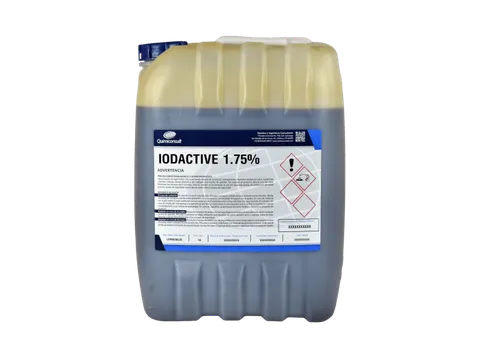
- Iodactive 5% — concentrated iodine disinfectant, another family of actives for disinfectant rotation.
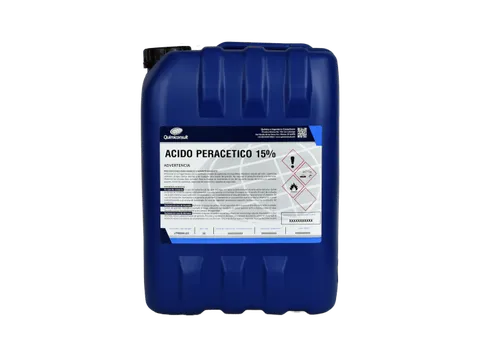
- Anticel Peracetic Acid 15% — oxidizing disinfectant based on peracetic acid, for clean surfaces (apply separately).
Looking to build a complete biosecurity program for your farm? Contact us and we will review the options in our catalog for your species, your facilities and your critical points.