Spanish
 English


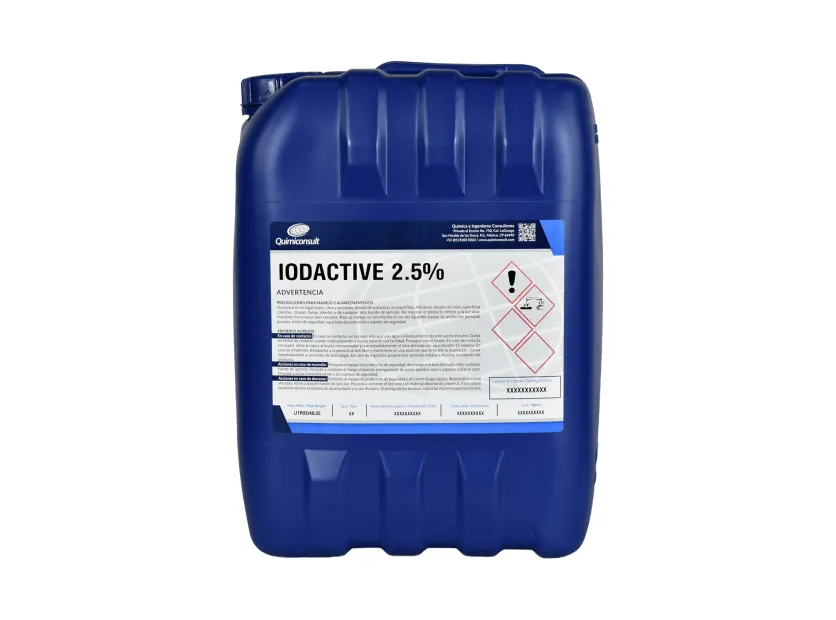
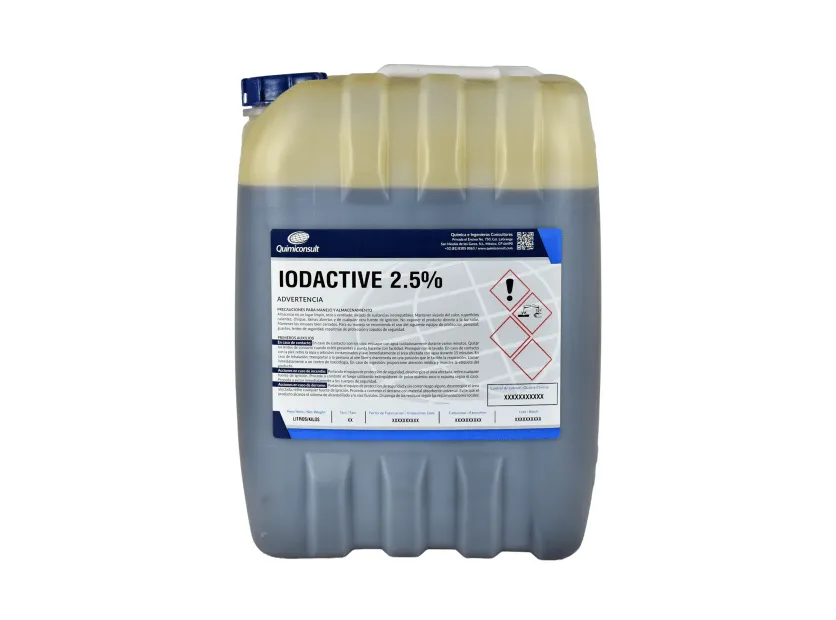
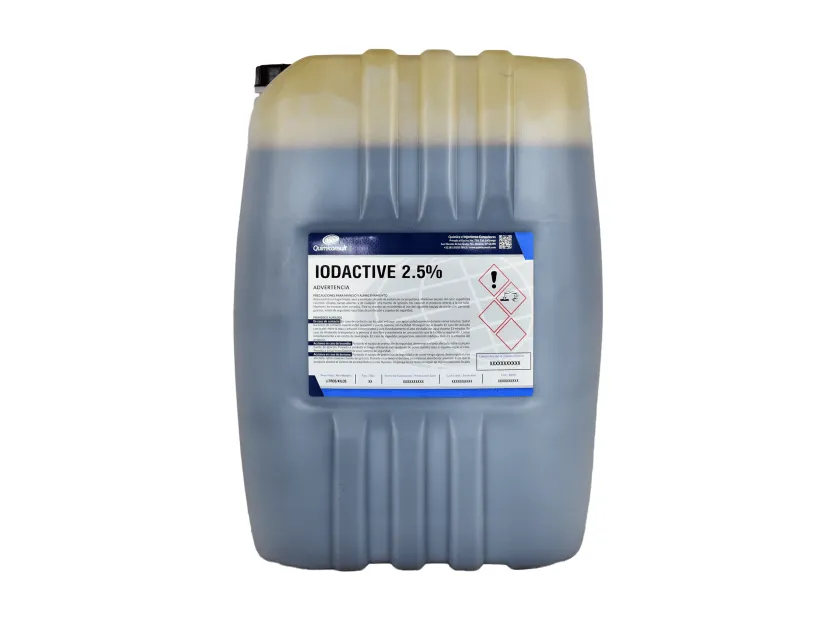
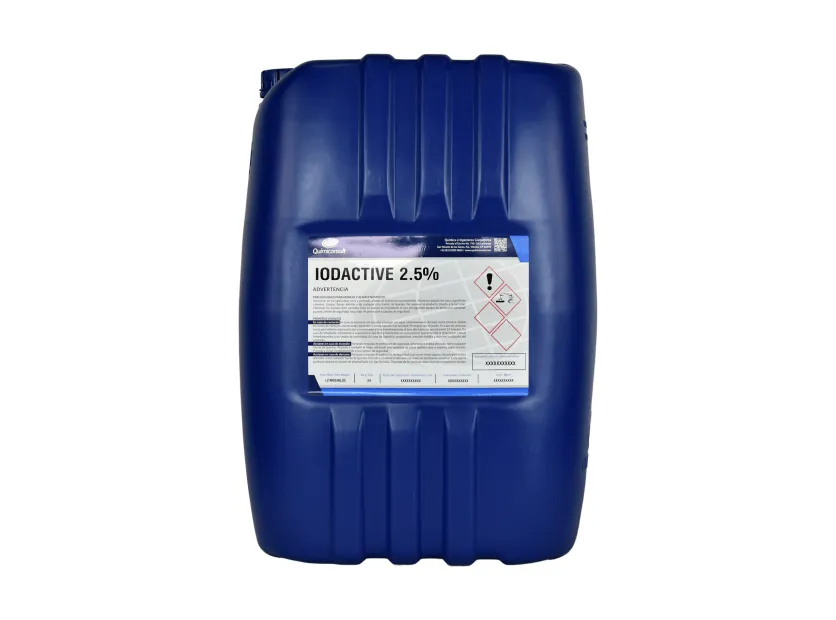
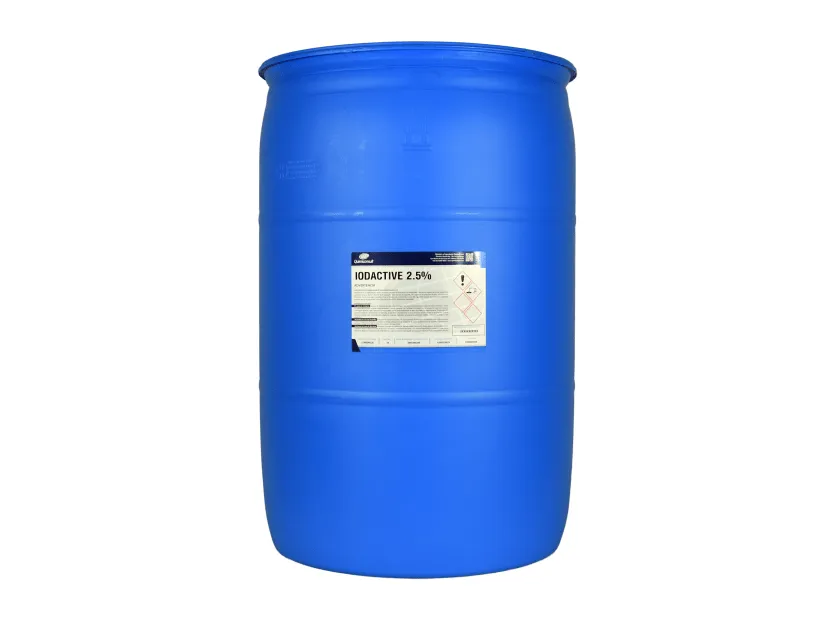
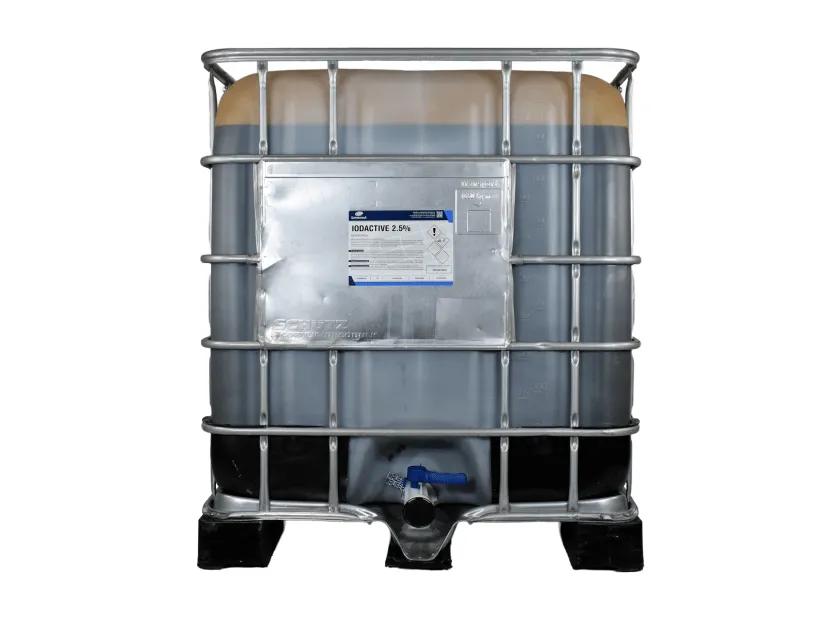
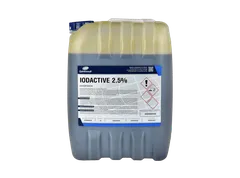
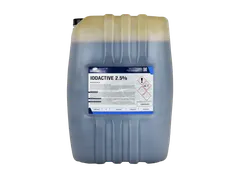
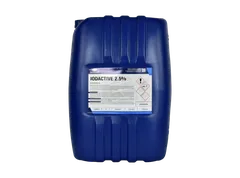
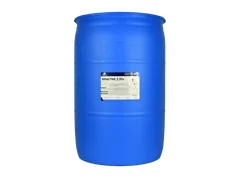
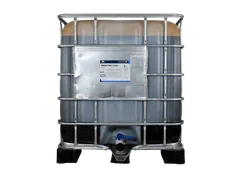
IODACTIVE 2.5% IODINE DISINFECTANT SOLUTION
View All Prices
| Quantity | Unit Price |
|---|---|
| kg | |
| 1 - 49 | USD 6.38 |
| 50 - 99 | USD 6.20 |
| 100 - 499 | USD 6.00 |
| 500 - 1999 | USD 5.60 |
| 2000 - 4999 | USD 5.00 |
| 5000+ | USD 4.86 |
We'll send you a single e-mail as soon as it's back in stock. No spam.
Product description: Stabilized 2.5% iodophor for high-performance disinfection
At Quimiconsult we offer Iodactive 2.5%, a high-concentration stabilized iodophor formulated for disinfection operations that demand maximum yield per liter of concentrate. With a minimum of 2.5% active iodine (equivalent to 25,000 ppm), this solution lets you prepare up to 92% more disinfectant solution per liter of concentrate than Iodactive 1.3%, and 43% more than Iodactive 1.75%.
The active ingredient in Iodactive 2.5% is elemental iodine (I₂), stabilized within an iodophor complex that acts as a molecular reservoir. This complex releases the active iodine gradually and in a controlled way on contact with the dilution water, ensuring a sustained biocidal concentration for longer than free-iodine solutions or conventional iodine tinctures. The formulation is completely water-soluble, does not stain stainless steel, plastic or glass surfaces, and its detergent properties help the disinfectant penetrate porous surfaces, biofilms and microcracks where microorganisms find shelter from surface disinfectants.
The biocidal action of Iodactive 2.5% is instantaneous on contact and covers an exceptionally broad antimicrobial spectrum: Gram-positive and Gram-negative bacteria (including spore-forming types), filamentous fungi, yeasts and certain protozoa. Its efficacy is not reduced by very hard water or by extreme temperature swings, common operating conditions in food processing plants, slaughterhouses, poultry farms and dairy operations.
Iodactive 2.5% is distributed from Monterrey, Nuevo León, with shipping throughout Mexico and technical support for implementing sanitation programs.
The ideal middle ground: why 2.5% is the preferred concentration for mid-to-large-scale operations
Within the Iodactive line, the 2.5% concentration fills a strategic niche that combines high volumetric efficiency with ease of handling. To understand why so many operations settle on this concentration, it helps to consider the balance between three factors that determine the right iodophor: yield per liter, dosing safety and logistics cost.
Low concentrations (1.3% and 1.5%) offer a wider safety margin against dosing errors, but require storing and transporting more product for the same amount of prepared disinfectant solution. At the other end, the 3% concentration maximizes yield but demands more precise measurement and can pose a greater risk in the event of an accidental concentrate spill.
Iodactive 2.5%: with 25,000 ppm of active iodine, a single liter of product goes significantly further than the low concentrations; for example, 1 liter of Iodactive 2.5% makes 1,000 liters of 25 ppm solution for surface sanitizing, while keeping a more manageable handling profile than the 3%. This balance makes it the preferred concentration for food processing plants with multiple production lines, poultry complexes with standardized sanitation programs, and distributors supplying farms and mid-sized operations in regions where freight costs matter.
Applications in the food and beverage industry
CIP and COP sanitizing. Iodactive 2.5% is dosed in the sanitizing phase of CIP (Clean in Place) and COP (Clean out of Place) protocols to disinfect transfer piping, silos, process tanks, heat exchangers, and pasteurization, cooling and storage systems in food and dairy plants. The product's high concentration lets volumetric dosers work with smaller injection volumes, reducing wear on dosing pumps and improving the accuracy of automated dosing systems.
Food contact surfaces. Work tables, conveyor belts, utensils, molds, trays and packaging equipment are sanitized with solutions of 12.5 to 25 ppm of active iodine. At these concentrations, the iodophor eliminates pathogenic microorganisms without leaving flavors, odors or toxic residues after rinsing, complying with NOM-251-SSA1-2009 and FSSC 22000 standards. A significant operational advantage over chlorine: iodine does not form organochlorine byproducts (trihalomethanes) when it reacts with residual organic matter.
Fruit and vegetable disinfection. Applied by spraying or immersion at doses of 50 to 200 ppm, Iodactive 2.5% is used in fresh produce packing houses to reduce the surface microbial load before storage and transport. The 2.5% concentration is particularly efficient for high-volume packers that prepare large immersion tanks, since less concentrate is needed for each fill.
Dairy industry. In cheese plants, yogurt plants and milk plants, Iodactive 2.5% is used to sanitize receiving equipment, ripening tanks, filling lines and milking parlor surfaces. Eliminating Listeria monocytogenes in biofilms is one of the most demanding control points in this sector, and the iodophor's detergent properties help it penetrate joints, seals and corners where this pathogen tends to persist.
Beverage industry. In craft and industrial breweries, water and soft drink bottlers, and juice plants, iodophors are widely used to sanitize fermenters, storage tanks, filling lines and filtration equipment. The absence of residual chlorine is especially valued in brewing, where traces of chlorinated compounds can produce off-flavors detectable even at parts-per-billion concentrations.
Veterinary, livestock and aquaculture applications
Poultry. Disinfecting poultry houses, incubators, hatchers, drinkers, feeders and ventilation systems between production cycles is the foundation of poultry biosecurity programs. Iodactive 2.5% is applied by spraying at concentrations of 200 to 500 ppm to eliminate Salmonella, Newcastle disease virus, avian influenza and Aspergillus fumigatus spores. Footbaths at house entrances are prepared at 200–400 ppm. The 2.5% concentration lets poultry complexes with multiple houses meet their needs from a smaller stored inventory.
Dairy farming. Iodophors are the worldwide standard for teat pre-dipping and post-dipping programs to prevent bovine mastitis. Iodactive 2.5% is also used to disinfect teat cup liners, milking hoses, bulk cooling tanks and milking parlor surfaces. Controlling Staphylococcus aureus, Streptococcus agalactiae and environmental coliforms at these points is critical for milk quality and herd health.
Swine production. Disinfection of pens, farrowing rooms, slatted floors, feeders and drinkers to control E. coli, Salmonella, Clostridium perfringens, PRRS virus and porcine circovirus. The 2.5% concentration makes it easy to prepare large volumes of disinfectant solution for all-in/all-out operations with shorter downtime between batches.
Aquaculture. Disinfection of production tanks, nets, harvesting equipment and aeration systems to control Vibrio, Aeromonas, Saprolegnia and other aquatic pathogens. Iodine is one of the safest disinfectants for use near bodies of water because it is rapidly neutralized in the aquatic environment at use concentrations.
Livestock drinking water. Iodactive 2.5% is used to disinfect the water supply in livestock facilities at concentrations of 5 to 20 ppm, eliminating bacteria, yeasts and protozoa such as Cryptosporidium and Giardia present in contaminated water sources.
Agriculture and greenhouse applications
Post-harvest. Disinfection of mango, avocado, berries, citrus, chili peppers and tomato by immersion or spraying at 50–200 ppm to meet USDA, CFIA and EFSA export phytosanitary standards. Iodine does not form trihalomethanes, a growing advantage over chlorine in international markets that are tightening restrictions on chemical residues in fresh produce.
Drip irrigation. Injection of iodine solutions into irrigation systems to control biofilms, algae and biological clogging in emitters and distribution lines, without the corrosion problems caused by hydrochloric acid.
Nurseries and seedbeds. Disinfection of germination trays between cycles to prevent damping-off caused by Pythium, Fusarium and Rhizoctonia. Disinfection of pruning and grafting tools between cuts to prevent the transmission of plant-pathogenic viruses and bacteria.
Dosing guide: dilution formula for Iodactive 2.5%
Volume of Iodactive 2.5% (mL) = (desired ppm × final volume in liters) ÷ 25,000
Where 25,000 is the product concentration in ppm (2.5% = 25,000 ppm of active iodine).
Reference doses: for food contact surfaces (25 ppm) you need 1.0 mL/L. For CIP/COP equipment (25–50 ppm), between 1.0 and 2.0 mL/L. For fruits and vegetables (50–200 ppm), between 2.0 and 8.0 mL/L. For footbaths (200–400 ppm), between 8.0 and 16.0 mL/L. For livestock drinking water (5–20 ppm), between 0.2 and 0.8 mL/L. For poultry house and pen disinfection (200–500 ppm), between 8.0 and 20.0 mL/L.
Note the efficiency of the 2.5%: sanitizing surfaces at 25 ppm takes only 1.0 mL per liter of water, less than a quarter of a teaspoon, which reflects the high yield of this concentration and explains its popularity in operations that prepare hundreds or thousands of liters of disinfectant solution every day.
Built-in visual indicator: the prepared solution has a golden-brown color whose intensity is proportional to the active iodine concentration. When the color fades and the solution turns clear, the iodine has been used up reacting with organic matter and the solution must be replaced. This visual quality-control system is unique to iodophors — no other industrial disinfectant offers such an immediate, cost-free way to check that a prepared solution is still effective.
Technical specifications
Iodactive 2.5% is a reddish-brown liquid with a characteristic iodine odor. Its pH in a 1.0% aqueous solution is between 2.5 and 4.0, an acidic range that maximizes the availability of active molecular iodine (I₂), the chemical species with the greatest biocidal power. Density at 20°C: 1.00–1.25 g/cm³. Foam: medium. Shelf life: one year in the original closed container, in a cool, dry place protected from light.
Incompatible materials: strong bases and metals. Non-flammable (NFPA flammability: 0). Non-reactive (NFPA reactivity: 0). Health hazard: NFPA 3. Transport: not regulated (no UN number), which simplifies distribution logistics with no special permits required.
Hazard classification: H302 (harmful if swallowed), H315 (causes skin irritation), H320 (causes eye irritation). Required protective equipment: neoprene gloves, splash goggles, synthetic apron, boots and a gas respirator if ventilation is insufficient. Prolonged or repeated exposure through ingestion may affect the thyroid.
Frequently asked questions about Iodactive 2.5%
How far does one liter of Iodactive 2.5% go? At the most common use concentration for surface sanitizing (25 ppm), one liter of Iodactive 2.5% makes 1,000 liters of ready-to-use disinfectant solution. For footbaths at 400 ppm, one liter makes 62.5 liters of solution. The exact yield depends on the application and the final concentration required.
Can Iodactive 2.5% be used to disinfect drinking water? Iodactive 2.5% is formulated for disinfecting the water supply in livestock facilities and for industrial use. For treating water for human consumption, consult local regulations and the maximum iodine limits allowed by the applicable standards.
Does iodine cause microbial resistance? No significant development of resistance to iodine has been documented. Its simultaneous mode of action on the cell membrane, enzymes and DNA makes it extremely difficult for microorganisms to develop resistance, unlike some antibiotics and disinfectants with a specific mode of action.
Can I use Iodactive 2.5% in automated CIP systems? Yes. In fact, the 2.5% concentration is one of the most widely used in CIP systems with volumetric dosers because it allows small, precise injection volumes, reducing product consumption and wear on dosing pumps.
Is iodine safer than chlorine for disinfecting food? Iodine has specific advantages over chlorine in food disinfection: it does not form organochlorine byproducts (trihalomethanes), it remains effective in hard water, it does not corrode stainless steel and it provides a visual activity indicator. However, the best disinfectant depends on the specific conditions of each operation — contact us for a personalized technical assessment.
What is the price of Iodactive 2.5%? The price varies by pack size and purchase volume. Contact us for a personalized quote.
Other names and synonyms
Iodine disinfectant / iodine-based disinfectant / iodine sanitizer: general terms for liquid formulations based on active iodine for industrial, food and livestock disinfection.
Dark iodine / iodine paint: colloquial names that refer to the intense reddish-brown color of concentrated iodine solutions.
Iodine solution / iodinated solution / iodine in solution / iodinated water: phrases used by buyers looking for liquid iodine formulations to prepare diluted disinfectant solutions.
Veterinary iodine disinfectant / iodine for farms / iodine for disinfecting poultry houses: livestock and poultry sector terms for iodine-based biosecurity solutions.
CIP and COP sanitizer / industrial iodine disinfectant / iodinated biocide: technical terms used by plant engineers and quality managers when specifying products for automated sanitation systems.
Iodine for cleaning / does iodine disinfect / is iodine good for disinfecting: informational searches by users confirming iodine's effectiveness before buying.
Povidone-iodine / povidone-iodine solution: related terms from the medical field. Iodactive 2.5% is an industrial iodophor for disinfecting surfaces, equipment and water — it is not interchangeable with formulations for topical use.