Spanish
 English


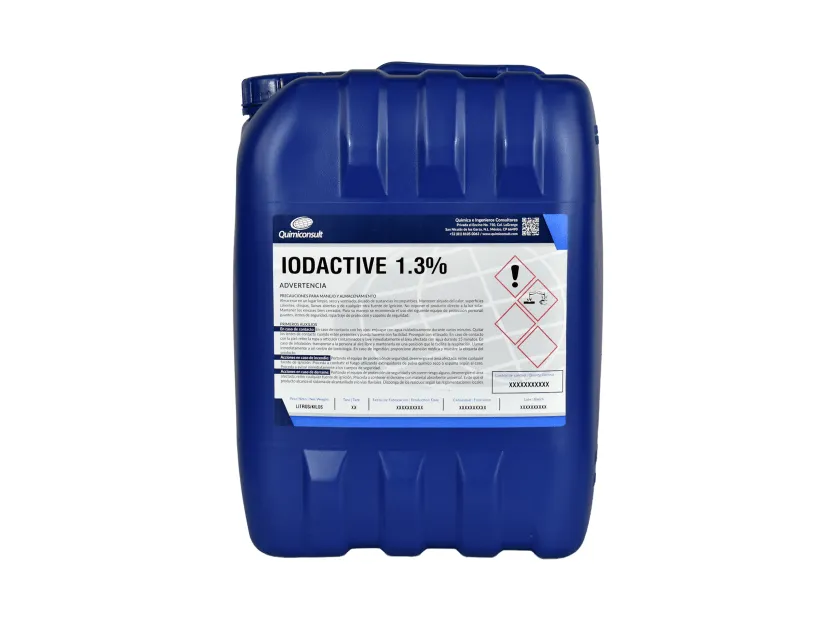
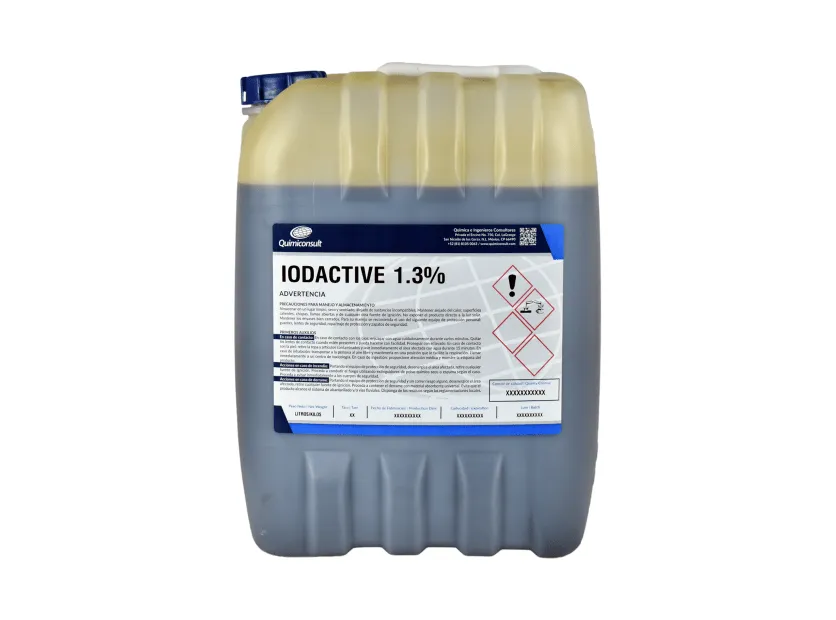
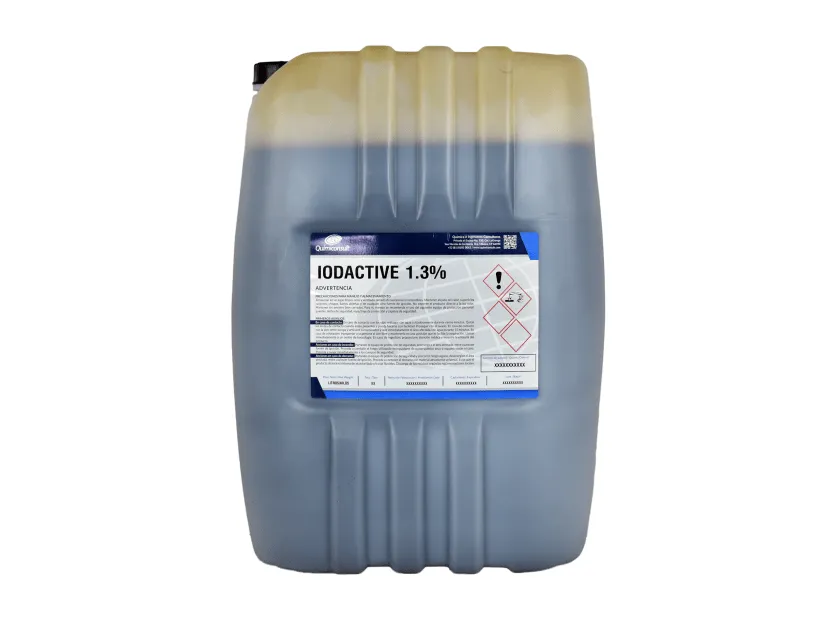
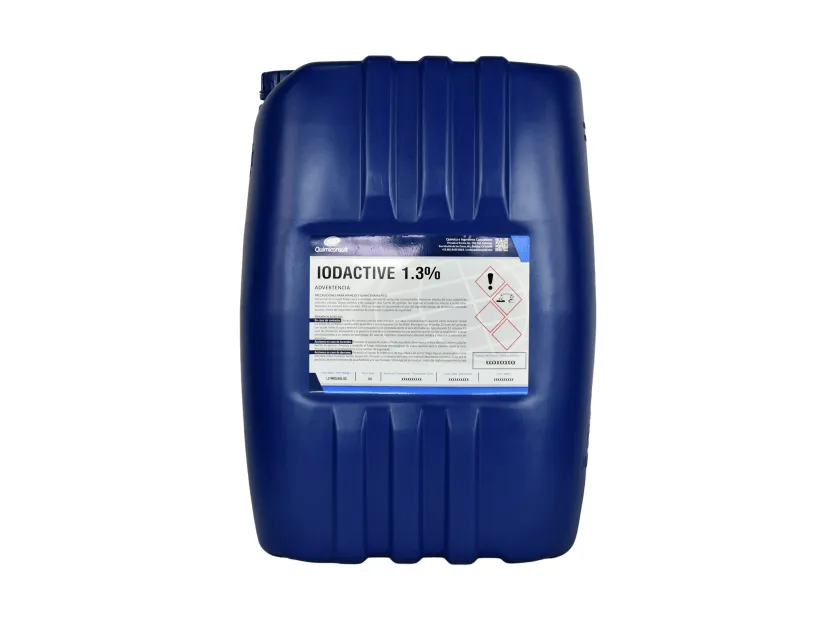
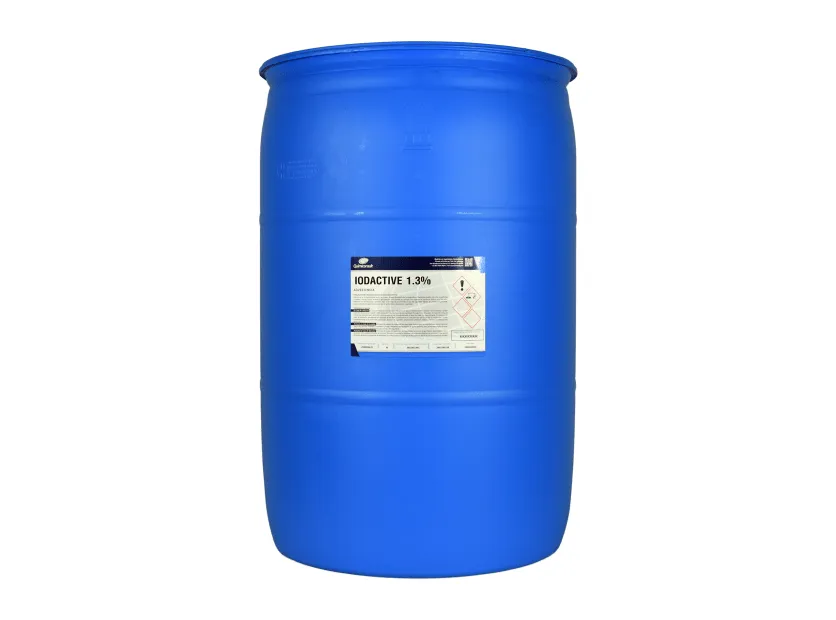
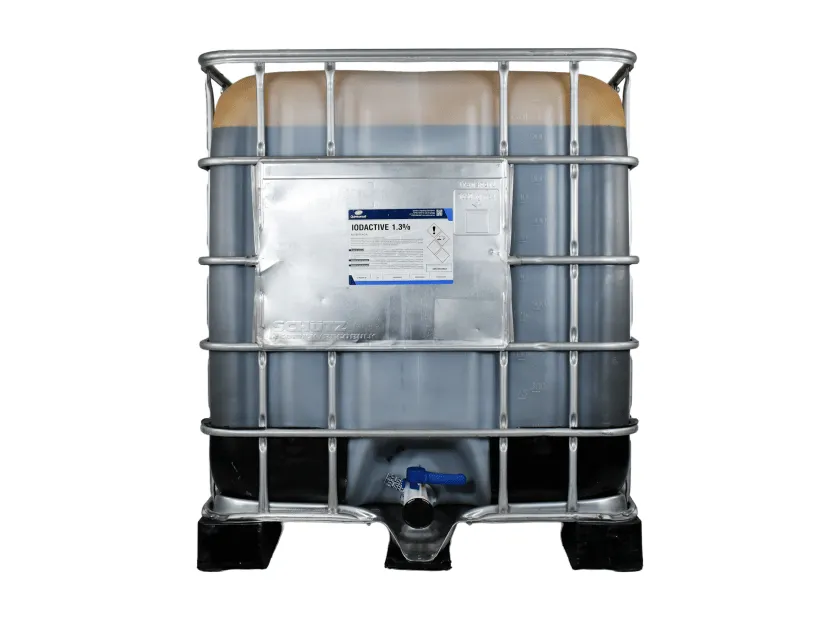
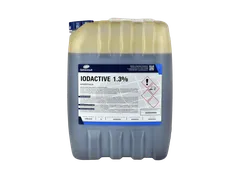
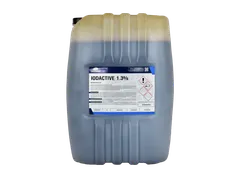
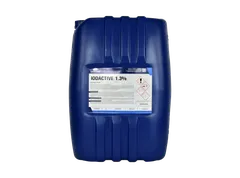
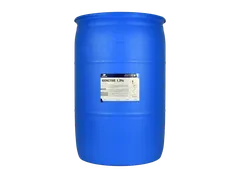
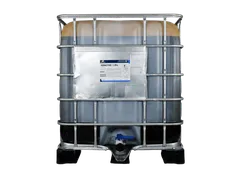
IODACTIVE 1.3% IODINE DISINFECTANT SOLUTION
View All Prices
| Quantity | Unit Price |
|---|---|
| kg | |
| 1 - 49 | USD 4.40 |
| 50 - 99 | USD 4.20 |
| 100 - 499 | USD 4.00 |
| 500 - 1999 | USD 3.80 |
| 2000 - 4999 | USD 3.40 |
| 5000+ | USD 3.20 |
Product Description: 1.3% Stabilized Iodophor for Controlled Sanitization of Surfaces, Equipment and Water
At Quimiconsult we offer Iodactive 1.3%, a concentrated stabilized iodophor designed for disinfection applications that require precise dosing control with the smallest possible margin of error. With a minimum content of 1.3% active iodine (equivalent to 13,000 ppm), this reddish-brown liquid solution combines the oxidizing power of iodine with the stability and complete solubility that only a professional iodophor formulation offers.
The word "iodophor" refers to a molecular complex in which elemental iodine (I₂) is bound to a solubilizing agent that acts as a carrier and reservoir, releasing active iodine gradually and in a controlled way when it comes into contact with the dilution water. This progressive release is what sets Iodactive 1.3% apart both from traditional tincture of iodine, which releases all of its iodine content immediately, volatilizing quickly and staining surfaces, and from medical formulations such as povidone-iodine, which are designed for topical use on skin and mucous membranes rather than for the industrial disinfection of equipment, surfaces or process water.
Why choose the 1.3% concentration? In operations where dosing precision is critical, such as sanitizing fresh fruits and vegetables for export, disinfecting drinking water on poultry and swine farms, or sanitizing food-contact surfaces in processing plants, a lower base concentration significantly reduces the risk of accidental overdosing. Each milliliter of concentrated product contributes less active iodine, allowing finer adjustments when preparing the working solution and making it easier to comply with the maximum residual iodine limits set by food safety and animal health regulations.
The robust formulation of Iodactive 1.3% maintains its biocidal efficacy even in the presence of hard water, extreme temperature variations and porous surfaces such as concrete, treated wood and textured plastics. It does not stain stainless steel, plastic or glass equipment because it is completely water-soluble, and its detergent properties help it penetrate pores, microcracks and biofilms where microorganisms tend to find refuge from conventional disinfectants.
Iodactive 1.3% is distributed from Monterrey, Nuevo León, with shipping throughout Mexico, personalized technical support and complete documentation for audits in the food, livestock and agro-industrial sectors.
The Chemistry Behind the Efficacy: Why the Iodophor's Acidic pH Boosts Its Biocidal Action
One of the least understood yet most decisive technical aspects of an iodine disinfectant's efficacy is the relationship between the pH of the solution and the availability of active molecular iodine. Iodactive 1.3% has a pH between 2.5 and 4.0 in 1.0% aqueous solution, a deliberately acidic range that maximizes the concentration of molecular iodine (I₂), the chemical species with the greatest biocidal power within the chemical equilibrium of iodine in solution.
In aqueous solutions, iodine exists in a dynamic equilibrium among several chemical species: molecular iodine (I₂), triiodide ion (I₃⁻), iodide ion (I⁻) and hypoiodous acid (HOI). At acidic pH (below 4.0), the equilibrium shifts toward the formation of I₂ and HOI, both species with a high capacity to penetrate the cell membranes of microorganisms. As the pH rises above 5.0, the equilibrium favors the formation of iodide ion (I⁻), which is biologically inactive as a disinfectant. This means that an iodophor formulated at neutral or alkaline pH may contain the same total amount of iodine but have significantly less active iodine available for disinfection.
This is why Iodactive 1.3% is formulated in the acidic range: it is not simply a product characteristic, but a formulation decision that maximizes the active biocidal fraction of the iodine present. For quality and food safety managers in food plants, this technical detail has direct practical implications: when preparing working solutions, the pH of the dilution water influences the final efficacy of the disinfectant. Process water with a pH above 7.0 will partially reduce the biocidal activity of iodine, so it may be necessary to adjust the dosage or slightly acidify the water before dilution in applications where maximum efficacy at the lowest possible concentration is required.
Antimicrobial Spectrum: Pathogens Eliminated by Iodactive 1.3%
Iodine is one of the few biocides that remains simultaneously active against virtually every group of microorganisms of concern in food safety, animal health and industrial sanitation. Iodactive 1.3% acts effectively against the following groups:
Gram-positive bacteria. The spectrum includes Staphylococcus aureus, responsible for food poisoning and one of the leading causes of bovine mastitis on dairy operations; Listeria monocytogenes, a notifiable pathogen in the ready-to-eat food industry due to its ability to grow at refrigeration temperatures and form persistent biofilms on stainless steel surfaces; and Bacillus cereus, a former of heat-resistant spores found in cereals, cooked rice and dairy products. Iodine acts on both the vegetative forms and the endospores of these bacteria, something disinfectants such as quaternary ammonium compounds (QACs) do not achieve consistently.
Gram-negative bacteria. Iodactive 1.3% effectively eliminates Salmonella spp. (the leading cause of foodborne illness in Mexico, with more than 80,000 cases reported annually), Escherichia coli O157:H7 (associated with serious outbreaks in ground beef, fresh produce and contaminated water), Pseudomonas aeruginosa (a frequent opportunistic contaminant in water systems, wet surfaces and cooling equipment), Campylobacter jejuni (a critical pathogen in the poultry industry and the leading cause of bacterial gastroenteritis in developed countries) and Vibrio spp. (relevant in aquaculture and seafood processing).
Molds and yeasts. The antifungal activity of iodine covers genera such as Aspergillus (an aflatoxin producer in stored grain), Penicillium (a cause of spoilage in cheeses, fruits and sausages), Fusarium (a crop pathogen that contaminates post-harvest grain), Candida spp. (a contaminant yeast in the beverage and dairy industries) and Alternaria (responsible for significant losses in fruits and vegetables during storage). Iodine's ability to penetrate the chitin-rich fungal cell wall and oxidize its internal structures makes it one of the most complete antifungals available for industrial use.
Protozoa. Certain cyst-forming protozoa such as Cryptosporidium parvum and Giardia lamblia, which are highly resistant to chlorine at the usual water disinfection concentrations, are sensitive to iodine. This property is particularly relevant for disinfecting animal drinking water at livestock facilities, where water sources may be contaminated by pasture runoff or by prolonged storage in tanks and cisterns.
Food Industry Applications: Sanitizing Equipment, Surfaces and Food
The food and beverage industry is the sector where Iodactive 1.3% finds its most demanding applications in terms of regulatory compliance and dosing precision.
Sanitizing food-contact surfaces. Every surface that comes into direct contact with food during processing (work tables, conveyor belts, cutting utensils, molds, cooling trays, dosing hoppers) requires a sanitization program that eliminates microorganisms without leaving toxic residues or altering the product's organoleptic properties. At the recommended use concentrations (12.5 to 25 ppm of active iodine), Iodactive 1.3% meets both requirements: its biocidal action is instantaneous on contact, and after rinsing no detectable flavors, odors or residues remain. This characteristic sets it apart from sodium hypochlorite, which can react with organic matter to form trihalomethanes and other organochlorine byproducts with toxicological and organoleptic potential.
CIP and COP systems on production lines. In the sanitizing phase of CIP (Clean in Place) and COP (Clean out of Place) protocols, Iodactive 1.3% is dosed into the recirculation circuit to disinfect pipes, tanks, heat exchangers, pasteurizers and storage systems. The 1.3% concentration is especially practical for CIP systems with precision volumetric dosers, where every milliliter counts and a measuring error with a more concentrated product could mean costly overdosing or dangerous underdosing. The iodophor's complete solubility ensures that no deposits remain in the lines after the final rinse, complying with the requirements of NOM-251-SSA1-2009 and the FSSC 22000 and IFS Food standards.
Disinfecting fresh fruits and vegetables. Iodactive 1.3% is used to disinfect fruits and vegetables by spraying or immersion at doses of 50 to 200 ppm. This application is critical for fresh produce packers supplying supermarket chains, export markets (United States, Canada, European Union, Japan) and processors of pre-cut salads and fresh-cut products. The advantage of iodine over chlorine in this application is twofold: it does not generate organochlorine byproducts, and its residual color acts as a visual indicator that the solution is still active, allowing plant staff to tell when the solution has been depleted and needs to be renewed.
Dairy industry and dairy products. In cheese plants, yogurt plants, and pasteurized and UHT milk plants, sanitizing raw milk receiving equipment, storage silos, ripening tanks and filling lines is a critical control point. Listeria monocytogenes can survive and proliferate in biofilms formed in joints, seals and corners of equipment that are not effectively reached by disinfectants with low penetrating capacity. The detergent properties of Iodactive 1.3% facilitate its action in these hard-to-reach areas, complementing prior mechanical cleaning with alkaline detergent.
Meat and sausage industry. Slaughterhouses, butcher shops and meat processing plants need disinfectants that act quickly between production shifts without leaving residues that affect the product. Iodactive 1.3% is used to sanitize cutting saws, deboning tables, cold rooms and packing area surfaces, helping to control Salmonella, E. coli O157:H7 and Listeria at the critical points of the meat chain.
Veterinary and Livestock Applications of Iodine Disinfectant
The veterinary and livestock sector demands iodine solutions with controlled concentrations that allow safe dosing for animals, facilities and operating staff alike. The 1.3% concentration of Iodactive is designed precisely for this application profile.
Poultry farms: disinfecting poultry houses, incubators and equipment. Biosecurity in modern poultry production depends heavily on the effectiveness of the cleaning and disinfection program between production cycles. Iodactive 1.3% is applied by spraying with manual or motorized equipment to disinfect poultry houses, floors, walls, ceilings, curtains, feeders, nipple drinkers, ventilation systems and incubators. Iodine's ability to eliminate bacterial spores makes it especially valuable during the downtime between flocks, when a biocide capable of eradicating the microorganisms that survive in the environment is needed, including Salmonella, Newcastle disease virus, avian influenza virus and Aspergillus fumigatus (the cause of aspergillosis in birds). Footbaths at the entrance to each house are prepared with Iodactive 1.3% at concentrations of 200 to 400 ppm to disinfect staff footwear and prevent cross-transmission.
Dairy production: sanitizing milking equipment and teat dipping. On dairy operations, Iodactive 1.3% is used to disinfect teat cups, milk hoses, cooling tanks and milking parlor surfaces. Iodophors are one of the most widely used disinfectant families worldwide in teat pre-dipping and post-dipping programs, a critical procedure for preventing mastitis caused by Staphylococcus aureus, Streptococcus agalactiae and environmental coliforms. The 1.3% concentration makes it possible to prepare dipping solutions at precise concentrations without the risk of skin irritation that more concentrated formulations could cause if dosed incorrectly.
Swine sector: biosecurity on farms and in farrowing rooms. In swine production, disinfecting gestation pens, farrowing rooms, slatted floors, feeders and automatic drinkers is essential to control pathogens such as enterotoxigenic E. coli (neonatal diarrhea), Salmonella, Clostridium perfringens, PRRS virus and porcine circovirus type 2. Iodactive 1.3% is integrated into all-in/all-out protocols as the main disinfectant after detergent cleaning, taking advantage of its instant contact action to minimize downtime between batches.
Aquaculture and fish farming. In production ponds for tilapia, trout, shrimp and other aquaculture species, disinfecting harvesting equipment, nets, transport tanks and aeration systems is essential to prevent outbreaks of Vibrio, Aeromonas, Saprolegnia and other aquatic pathogens. Iodine is one of the safest disinfectants for use near bodies of water, since at use concentrations it is quickly neutralized and does not persist in the aquatic environment.
Disinfecting animal drinking water. The microbiological quality of the water consumed by poultry, pigs, cattle and other species has a direct impact on their health, weight gain and feed conversion efficiency. Iodactive 1.3% is used for the disinfecting iodination of water supplies at livestock facilities, eliminating bacteria, yeasts and protozoa that may be present in water sources contaminated by runoff, prolonged storage or distribution systems with biofilms. The 1.3% concentration makes it easy to prepare solutions in the range of 5 to 20 ppm of active iodine without the need for high-precision measuring equipment.
Applications in Agriculture, Post-Harvest and Greenhouses
Iodine solutions are gaining ground in the agricultural sector as an alternative to chlorine-based disinfectants, especially in operations geared toward certified organic agriculture and export markets with strict regulations on chemical residues.
Post-harvest disinfection in packing houses. On packing lines for mango, avocado, berries, citrus, chili peppers, tomato and other high-value fruits and vegetables, immersion or spraying with iodine solutions at 50–200 ppm reduces the surface microbial load before storage and transport, extending shelf life and meeting the microbiological limits of USDA, CFIA and EFSA export programs. Iodine has the advantage of not generating trihalomethanes or other chlorinated byproducts that are increasingly being questioned by international buyers.
Disinfecting drip irrigation systems. In protected agriculture (greenhouses, shade houses, macro-tunnels) and in open fields, the buildup of bacterial biofilms, algae and water molds in drip emitters and distribution lines reduces irrigation uniformity and can introduce plant pathogens into the crop through the water. Periodic injection of iodine solutions into the irrigation system helps control these biological blockages and maintain the hydraulic efficiency of the installation without the corrosion problems caused by hydrochloric acid or the residues left by copper sulfate.
Disinfecting trays, substrates and pruning tools. In nurseries, seedbeds and seedling production operations, germination trays are a recurring source of infection by Pythium, Fusarium, Rhizoctonia and Phytophthora, soil fungi that cause damping-off and root rot in young seedlings. Disinfecting trays between production cycles with iodine solutions reduces the incidence of these diseases and improves germination rates. Likewise, pruning tools and grafting knives are disinfected with iodine solutions between cuts to prevent the transmission of plant-pathogenic viruses and bacteria from plant to plant.
Dosing Guide: How to Prepare an Iodine Solution from Iodactive 1.3%
The final concentration of active iodine in the working solution is calculated with the following formula:
Volume of Iodactive 1.3% (mL) = (desired ppm × final volume in liters) ÷ 13,000
Where 13,000 is the product concentration in ppm (1.3% = 13,000 ppm of active iodine).
Recommended dosages by application:
For sanitizing food-contact surfaces (tables, utensils, conveyor belts), a concentration of 25 ppm is recommended, equivalent to approximately 1.9 mL of Iodactive 1.3% per liter of water. For disinfecting equipment in CIP/COP systems (tanks, pipes, pasteurizers), the recommended concentration is 25 to 50 ppm, using between 1.9 and 3.8 mL per liter. For disinfecting fruits and vegetables by spraying or immersion, the dosage ranges from 50 to 200 ppm depending on the type of product and the level of contamination, corresponding to 3.8 to 15.4 mL per liter of water.
For footbaths and foot dips on farms and in food plants, the recommended concentration is 200 to 400 ppm (15.4 to 30.8 mL/L), ensuring a minimum contact time between the footwear and the solution for effective disinfection. For disinfecting animal drinking water, concentrations of 5 to 20 ppm (0.4 to 1.5 mL/L) are used depending on the quality of the source water and the type of livestock production. For disinfecting poultry houses, pens and milking parlors between production cycles, concentrations of 200 to 500 ppm (15.4 to 38.5 mL/L) are used, applied by spraying after detergent cleaning. For teat dipping solutions in mastitis prevention programs, typical concentrations range from 2,500 to 5,000 ppm of active iodine, prepared according to the specific protocol of the veterinarian responsible for the udder health program.
Visual check of activity: the golden-brown color of the prepared solution indicates the presence of active iodine. When the solution loses its color and turns clear or pale yellow, it means the iodine has been consumed by reacting with organic matter and the solution must be renewed. This unique property of iodophors works as a built-in quality control system that no other disinfectant offers: neither chlorine, nor QACs, nor peracetic acid provide such an immediate visual indicator that their active ingredient has been depleted.
Iodactive 1.3% Technical Specifications
Iodactive 1.3% is a reddish-brown liquid with a characteristic iodine odor. Its density at 20°C ranges from 1.00 to 1.25 g/cm³, and its pH in 1.0% aqueous solution is between 2.5 and 4.0, an acidic range optimized to maximize the availability of active molecular iodine (I₂). It produces moderate foam when dissolved, which makes it suitable both for spray and immersion application and for use in closed CIP systems without causing excessive foaming problems in pumps and valves.
The product's shelf life is one year when stored in its original, tightly closed container in a cool, dry place protected from direct light. The product is chemically stable under the recommended storage conditions, non-flammable (NFPA flammability: 0) and non-reactive (NFPA reactivity: 0). Incompatible materials are strong bases and metals, which can reduce iodine and decrease its disinfecting activity. Its health hazard rating is NFPA 3, which indicates that it requires appropriate handling precautions but does not pose extreme risks when used with the correct personal protective equipment.
The product is not regulated for transport under United Nations regulations (no UN number assigned), which simplifies its logistics and storage since no special hazardous materials transport permits are required.
Storage, Handling and Safety
To preserve the efficacy of Iodactive 1.3%, the product must be stored in its original, tightly closed container in a cool, dry place protected from direct sunlight. Prolonged exposure to heat, UV light or extreme humidity can accelerate the degradation of the iodophor complex and reduce the concentration of available active iodine.
Personal protective equipment must be worn during handling: neoprene gloves, splash goggles, a synthetic apron and boots. In areas with insufficient ventilation, a gas mask is recommended. The product is classified with the hazard statements H302 (harmful if swallowed), H315 (causes skin irritation) and H320 (causes eye irritation).
In case of skin contact, wash with plenty of soap and water for at least 15 minutes while removing contaminated clothing. In case of eye contact, rinse immediately with running water for at least 15 minutes, remove contact lenses if possible, and seek medical attention. In case of accidental ingestion, do not induce vomiting, drink large amounts of water or milk and seek immediate medical assistance.
The product's toxicological information indicates that prolonged or repeated oral exposure to iodine can affect the thyroid. This consideration is especially relevant in animal drinking water disinfection applications, where strict adherence to the recommended dosages is essential to avoid iodine accumulation in the animals and possible thyroid disorders that could affect their productive performance.
Frequently Asked Questions about Iodactive 1.3% and Iodine Solutions
What is iodine used for as an industrial disinfectant? Iodine is a broad-spectrum biocide with more than a century of documented use in industrial sanitation. It is used to eliminate bacteria (Gram-positive and Gram-negative), molds, yeasts, spores and certain protozoa on surfaces, equipment, water and food. Its multiple mechanism of action, attacking the cell membrane, enzymes and DNA simultaneously, makes the development of microbial resistance virtually impossible, a critical advantage over other disinfectants that can lose efficacy with repeated use.
How many milliliters of Iodactive 1.3% do I need per liter of water? It depends on the desired final concentration. The formula is: mL of product = (desired ppm × liters of water) ÷ 13,000. For sanitizing food-contact surfaces (25 ppm), approximately 1.9 mL/L is needed. For fruits and vegetables (50–200 ppm), between 3.8 and 15.4 mL/L. For footbaths (200–400 ppm), between 15.4 and 30.8 mL/L.
How do I know if the iodine solution is still active? The golden-brown color of the prepared solution is a visual indicator of the presence of active iodine. When the solution turns clear or very pale yellow, it means the iodine has been consumed by reacting with organic matter and it must be renewed. This is a unique advantage of iodophors that other disinfectants such as chlorine or quaternary ammonium compounds do not offer.
Is iodine disinfectant compatible with stainless steel? Yes. Iodophors such as Iodactive 1.3% are completely water-soluble and do not corrode or stain stainless steel at the recommended use concentrations. This sets them apart from chlorine, which is significantly more corrosive to metals, especially at low pH.
Is Iodactive 1.3% regulated as a hazardous material for transport? No. The product has no UN number assigned and is not classified as dangerous goods for transport, which simplifies its distribution logistics and storage without requiring special permits.
Does iodine affect the thyroid of animals that drink treated water? At the dosages recommended for drinking water disinfection (5–20 ppm), residual iodine is safe for animal consumption. However, chronic overdosing can affect thyroid function, so it is essential to follow the indicated dosages and periodically monitor the iodine concentration in the treated water.
Other Names and Synonyms for Iodine Disinfectant
Iodine disinfectant / iodine-based disinfectant (yodo desinfectante / desinfectante de yodo): general terms used in commercial searches and technical documentation in the cleaning and disinfection industry in Mexico and Latin America. Iodactive 1.3% is a professional stabilized iodophor formulation that belongs to this product category.
Dark iodine / iodine paint (yodo oscuro / pintura de yodo): colloquial names used in industrial and veterinary contexts to refer to concentrated iodine solutions with an intense reddish-brown color, distinguishing them from clear formulations for medical use. The term "iodine paint" highlights both the color and the disinfecting function of the product when applied to surfaces.
Iodine solution / iodinated solution / iodine water (solución yodada / agua yodada): expressions used both by chemical industry professionals and by buyers looking for liquid active iodine formulations for disinfection. "Iodine water" refers specifically to the diluted solution prepared from a concentrate such as Iodactive 1.3%.
Veterinary iodine disinfectant / iodine for disinfecting chicken coops / iodine for disinfecting poultry houses / iodine for farms: livestock and poultry sector terms that reflect the demand for iodine solutions for biosecurity at animal production facilities.
Iodine for cleaning / does iodine disinfect / is iodine used to disinfect / what is iodine used for: frequent informational search variations among users researching the efficacy of iodine as a biocide before making a purchasing decision. Iodine is indeed one of the oldest, most studied and most effective disinfectants available for industrial, food and veterinary use.
CIP and COP sanitizer / industrial iodine disinfectant / iodine biocide: technical terms used by plant engineers, quality managers and maintenance supervisors when specifying products compatible with their automated cleaning and sanitizing systems.
Povidone-iodine solution / povidone-iodine: although these terms frequently appear in related searches, it is important to clarify that povidone-iodine is a formulation for medical use (topical antiseptic), distinct from industrial iodophors such as Iodactive 1.3%, which are designed for disinfecting surfaces, equipment and water. They are not interchangeable products.