Spanish
 English


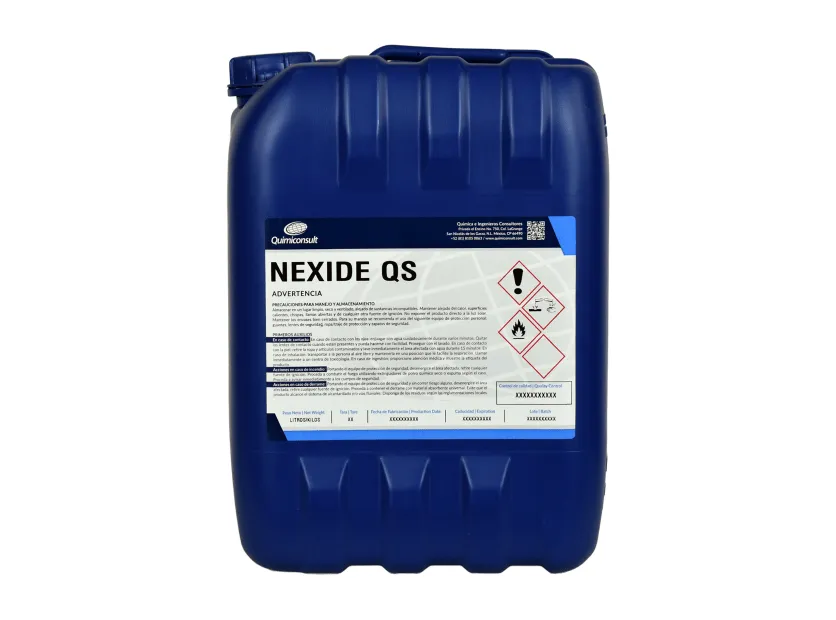
NEXIDE QS SPECIALIZED MULTIPURPOSE QUATERNARY
View All Prices
| Quantity | Unit Price |
|---|---|
| kg | |
| 1 - 99 | USD 10.74 |
| 100 - 199 | USD 10.52 |
| 200 - 499 | USD 10.30 |
| 500 - 999 | USD 10.10 |
| 1000 - 4999 | USD 9.90 |
| 5000 - 9999 | USD 9.71 |
| 10000 - 17999 | USD 9.53 |
| 18000+ | USD 9.36 |
Nexide QS Description: Fifth-Generation Quaternary Ammonium for Premium Industrial Sanitization
At Quimiconsult we offer Nexide QS, a specialized fifth-generation quaternary ammonium compound (QAC-5), formulated as a synergistic blend of four twin-chain quaternary ammonium salts potentiated with ethanol, designed to deliver the highest microbicidal performance available in modern quaternary technology. It is a clear, colorless to slightly yellow liquid, with a specific gravity of 0.90, viscosity of 360 cP at 25 °C, pH of 6.5–8.5 in a 10 % aqueous solution and a minimum total quaternary active content of 80 %, parameters that guarantee both the biocidal potency and the chemical purity required for critical industrial sanitization applications.
The certified synergistic composition of Nexide QS combines four carefully balanced quaternary ammonium salts to maximize biocidal spectrum and residual persistence: 32 % C12-16 alkyl dimethyl benzyl ammonium chloride (CAS 68424-85-1), 24 % octyl decyl dimethyl ammonium chloride (CAS 32426-11-2), 12 % didecyl dimethyl ammonium chloride (CAS 7173-51-5) and 12 % dioctyl dimethyl ammonium chloride (CAS 5538-94-3), complemented by approximately 10 % ethanol (CAS 64-17-5), which acts as a co-solvent and synergistic biocidal agent, boosting the antimicrobial activity of the quaternary system and improving biocide penetration into surfaces and organic matrices. This combination of linear and branched-chain (C12-C16) quats with ethanol places Nexide QS in the fifth-generation quaternary category, a classification representing the most advanced evolution of quaternary technology, significantly outperforming first-, second-, third- and fourth-generation quats in demanding industrial applications.
Nexide QS is widely used as an industrial disinfectant, sanitizer, preservative and fungicide in applications including institutional and industrial cleaning, water treatment, wood preservation, oilfield fluid systems, process equipment sanitization, biofilm control in cooling towers, and formulation of professional sanitizing products. Its twin-chain technology with an alcohol activator delivers superior biocidal action even in hard water, under high organic load, against mature biofilms and against resistant microorganisms that compromise the performance of earlier-generation quats and conventional disinfectants such as hypochlorite or plain benzalkonium chloride.
At Quimiconsult, located in San Nicolás de los Garza, Nuevo León, we manufacture Nexide QS 5th Generation Quaternary Ammonium with nationwide coverage, professional technical support, certificates of analysis for every lot, and a technical data sheet (TDS) and safety data sheet (SDS) kept up to date in accordance with NOM-018-STPS-2015 and the Globally Harmonized System (GHS), serving professional sanitizer formulators, industrial plants, institutions, specialty chemical manufacturers and industrial system operators throughout Mexico.
The Technological Evolution of Quaternary Ammonium Compounds: From the First to the Fifth Generation
To understand the technological position of Nexide QS within the quaternary disinfectant market, it is important to know the evolution of quat generations and why the fifth generation represents today's state of the art:
First generation (QAC-1): corresponds to plain benzalkonium chloride (alkyl dimethyl benzyl ammonium), developed in the 1930s-1940s. It is the most basic quat, effective but with significant limitations: it loses activity in hard water, is inactivated by heavy organic matter, and has a more limited spectrum against non-enveloped viruses and mature biofilms. It is still used because of its affordable cost.
Second generation (QAC-2): includes quats substituted on the benzyl ring (alkyl dimethyl ethylbenzyl ammonium chloride, dimethyl diethylbenzyl ammonium), which slightly improve tolerance to hard water and organic matter compared with the first generation.
Third generation (QAC-3): corresponds to binary blends of first- and second-generation quats, combining two different quaternary salts to broaden the biocidal spectrum and improve performance under adverse conditions. It was a significant advance in the 1960s-1970s.
Fourth generation (QAC-4): introduces twin-chain quats with C8-C10 alkyl chains such as didecyl dimethyl ammonium and dioctyl dimethyl ammonium, blended with benzyl quats. This generation offers greater tolerance to hard water, better performance under organic load and higher virucidal activity against enveloped viruses. It is currently the most widely used generation in the food industry.
Fifth generation (QAC-5) — the category Nexide QS belongs to: represents the most recent and advanced evolution, combining multiple twin-chain quaternary salts with co-solvent activators (typically ethanol or isopropanol). This combination achieves synergy between the different mechanisms of action: long alkyl chains penetrate lipid membranes, twin chains optimize surface adsorption, benzyl quats broaden the spectrum against Gram-positive bacteria, and the alcohol co-solvent facilitates penetration into biofilms and organic matrices while contributing its own complementary biocidal action. The result is a disinfectant with an extremely broad spectrum, fast action, prolonged residual persistence, excellent performance under adverse conditions and superior cost-effectiveness thanks to the low use concentrations required.
Quimiconsult's Quaternary Ammonium Family: Comparing the Options
Quimiconsult offers three levels of quaternary technology so that each customer can select the optimal option for their application, budget, operating conditions and microbiological performance requirements:
- Benzalkonium Chloride 50 % and 80 % (first-generation quat): the most affordable option, ideal for standard applications where water conditions and organic load are controlled. Suitable for general industrial, livestock and institutional sanitization and as an active ingredient in basic disinfectant formulations. Available at 50 % and 80 % concentration depending on the volume required by the formulator.
- Fourth-Generation Quaternary Ammonium (QAC-4): the option with the optimal balance between performance and cost, with a synergistic blend of alkyl dimethyl benzyl ammonium, octyl dimethyl ammonium, dioctyl dimethyl ammonium and didecyl dimethyl ammonium chlorides (no ethanol). Designed for the food, pharmaceutical, institutional and water treatment sectors where performance superior to a plain quat is required, but without the regulatory complexity of a flammable product.
- Nexide QS — Fifth-Generation Quaternary Ammonium (QAC-5): the option with the highest technical performance available in quaternary technology, with a blend of four twin-chain quaternary salts potentiated with ethanol as a biocidal activator. Recommended for critical applications requiring maximum efficacy even under extremely adverse conditions, control of persistent biofilms, wood preservation, oilfield fluid systems and formulation of premium sanitizing products.
The choice between these three technologies depends on the criticality of the application, the operating conditions (water quality, organic load, type of microorganisms), the regulatory requirements of the end-use sector and the available budget. Our technical team can advise on the optimal selection for each specific case.
Nexide QS Technical Specifications and Physicochemical Properties
The Nexide QS we sell at Quimiconsult meets rigorous specifications verified by a Certificate of Analysis (CoA) for each lot, guaranteeing consistent active concentration, quaternary salt balance and biocidal performance in every delivery. Chemically, it is a liquid blend of four quaternary ammonium salts with ethanol as a co-solvent, with the following certified technical properties:
Appearance: clear liquid. Color: colorless to slightly yellow. Total quaternary active content: minimum 80 %. Specific composition: 32 % alkyl dimethyl benzyl ammonium chloride (C12-16), 24 % octyl decyl dimethyl ammonium chloride, 12 % didecyl dimethyl ammonium chloride, 12 % dioctyl dimethyl ammonium chloride, complemented by approximately 10 % ethanol. Specific gravity: 0.90. pH (10 % solution in water): 6.5–8.5 (neutral to slightly alkaline). Viscosity at 25 °C: 360 cP. Percent volatile: < 19 %. Flash point: 45 °C (due to the alcohol content). Water solubility: miscible in all proportions. Solvent solubility: soluble in alcohols, glycols, acetone and polar solvents.
The most relevant functional properties that set Nexide QS apart from other quats include:
- Extremely broad biocidal spectrum against Gram-positive bacteria (Staphylococcus aureus, Streptococcus, Listeria, Bacillus), Gram-negative bacteria (Escherichia coli, Salmonella, Pseudomonas, Klebsiella), fungi (Candida, Aspergillus, Penicillium), yeasts, algae (Chlorella, Anabaena), enveloped viruses (including coronavirus, influenza, herpes) and persistent biofilms.
- Fast action with typical contact times of 30 seconds to 5 minutes depending on concentration and matrix.
- Prolonged residual persistence on treated surfaces, maintaining antimicrobial activity for days after drying.
- Excellent performance under adverse conditions: remains active in hard water up to 1,000 ppm CaCO₃, under high organic load, against mature biofilms and at variable temperatures.
- Synergy with ethanol that improves biofilm penetration, accelerates initial biocidal action and broadens the spectrum against resistant microorganisms.
- Compatibility with nonionic surfactants, allowing the formulation of simultaneous cleaning-disinfection products.
- Low foaming compared with anionic surfactants, ideal for CIP, high-pressure and automatic dosing applications.
- Chemical stability during prolonged storage (24-36 months) in a closed container.
- Non-corrosive to stainless steel, aluminum and most plastics at use concentrations.
- Non-staining on treated surfaces, fabrics or materials.
In terms of stability and reactivity, it is critical to note that Nexide QS is stable under recommended storage conditions (cool, dry, well-ventilated place away from ignition sources), but because of its ethanol content and classification as a Category 3 flammable liquid it must be kept away from heat, sparks, open flames, hot surfaces and other ignition sources. It is incompatible with strong oxidizing agents (concentrated hydrogen peroxide, hypochlorites, oxidizing acids) and with anionic surfactants (soaps, sodium lauryl sulfate, dodecylbenzene sulfonate), which neutralize its cationic charge and completely inactivate its biocidal action, as well as with chlorinated products/bleaches, which can cause dangerous reactions.
Synonyms, Trade Names and Search Terms Related to Fifth-Generation Quats
In the industrial, chemical and professional sanitization market, fifth-generation quaternary ammonium, and specifically Nexide QS, is identified under many names and synonyms depending on the region, application, manufacturer and product specialization. The most commonly used terms include QAC-5, type V quat, fifth generation quat, fifth generation quaternary ammonium (cuaternario de quinta generación), fifth gen quat with alcohol, alcohol-potentiated quaternary, quat blend with ethanol, multi-quat alcohol enhanced, dual chain quat with cosolvent, premium quat, synergistic quat with ethanol and high-performance quaternary blend.
In commercial and chemical nomenclature, the individual salts that make up Nexide QS can be searched for as ADBAC C12-16 (alkyl dimethyl benzyl ammonium chloride), octyl decyl dimethyl ammonium chloride, didecyl dimethyl ammonium chloride (DDAC), dioctyl dimethyl ammonium chloride (DOAC), and referenced under global industry trade names such as BTC blend, Bardac multi-quat, Mirapol, Maquat, Lonzabac and other brands from manufacturers specializing in quaternary biocides.
Likewise, in purchasing, sourcing, formulation and operations it is common to see searches such as 5th generation quat price, buy fifth generation quat, premium quat Mexico, Nexide QS price, Nexide QS Quimiconsult, quat with ethanol, industrial synergistic quat, high-performance disinfectant, premium quaternary biocide, quat for wood preservation, biocide for oilfield fluids, quat for cooling towers, premium food industry quat, quat for hospitals, multi-quat Mexico, QAC 5 price, twin-chain quaternary ammonium, anti-biofilm quat, alcohol-potentiated quat or quat for advanced CIP. These variations are relevant to professional sanitizer formulators, quality managers at food and pharmaceutical plants, industrial water treatment technicians, maintenance engineers, wood preservers, oil industry technicians and other specialized professionals who need to identify the most advanced quaternary technology available.
Synergistic Mechanism of Action of Nexide QS — Why the Fifth Generation Is Superior
Nexide QS exerts its biocidal action through a potentiated multi-target mechanism that combines the action of four different quaternary salts with the synergistic effect of ethanol as a co-solvent and complementary biocide. This mechanism unfolds in stages that take advantage of the unique properties of each component:
Stage 1 — Rapid electrostatic adsorption: the four quaternary salts, all with a permanent cationic charge, adsorb simultaneously onto negatively charged microbial cell surfaces. The presence of benzyl quats (alkyl dimethyl benzyl ammonium) optimizes adsorption onto Gram-positive bacteria, while the twin-chain quats (didecyl, dioctyl, octyl decyl) show greater affinity for Gram-negative bacteria and fungi.
Stage 2 — Ethanol-assisted penetration: the ethanol in the formulation partially dehydrates the lipid membranes of microorganisms, facilitating penetration by the hydrophobic alkyl chains of the quats. In addition, ethanol penetrates mature biofilms that normally protect bacterial colonies, allowing the quats to reach microorganisms that would be inaccessible to quats without a co-solvent.
Stage 3 — Multi-point membrane disruption: alkyl chains of different lengths (C8, C10, C12-16) insert into the lipid bilayer of the cytoplasmic membrane at multiple points simultaneously, causing massive disorganization of the membrane structure that is harder to repair than the disruption caused by a single type of quat.
Stage 4 — Accelerated protein denaturation: ethanol acts as a protein-denaturing agent that complements the action of the quats, attacking structural proteins and critical metabolic enzymes in parallel with membrane disruption.
Stage 5 — Cell lysis and death: the combination of multi-point membrane disruption, accelerated protein denaturation and enzyme inactivation results in faster and more complete cell death than that achieved with conventional quats.
Stage 6 — Residual persistence: the quats remain adsorbed on the treated surface after drying, maintaining prolonged residual antimicrobial activity that continues to control microbial colonization for days.
This combination of mechanisms explains why Nexide QS works where other disinfectants fail: in the presence of mature biofilms that plain quats cannot penetrate, in hard water where plain benzalkonium chloride loses activity, against resistant microorganisms that have developed tolerance to first-generation quats, and under high organic load where hypochlorite is completely inactivated.
Industrial Applications of Nexide QS 5th Generation Quat
Nexide QS is a premium quat with applications extending to industrial sectors that require the highest microbicidal performance available. The main fields of application are detailed below.
Premium Institutional and Industrial Cleaning
In high-level institutional and industrial cleaning (hospitals, clinics, laboratories, research centers, pharmaceutical plants, premium food plants, biotechnology facilities, cleanrooms), Nexide QS is used as the active ingredient in professional disinfectants and sanitizers where microbiological performance is critical and allows no compromises. It is found in high-efficacy multipurpose disinfectants, sanitizers for pharmaceutical process areas, hospital disinfectants for critical areas, solutions for terminal cleaning of isolation rooms, sanitizers for biologics manufacturing areas, and disinfection products for the medical device industry. Typical concentrations in finished formulations are 0.5 to 3 % quaternary active.
CIP and COP Cleaning in Regulated Industries
In Clean-In-Place (CIP) and Clean-Out-of-Place (COP) systems in the food, pharmaceutical, dairy, beverage and biotechnology industries, Nexide QS is used in the post-cleaning sanitization step, after alkaline and acid washing, for final residual microbial inactivation before production resumes. Its low foaming makes it ideal for CIP systems with circulation pumps, its residual persistence keeps areas clean between production cycles, and its efficacy in hard water allows operation without pretreating the process water. Typical CIP doses are 200-800 ppm of active depending on the matrix and microbiological requirements.
Industrial Water Treatment and Cooling Towers
In industrial water treatment, Nexide QS works as a high-performance non-oxidizing biocide in cooling towers, process water systems, closed loops, industrial air conditioning systems, evaporative condensers and chemical process cooling systems. Its superior ability to destroy mature biofilms (which protect bacterial colonies in pipes, heat exchangers and wet surfaces) makes it a critical tool for Legionella pneumophila control, prevention of microbiologically influenced corrosion (MIC) affecting metal piping, algae control in systems exposed to light, and elimination of sulfate-reducing bacteria (SRB) responsible for generating H₂S and equipment deterioration. Typical doses are 50-200 ppm of commercial product depending on the system's microbial load, applied in alternation with oxidizing biocides (chlorine, chlorine dioxide) to optimize biological control and prevent the development of microbial resistance.
Preservation of Wood and Lignocellulosic Products
This is a specialized, high-value application of Nexide QS, where it is used as a fungicide and bactericide for preserving wood, boards, lignocellulosic products, pulp and cellulose products, and wood-based construction materials. Its ability to penetrate the porous wood matrix, its prolonged persistence and its spectrum against decay fungi (Coniophora, Serpula, Trametes, Aspergillus, Penicillium), blue-stain fungi (Ceratocystis, Aureobasidium) and degrading bacteria make it suitable for treating structural lumber, poles, railroad ties, particleboard, technical paperboard, and preserving pulp during storage. Application concentrations vary depending on the treatment (vacuum-pressure impregnation, dipping, spraying) and the final environmental exposure of the product.
Oilfield Fluid Systems and Petroleum Applications
In the oil and natural gas industry, Nexide QS is applied as a specialized biocide in injection water, water-based drilling muds, enhanced oil recovery (EOR) systems, produced water and petroleum process fluids, where it controls sulfate-reducing bacteria (SRB) responsible for generating H₂S and MIC, acid-producing bacteria (APB), and biofilms in pipelines and equipment. Its efficacy in the saline, very hard water typical of oilfield operations sets it apart from other biocides that lose activity under these conditions. It is also used as a preservative for hydraulic fracturing fluids, in petroleum storage terminals, and as a biocide in pipeline systems during maintenance and cleaning operations.
Formulation of Professional Sanitizing Products
Nexide QS is a premium input for formulators of professional cleaning and sanitizing products who want to bring differentiated, high-performance products to market for demanding segments (hospital, pharmaceutical, premium food, biotechnology, automotive). It is used as the active ingredient in concentrated hospital disinfectants, certified food sanitizers, premium multipurpose cleaner-disinfectants, solutions for fogging and thermal fogging, industrial disinfectant wipes, products for deep cleaning of critical surfaces, and biocides for incorporation into antimicrobial paints and sanitary coatings.
Applications in the Commercial Poultry, Livestock and Aquaculture Industries
In the professional commercial livestock, poultry and aquaculture industries (high-tech poultry farms, modern hog facilities, hatcheries, intensive farming facilities), Nexide QS is used for terminal disinfection of facilities, vehicle wheel dips and sanitizing arches, sanitization of processing equipment, egg disinfection in hatcheries, and enhanced biosecurity treatments during outbreaks or strict microbiological control programs. Its residual persistence and efficacy against resistant microorganisms make it particularly valuable in high-demand biosecurity programs.
Specialized Industrial Sanitization and Other Applications
Other relevant applications of Nexide QS include sanitization of chemical and petrochemical plants, disinfection of technical areas and machine rooms, surface treatment in the automotive and manufacturing industries, preservation of formulated chemical products (paints, adhesives, hydraulic fluids), biocide in formulations of products for industrial pools and commercial spas, sanitization of refrigerated transport equipment, and disinfection of areas affected by serious microbiological contamination (Legionella outbreaks, persistent mold contamination, industrial bio-incidents).
Comparing Quats — When to Choose Nexide QS, a 4th Generation Quat or Benzalkonium Chloride 80%?
One of the most important decisions for formulators and plant engineers is choosing the right quat for each application. Here is a comparative guide to the three options in the quat family we offer:
Choose Benzalkonium Chloride 50% or 80% when: the application is standard (general sanitization, livestock, basic institutional use, ingredient for economical cleaner formulations), water conditions and organic load are controlled, the budget is tight, advanced anti-biofilm performance is not required, and the customer prioritizes cost-effectiveness over maximum performance. Active concentration: 50 % or 80 %. Best price-to-volume ratio for high-consumption applications where plain quat performance is sufficient.
Choose Fourth-Generation Quaternary Ammonium when: the application requires a broader biocidal spectrum (food, pharmaceutical, moderately demanding institutional use, water treatment under moderate conditions), better performance in hard water and under organic load than a plain quat is needed, prolonged residual action is sought without the complexity of handling a flammable product, and a synergistic twin-chain quat is required but without alcohol potentiation. Composition: a blend of alkyl dimethyl benzyl ammonium, octyl dimethyl ammonium, dioctyl dimethyl ammonium and didecyl dimethyl ammonium chlorides in synergistic proportions. Excellent balance of performance, cost and operational complexity.
Choose Nexide QS Fifth-Generation Quat when: the application is critical and carries high microbiological risk (advanced hospital use, sterile pharmaceutical products, biotechnology, premium food, cleanrooms), maximum anti-biofilm performance is required in cooling towers, industrial systems or wood preservation, conditions are extremely adverse (very hard water, high organic load, resistant microorganisms, mature biofilms), fast action with prolonged persistence is needed at the same time, and the application involves wood preservation, oilfield fluids or specialized industrial treatments that require the most advanced quaternary technology available. Composition: four synergistic quaternary salts potentiated with ethanol. Best technical performance available, with additional handling considerations due to its classification as a flammable liquid.
The selection among these three technologies should be based on a technical analysis of each specific application. Our technical team at Quimiconsult can advise on the optimal choice, considering microbiological criticality, operating conditions, the regulatory requirements of the end-use sector and the available budget.
Nexide QS vs Other Non-Quaternary Disinfectants
Compared with other non-quaternary industrial disinfectants and biocides, Nexide QS offers specific advantages and disadvantages:
Nexide QS vs Sodium Hypochlorite: hypochlorite is cheaper and has a broader virucidal spectrum, but it is highly corrosive, inactivated by organic matter, unstable, and generates strong odors and trihalomethanes. Nexide QS is non-corrosive, stable, free of strong odors, remains active in the presence of organic matter and provides residual persistence; ideal where corrosion, stability and persistence are critical.
Nexide QS vs Peracetic Acid: peracetic acid is sporicidal and breaks down into safe residues, but it is strongly oxidizing, corrosive, unstable and has a high operating cost. Nexide QS is more stable, less corrosive and has a more predictable cost, although it is not a primary sporicide.
Nexide QS vs Glutaraldehyde: glutaraldehyde is a high-level sterilant but it is highly toxic, a respiratory sensitizer, a suspected carcinogen and strictly regulated. Nexide QS has lower toxicity for personnel and is suitable for continuous use, although it does not reach sterilant level.
Nexide QS vs Alcohols (ethanol, isopropanol): alcohols are fast but leave no residual activity, are flammable and are inactivated by organic matter. Nexide QS contains ethanol as a co-solvent but adds quaternary persistence; it offers the best of both worlds.
Nexide QS vs Iodophors: iodophors have a broad spectrum but stain surfaces and are inactivated by organic matter. Nexide QS does not stain and remains active under organic load.
Recommended Concentrations and Dosages for Nexide QS
Recommended concentrations by application are approximately as follows (confirmation through specific testing in each formulation is always recommended):
- Hospital surface disinfection: 300-1,000 ppm of quaternary actives (1:300 to 1:1,000 dilution from the 80 % product).
- Food industry CIP/COP sanitization: 200-600 ppm of quaternary actives.
- Disinfection of pharmaceutical areas and cleanrooms: 500-1,500 ppm of quaternary actives.
- Cooling towers and industrial water: 50-200 ppm of commercial product.
- Wood preservation (impregnation): 1-5 % of commercial product in the impregnation solution.
- Biocide in oilfield fluids: 100-500 ppm according to the specific protocol.
- Formulation of professional disinfectants (concentrates): 5-15 % Nexide QS in the final formulation.
- Livestock wheel dips and sanitizing arches: 800-2,000 ppm of quaternary actives.
- Disinfection after sanitary downtime on poultry farms: 1,000-2,000 ppm of quaternary actives.
Practical calculation: to prepare 100 L of working solution at 500 ppm of quaternary actives from 80 % Nexide QS, dilute approximately 62.5 mL of the commercial product (which provides 50 g of quaternary actives, equivalent to 500 ppm in 100 L). The recommended contact time is 5-10 minutes for maximum efficacy, ensuring complete wetting of the treated surface.
Nexide QS Compatibilities and Incompatibilities
Nexide QS is compatible with: standard-quality process water (including hard water up to 1,000 ppm CaCO₃), nonionic surfactants (ethoxylated alcohols, compatible ethoxylated nonylphenols), chelating agents in specific formulations (EDTA, citrate), alcohols (ethanol, isopropanol, propylene glycol, butylene glycol), glycols, non-anionic fragrances and scents, compatible preservatives (phenoxyethanol, isothiazolinones), and most industrial plastics and elastomers (polyethylene, polypropylene, PVC, Viton).
It is incompatible and contact must be avoided with: anionic surfactants (soaps, sodium lauryl sulfate, dodecylbenzene sulfonate, any sulfate/sulfonate), which neutralize the cationic charge and completely inactivate the biocidal action; strong oxidizing agents (concentrated hydrogen peroxide, hypochlorites, peracetic acid, permanganates); chlorinated products/bleaches, which can cause dangerous reactions; ignition sources (heat, sparks, open flames, static electricity) because of the flammable alcohol content; concentrated strong bases at high temperatures; and certain anionic dyes and pigments, which may precipitate.
Nexide QS Storage, Packaging and Shelf Life
Nexide QS is offered in packaging suited to different scales of industrial consumption, including 20 kg pails, 200 kg drums, 1,000 kg IBC totes and bulk for high-consumption customers, subject to availability. To ensure the integrity and performance of the product, store it in its original, tightly closed container with a vented seal, in a cool, dry, well-ventilated place away from heat, sparks, open flames, hot surfaces, ignition sources, direct sunlight and incompatible materials. Because of its classification as a flammable liquid (Category 3, flash point 45 °C), storage must comply with regulations for flammable liquid warehouses, with adequate ventilation, appropriate fire detection and suppression systems, and separation from ignition sources and oxidizing materials. Under these conditions, the product's shelf life is approximately 24 to 36 months from the date of manufacture.
Nexide QS Safety, Handling and Regulatory Considerations
Nexide QS is classified under the Globally Harmonized System (GHS) and NOM-018-STPS-2015 with the following hazard categories:
Flammable liquid: Category 3 (H226 – Flammable liquid and vapor). Acute oral toxicity: Category 4 (H302 – Harmful if swallowed). Skin irritation: Category 1 (H314 – Causes severe skin burns and eye damage). Serious eye damage: Category 1 (H318 – Causes serious eye damage). Signal word: WARNING.
GHS pictograms: flame (flammable), corrosion, exclamation mark.
The personal protective equipment (PPE) required during industrial handling includes splash goggles and full face protection, neoprene gloves resistant to chemicals and solvents, protective work clothing and suitable boots, and respiratory protection if ventilation is insufficient. It must be kept away from heat, sparks, flames, hot surfaces and other ignition sources. No smoking during handling. Take measures against electrostatic discharge. Work in well-ventilated areas.
First aid according to the SDS: If swallowed, do not induce vomiting, rinse the mouth, immediately call a poison control center or doctor, and seek immediate medical attention. In case of skin contact, immediately remove all contaminated clothing, wash with plenty of soap and water, and get immediate medical attention. In case of eye contact, check for and remove contact lenses, rinse with plenty of water for at least 15 minutes, and seek immediate ophthalmological attention (eye injuries can be serious). If inhaled, move to fresh air; if breathing is difficult, have trained personnel administer oxygen; get immediate medical attention.
Transport information: UN number UN 2924, proper shipping name "Flammable liquid, corrosive (ethanol, quaternary ammonium chloride)", hazard class 3 (8) (flammable + corrosive), packing group III. Aquatic toxicity: under proper handling conditions no significant ecological problems are expected; avoid release to the environment and discharge to drains.
Firefighting measures: use dry chemical powder, water spray, foam or CO₂ as extinguishing media. Vapors may travel to distant ignition sources and flash back. Toxic gases may form during a fire. Firefighting personnel must wear self-contained breathing apparatus with a full face mask and full protective suit.
Frequently Asked Questions about Nexide QS 5th Generation Quat
What is a fifth-generation quaternary ammonium and why does Nexide QS belong to this category?
A fifth-generation quaternary ammonium (QAC-5) is the most advanced evolution of quaternary technology, combining multiple twin-chain quaternary ammonium salts (typically 3-4 different salts with alkyl chains of varying lengths) with an alcohol co-solvent (ethanol or isopropanol) that acts as a synergistic biocidal activator. This combination delivers a broader biocidal spectrum, faster action, prolonged residual persistence, better performance under adverse conditions and greater anti-biofilm capacity than earlier generations. Nexide QS belongs to this category because it contains four synergistic quaternary salts (C12-16 alkyl dimethyl benzyl ammonium, octyl decyl dimethyl ammonium, didecyl dimethyl ammonium and dioctyl dimethyl ammonium) plus approximately 10 % ethanol as an activator, representing the most advanced quaternary technology commercially available.
What is the difference between Nexide QS and a fourth-generation quat?
The main difference is the presence of the alcohol co-solvent (ethanol) in Nexide QS. While a fourth-generation quat combines several twin-chain quaternary salts in water, fifth-generation Nexide QS adds approximately 10 % ethanol, which boosts biocidal action through several mechanisms: it facilitates penetration into mature biofilms, dehydrates microbial membranes, accelerating the action of the quats, denatures proteins as a complement, and broadens the spectrum against resistant microorganisms. The cost of this technical advantage is that Nexide QS is classified as a flammable liquid (flash point 45 °C), requiring handling and storage in accordance with flammable-materials regulations, while alcohol-free fourth-generation quats are non-flammable and simpler to handle.
When should I choose Nexide QS over benzalkonium chloride or a fourth-generation quat?
You should choose Nexide QS when: your application requires maximum anti-biofilm performance (critical cooling towers, systems with persistent mature biofilms), you work under extremely adverse conditions (very hard water, high organic load, resistant microorganisms), your industry is microbiologically critical (advanced hospital use, sterile pharmaceuticals, biotechnology, premium food), you need a specialized biocide for wood preservation or oilfield fluids, or you develop differentiated premium sanitizing products. If your application is standard and conditions are controlled, benzalkonium chloride 50% or 80% offers better cost-effectiveness. If you need a middle-ground balance between performance and cost without the complexity of a flammable product, the fourth-generation quat is the optimal option.
Which microorganisms does Nexide QS eliminate?
Nexide QS has an extremely broad biocidal spectrum, effective against: Gram-positive bacteria (Staphylococcus aureus including MRSA, Streptococcus, Listeria monocytogenes, Bacillus cereus, Enterococcus); Gram-negative bacteria (Escherichia coli, Salmonella, Pseudomonas aeruginosa, Klebsiella, Legionella pneumophila, Enterobacter); fungi and molds (Candida albicans, Aspergillus, Penicillium, Trichophyton); algae (Chlorella, Anabaena, Oscillatoria); enveloped viruses (including SARS-CoV-2 coronavirus, influenza, herpes simplex, respiratory syncytial virus, HIV); mature biofilms; and resistant microorganisms that have developed tolerance to first-generation quats. It is less effective against bacterial spores (Bacillus, Clostridium) and non-enveloped viruses (norovirus, rotavirus), where specific sporicidal biocides such as peracetic acid are required.
Why is Nexide QS a flammable liquid when traditional quats are not?
Because Nexide QS contains approximately 10 % ethanol as a co-solvent and biocidal activator, which gives it its classification as a Category 3 flammable liquid with a flash point of 45 °C. Traditional quats (benzalkonium chloride, fourth-generation quats) are formulated in water without alcohol and are non-flammable. The presence of ethanol in Nexide QS is a technical advantage that boosts biocidal performance (synergy, biofilm penetration, protein denaturation), but it requires handling and storage in accordance with flammable liquid regulations: away from heat, sparks, flames and ignition sources; warehouses with adequate ventilation and fire suppression; precautions against static electricity.
How is Nexide QS diluted for application?
The dilution depends on the application. As a general reference, to prepare 100 L of solution at 500 ppm of quaternary actives from Nexide QS at 80 % actives, dilute approximately 62.5 mL of the commercial product in water to make up 100 L. For specific concentrations: 200 ppm (food CIP) requires ~25 mL/100 L; 1,000 ppm (hospital disinfection) requires ~125 mL/100 L; 1,500 ppm (critical facilities) requires ~190 mL/100 L. Always add the product to the water, not the other way around. Use water of good microbiological quality, mix well after dilution, and observe a contact time of 5-10 minutes on previously cleaned surfaces.
Is Nexide QS safe for use in the food industry?
Nexide QS is formulated for professional industrial use in sanitizing surfaces and equipment with indirect food contact during CIP/COP processes and disinfection of food plant areas, subject to verification against specific local Mexican regulations (COFEPRIS) and each plant's protocols. It is not a food additive and must not come into direct contact with food. After application as a sanitizer on food-contact surfaces, a final rinse with potable water is recommended according to each operation's protocol, unless specific regulations allow "no-rinse" application under controlled conditions. Always verify regulatory compliance with the corresponding health authority.
Why doesn't Nexide QS work with soap or anionic detergent?
Because anionic surfactants (traditional soaps, sodium lauryl sulfate, dodecylbenzene sulfonate found in many common detergents) carry a negative electrical charge that completely neutralizes the cationic charge of quats, forming insoluble complexes that inactivate all biocidal action. This applies to all quats (first to fifth generation), including Nexide QS. That is why cleaning with anionic detergent and sanitizing with a quat must be done in separate steps: first wash and rinse thoroughly, then apply the quaternary disinfectant. If simultaneous cleaning-disinfection is desired, specific formulations with nonionic surfactants compatible with quats must be used.
Can I use Nexide QS for wood preservation?
Yes, this is one of the premium specialized applications of Nexide QS. It is used as a fungicide and bactericide for preserving wood, boards, lignocellulosic products and wood-based construction materials, controlling decay fungi (Coniophora, Serpula, Trametes), blue-stain fungi (Ceratocystis, Aureobasidium) and degrading bacteria. Application concentrations vary according to the treatment method (vacuum-pressure impregnation, immersion, spraying) and the final environmental exposure. We recommend consulting our technical team to define the specific protocol according to the type of wood, expected exposure conditions and desired service life of the treatment.
How long does Nexide QS last in storage?
In its original, tightly closed container with a vented seal, stored in a cool, dry, well-ventilated place away from heat (ideally 15-30 °C), ignition sources and incompatible materials, Nexide QS has a shelf life of approximately 24 to 36 months from the date of manufacture. Diluted working solutions have a much shorter life (24-72 hours depending on water quality, temperature, exposure to organic matter and contamination), so solutions should be prepared daily according to consumption. Opened containers must be kept tightly closed to prevent ethanol evaporation and absorption of contaminants.
Where can I buy Nexide QS in Mexico and at what price?
At Quimiconsult we distribute Nexide QS 5th Generation Quaternary Ammonium with immediate availability from our warehouse in San Nicolás de los Garza, Nuevo León, serving industrial customers throughout Mexico. We offer packaging ranging from laboratory samples, 20 kg pails, 200 kg drums and 1,000 kg IBC totes to bulk supply depending on volume, with complete technical documentation (CoA, TDS, SDS). The price of Nexide QS depends on volume, packaging and end application. Request a personalized quote stating your estimated volume, industrial application sector and required specifications through our website or by phone at +52 (81) 8105 0063.
What should I do in case of a Nexide QS spill?
In case of a spill: eliminate all ignition sources from the area immediately (it is a flammable liquid), ventilate the area, avoid direct contact with the product, use full PPE (neoprene gloves, splash goggles, protective clothing, boots, a respirator if aerosols or vapors are present), contain and absorb with inert, non-flammable absorbent materials (vermiculite, sand, diatomaceous earth), place in a closed, labeled container for disposal as hazardous waste, use a water rinse for final cleaning of the affected area, avoid discharges to drains or bodies of water, remember that contaminated absorbent may present the same hazards as the spilled product, and dispose of the waste through an authorized hazardous waste management company. Personnel involved must be trained in responding to spills of flammable and corrosive liquids.
Request Your Quote for Nexide QS or the Quat Family
Does your company, hospital, clinic, pharmaceutical plant, premium food plant, professional sanitizer formulation business, industrial water treatment plant, facility with critical cooling tower systems, wood processing plant, oilfield operation or industry requiring a maximum-performance quaternary ammonium need to incorporate Nexide QS 5th Generation Quat into its processes? If your application requires standard performance and better cost-effectiveness, we also offer Benzalkonium Chloride 50 % and 80 % and 4th Generation Quaternary Ammonium. Contact us and we will gladly analyze your specific application, recommend the right quaternary technology for your case (first, fourth or fifth generation depending on criticality, budget and operating conditions), and offer you a comprehensive solution that includes complete technical documentation, certifications, formulation and dosing advice, and timely delivery to
Related Products and the Quat Family
Discover our complete family of quaternary ammonium compounds and complementary products for industrial sanitization:
Benzalkonium Chloride 50% — first-generation quat for standard applications
Benzalkonium Chloride 80% — high-concentration first-generation quat
Fourth-Generation Quaternary Ammonium (QAC-4) — synergistic quaternary blend for the food, pharmaceutical and institutional sectors
Glutaraldehyde 50% — high-level sterilant for hospitals and critical disinfection
Peracetic Acid — broad-spectrum oxidizing disinfectant, including spores
Category: Industrial Biocides and Disinfectants
Category: Quaternary Ammonium Family
Category: Premium CIP & COP Cleaning