 Spanish
 English


Propylene glycol vs. PEG: what's the difference?
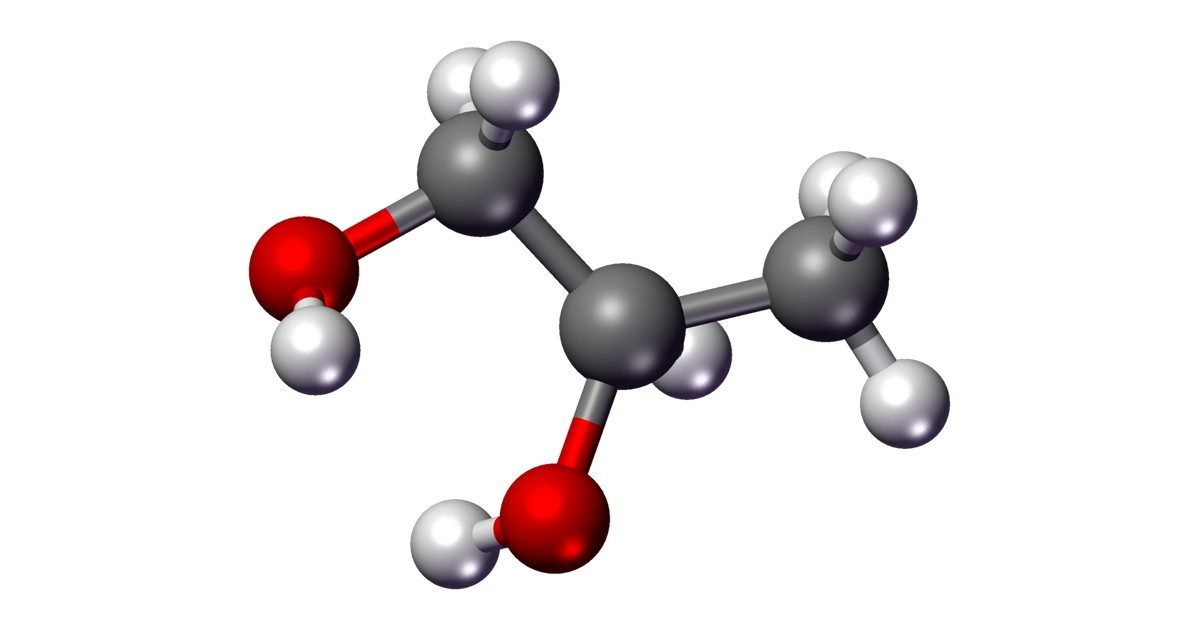
No, they are not the same. Propylene glycol is a small molecule, while polyethylene glycol (PEG) is a polymer made of many repeating units. They share the word “glycol” and some functions, such as retaining moisture and dissolving ingredients, but they differ in size, viscosity and the industries that use them. Here is how to tell them apart and which one suits your formulation.
What is propylene glycol?
Propylene glycol (1,2-propanediol, CAS 57-55-6) is a clear, colorless, practically odorless liquid with the formula C₃H₈O₂ and a molecular weight of 76.09 g/mol. It mixes with water and alcohol in any proportion, and it is hygroscopic: it draws in and holds moisture from the air.
The FDA recognizes it as GRAS (Generally Recognized as Safe), and in the European Union it is food additive E1520. That is why it goes into products that are eaten, applied to skin or taken as medicine:
- Food and beverages: solvent for flavors, colors and vitamins; humectant in bread, cakes and confectionery.
- Pharmaceuticals: excipient in syrups, soft capsules and solutions.
- Cosmetics: fragrance carrier and humectant in creams, lotions and deodorants.
- HVAC: antifreeze in closed systems where a leak must not contaminate food; it freezes at about −59 °C.
Quimiconsult supplies it as USP-grade propylene glycol, with a minimum purity of 99.5%.
What is polyethylene glycol (PEG)?
Polyethylene glycol (CAS 25322-68-3) is a polymer of ethylene oxide. Its general formula is H(OCH₂CH₂)ₙOH, where n is the number of repeating units. The number in the name is its average molecular weight: PEG 400, for example, has a molecular weight between 380 and 420.
That number changes how the product behaves. Low-molecular-weight PEGs, from 200 to 600, are liquids at room temperature (PEG 600 can turn semi-solid when cold); from about PEG 1000 upward they become waxes and solids. The higher the number, the more viscous and the less hygroscopic the PEG.
Its main uses are:
- Cosmetics and personal care: humectant, solvent and emulsifier in creams, gels and hair products.
- Industry: lubricant and mold release in molding, plasticizer in ceramics, dispersant in inks and coatings.
- Textiles: fiber softener and antistatic agent.
- Cleaning: solvent and wetting agent that helps lift dirt.
Comparison table: propylene glycol vs. polyethylene glycol
Property | Propylene glycol | Polyethylene glycol (PEG) |
|---|---|---|
Compound type | Small molecule (diol) | Polymer of ethylene oxide |
Formula | C₃H₈O₂ | H(OCH₂CH₂)ₙOH |
CAS number | 57-55-6 | 25322-68-3 |
Molecular weight | 76.09 g/mol | By grade: ~200 (PEG 200) to ~400 (PEG 400) and up |
Physical state | Slightly viscous liquid | Liquid (PEG 200–600) or solid wax (PEG 1000 and up) |
Water solubility | Complete | Complete for the liquid grades |
Grade at Quimiconsult | USP (pharmaceutical) | Industrial |
Main industries | Food, beverages, pharma, cosmetics, HVAC | Cosmetics, textiles, ceramics, inks, lubricants, cleaning |
Why are they confused?
Both names end in “glycol”, both are water-soluble liquids and both appear on cosmetic labels as humectants. A third name adds to the mix: ethylene glycol, which is toxic and must never be used in food, medicine or cosmetics. Propylene glycol, polyethylene glycol and ethylene glycol are three different substances, each with its own technical and safety data sheet.
Which one should you choose?
The answer depends on where your product ends up and the function you need:
- Your product touches food or is pharmaceutical: choose USP propylene glycol.
- You need antifreeze for a system near food: propylene glycol. See also our antifreeze line.
- You need to lubricate molds, plasticize ceramics, soften fibers or disperse pigments: choose a PEG. PEG 200 is the most fluid, PEG 300 sits in the middle and PEG 400 gives more body.
- You formulate cosmetics: both work. Propylene glycol is light and a good fragrance carrier; PEG gives creams and gels more body. For other options, browse our personal care humectants.
Before swapping one for the other, run a lab trial: viscosity, skin feel and regulatory requirements all change.
Frequently asked questions
Are propylene glycol and polyethylene glycol the same? No. Propylene glycol is a small molecule (C₃H₈O₂) and polyethylene glycol is a polymer of ethylene oxide. They share some functions but are not interchangeable in every application.
Is propylene glycol the same as ethylene glycol? No. Ethylene glycol is toxic and used in automotive antifreeze. Propylene glycol is recognized as GRAS by the FDA and is used in food, medicine and cosmetics.
What does the number in PEG 400 mean? It is the polymer's average molecular weight. PEG 400 has a molecular weight between 380 and 420. A higher number means a more viscous PEG.
Can I replace propylene glycol with PEG? In some cosmetic formulations, yes, as a humectant. In food and pharmaceuticals, not without checking the grade and the applicable regulations. Always validate the change with a lab trial.
Where can I buy propylene glycol and PEG in Mexico? From Quimiconsult, shipped from Monterrey to all of Mexico with a certificate of analysis for every batch.
How Quimiconsult helps
Quimiconsult distributes both products from Monterrey, Nuevo León, with shipping across Mexico:
- USP-grade propylene glycol: minimum purity 99.5%, Kosher certified. 20 L jerrycan, 50 L and 200 L drums and 1000 L tote.
- Industrial-grade polyethylene glycol: PEG 200, PEG 300 and PEG 400.
- Documentation and support: certificate of analysis per batch, technical data sheet, safety data sheet and guidance on choosing the right grade.
Not sure which one you need? Talk to a technical advisor or subscribe to our newsletter for more guides like this one.
Related articles
Glycerin: what it is, what it's for and how to choose the right grade
What glycerin is used for in cosmetics, pharma, food and industry, how crude, USP and vegetable glycerin differ, and why the grade matters.
Chlorhexidine: what it is, what it's for and which concentration to use
What chlorhexidine is, how it's used in mouthwash, antiseptics and teat dips, how to dilute the 20% concentrate and how it compares with povidone-iodine.
Citric acid: much more than lemons
From soft drinks to descalers and fizzy tablets: discover what citric acid does in industry and how to choose the right grade.
