Spanish
 English


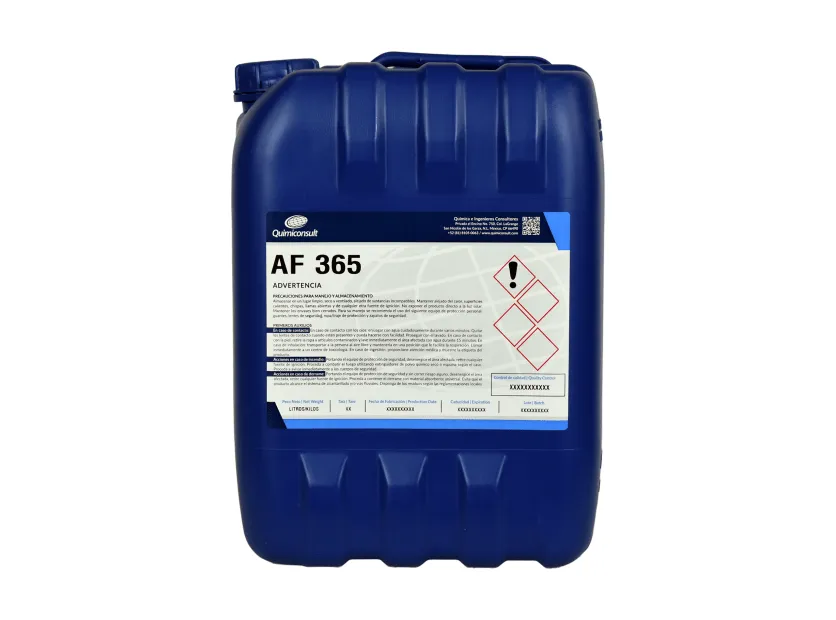
AF 365 FOAM CONTROL FOR AGROCHEMICAL DISPERSIONS
View All Prices
| Quantity | Unit Price |
|---|---|
| kg | |
| 1 - 99 | USD 12.69 |
| 100 - 199 | USD 12.35 |
| 200 - 499 | USD 12.00 |
| 500 - 999 | USD 11.67 |
| 1000 - 4999 | USD 11.35 |
| 5000 - 9999 | USD 11.06 |
| 10000 - 17999 | USD 10.78 |
| 18000+ | USD 10.51 |
AF365 Description — Silicone Antifoam Emulsion for Foam Control in Dispersions and Agrochemical Formulations
At Quimiconsult we manufacture AF365, a high-active aqueous antifoam emulsion based on polydimethylsiloxane (PDMS / dimethicone / dimethylpolysiloxane, CAS 63148-62-9), designed specifically for effective foam control in industrial processes and, in particular, in the formulation of agrochemical products. With an active ingredient content above 50% by weight (minimum 60% per the product specification), AF365 delivers excellent performance at very low doses, combining fast foam knock-down with a long-lasting residual effect (persistence) both during manufacturing and in final use in the field. It is a non-ionic antifoam, compatible with a wide range of non-ionic and anionic surfactants, that maintains its performance under acidic, neutral and slightly alkaline conditions. As direct manufacturers with our own R&D laboratory and more than 30 years of experience supplying raw materials for agrochemical formulation in Mexico, we guarantee batch-to-batch consistency, with availability from our plant in Monterrey, Nuevo León, and shipping throughout Mexico.
Foam is a critical problem in the manufacture of agrochemical dispersions: wet milling, high-shear mixing and homogenization processes create ideal conditions for its formation (high agitation energy, the presence of surfactants and dispersants, and aqueous phases with a high solids load). Foam is not only an operational problem: it reduces milling efficiency, remains trapped as occluded air that compromises suspension stability, slows down packaging and causes container underfilling, and can generate bulk density variations between batches that affect dosing accuracy in the field. AF365, dosed at the critical stages of the process, solves these problems with a minimal amount of active ingredient, without interfering with the formulation's dispersion and stabilization systems: being non-ionic, it does not interfere with the electrical charge of the active ingredients or the adjuvants.
For those looking for foam control for agrochemical dispersions, an antifoam for suspension concentrates (SC), an antifoam for emulsifiable concentrates (EC), an antifoam for water-dispersible granules (WG) and wettable powders (WP), an antifoam for tank mixes, a silicone antifoam for agrochemical formulation or dimethicone / PDMS-based foam control, AF365 is the technical answer from the Quimiconsult catalog, backed by in-house manufacturing, complete regulatory documentation and advice on dosing and evaluating the product in each process.
Dimethicone, PDMS and dimethylpolysiloxane: the same antifoam active
The terms dimethicone, PDMS, dimethylpolysiloxane and polydimethylsiloxane are equivalent names for the same linear silicone polymer (CAS 63148-62-9) that constitutes the antifoam active in AF365. The difference between the various products containing this compound is not in the molecule, but in the concentration and the presentation format. Whatever name your process or technical literature uses for it —dimethicone, PDMS or dimethylpolysiloxane— AF365 is the source of that compound in a high-active aqueous emulsion format optimized for agrochemical formulation. It is an industrial grade product for use as a processing aid; for applications involving food contact, the food grade versions of the Silad family (Silad 210 FG or Silad Powder FG, manufactured in an SQF plant) should be used.
High-active PDMS: a specialized concentration for agrochemical formulation
The market for PDMS-based antifoams basically offers two major formats: aqueous emulsions at 20-30% active and concentrates at 90% or more. AF365 occupies an intermediate technical space in active concentration, with more than 50% (minimum 60% per specification), which gives it concrete advantages for the agrochemical formulator:
- More active per kilogram than a conventional 20% emulsion: at the same dose by weight, AF365 delivers approximately three times more active PDMS to the system. In practice, the formulator can use roughly one third of the product volume compared with a 20% emulsion to achieve the same active concentration in the final formulation. This reduces the total volume of antifoam incorporated, which has a positive impact on suspension viscosity, freight and storage costs, and the stability of the dispersion system.
- Easy-to-incorporate aqueous emulsion format: unlike near-pure concentrates, AF365 is incorporated directly into the aqueous phase with moderate agitation, is water-dilutable and requires no pre-emulsification or special solvents.
- pH range optimized for agrochemical processing (4.5 – 7.0): covers the acidic to neutral spectrum typical of water-based agrochemical formulations, including formulations with acidic active ingredients.
AF365 within the Quimiconsult antifoam family
Quimiconsult offers a complete family of silicone-based and organic-based antifoams to cover every type of system and concentration:
- AF365 (high-active silicone emulsion, specialized for agrochemicals, pH 4.5 – 7.0) — the product described on this page: a high-active aqueous PDMS emulsion formulated specifically for foam control in agrochemical dispersions and formulations.
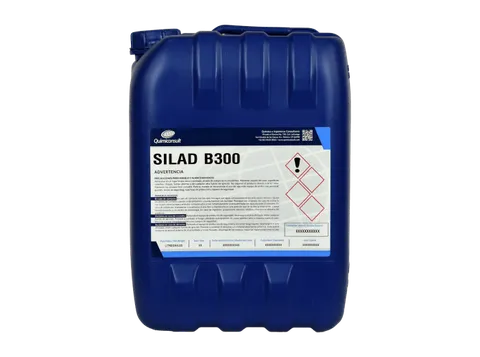
- Silad B300 (silicone emulsion, 20% active, pH 3.5 – 5.0) — low-viscosity silicone antifoam emulsion for neutral to acidic aqueous systems.
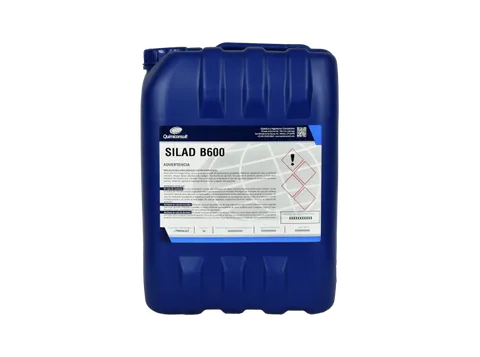
- Silad B600 (silicone emulsion, 20% active, pH 5.0 – 8.0) — very low-viscosity silicone antifoam emulsion for aqueous systems with anionic surfactants or neutral to alkaline pH.
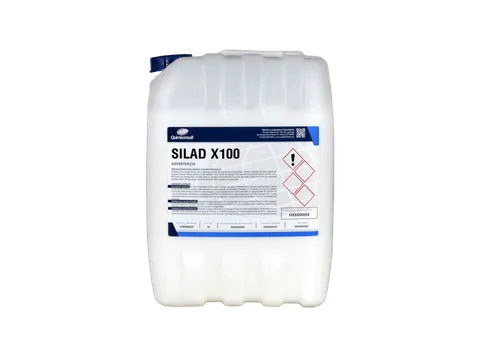
- Silad X100 (100% active, self-dispersing) — PDMS concentrate for oil-based, mixed and non-aqueous systems.
- Silad X700 (min. 90% active, silicone-based) — PDMS concentrate for non-aqueous systems.
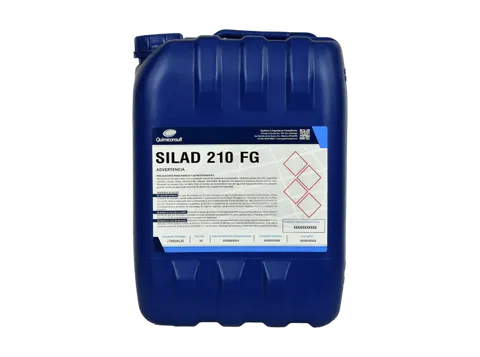
- Silad 210 and Silad 210 FG (silicone emulsion, 10% active) — emulsion foam controllers; the 210 FG version is food grade, kosher, and manufactured in an SQF plant.
- Silad Powder FG (powdered silicone, food grade) — food grade powdered antifoam for dry blends.
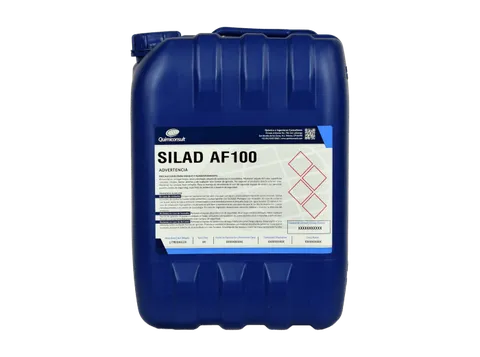
- Silad AF100 (organic-based, silicone-free) — concentrated organic antifoam for silicone-sensitive processes and products.
Why foam is a critical problem in agrochemical manufacturing
Formulating agrochemical dispersions involves wet milling, high-shear mixing and homogenization processes that generate intense foam. This foam directly affects product quality and process efficiency:
- In wet milling: foam creates a gas phase that dampens the transmission of mechanical energy from the grinding media to the solid, reduces milling efficiency, increases the time and energy needed to reach the target particle size, and can cause inhomogeneities in the particle size distribution.
- In mixing and homogenization: air incorporated during mixing remains trapped in the final formulation, creating air pockets that compromise the physical stability of the suspension and can be mistaken for phase separation or sedimentation in quality control.
- In packaging and filling: foam on the line slows packaging speed, causes container underfilling and contaminates seals and nozzles, leading to product losses and additional cleaning time.
- In the finished product: a formulation with residual foam can show bulk density variations between batches, which affects dosing accuracy in the field when the farmer measures the product by volume.
AF365, with its fast knock-down action and persistence, dosed at the critical stages of the process, solves these problems with a minimal amount of active ingredient.
Key features and benefits of AF365
- High active silicone content (>50%; minimum 60% per specification): allows very low dosages and a competitive cost per unit of antifoam efficacy.
- Fast antifoam action (knock-down) and excellent persistence: breaks existing foam immediately and prevents it from re-forming for extended periods, both in manufacturing and in field use.
- Compatible with non-ionic and anionic surfactants: the standard surfactant and dispersant systems of agrochemical formulation.
- Non-ionic: does not interfere with the electrical charge of the active ingredients or the formulation adjuvants, a critical attribute in agrochemicals.
- Stable over a wide pH range (typically 4.5 – 7.0): covers the acidic to neutral conditions of the agrochemical manufacturing process.
- Easy incorporation into the aqueous phase with moderate agitation: water-dilutable, with no pre-emulsification or special solvents.
- Low oral and dermal toxicity: facilitates safe handling in formulation plants.
- Non-flammable (flash point > 100 °C) and not regulated for transport (ADR/IMDG/IATA): handling and logistics advantages.
- In-house manufacturing with quality control: batch-to-batch consistency and supporting documentation (COA per batch, TDS, SDS).
AF365 applications
AF365 is especially suited to the agrochemical industry, where foam control is critical during manufacturing, packaging and field application of the finished product. Suitability and dosage for each case must be validated under the customer's specific conditions; our technical team can support the trials.
Formulation of pesticides, herbicides, fungicides and insecticides
Foam control in both high-shear mixing processes and high-speed packaging, in the manufacture of:
- Emulsifiable concentrates (EC), suspension concentrates (SC), suspo-emulsions (SE) and soluble concentrates (SL).
- Wettable powders (WP) and water-dispersible granules (WG), during the wetting and dispersion phase in the tank, where the high concentration of surfactants and dispersants needed to achieve dispersibility generates intense foam under agitation.
Foliar fertilizers, NPK suspensions, biostimulants and growth regulators
Foam control in the manufacture of liquid foliar fertilizers and NPK suspensions, plant growth regulators and biostimulants, where agitation and the presence of salts, extracts and adjuvants generate foam during mixing and packaging.
Agricultural adjuvants and tank mixes
AF365 is used in the formulation of agricultural adjuvants —wetting agents, dispersants, penetrants and spray solution acidifiers— and as an antifoam component in tank mixes for application with ground and aerial equipment, where foam can cause loss of usable tank volume, irregular dosing and foam-clogged filters.
Process water, equipment washing and bio-input fermentation
Foam control in process water and in washing agrochemical formulation and packaging equipment, and in industrial fermentation for the production of biopesticides and biofertilizers (Bacillus spp., Trichoderma spp., among others), where aeration and agitation of the culture generate foam that reduces the usable capacity of the fermenter.
Other general industrial applications
In addition to the agrochemical industry, AF365 can be used in industrial and municipal wastewater treatment, pulp and paper processing, alkaline cleaners and industrial detergents, water-based coatings, paints and adhesives, and textile and finishing processes. (For coatings and systems sensitive to silicone-related surface defects, also consider the silicone-free option Silad AF100.)
Compatibility with agrochemical formulation systems
AF365 is compatible with the standard surfactant and dispersant systems of agrochemical formulation: anionic dispersants (calcium and sodium lignosulfonates, naphthalene sulfonate condensates), non-ionic and EO/PO-type dispersants and surfactants, and formulation adjuvants, at the typical use concentrations of the process. Because it is non-ionic, it does not interfere with the electrical charge of the active ingredients or the adjuvants. Its pH range (4.5 – 7.0) makes it compatible with the acidic to neutral spectrum of water-based agrochemical formulations, including formulations with acidic active ingredients. To verify compatibility with a specific dispersion system or a particular active ingredient, our technical team can perform laboratory-scale compatibility tests before plant-scale implementation.
AF365 use and dosage recommendations
Method of application: AF365 can be used as a concentrate or pre-diluted in water, depending on ease of incorporation and the volume to be treated. For dilution, mix 1 part AF365 in 5 to 10 parts water with gentle agitation until a uniform mixture is obtained; pre-dilution makes incorporation into large-volume systems easier and improves distribution.
Recommended doses (as an initial reference):
- Agrochemical formulations (EC, SC, SL, SE): 0.1 – 0.5% (1,000 – 5,000 ppm) of the final formulation.
- Wettable powders (WP) and dispersible granules (WG): 0.1 – 1.0% of the formulation weight.
- Tank mixes for field application: 50 – 200 ppm of the total spray volume.
- Biopesticide and biofertilizer fermentations: 50 – 500 ppm of the culture broth volume.
- Water treatment and general chemical processes: 20 – 100 ppm.
We recommend laboratory or pilot-scale trials before establishing the final dose, adjusting it according to the observed performance. Add AF365 at the point where the most foam is generated, with moderate agitation; avoid excessive agitation or prolonged high shear, which can break the emulsion and reduce efficacy.
AF365 technical specifications
The AF365 we manufacture meets a consistent batch-to-batch quality profile, verifiable through a Certificate of Analysis (COA):
Nature:
Aqueous silicone emulsion — polydimethylsiloxane (PDMS)
CAS number:
63148-62-9
Other names:
PDMS, dimethylpolysiloxane, dimethicone
Appearance:
Opaque liquid, milky white emulsion
Active ingredient content:
> 50% by weight (minimum 60% per product specification)
Specific gravity at 25 °C:
≈ 1.00
Viscosity at 20 °C:
4,000 – 5,000 cP
Suitable diluent:
Water
Emulsifier type:
Non-ionic
pH (1% solution) at 25 °C:
4.5 – 7.0
Odor:
Mild, characteristic
Flash point:
> 100 °C (non-flammable)
Solubility in water:
Dispersible
Every AF365 delivery comes with its batch Certificate of Analysis (COA), Technical Data Sheet (TDS), Safety Data Sheet (SDS) and additional regulatory documentation as required by the customer for audit and supplier approval processes.
Packaging, storage and shelf life
Packaging: AF365 is available in 20 kg and 50 kg pails, 200 kg drums and 1,000 kg containers (IBC/tote) for high-volume producers or agrochemical input distributors, as well as samples for in-process technical evaluation.
Storage: to ensure product stability, keep the container tightly closed when not in use. Store at normal room temperature in a dry, ventilated place, protected from direct sunlight and heat sources. Avoid freezing, as it can break the emulsion irreversibly. If separation occurs due to heat or prolonged standing, gently stir the contents before use and the product will recover its normal properties.
Shelf life: 12 months from the date of manufacture, in a closed container and under the storage conditions indicated. The official expiration date is stated on the original container and on the Certificate of Analysis (COA) for the corresponding batch.
Safety, handling and regulatory considerations
AF365 has a favorable handling profile: low oral and dermal toxicity, non-flammable (flash point > 100 °C) and not regulated for transport (ADR/IMDG/IATA). It must be handled according to the recommendations of its current Safety Data Sheet (SDS). As general good practice for industrial handling, the use of personal protective equipment (PPE) is recommended: chemical safety goggles, industrial gloves (nitrile or equivalent), appropriate work clothing and adequate ventilation. In case of eye contact, rinse with plenty of water for at least 15 minutes. Wash hands and arms after handling the product.
Spill handling: antifoam spills are slippery and pose a fall hazard. Contain with inert absorbents (vermiculite, sand, absorbent pads), collect and dispose of according to current waste legislation, and wash the area with water and detergent to remove residues.
GHS classification, hazard statements (H statements) and precautionary statements: the complete classification under the Globally Harmonized System (GHS), hazard statements, precautionary statements, first aid and labeling in accordance with NOM-018-STPS-2015 must be taken from the product's current Safety Data Sheet (SDS), which is provided with every shipment. Always consult the updated SDS before use.
AF365 frequently asked questions
What is AF365 and what is it used for?
AF365 is a high-active (>50%; minimum 60% per specification) aqueous silicone (PDMS) antifoam emulsion manufactured by Quimiconsult, designed specifically for foam control in the formulation of agrochemical products: EC, SC, SE, SL, WP, WG, foliar fertilizers, biostimulants, adjuvants, tank mixes and bio-input fermentation, as well as general industrial applications.
What sets AF365 apart from 20% silicone antifoams such as Silad B300 or B600?
The main difference is the active concentration: AF365 contains more than 50% PDMS (minimum 60% per specification), compared with 20% in conventional emulsions. At the same dose by weight, AF365 delivers approximately three times more active PDMS, so the formulator can use roughly one third of the volume to achieve the same active concentration, reducing the total volume of antifoam in the formulation (with a positive impact on SC viscosity, freight cost and dispersion system stability). In addition, AF365 is optimized for the agrochemical pH range (4.5 – 7.0) and is non-ionic, so it does not interfere with the charge of the active ingredients.
Is AF365 compatible with anionic dispersants such as lignosulfonates or naphthalene sulfonates?
Yes. AF365 is formulated for use in agrochemical formulation systems where anionic dispersants (calcium and sodium lignosulfonates, naphthalene sulfonate condensates) and EO/PO-type dispersants are the standard stabilizers, and it is compatible with them at typical use concentrations. To verify compatibility with a specific dispersion system or active ingredient, our technical team can perform laboratory-scale tests.
Can AF365 be used in acid-based formulations?
Yes. AF365's pH range (4.5 – 7.0) is compatible with acidic to neutral agrochemical formulations. Its stability in this range is a design attribute of the formulation, distinguishing it from antifoams formulated for neutral to alkaline pH. For specific active ingredients, we recommend validating compatibility through laboratory testing.
At what point in the process should AF365 be added when manufacturing an SC?
As a general rule, we recommend adding AF365 at the point where the most foam is generated —often the aqueous phase before milling begins— with moderate agitation, so that the PDMS is dispersed before the stage of greatest foam generation. If foam appears mainly in later stages (mixing, homogenization, packaging), it may be more efficient to dose at that stage or split the dose between two points. Avoid prolonged high-shear agitation, which can break the emulsion.
How is AF365 dosed?
As an initial reference: EC/SC/SL/SE formulations, 0.1 – 0.5% (1,000 – 5,000 ppm) of the final formulation; WP and WG, 0.1 – 1.0% by weight; tank mixes, 50 – 200 ppm of the spray volume; bio-input fermentations, 50 – 500 ppm; water treatment and general processes, 20 – 100 ppm. We recommend validating the dose through laboratory or pilot trials.
Can it be used diluted?
Yes. It can be used as a concentrate or pre-diluted in water (1 part AF365 in 5 to 10 parts water, with gentle agitation). Pre-dilution makes incorporation into large-volume systems easier and improves distribution.
Is AF365 flammable or regulated for transport?
No. AF365 is non-flammable (flash point > 100 °C) and is not regulated for transport under ADR/IMDG/IATA; it also has low oral and dermal toxicity, which simplifies handling and logistics. Always consult the current SDS for handling and classification details.
What happens if AF365 separates during storage?
Separation can occur due to heat or prolonged standing; in that case, gently stir the contents before use and the product will recover its normal properties. Avoid freezing, which can break the emulsion irreversibly.
How long does AF365 last in storage?
In a closed container and under the storage conditions indicated, the shelf life is 12 months from the date of manufacture. The official expiration date is stated on the container and on the batch COA.
Where can I buy AF365 in Mexico?
AF365 is available from Quimiconsult inventory in Monterrey, Nuevo León, with shipping throughout Mexico, in 20 kg and 50 kg pails, 200 kg drums and 1,000 kg containers, as well as samples for technical evaluation. We are direct manufacturers, with complete technical documentation (TDS, SDS, COA per batch) and technical support. Request a quote or a sample at +52 (81) 8105 0063.
Other names and search terms related to AF365
AF365 is a Quimiconsult brand. The active ingredient and product type are known by various chemical names and functional descriptions:
foam control for agrochemical dispersions, foam control in dispersions, antifoam for agrochemicals, antifoam for agrochemical formulation, antifoam for suspension concentrates, antifoam for SC, antifoam for emulsifiable concentrates, antifoam for EC, antifoam for dispersible granules, antifoam for WG, antifoam for wettable powders, antifoam for WP, antifoam for tank mixes, tank mix antifoam, antifoam for foliar fertilizers, antifoam for biostimulants, antifoam for biopesticide fermentation, silicone antifoam emulsion, silicone antifoam, PDMS, polydimethylsiloxane, dimethylpolysiloxane, dimethicone, agricultural defoamer, defoamer for agrochemicals, foam suppressor, foam controller, foam control agent, antifoaming agent, AF365, AF 365, AF365 antifoam, AF365 price, buy AF365, AF365 Mexico, agrochemical antifoam Mexico, antifoam manufacturer Mexico, antifoam supplier Monterrey, Silad antifoam, Quimiconsult antifoam.
These variations help formulators, process engineers, plant managers, quality teams, buyers and R&D teams in the agrochemical industry find AF365 within the Quimiconsult antifoam line.
Why buy AF365 from Quimiconsult?
Quimiconsult is a Mexican company with more than 30 years of experience in specialty chemicals and raw materials for agrochemical formulation in Mexico. We know the real conditions of SC, EC and WG manufacturing processes in Mexican plants: the hardness of the process water, the operating temperature of the milling equipment and the most common dispersion systems the antifoam must coexist with. When you buy AF365 from Quimiconsult you get:
- An in-house manufactured product, with our own R&D laboratory and internal quality control, and batch-to-batch consistency.
- A high-active silicone antifoam emulsion formulated specifically for foam control in agrochemical dispersions.
- Compatibility with the surfactant, dispersant and pH systems of agrochemical formulation, without interfering with the charge of the active ingredients.
- The ability to develop custom variants (active concentration, pH profile or viscosity adjusted to your dosing system).
- Direct technical support from the manufacturer, with plant visits to evaluate the process, identify the optimal dosing point and minimize antifoam consumption.
- Complete regulatory documentation (COA per batch, TDS, SDS) for audits and supplier approval.
- Availability from Monterrey, Nuevo León, in pails, drums and containers, with shipping throughout Mexico.
Request your AF365 quote or sample
Does your suspension concentrate (SC), emulsifiable concentrate (EC), dispersible granule (WG) or wettable powder (WP) formulation plant, your production of foliar fertilizers, biostimulants or adjuvants, your bio-input fermentation process, or your agrochemical packaging operation need a high-active antifoam that controls foam without interfering with the formulation? We also offer the complete Silad antifoam line (silicone emulsions, self-dispersing concentrates, organic-based, food grade and powder). Contact us and we will gladly analyze your application, recommend the optimal dosage and incorporation point, guide you on which product fits your process, and deliver a comprehensive solution with complete technical documentation, application advice and timely delivery anywhere in Mexico. Our technical team can visit your formulation plant to evaluate the process and propose the working concentration that minimizes antifoam consumption without compromising foam control. We manufacture in Mexico with domestic production, our own inventory and short lead times, and we serve the entire country —including Monterrey, Mexico City, Guadalajara, Puebla, Querétaro, San Luis Potosí, Saltillo, Chihuahua and the Bajío region—. Call us at +52 (81) 8105 0063 or visit us at Privada El Encino No. 750, Col. LaGrange, San Nicolás de los Garza, N.L., CP 66490.
Related products and antifoam family
- Silad B300 / Silad B600 — silicone antifoam emulsions (20% active) for general-purpose industrial aqueous systems.
- Silad X100 / Silad X700 — self-dispersing silicone concentrates for oil-based and non-aqueous systems.
- Silad B700 — 100% active concentrated silicone antifoam for water treatment, alkaline cleaners and CIP.
- Silad 210 / Silad 210 FG — silicone emulsion foam controllers; the 210 FG version is food grade, kosher, and manufactured in an SQF plant.
- Silad Powder FG — food grade powdered antifoam for dry blends and food processes.
- Silad AF100 — concentrated organic-based, silicone-free antifoam for silicone-sensitive processes and products.
Related categories: Antifoams for agrochemical dispersions · Dispersants and emulsifiers for agrochemical formulation · Raw materials for industrial water treatment
Not sure which antifoam is right for your formulation? Contact us and we will help you select the right technology, concentration and format for your formulation type (SC, EC, WG, WP), dispersion system, pH and process.
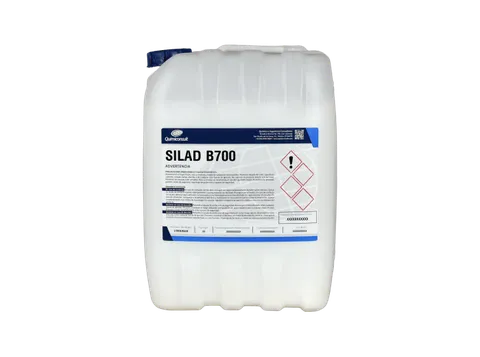
SILAD B700 CONCENTRATED DEFOAMER DISPERSIBLE IN WATER BASED SYSTEM