Spanish
 English


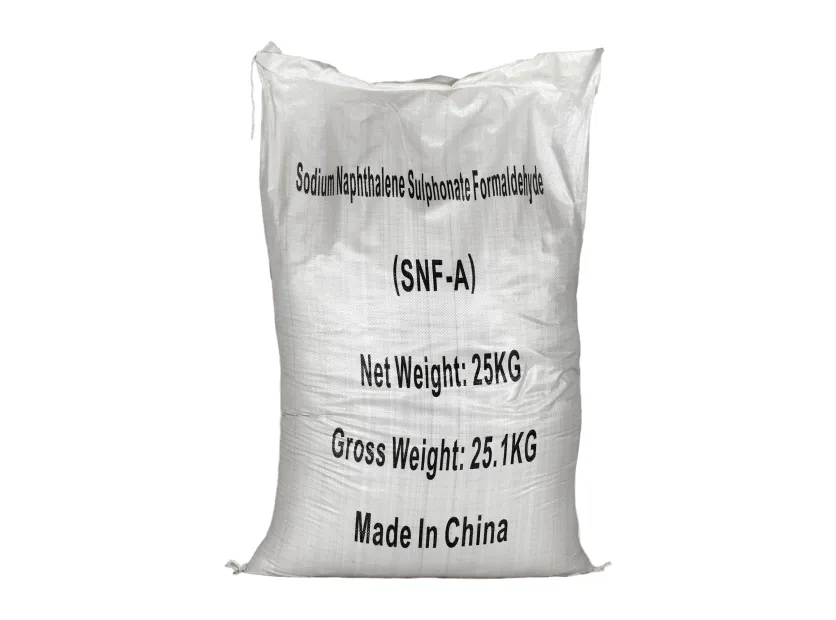
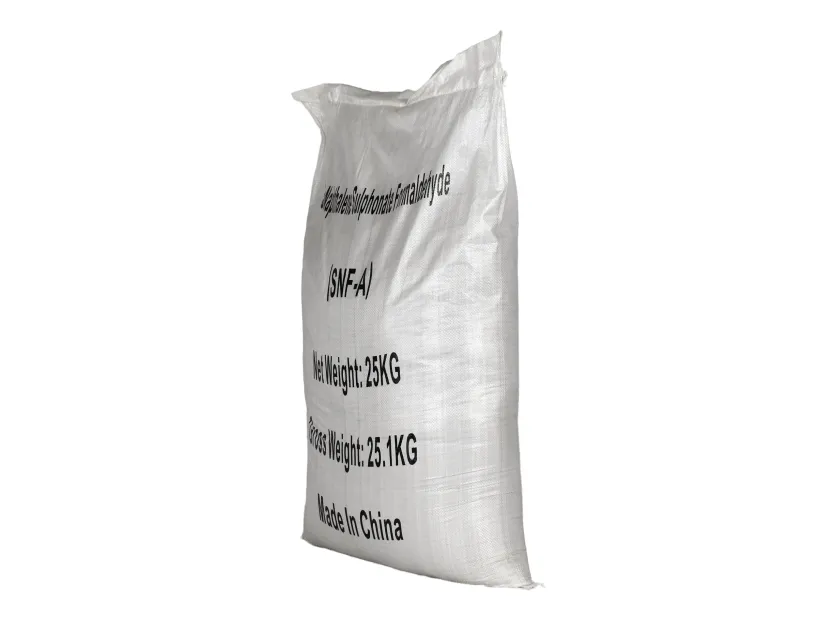
SODIUM NAPHTHALENE SULFONATE FORMALDEHYDE INDUSTRIAL GRADE SNF A
View All Prices
| Quantity | Unit Price |
|---|---|
| kg | |
| 1 - 99 | USD 1.80 |
| 100 - 199 | USD 1.77 |
| 200 - 499 | USD 1.74 |
| 500 - 999 | USD 1.71 |
| 1000 - 4999 | USD 1.68 |
| 5000 - 9999 | USD 1.65 |
| 10000 - 17999 | USD 1.62 |
| 18000+ | USD 1.59 |
Sodium Naphthalene Sulfonate (SNF) Description – Industrial Dispersant and Water Reducer
At Quimiconsult we offer Sodium Naphthalene Sulfonate Formaldehyde (SNF or SNF-A), a high-performance anionic dispersant and industrial-grade water reducer, supplied as a light brown powder with a minimum active content of 91 %. This product is designed to improve the dispersion, flowability and stability of systems containing fine solids and is widely used in construction, agrochemicals, ceramics, coatings, gypsum, cement, mineral slurries and other industrial applications.
SNF works by reducing the tension between solid particles and the liquid medium, which lowers the amount of water required, improves mix homogeneity and optimizes the performance of the final system. Thanks to its sulfonated polymer structure, it makes it easier to formulate more stable, workable and consistent mixes, without adversely affecting the mechanical or functional properties of the finished product.
This sodium sulfonate-based additive is compatible with a wide range of inorganic and organic materials, including Portland cements, pozzolanic materials, mineral fillers, pigments and clays, delivering reliable performance across different ranges of temperature, in both hot and cold climates.
Industrial-grade Sodium Naphthalene Sulfonate Formaldehyde (SNF) is available in Monterrey, Nuevo León, with shipping throughout Mexico.
Sodium Naphthalene Sulfonate Formaldehyde Details and Properties
Our Sodium Naphthalene Sulfonate Formaldehyde (SNF) is supplied as a light brown solid powder, free of visible impurities, with a pH between 7.0 and 9.0 in a 5 % aqueous solution, giving it a practically neutral nature and high compatibility with a variety of industrial formulations. It has a minimum active content of 91 %, suitable for applications that require consistent, reproducible dispersing efficiency.
The product has CAS number 36290-04-7 and a general formula C₁₀H₇SO₃Na·(CH₂O)ₙ, corresponding to a sulfonated naphthalene-formaldehyde polymer. It is highly soluble in water, even in systems with some hardness, and remains stable under normal storage and industrial operating conditions.
It is sold in 25 kg bags and 50 kg drums, with sealed inner liners to protect it from moisture. Its estimated shelf life is 12 months when stored in a dry, cool and well-ventilated environment.
SNF Properties
SNF works as a high-efficiency anionic dispersant, preventing the agglomeration and flocculation of solid particles in aqueous systems. This action improves the uniform distribution of solids, increases system flowability and promotes the stability of suspensions and mixes.
In addition, its role as a water reducer makes it possible to cut the water content of formulations by 15 % to 25 %, depending on the system, which translates into better mechanical properties, lower porosity and higher density in finished products. SNF is compatible with other industrial additives, such as retarders, accelerators, air-entraining agents and rheology modifiers, enabling the design of high-performance formulations tailored to different applications.
Sodium Naphthalene Sulfonate (SNF) Applications
Sodium Naphthalene Sulfonate (SNF) is widely used in the construction industry as a dispersant and water reducer in concrete, mortars, precast elements, gypsum board and specialty cements, improving the workability, strength and durability of mixes.
In the agrochemical industry, SNF is used as a dispersing agent in pesticide, herbicide and fertilizer formulations, supporting suspension stability and application effectiveness. In the ceramics and minerals industry, it is used to improve the dispersion of clays, pigments and mineral fillers, reducing viscosity and making processing easier.
SNF is also incorporated as a dispersing aid in industrial coatings, gypsum formulations, adhesives and chemical suspensions, where rheology control, stability and homogeneity are required. Its versatility makes it a key functional additive in many industrial processes.
To discover other additives and complementary solutions, visit our Construction, Pulp & Paper Dispersants and Industrial Cleaning pages, where you will find products to improve the workability, strength and durability of your mixes.
Key Benefits of Sodium Naphthalene Sulfonate (SNF)
Sodium Naphthalene Sulfonate (SNF) delivers key functional benefits across a wide range of industrial applications thanks to its behavior as a high-performance anionic dispersant and water reducer. It improves the uniform distribution of solid particles, reduces agglomeration and flocculation, and increases the stability of suspensions and mixes, even in systems with a high solids load. These characteristics translate into better flowability, greater homogeneity and more consistent performance of the final product.
In addition, SNF contributes to lower water consumption in industrial formulations, which has a positive impact on the mechanical properties, density and durability of the systems it is added to. Its compatibility with many materials and additives makes it easy to integrate into different production processes, optimizing performance without altering the essential chemical properties of the system. These benefits make SNF an efficient solution to improve technical performance and quality control, as well as to optimize formulation costs.
Advantages of SNF Over Other Industrial Dispersants
Compared with other industrial dispersants, Sodium Naphthalene Sulfonate (SNF) offers a balanced combination of efficiency, stability and versatility. Unlike naturally derived dispersants or detergent surfactants, SNF has a polymer structure designed specifically for systems with mineral solids, allowing it to maintain its performance even under conditions of variable pH, moderate temperatures and the presence of salts or impurities.
SNF provides more controlled and reproducible dispersion, with less impact on foam formation and without introducing unwanted detergent properties. This advantage makes it especially suitable for industrial applications that require rheology control, long-term stability and batch-to-batch consistency, in many cases outperforming conventional dispersants that are not designed for this type of system.
SNF Storage and Handling
To preserve the quality and performance of SNF, store it in its original packaging, tightly closed and protected from moisture. Keep it in a cool, dry and well-ventilated place, away from heat sources.
When handling, wear gloves, safety glasses and a dust mask to avoid inhaling the powder or contact with skin and eyes. For use, the product should first be dissolved in clean water, ensuring a homogeneous solution before adding it to the final formulation. Follow the recommended dosages for each application.
Other names, synonyms and compounds related to SNF
Sodium Naphthalene Sulfonate Formaldehyde (SNF-A) / Naftalen sulfonato de sodio formaldehído
These names are the full technical and chemical name of the product known commercially as SNF. They are widely used in the construction, materials and industrial formulation industries to identify this high-performance anionic dispersant and water reducer. Under these names SNF is recognized as a sulfonated naphthalene-formaldehyde polymer, used to improve the dispersion of solids, reduce water demand and optimize mix stability in a variety of industrial applications.
Sodium dodecylbenzene sulfonate / Linear alkylbenzene sulfonate (LAS)
These compounds are anionic surfactants used mainly in the detergent and cleaning products industry. Although they belong to the sodium sulfonate family, they are neither functionally nor chemically related to SNF as a superplasticizer or industrial dispersant for construction. Their structure and application are geared toward detergent and foaming properties, not toward dispersing mineral particles or reducing water in cementitious systems.
Sodium alkylbenzene sulfonate / Sodium alpha olefin sulfonate / Alpha olefin sulfonate (AOS)
These names refer to biodegradable anionic surfactants used in personal care, cosmetics and household and industrial cleaning products. While they belong to the general class of sulfonates, their chemical structure, behavior and applications differ from those of Sodium Naphthalene Sulfonate Formaldehyde (SNF). They should not be considered functional substitutes for SNF in industrial dispersion or water-reduction applications.
SNF A / SNF Superplasticizer
These names are used to highlight the industrial grade of the product and its main function as a dispersant and water reducer. The term SNF A is often used to distinguish it from other types of sulfonates or commercial grades, while SNF superplasticizer emphasizes its use in cementitious mixes, mortars, precast elements and other applications that require high flowability and stability.