Spanish
 English


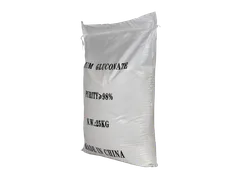
SODIUM GLUCONATE INDUSTRIAL GRADE STABILIZER AND CHELATING AGENT
View All Prices
| Quantity | Unit Price |
|---|---|
| kg | |
| 1 - 99 | USD 1.39 |
| 100 - 199 | USD 1.37 |
| 200 - 499 | USD 1.36 |
| 500 - 999 | USD 1.34 |
| 1000 - 4999 | USD 1.32 |
| 5000 - 9999 | USD 1.30 |
| 10000 - 17999 | USD 1.29 |
| 18000+ | USD 1.27 |
Need more? Message us and we'll help you source the volume you're after.
Message us on WhatsApp Message usProduct description – technical grade sodium gluconate
At Quimiconsult we offer industrial grade sodium gluconate in Mexico, a high-purity (≥ 98 %) white crystalline powder with excellent water solubility, designed for processes that require an efficient chelating agent, formulation stabilizer and set retarder in cementitious systems. Its non-corrosive, non-toxic and biodegradable nature makes it a functional alternative to other metal sequestrants used in industrial applications.
Thanks to its ability to form stable complexes with metal ions such as calcium, iron and aluminum, sodium gluconate improves the chemical stability of alkaline solutions, prevents scaling, optimizes concrete workability and allows homogeneous dispersion of components in liquid and solid formulations. This positions it as a multifunctional additive in the construction, industrial cleaning, water treatment, electroplating and chemical formulation industries.
Industrial grade sodium gluconate is available in Monterrey, Nuevo León, with shipping throughout Mexico and specialized technical support for integrating it into your production processes.
Sodium gluconate details and properties
Our sodium gluconate has a minimum purity of 98 %, a whiteness index of 55.5 to 85.0 % and a controlled impurity content, with reducing substances ≤ 0.50 %, chlorides ≤ 0.05 % and sulfates ≤ 0.05 %. Heavy metals (Pb) content is ≤ 5 mg/kg and arsenic ≤ 1 mg/kg, ensuring stable performance in demanding industrial applications.
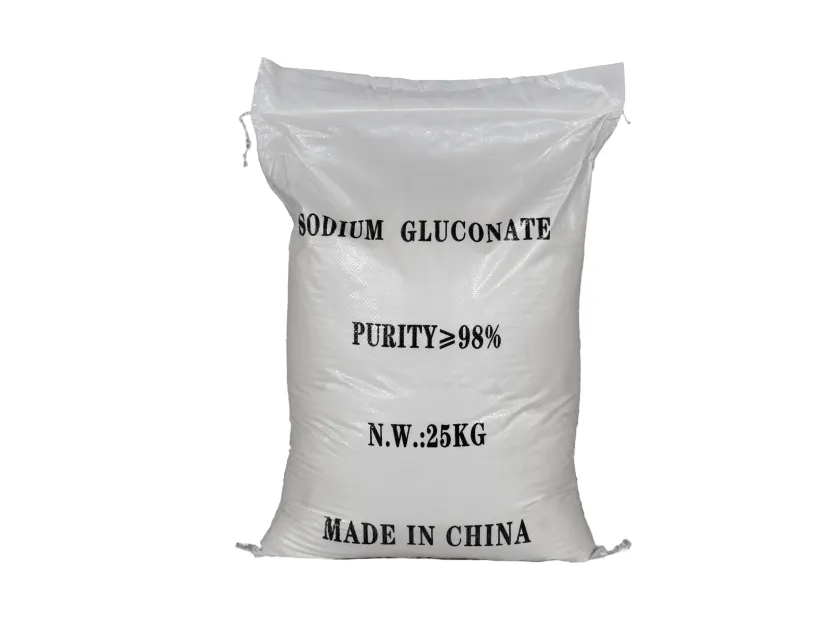
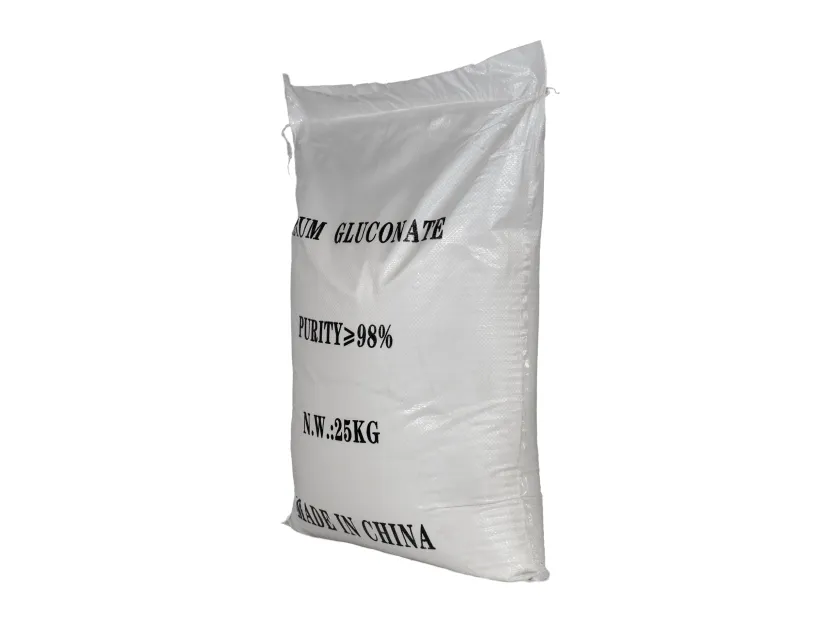
The pH of a 5 % solution lies between 6.0 and 8.0. It comes as a white, odorless granulated powder that is easy to handle logistically. It is supplied in 25 kg bags and 500 kg super sacks with a high-density polyethylene inner liner that protects the product from moisture and external contamination.
Functional properties of sodium gluconate
Sodium gluconate stands out for its high chelating capacity in alkaline media, where other sequestrants lose efficiency. This property helps prevent the precipitation of metal salts, improve detergent stability and avoid scale formation on metal surfaces and process equipment.
In cementitious systems it acts as a set retarder and plasticizer, extending concrete workability time without affecting the development of mechanical strength. Its dispersing effect lowers the water-cement ratio, improves mix flowability and makes pumping easier, resulting in denser, more homogeneous and more durable concrete.
Its low toxicity and biodegradability make it a compatible solution for formulations that seek technical performance with a lower environmental impact.
Sodium gluconate applications and uses
In the construction industry it is used as a set retarder, water reducer and plasticizer in concrete, mortars and plasters, especially in hot climates, large-volume pours and applications that require longer workability and a better surface finish.
In detergents and industrial cleaning it works as a hardness sequestrant, preventing calcium and magnesium ions from deactivating surfactants and increasing the efficiency of the washing system. It also stabilizes alkaline solutions and improves performance when cleaning metal surfaces.
In electroplating it acts as a stabilizer for metal baths and promotes uniform deposition of the coating.
In water treatment it is used for scale control, metal stabilization and system cleaning, while in chemical processes it facilitates the formulation of stable, precipitate-free solutions.
To discover more complementary solutions, visit our Construction, Stabilizers, Dispersants, pH Regulator, Detergents and Pharmaceutical & Wellnesspages.
Compatibility in industrial formulations
Sodium gluconate is compatible with alkaline systems, dispersants, polycarboxylate- and lignosulfonate-based water reducers, anionic and nonionic surfactants, phosphates and carbonates. This versatility allows it to be incorporated into complex formulations without causing instability or salt precipitation.
Benefits of sodium gluconate in industrial processes
Industrial grade sodium gluconate brings operational and economic advantages to a wide variety of formulations thanks to its high chelating capacity and its stability in alkaline media. By sequestering metal ions such as calcium, iron and aluminum, it prevents scale formation, avoids salt precipitation and maintains the efficiency of cleaning systems, which translates into lower raw material consumption and longer service life for process equipment. This property allows industrial detergents to work at maximum effectiveness even in hard water, improving system performance without the need to increase the dosage of other additives.
In construction industry applications, its action as a set retarder and water reducer significantly improves the workability of concrete and mortars, allowing more controlled pours, a better surface finish and more uniform cement hydration. This makes operations easier in hot climates, large-volume pours and long-distance transport, reducing rejections, rework and the costs associated with limited placement times. At the same time, it helps produce denser, more homogeneous mixes, resulting in concrete with greater durability and mechanical performance.
From a chemical formulation standpoint, sodium gluconate acts as an efficient stabilizer in alkaline solutions and complex aqueous systems, preventing premature breakdown of the active components and maintaining the clarity and uniformity of the final product. Its biodegradable nature and low toxicity make it a more environmentally friendly alternative to other traditional sequestrants, allowing more sustainable formulations to be developed without sacrificing technical performance.
Thanks to this combination of efficiency, versatility and safe handling, sodium gluconate stands as a multifunctional additive that optimizes processes, improves final product quality and reduces operating costs in industries such as construction, industrial cleaning, water treatment and specialty chemical formulation.
Sodium gluconate storage and handling
To preserve product quality, it should be stored in its original, tightly closed container in a dry, ventilated place, protected from moisture and heat sources. Bags should be properly closed after each use to prevent water absorption and caking.
During handling, it is advisable to wear gloves and a fine-dust mask, avoiding prolonged skin contact and inhalation of the material.
Other names and synonyms for sodium gluconate
Sodium gluconate is known in the chemical, construction, water treatment and detergent formulation industries under many technical and trade names, as well as search terms used in procurement. Its systematic chemical name is gluconic acid sodium salt, while in scientific literature and international documentation it is identified as sodium gluconate (gluconato de sodio), the standard name used in technical data sheets, safety data sheets (SDS), certificates of analysis, purchase specifications and imports. It can also be found as sodium D-gluconate, a name referring to its origin from the oxidation of D-glucose that appears mainly in academic publications and specialized formulations.
In the construction sector it is known as a concrete set retarder, cement water reducer, mortar plasticizer or retarding concrete admixture, terms that describe its function rather than its chemical composition and are common in job specifications, mix design sheets and cementitious mix development. In industrial cleaning and detergent formulations it is also called a chelating agent, metal sequestrant, alkaline detergent stabilizer or builder for cleaning formulations, highlighting its ability to complex calcium, magnesium, iron and other ions that affect the performance of washing systems.
In the water treatment industry it is commonly found as a scale inhibitor, mineral salt dispersant or complexing agent for aqueous systems, since its main function is to keep metals in solution and prevent deposits in pipes, heat exchangers and process equipment. In metalworking and metal surface cleaning applications it is searched for as a chelant for metal cleaning, stabilizer for descaling solutions or rust removal agent, terms associated with its performance in alkaline and neutral formulations.
From a regulatory and international identification standpoint, sodium gluconate is classified under CAS number 527-07-1, a unique code used in global trade, safety data sheets and chemical substance management systems. In European inventory systems it appears with its corresponding EC/EINECS number, making it easier to integrate into supply chains that require regulatory compliance.
In the pharmaceutical and food sectors, although the product offered by Quimiconsult is industrial grade, related searches can be found such as food grade sodium gluconate, pharmaceutical sodium gluconate, sodium gluconate supplement or sodium gluconate solution, terms that reflect other purity grades of the same compound and are often part of informational or comparative queries during the purchasing process.