Spanish
 English


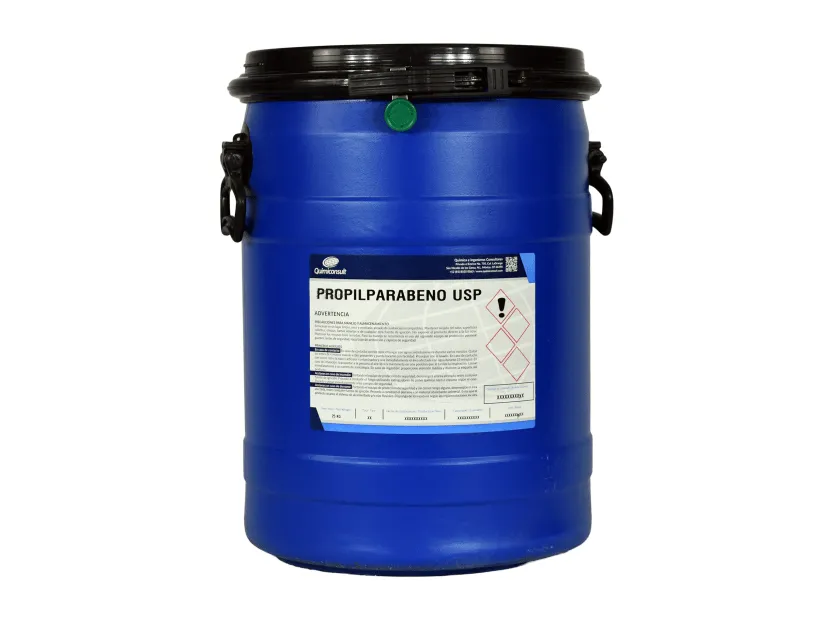
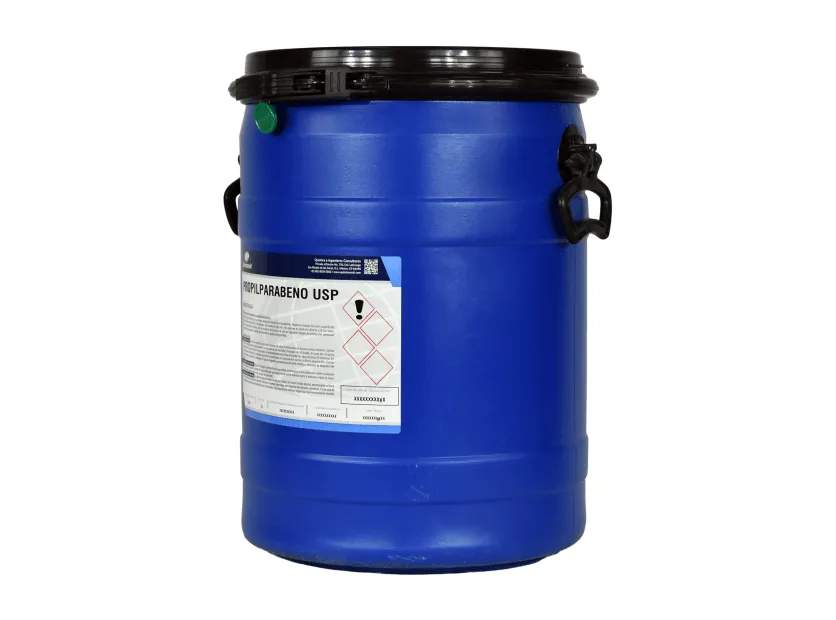
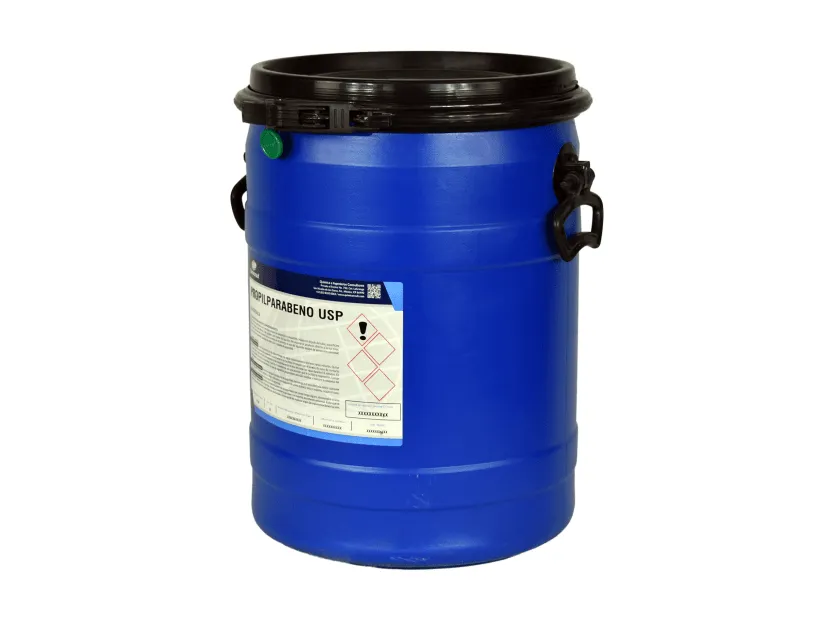
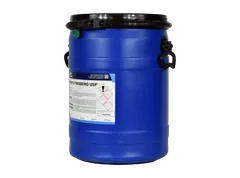
PROPYLPARABEN USP GRADE ANTIMICROBIAL PRESERVATIVE
View All Prices
| Quantity | Unit Price |
|---|---|
| kg | |
| 1 - 99 | USD 9.27 |
| 100 - 199 | USD 9.19 |
| 200 - 499 | USD 9.06 |
| 500 - 999 | USD 8.93 |
| 1000 - 4999 | USD 8.80 |
| 5000 - 9999 | USD 8.67 |
| 10000 - 17999 | USD 8.55 |
| 18000+ | USD 8.44 |
Propylparaben USP description — High-Purity Propyl Ester of para-Hydroxybenzoic Acid
At Quimiconsult we offer Propylparaben USP, also known as propyl ester of para-hydroxybenzoic acid (4-hydroxybenzoic acid) or simply propylparaben (propilparabeno), a pharmaceutical grade antimicrobial preservative widely used worldwide in the cosmetic, pharmaceutical and food industries for its high bacteriostatic and fungistatic power, its excellent safety profile documented over more than 80 years of commercial use, and its chemical stability in formulations —aqueous, hydroalcoholic and oily— across wide pH and temperature ranges. It is a fine white, odorless, tasteless powder, with a certified assay of 98.0–102.0% purity per the USP monograph, residue on ignition of 0.1% maximum, heavy metals (as lead) less than or equal to 10 mg/kg, and a low acidity value (NMT 0.1 mL of 0.1 N NaOH required to change the indicator color), parameters that guarantee pharmacopeial quality suitable for critical applications in products for human consumption and application.
Propylparaben USP belongs to the paraben family (alkyl esters of para-hydroxybenzoic acid), a group of chemical preservatives found naturally in many plants, fruits and vegetables (blueberries, carrots, apples, mango, strawberries, vanilla and other plants), where they act as a natural defense mechanism against microorganisms. This natural occurrence has been the subject of scientific research since 1924 and supports propylparaben's long documented safety record in regulated pharmaceutical, cosmetic and food applications. Its CAS number is 94-13-3, molecular formula C₁₀H₁₂O₃, molecular weight 180.20 g/mol, melting point 96-98 °C, and it is recognized internationally under the monographs of the USP (United States Pharmacopeia), BP (British Pharmacopoeia), EP (European Pharmacopoeia), JP (Japanese Pharmacopoeia) and food additive code E-216 under European Union regulation (its food use is currently restricted in some markets, while its cosmetic and pharmaceutical use remains authorized at regulated concentrations).
Propylparaben is characterized by its broad-spectrum biocidal action covering Gram-positive bacteria, filamentous fungi and yeasts, and is particularly effective against the most common microorganisms that contaminate cosmetic and pharmaceutical formulations (Staphylococcus aureus, Candida albicans, Aspergillus niger, Penicillium spp.). Its mechanism of action is based on the disruption of microbial cell membranes and the inhibition of nutrient transport and energy production within cells, which stops microbial growth without the need for high concentrations. A distinctive feature of propylparaben compared with other preservatives is its greater lipophilicity compared with methylparaben and ethylparaben (intermediate alkyl chain length), which gives it greater affinity for the oil phases of cosmetic and pharmaceutical emulsions, where the microorganisms that contaminate them typically concentrate.
At Quimiconsult, located in San Nicolás de los Garza, Nuevo León, we distribute Propylparaben USP with nationwide coverage, professional formulation technical support, certificates of analysis per batch, and up-to-date technical data sheet (TDS) and safety data sheet (HDS/SDS), serving pharmaceutical laboratories, cosmetic formulators, food plants, personal care manufacturers, veterinary laboratories and product developers throughout Mexico.
The Paraben Family at Quimiconsult — Preservatives for Cosmetics, Pharmaceuticals and Food
Quimiconsult offers a complete paraben family covering all available options so that each formulator can select the optimal ester according to the required solubility, the formulation phase to be preserved, the desired antimicrobial activity profile and the regulations applicable to the final product. Each paraben has specific properties determined by the length of its alkyl chain, which defines its relative solubility in water vs. oil, its biocidal potency and its affinity for the different phases of a formulation:
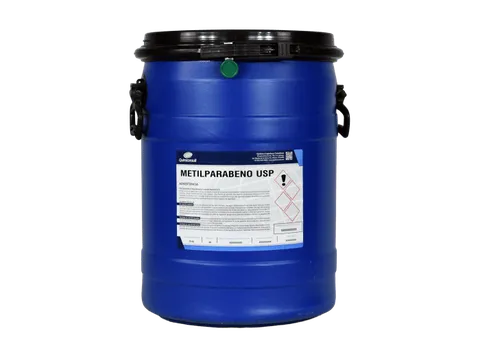
- Methylparaben USP (CAS 99-76-3): the most hydrophilic paraben in the family, with high water solubility and low oil solubility. Ideal as a water-phase preservative in cosmetics, pharmaceuticals and water-soluble formulations. It is the most commonly used paraben, often in combination with propylparaben for comprehensive protection. Typical concentrations: 0.1-0.3% in the final formulation.
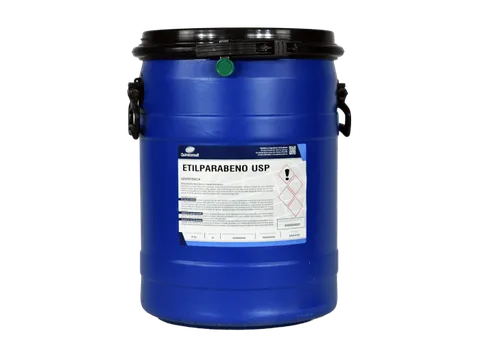
- Ethylparaben USP (CAS 120-47-8): a paraben intermediate between methylparaben and propylparaben. Moderate water solubility, intermediate biocidal potency. It is used in formulations that require a balance between water solubility and broader antimicrobial activity. Typical concentrations: 0.05-0.2% in the final formulation.
- Propylparaben USP (CAS 94-13-3) — the product described on this page: a paraben with greater lipophilicity than methylparaben and ethylparaben, and high affinity for the oil phase. Ideal as an oil-phase preservative in cosmetic emulsions, creams and lotions, and as a complement to methylparaben for dual preservation of the water and oil phases. Typical concentrations: 0.02-0.1% in the final formulation.
Selecting among these parabens —and especially the synergistic combination of several— is a standard strategy in cosmetic and pharmaceutical formulation. The classic combination is methylparaben + propylparaben (typically 0.18% + 0.02% in a 9:1 ratio), where methylparaben protects the water phase while propylparaben protects the oil phase, achieving comprehensive antimicrobial protection with low individual concentrations that take advantage of the synergistic effect of the blend. For creams, lotions, emulsions and complex formulations, this combination is practically an industry standard.
Technical Specifications and Physicochemical Properties of Propylparaben USP
The Propylparaben USP sold by Quimiconsult meets the rigorous specifications of the USP monograph (United States Pharmacopeia) and is compatible with BP, EP and JP, verified by a Certificate of Analysis (CoA) for each batch, ensuring consistent purity and antimicrobial performance in every delivery. The certified technical properties are:
Appearance: fine white powder. Color: white (no yellowish or gray tints). Odor and taste: practically odorless and tasteless. Solubility: very slightly soluble in water (~0.04% at 25 °C, ~0.2% at 80 °C), freely soluble in 95% ethanol and in methanol, also soluble in ether, acetone, propylene glycol, glycerin (when heated), fatty oils and many organic solvents. Acidity value: maximum 0.1 mL of 0.1 N NaOH required to turn the indicator blue (a USP parameter that confirms purity). Residue on ignition: maximum 0.1% (confirms the absence of ash and inorganic contaminants). Assay: 98.0 – 102.0% of the active ester. Heavy metals (as lead): ≤ 10 mg/kg. Melting point: 96-98 °C. Maximum theoretical solubility in water: a critical limitation for use in purely aqueous formulations, which is why prior dissolution in propylene glycol or ethanol, or moderate heating, is preferred.
The most relevant functional properties of propylparaben for use as a preservative include:
- Antimicrobial spectrum: very effective against filamentous fungi (Aspergillus niger, Penicillium spp., Cladosporium, Trichophyton), yeasts (Candida albicans, Saccharomyces, Rhodotorula), and Gram-positive bacteria (Staphylococcus aureus, Streptococcus, Bacillus, Micrococcus). Moderate activity against Gram-negative bacteria (E. coli, Pseudomonas), so in formulations that require broad protection against Gram-negatives it is complemented with other compatible preservatives.
- Minimum inhibitory concentration (MIC): typically 50-200 ppm against fungi, 200-500 ppm against Gram-positives, and >500 ppm against Gram-negatives depending on the specific microorganism.
- Stability over a wide pH range: optimal antimicrobial activity at pH 4-8, remaining effective up to pH 9. At very high alkaline pH (>10), hydrolysis of the ester can occur, gradually reducing activity.
- Thermal stability: stable up to typical processing temperatures (70-80 °C); it can be incorporated into the hot phases of emulsions without significant loss of activity.
- Compatibility with most cosmetic and pharmaceutical ingredients: compatible nonionic surfactants, vegetable and mineral oils, glycerin, propylene glycol, butylene glycol, alcohols, polymers (with verification), pigments, fragrances, vitamins.
- Non-volatile, non-flammable under normal conditions (its flash point is high due to its crystalline solid nature).
- Synergy with methylparaben and other preservatives: combining parabens with different alkyl chain lengths provides comprehensive protection in multiphase formulations, allowing lower individual concentrations with superior overall preservative efficacy.
In terms of stability and reactivity, propylparaben is stable under normal storage conditions in the original closed container, in a cool, dry place. It is incompatible with: strong bases at high temperature (which can hydrolyze the ester), strong oxidizing agents, nonionic surfactants at very high concentrations (which can partially sequester the paraben, reducing its availability as a preservative — a phenomenon known as "binding" or micellar sequestration, important to consider in formulations with high concentrations of polysorbates), proteins and polysaccharides in certain systems (where partial binding can occur), and certain plastic materials that can absorb small amounts during prolonged storage.
Synonyms, Chemical Names and Search Terms Related to Propylparaben
In the industrial cosmetic, pharmaceutical and food market, Propylparaben USP is known under multiple chemical names, trade names and regulatory nomenclatures depending on the region and application. The most widely used terms include propylparaben or propyl paraben (dominant in international technical literature), propilparabeno, propil parabeno (Spanish), propyl ester of para-hydroxybenzoic acid, propyl ester of 4-hydroxybenzoic acid, propyl PHB, propyl PHB ester, propyl 4-hydroxybenzoate, propyl p-hydroxybenzoate, n-propyl paraben (to distinguish it from branched isopropylparaben), propagin (historical trade name), nipasol (common trade name), paseptol, and in INCI (International Nomenclature of Cosmetic Ingredients) nomenclature as Propylparaben. In the food sector it appears as additive E-216 under European regulation (although its food use has been restricted in the EU since 2006).
Likewise, in purchasing, sourcing, formulation and product development it is common to find searches such as propylparaben price, buy propylparaben, propylparaben USP Mexico, propylparaben cosmetics, pharmaceutical propylparaben, paraben preservative, preservative for cream, cosmetic antimicrobial preservative, preservative for shampoo, paraben for emulsion, propylparaben dosage, propylparaben solubility, oil-phase preservative, methylparaben propylparaben blend, pharmaceutical grade preservative, propylparaben Nipasol equivalent, propylparaben supplier Mexico, propylparaben Monterrey, bulk propylparaben or propylparaben price per kilo. These variations are especially relevant for cosmetic formulators, pharmaceutical chemists, personal care product developers, food plant technicians, laboratory purchasing managers and other professionals who need to identify the specific ester for their formulations.
Antimicrobial Mechanism of Action of Propylparaben
Propylparaben exerts its bacteriostatic and fungistatic action (inhibition of microbial growth, in contrast to bactericidal or fungicidal action that directly kills the microorganism) through a multifaceted mechanism that affects several cellular functions simultaneously:
Penetration by passive diffusion: thanks to its intermediate lipophilic nature, propylparaben diffuses passively across microbial cell membranes without requiring active transport, quickly reaching the microbial cytoplasm. Longer alkyl chains (propyl vs. methyl) facilitate this penetration in Gram-positive bacteria, fungi and yeasts.
Disruption of cytoplasmic membranes: once incorporated into the membrane, propylparaben alters the selective permeability of the microbial membrane, causing leakage of potassium and magnesium ions, amino acids and other intracellular components essential for microbial metabolism and reproduction.
Inhibition of membrane transport: it blocks specific transport systems in the membrane, preventing the uptake of nutrients (sugars, amino acids, ions) needed for growth and reproduction.
Inhibition of membrane enzymes: it interferes with membrane-associated enzymes involved in energy production (ATPases) and in the synthesis of cellular components.
Alteration of the proton gradient: it affects the transmembrane electrochemical gradient that microbial cells use for energy production, compromising metabolic viability.
This combined mechanism results in inhibition of microbial growth and reproduction at low concentrations, making it possible to preserve formulations throughout their shelf life without requiring toxic concentrations. The activity spectrum of propylparaben is complementary to that of methylparaben (which penetrates the water phase better), which is why the combination of both parabens provides comprehensive protection in multiphase formulations.
Industrial Applications of Propylparaben USP
Propylparaben USP is one of the most versatile antimicrobial preservatives, with applications spanning multiple industrial sectors that require microbiological protection throughout a product's shelf life. Below we detail the main fields of application.
Cosmetics and Personal Care Industry
This is one of the main applications of propylparaben worldwide. In cosmetics and personal care products, propylparaben works as an oil-phase antimicrobial preservative in a wide range of products:
- Facial and body moisturizing creams: antifungal and antibacterial protection over an extended shelf life (typically 12-36 months).
- Body and facial lotions: preservative in O/W (oil-in-water) and W/O (water-in-oil) emulsions.
- Hair products: shampoos, conditioners, hair masks, leave-in treatments, styling products.
- Face masks: in cream format as well as peel-off masks, impregnated sheet masks and exfoliants.
- Liquid and cream makeup: foundations, concealers, cream eyeshadows, lipsticks, mascaras, eyeliners.
- Shaving products: pre- and post-shave creams, gels and balms.
- Deodorants and antiperspirants: especially in cream and roll-on formulations.
- Bath products: gels, foams and bath salts formulated in oily systems.
- Baby products: lotions, creams and oils (in formulations specifically designed for this category, with concentrations controlled according to regulation).
- Treatment cosmetics: serums, eye contour products, anti-aging creams, depigmenting products.
Typical concentrations are 0.02% to 0.1% in the final formulation, generally combined with methylparaben (typically in a 9:1 methylparaben:propylparaben ratio) for comprehensive protection of both phases of the emulsion.
Pharmaceutical Industry
In the pharmaceutical industry, propylparaben USP is one of the most widely used preservative excipients in liquid and semisolid formulations:
- Syrups and oral solutions: especially pediatric syrups that require preservation throughout their shelf life without altering taste.
- Pharmaceutical suspensions: both aqueous and oily suspensions, where it protects against post-opening contamination.
- Creams, ointments and salves: standard preservative in oily bases and pharmaceutical emulsions for topical use.
- Pharmaceutical gels: hydrogels, oleogels and emulgels.
- Ophthalmic and otic solutions: at specific regulated concentrations and with suitable buffer systems.
- Nasal solutions and sprays: for preserving nasal formulations in multidose bottles.
- Vaccines and biologics: in some specific cases (increasingly uncommon due to a preference for other preservatives).
- Excipients for compounded preparations: in compounding pharmacies and galenic preparation.
Typical concentrations in pharmaceuticals are 0.02% to 0.2% depending on the dosage form and the phase to be protected.
Veterinary Products Industry
In veterinary medicines and products (oral suspensions for pets, topical veterinary products, antiparasitic shampoos, animal care products), propylparaben is used for purposes similar to those in human pharmaceuticals: antimicrobial preservation of liquid and semisolid formulations. Typical concentrations: 0.02-0.2%.
Food Industry (Specific Applications Subject to Regulation)
Propylparaben (E-216) has food applications in some markets (not in the European Union, where it was removed from the list of food additives in 2006, nor in other markets that follow that regulation). In markets where it is still permitted under specific regulations, it is used as a preservative in:
- Jams and fruit preserves: antifungal protection for sugary products.
- Sauces and dressings: especially oil-based products where its lipophilicity is an advantage.
- Non-carbonated and functional beverages: at controlled concentrations.
- Specific dairy products: in specific applications according to local regulations.
- Industrial bakery and pastry products: to extend shelf life.
Important: the food use of propylparaben is subject to country-specific regulations that may have changed in recent years. We recommend that our customers verify the specific regulations in force (COFEPRIS in Mexico, FDA in the U.S., EFSA in Europe, local health authorities in other markets) before incorporating propylparaben into food formulations intended for sale.
Cleaning and Maintenance Products Industry
In household and industrial cleaning products with a long shelf life, propylparaben is used to preserve aqueous and emulsified formulations against microbial contamination during storage and use. Applications include concentrated liquid detergents, all-purpose cleaners, surface care products, household maintenance products and automotive care products.
Raw Materials Industry and Specialized Applications
Other applications of propylparaben USP include its use as a preservative in raw materials and derivatives (plant extracts, hydrosols, natural gums, liquid gelatins, polymer solutions), in water-based adhesives that require microbiological preservation during storage, in polymer emulsions and latex for the paints and coatings industry, and in laboratory bioformulations for preserving cell cultures, culture media and biological reagents at specific concentrations.
Features and Competitive Advantages of Propylparaben USP
The widespread preference for propylparaben over other antimicrobial preservatives rests on a combination of technical, regulatory and economic properties that have positioned it as one of the industry's standard preservatives for decades:
- Broad antimicrobial spectrum, especially effective against fungi, yeasts and Gram-positive bacteria.
- Natural origin documented in plants, fruits and vegetables, which supports its safety profile and allows a certain "natural" marketing narrative (although the commercial grade is chemically synthesized).
- Long history of safe use documented over more than 80 years in cosmetics, pharmaceuticals and food.
- High lipophilicity, which makes it especially effective as an oil-phase preservative in emulsions.
- Synergy with other parabens (especially methylparaben), allowing effective preservative systems to be formulated at low concentrations.
- Chemical stability over a wide pH range (4-8) and moderate temperatures (up to 70-80 °C).
- Broad compatibility with most cosmetic and pharmaceutical ingredients.
- No detectable odor or taste at use concentrations; it does not affect the organoleptic properties of the final product.
- Non-volatile; it is not lost during processing or storage.
- Does not stain or alter the product's color.
- Guaranteed pharmacopeial quality: meets USP, BP, EP and JP monographs for pharmaceutical applications.
- Global availability and broad regulatory backing (FDA, COFEPRIS, international cosmetic and pharmaceutical authorities).
- High cost-effectiveness: required at low concentrations (0.02-0.1%), which makes the cost per kilo of formulated product very competitive.
- Compatible with INCI labeling and accepted under most cosmetic regulations worldwide.
International Regulatory Trends for Parabens — Important Information
In the interest of technical transparency, it is important to mention that parabens have been the subject of regulatory and scientific discussion in recent years due to studies investigating possible effects as weak endocrine disruptors. The current regulatory reality is nuanced:
Methylparaben and Ethylparaben: remain accepted without special restrictions under most international regulations (FDA, EFSA, COFEPRIS, JP) for cosmetic and pharmaceutical use at traditional concentrations.
Propylparaben: permitted in cosmetics and pharmaceuticals with a maximum permitted concentration of 0.14% individually or 0.8% for the sum of propyl + butylparaben under European regulation (Regulation EC 1223/2009). In Mexico (COFEPRIS) and other Latin American markets, it remains permitted in cosmetics and pharmaceuticals under standard regulation without additional specific restrictions. Its food use was removed from the European list in 2006 (E-216), although it remains permitted in other markets under local regulations.
Recommendation: for cosmetic or pharmaceutical formulations intended for export to the European Union or markets with similar regulations, verify the maximum permitted concentrations under the specific regulations in force. For formulations for the Mexican and Latin American markets, propylparaben remains a standard permitted preservative at traditional concentrations. For customers who prefer paraben alternatives as part of a "paraben-free" marketing strategy, we offer advice on alternative preservatives such as phenoxyethanol, isothiazolinones (with regulatory verification), sodium benzoate, potassium sorbate and other modern preservative systems.
Propylparaben vs. Other Parabens: Which One to Choose?
The choice among the different parabens depends on the phase to be protected in the formulation, the required antimicrobial spectrum and the necessary solubility. Here is a technical selection guide:
Choose Methylparaben when: the formulation is mainly aqueous (aqueous lotions, solutions, hydrophilic gels), preservation of the water phase of emulsions is required, you are looking for the most economical and most widely available paraben, or you are developing formulations where maximum water solubility is critical.
Choose Ethylparaben when: you need an intermediate balance between water solubility and potency, you are developing a complex preservative blend that requires a paraben with intermediate properties, or you are complementing methylparaben + propylparaben with a third paraben for reinforced protection.
Choose Propylparaben (the product described here) when: the formulation is an emulsion with a significant oil phase (creams, lotions, ointments, creamy cosmetic products), specific preservation of the oil phase is required, you are looking for synergy with methylparaben in the classic 9:1 methylparaben:propylparaben combination, or you need a more potent paraben than methylparaben but with a less restrictive regulatory profile than butylparaben.
Choose Butylparaben when: you need the maximum biocidal potency among the traditional linear parabens, the formulation is predominantly oily and is not exported to markets with specific restrictions, or you want to use the lowest possible concentration of preservative.
Recommended classic combination for cosmetic formulations: 0.18% methylparaben + 0.02% propylparaben (9:1 ratio), which provides comprehensive protection of the water and oil phases with low individual concentrations and takes advantage of the synergistic effect. This is the standard combination used in thousands of cosmetic products worldwide.
For paraben-free alternatives: if the marketing strategy or specific regulations require avoiding parabens, the most common options are phenoxyethanol (similar spectrum, widely accepted), isothiazolinones (methylisothiazolinone, MIT/CMIT at regulated concentrations), benzyl alcohol, sodium benzoate + potassium sorbate (for acidic pH), ethylhexylglycerin (preservative booster), or modern multi-preservative systems.
Recommendations for Use, Dosage and Incorporation of Propylparaben
To obtain maximum preservative efficacy with propylparaben in formulations, we recommend following a proper incorporation protocol that ensures complete dissolution and uniform distribution:
Prior dissolution: because of propylparaben's very low water solubility (~0.04% at 25 °C), it is essential to dissolve it beforehand before incorporating it into the main formulation. The dissolution options are:
- In the hot oil phase (60-75 °C): the preferred option for emulsions. Propylparaben dissolves quickly in vegetable oils, mineral oils and cosmetic esters (caprylic/capric triglyceride, isopropyl myristate, etc.) at moderate temperature. Once dissolved, the oil phase is incorporated into the water phase to form the emulsion.
- In hot propylene glycol or butylene glycol: propylparaben is freely soluble in cosmetic glycols, allowing a concentrated preservative "premix" (typically 1-5% paraben in glycol) to be prepared and incorporated into the formulation. This technique is widely used when the formulation has no significant oil phase.
- In ethanol or methanol: propylparaben dissolves easily in alcohols, a useful option for hydroalcoholic formulations (toners, perfumes, alcohol-based leave-on products).
- In hot water: requires water at 70-80 °C and prolonged stirring; it is not the most efficient option but is viable for purely aqueous formulations if glycols are not available. Check that it does not precipitate on cooling.
Typical concentrations in the final formulation:
- Cosmetic creams and lotions: 0.02-0.1% (typically 0.02% in combination with 0.18% methylparaben).
- Shampoos and body washes: 0.05-0.15% (typically combined with methylparaben).
- Masks and creamy products: 0.05-0.1%.
- Liquid and cream makeup: 0.05-0.1%.
- Topical pharmaceutical products: 0.02-0.2% according to the specific monograph.
- Pharmaceutical syrups and suspensions: 0.02-0.2% in combination with methylparaben.
- Baby products: 0.02-0.05% (conservative low concentrations).
- Food products (where regulations apply): according to the specific legislation of the country.
Point of incorporation: incorporate propylparaben at the end of the formulation once the temperature has dropped to 40-50 °C or, if dissolved in the hot oil phase, during the emulsification process at process temperature (70-75 °C). Avoid prolonged exposure to temperatures above 80 °C.
Verifying preservative efficacy: once the product has been formulated, we recommend performing a preservative efficacy test (Challenge Test, USP 51, EP 5.1.3) to verify that the preservative system works properly in the specific formulation. This test is mandatory in pharmaceuticals and highly recommended in cosmetics.
Compatibility and Incompatibilities of Propylparaben
Propylparaben is compatible with: most cosmetic and pharmaceutical surfactants (taking micellar binding into account at high concentrations of nonionics), vegetable oils (olive, almond, jojoba, argan, avocado, coconut), mineral oils and silicones, cosmetic esters, glycerin, propylene glycol, butylene glycol, sorbitol, compatible cosmetic polymers (carbomers, modified celluloses under suitable conditions), mineral and organic pigments, fragrances, vitamins (with specific verification), and complementary preservatives (methylparaben, ethylparaben, butylparaben, phenoxyethanol, benzyl alcohol, ethylhexylglycerin).
It is incompatible with, or requires special precautions with: strong bases at high temperature (concentrated NaOH, KOH at elevated temperatures), which can hydrolyze the ester and gradually reduce activity; strong oxidizing agents (concentrated hydrogen peroxide, hypochlorites, peracetic acid); nonionic surfactants at very high concentrations (polysorbate 20, 60, 80 at concentrations >2-5%), which can partially sequester the paraben in micelles, reducing the free concentration available for preservation; proteins at high concentration (casein, gelatin, soy protein), which can bind the paraben; specific starches and polysaccharides with moderate binding; and some plastic packaging materials that can absorb small amounts of paraben during prolonged storage (LDPE may be more susceptible than HDPE or PET).
Practical implication of micellar binding: in formulations with high concentrations of nonionic surfactants (such as creams with 3-5% polysorbates), part of the propylparaben may be "sequestered" in the micelles, reducing the effective antimicrobial concentration. In these cases, it is recommended to slightly increase the total paraben concentration or complement with a second preservative (phenoxyethanol, ethylhexylglycerin) to ensure comprehensive protection.
Storage, Presentations and Shelf Life of Propylparaben USP
Propylparaben USP is offered in presentations suited to different scales of industrial consumption, including 25 kg bags, drums and bulk bags for industrial production, with smaller presentations available for development, formulation and testing. To ensure the integrity and performance of the product, it is recommended to store it in its original tightly closed container, in a cool, dry, well-ventilated place with controlled temperature (ideally 15-25 °C), away from heat sources, moisture, direct sunlight and incompatible materials. The product is moderately hygroscopic: once opened, the container must be tightly resealed to prevent moisture absorption that could cause the powder to cake. The product's shelf life under these conditions is approximately 36 to 60 months from the date of manufacture, one of the longest shelf lives in the chemical preservatives category.
Safety, Handling and Regulatory Considerations
Propylparaben USP is a substance with a very low toxicological profile documented over more than 80 years of safe commercial use. Typical GHS safety classifications indicate minimal hazards (mild eye and skin irritation from direct contact with the powder, respiratory irritation from inhaling dust at high concentrations). The recommended personal protective equipment (PPE) during industrial handling includes safety glasses to avoid eye contact with dust, general-purpose gloves to avoid prolonged skin contact, an N95 dust mask when handling large quantities in operations that generate airborne dust, and working in areas with adequate ventilation.
From a regulatory standpoint:
- FDA: GRAS (Generally Recognized as Safe) at specific concentrations for pharmaceuticals and cosmetics.
- COFEPRIS (Mexico): permitted as a pharmaceutical excipient and cosmetic preservative according to applicable regulations.
- EFSA / Regulation EC 1223/2009 (European Union): permitted in cosmetics with a maximum individual concentration of 0.14% or 0.8% for the sum of propyl + butylparaben. Food use removed in 2006.
- USP, BP, EP, JP: official monographs as a pharmaceutical excipient.
- CIR (Cosmetic Ingredient Review): has assessed propylparaben as safe for use in cosmetics at traditional concentrations.
For empty containers and waste: dispose of according to current legislation. It is not hazardous waste under most regulations at typical use quantities.
Certifications and Regulatory Compliance
The Propylparaben USP we distribute complies with the official monographs of the USP (United States Pharmacopeia) and is compatible with the BP (British Pharmacopoeia), EP (European Pharmacopoeia) and JP (Japanese Pharmacopoeia), ensuring suitability for pharmaceutical, cosmetic and food applications under specific regulations. Every batch comes with a Certificate of Analysis (CoA) documenting the critical parameters: appearance, color, solubility, acidity value, residue on ignition, assay (% purity) and heavy metals. Where applicable, complementary certifications are offered, such as Kosher, Halal, Non-GMO, a TSE/BSE statement (free of animal origin), and regulatory support for inclusion in pharmaceutical and cosmetic dossiers.
Formulators, regulatory departments, development chemists and quality assurance departments can request complementary technical documentation such as the technical data sheet (TDS), safety data sheet (SDS/HDS), specific statements, analytical methods and technical support for their operational files, health registrations and cosmetic notifications.
Frequently Asked Questions about Propylparaben USP
What is propylparaben and what is it used for?
Propylparaben is the propyl ester of para-hydroxybenzoic acid, a member of the paraben family, antimicrobial preservatives widely used in cosmetics, pharmaceuticals and (in some markets) food. It works as a bacteriostatic and fungistatic agent, especially effective against fungi, yeasts and Gram-positive bacteria. It is used to preserve products against microbial contamination throughout their shelf life, especially in creams, lotions, shampoos, pharmaceutical syrups, suspensions, veterinary products and cosmetic and pharmaceutical formulations in general. It has been one of the most widely used preservatives worldwide for more than 80 years.
What is the difference between methylparaben, ethylparaben, propylparaben and butylparaben?
The difference is the length of the ester's alkyl chain, which determines its solubility and biocidal potency. Methylparaben (methyl chain) is the most hydrophilic, ideal for the water phase. Ethylparaben (ethyl chain) is intermediate. Propylparaben (propyl chain) is more lipophilic, ideal for the oil phase of emulsions. Butylparaben (butyl chain) is the most lipophilic and potent, effective at lower concentrations. The classic methylparaben + propylparaben combination (9:1 ratio) protects both phases of an emulsion simultaneously with low individual concentrations and synergy between the two.
At what concentration is propylparaben used in cosmetics?
The typical concentration of propylparaben in cosmetics is 0.02% to 0.1% in the final formulation, generally combined with methylparaben (typically 0.02% propylparaben + 0.18% methylparaben in a 9:1 ratio) for comprehensive protection. Under European regulation (Regulation EC 1223/2009) the maximum permitted individual concentration is 0.14%, or 0.8% for the sum of propylparaben + butylparaben. In Mexico and Latin American markets it remains permitted at traditional concentrations under standard cosmetic regulation.
How do you dissolve propylparaben if it is so poorly soluble in water?
Because of its low water solubility (~0.04% at 25 °C), propylparaben must be dissolved beforehand before being incorporated into aqueous formulations. The recommended options are: dissolution in the hot oil phase (60-75 °C) for emulsions, dissolution in hot propylene glycol or butylene glycol (the preferred technique when there is no oil phase, preparing a 1-5% "premix" of paraben in glycol), dissolution in ethanol for hydroalcoholic formulations, or dissolution in hot water (70-80 °C) with prolonged stirring (the least efficient option). In emulsions, the most common practice is to dissolve it directly in the oil phase during the heating process.
Are parabens safe? What do science and regulation say?
Parabens have a history of safe use documented over more than 80 years in cosmetic, pharmaceutical and (previously) food products. International regulatory authorities (FDA, COFEPRIS, EFSA, CIR Cosmetic Ingredient Review) have repeatedly evaluated the safety of parabens. Methylparaben and ethylparaben remain accepted without special restrictions. Propylparaben and butylparaben are permitted in cosmetics with regulated maximum concentrations in some markets (especially the European Union since 2014). Their food use was removed in the EU in 2006. The public controversy over parabens is based on studies of weak estrogenic activity; however, typical exposure concentrations from cosmetic products are far below the levels associated with significant biological effects according to regulatory assessments. For customers who prefer "paraben-free" formulations as a marketing strategy, we offer alternatives such as phenoxyethanol, isothiazolinones and other modern preservative systems.
Why are methylparaben and propylparaben combined in cosmetics?
Because each paraben has a specific affinity for one phase of the emulsion: methylparaben is hydrophilic and protects the water phase, while propylparaben is lipophilic and protects the oil phase. Since cosmetic emulsions (creams, lotions, masks) have both phases coexisting, protecting a single phase is not enough, as microorganisms can contaminate the unprotected phase. Combining both parabens (typical 9:1 methyl:propyl ratio) provides comprehensive antimicrobial protection of the entire formulation with low individual concentrations and takes advantage of the synergistic effect between them. This is the standard combination in thousands of cosmetic products worldwide.
Can propylparaben be used in baby products?
Yes, under specific regulations and at controlled concentrations, propylparaben is used in some baby products (creams, lotions, baby bath products). Under European regulation (Regulation EC 1223/2009), propylparaben is NOT permitted in leave-on cosmetic products intended for application to the diaper area of children under 3 years of age (this includes diaper rash creams, talcs and powders). In other markets such as Mexico, the United States and Latin America, it remains permitted in children's products under general cosmetic regulation. For formulations specifically intended for babies or young children, we recommend verifying the specific regulations of the destination market and considering alternatives such as phenoxyethanol-based preservative systems or multi-preservative systems specifically designed for children's products.
Can propylparaben be used in food products?
It depends on the specific regulations of the country. In the European Union, propylparaben has NOT been permitted as a food additive since 2006 (it was removed from the list of food additives as E-216). In Mexico (COFEPRIS) and other Latin American markets, its food use remains governed by specific regulations that should be verified with the corresponding health authority. In the United States (FDA), it is classified as GRAS under certain use restrictions. For food applications, we recommend verifying the regulations in force in the market where the final product will be sold before incorporating propylparaben. Most cosmetic and pharmaceutical applications are not subject to this restriction.
What is the difference between propylparaben USP and technical grade propylparaben?
Propylparaben USP meets the rigorous specifications of the USP monograph (United States Pharmacopeia): purity 98.0-102.0%, residue on ignition 0.1% maximum, heavy metals ≤10 mg/kg, controlled acidity value, absence of specific impurities. It is suitable for pharmaceutical, cosmetic and food use in markets that accept the USP standard. Technical grade propylparaben may have lower purity (95-98%) and a higher impurity content (residues, heavy metals), and is NOT certified for regulatory-demanding pharmaceutical or cosmetic applications. At Quimiconsult we distribute only Propylparaben USP to ensure suitability for professional pharmaceutical and cosmetic applications.
How do I verify that propylparaben works as a preservative in my formulation?
Through a Preservative Efficacy Test (PET, Challenge Test) according to the official monographs USP chapter <51> or EP 5.1.3. This test consists of inoculating the formulated product with specific microbial strains (Staphylococcus aureus, Pseudomonas aeruginosa, Escherichia coli, Candida albicans, Aspergillus niger) and monitoring the reduction in microbial load over 28 days. The preservative system (propylparaben + methylparaben or others) is effective if it achieves the specified minimum microbial reduction within the established times. This test is mandatory in pharmaceuticals and highly recommended in cosmetics, especially before launching new products. We recommend having it performed by accredited microbiology laboratories.
How long does propylparaben USP last in storage?
In its original tightly closed container, stored under proper conditions (cool, dry, well-ventilated place, temperature 15-25 °C, away from sunlight and moisture), Propylparaben USP has a shelf life of approximately 36 to 60 months from the date of manufacture, one of the longest shelf lives in the preservatives category. Once the container is opened, it must be kept tightly closed between uses to prevent moisture absorption (it is moderately hygroscopic) and contamination. Check general characteristics (appearance, color, absence of caking) before using batches that have been stored for a long time.
Where to buy Propylparaben USP in Mexico and at what price?
At Quimiconsult we distribute Propylparaben USP with immediate availability from our warehouse in San Nicolás de los Garza, Nuevo León, serving customers throughout Mexico. We offer presentations from laboratory samples to 25 kg bags for industrial production, with complete technical documentation (USP CoA, TDS, SDS) and formulation technical support. We also distribute Methylparaben USP and other parabens in the family for formulators who need the complete line. The price of propylparaben USP depends on volume, presentation and end application. Request a personalized quote stating the estimated volume, application sector and required specifications through our website or by phone at +52 (81) 8105 0063.
Request Your Quote for Propylparaben USP or the Paraben Line
Does your cosmetic laboratory, pharmaceutical plant, personal care manufacturer, veterinary product formulator, food plant or any industry that requires a top-quality pharmaceutical grade antimicrobial preservative need to incorporate Propylparaben USP into its formulations? We also offer Methylparaben USP and other parabens in the family so you can implement the classic methylparaben + propylparaben combination that is standard in cosmetics and pharmaceuticals worldwide. Contact us and we will gladly analyze your specific application, recommend the optimal combination of preservatives for your formulation, provide regulatory advice for your destination market, and offer you a comprehensive solution that includes complete technical documentation, certifications (USP, Kosher, Halal, Non-GMO as required), formulation and incorporation advice, and timely delivery anywhere in Mexico.
Related Products and the Paraben Family
Discover our complete family of parabens and antimicrobial preservatives for cosmetic, pharmaceutical and personal care formulations:
Methylparaben USP — hydrophilic paraben for water-phase preservation (classic combination with propylparaben)
Ethylparaben USP — intermediate paraben for specific formulations
Potassium Sorbate — preservative for acidic systems (formulations with pH < 6)
Sodium Benzoate — preservative for acidic systems, complementary to sorbate
Glycerin USP — humectant and solubilizer for parabens
Propylene Glycol USP — preferred solvent for paraben premixes
Category: Preservatives and Antimicrobials
Category: Paraben Family
Category: Pharmaceutical Excipients
Category: Cosmetic Raw Materials