Spanish
 English


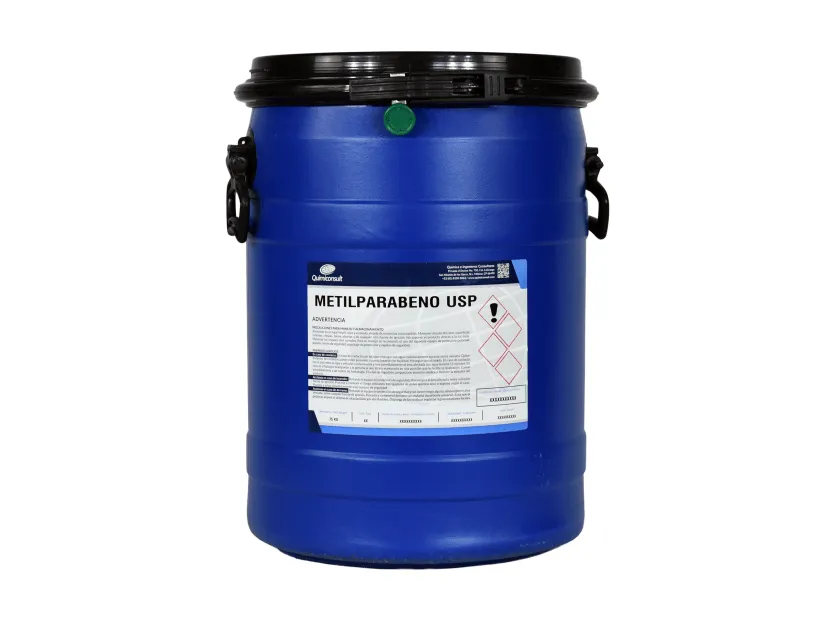
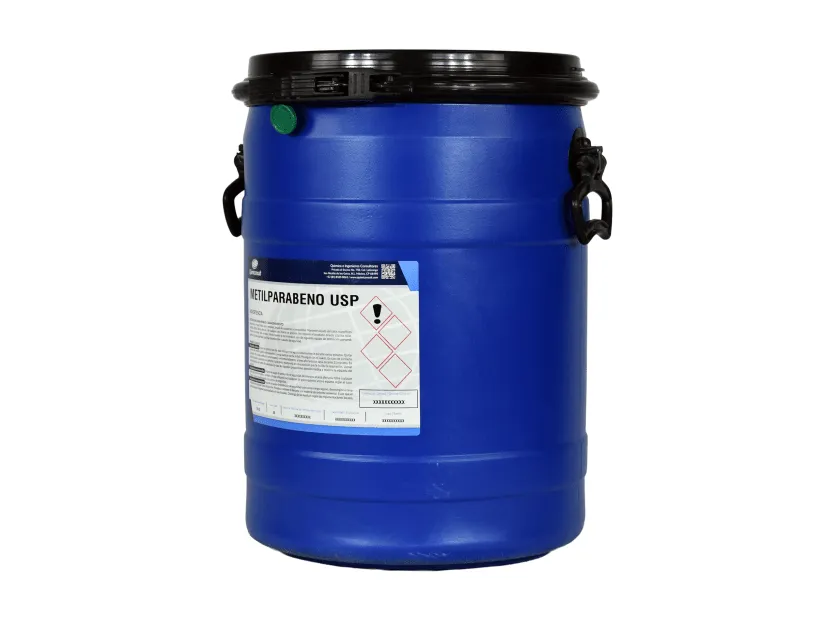
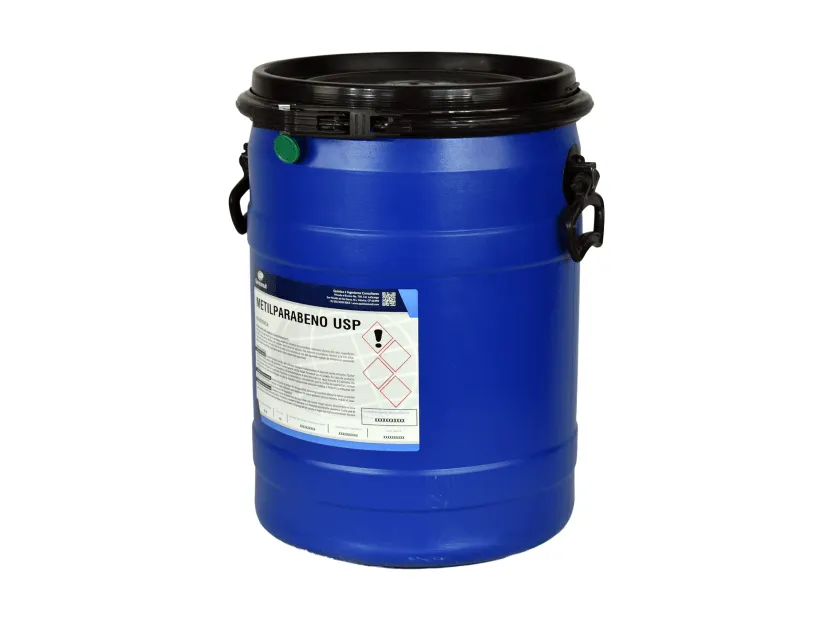
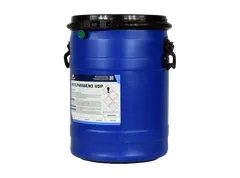
METHYLPARABEN USP GRADE ANTIMICROBIAL PRESERVATIVE
View All Prices
| Quantity | Unit Price |
|---|---|
| kg | |
| 1 - 99 | USD 8.28 |
| 100 - 199 | USD 8.22 |
| 200 - 499 | USD 8.10 |
| 500 - 999 | USD 7.98 |
| 1000 - 4999 | USD 7.86 |
| 5000 - 9999 | USD 7.75 |
| 10000 - 17999 | USD 7.65 |
| 18000+ | USD 7.54 |
Methylparaben, a preservative and antimicrobial agent
The USP-grade methylparaben offered by Quimiconsult is a broad-spectrum antimicrobial preservative designed for cosmetic, pharmaceutical and food applications that demand high purity, stability and safety in the microbiological protection of formulations. It comes as a fine white powder with an assay of 98.0–102.0 %, ensuring consistency in production processes and compliance with the standards of the United States Pharmacopeia. Its bacteriostatic and fungicidal action is especially effective against gram-positive bacteria, molds and yeasts, helping to maintain microbiological stability and extend the shelf life of water-based products and systems susceptible to contamination.
From a physicochemical standpoint, methylparaben is very slightly soluble in water and freely soluble in 96 % ethanol and methanol, which makes it easy to incorporate into hydroalcoholic solutions, perfumes, mouthwashes and liquid cosmetic formulations. Its purity profile, together with a heavy-metals content below 10 mg/kg, makes it suitable for applications that require a reliable, pharmaceutical-grade preservative.
Also known as E218 in the food industry, methylparaben is widely used as a preserving agent in personal care products, topical medications and processed formulations, where it inhibits the growth of microorganisms and protects the physicochemical properties of the product during storage and use.
At Quimiconsult we have stock available in Monterrey, Nuevo León, with shipping throughout Mexico, ensuring immediate supply for the cosmetic, pharmaceutical and food industries.
USP-grade methylparaben details
The USP-grade methylparaben we sell at Quimiconsult comes as a high-purity fine white powder with an assay of 98.0–102.0 %, ensuring consistency in formulation processes and compliance with the quality standards of the United States Pharmacopeia. Identified by CAS number 99-76-3, it belongs to the paraben family, preservatives widely recognized for their high antimicrobial efficacy at low concentrations and their excellent cost-benefit ratio in cosmetic, pharmaceutical and food applications.
In terms of solubility, it is very slightly soluble in water and freely soluble in 96 % ethanol and methanol, which makes it easy to incorporate into hydroalcoholic systems, emulsions and liquid solutions where an even distribution of the preservative is required. Its purity profile keeps the heavy-metals content below 10 mg/kg, meeting the requirements of pharmaceutical- and cosmetic-grade applications that demand impurity control and raw-material traceability. It is available in 1 kg packs and 25 kg bags in hermetically sealed containers, designed to protect the product from moisture and preserve its stability during storage and transport, ensuring reproducible performance in industrial processes.
Properties of methylparaben
Beyond its role as a broad-spectrum antimicrobial preservative, USP-grade methylparaben stands out for its well-documented safety profile and high compatibility with different formulation systems, making it one of the most widely used preservatives in the cosmetic, pharmaceutical and food industries. When incorporated into aqueous formulations within the recommended concentrations, it behaves practically neutrally, without altering the color, odor or appearance of the finished product — an essential trait in developments where sensory stability is critical. Its low volatility and high thermal stability allow it to undergo manufacturing processes with moderate heating without degrading or losing efficacy, ensuring consistent microbiological protection throughout the product's shelf life.
Its antimicrobial mechanism of action is based on inhibiting the enzymatic activity of susceptible microorganisms, preventing their growth and reproduction in emulsions, solutions and water-based systems. This efficiency at low concentrations makes it especially attractive to formulators looking to optimize costs without compromising microbiological safety. From a regulatory standpoint, methylparaben has been evaluated by international bodies and health authorities, which have confirmed its safety for use in cosmetic and pharmaceutical products and in certain food applications within established limits, allowing it to be used as a reliable and widely accepted preservative worldwide.
Applications and uses of methylparaben
USP-grade methylparaben is one of the most widely used preservatives in formulations that require effective microbiological protection and long-term stability, especially in water-based systems and emulsions. In the cosmetic and personal care industry it is incorporated into creams, lotions, gels, ointments, make-up, hair products and personal hygiene solutions, where its bacteriostatic and fungicidal action prevents contamination during storage and use, preserving the physicochemical, sensory and functional properties of the finished product. In the pharmaceutical sector it is used in syrups, suspensions, oral solutions, ointments and topical preparations, where it acts as a preserving agent to maintain microbiological stability and ensure the safety of the medicine throughout its shelf life.
In the food industry, where it is identified as E218, it is used in certain applications as a preservative to inhibit the growth of molds and bacteria in processed products, helping to extend their shelf life without affecting their organoleptic characteristics. Thanks to its high solubility in ethanol and other alcoholic solvents, it blends easily into perfumes, fragrances, mouthwashes and hydroalcoholic solutions, allowing an even distribution of the preservative throughout the system. Its efficacy at low concentrations and its compatibility with a wide variety of raw materials make it a versatile solution for formulators seeking to optimize performance, cost and microbiological safety. For the development of more complete preservation systems, at Quimiconsult.
To discover other complementary solutions, explore our categories of biocides, personal care and cosmetics, pharmaceuticals and wellness and preservatives, where you will find related ingredients for safe and stable formulations.
Storage and handling of methylparaben
To preserve the purity, stability and antimicrobial efficacy of USP-grade methylparaben, keep the product in its original, hermetically sealed container, protected from light and stored in a cool, dry, well-ventilated place, avoiding direct exposure to heat sources and strong oxidizing agents that could affect its integrity. Because it is slightly hygroscopic, it is important to minimize prolonged contact with air to prevent moisture absorption and ensure consistent performance in formulation processes.
When handling it, the use of personal protective equipment such as gloves and a dust mask is recommended to avoid inhaling fine particles and direct skin contact, especially during dosing and mixing operations. Under these storage and handling conditions, methylparaben retains its physicochemical properties and its function as a preservative for a minimum of twelve months, ensuring reproducibility, traceability and reliability in cosmetic, pharmaceutical and food applications.
Other names, synonyms and designations of methylparaben
Methylparaben is widely identified across the chemical, cosmetic, pharmaceutical and food industries by various technical, commercial and regulatory names that make it easy to recognize in technical data sheets, safety data sheets, ingredient lists and raw-material approval processes. Its chemical name is methyl p-hydroxybenzoate (metil p-hidroxibenzoato), which describes its structure as the methyl ester of p-hydroxybenzoic acid, and it is associated with CAS number 99-76-3, a key reference for quality control, traceability and regulatory compliance in supply chains.
Internationally it is sold as methylparaben, part of the parabens family, preservatives widely used for their antimicrobial efficacy at low concentrations and their stability in formulation systems.
When greater solubility in aqueous media is required, especially in pharmaceutical and ophthalmic solutions and water-based systems, its salt form known as sodium methylparaben (metilparabeno sódico) is used, offering faster and more even dispersion in the final product without altering its function as a preservative. In the food industry it is identified as E218, a code confirming its authorized use as a preservative additive within the limits set by health authorities. In technical documentation and purchasing processes it may also appear as USP-grade methylparaben, methylparaben USP, pharmaceutical-grade methylparaben, cosmetic-grade methylparaben, paraben preservative, antimicrobial preservative for cosmetics or preservative for water-based formulations, terms that specify the product's purity, regulatory standard and application.
In formulation work it is common to find references to paraben preservative systems, methylparaben-propylparaben blends or paraben blend, synergistic combinations that broaden the antimicrobial spectrum against bacteria and fungi and allow individual concentrations to be reduced, optimizing the performance and cost-efficiency of the preservative system. On cosmetic and personal care labels it is usually declared as methylparaben, parabens or methyl p-hydroxybenzoate, in line with INCI nomenclature requirements for ingredient labeling.
In technical and online searches, the product is also associated with terms such as preservative for creams and lotions, preservative for syrups and suspensions, parabens in cosmetics, USP-grade preservative, methylparaben in food, methylparaben in perfumes, methylparaben solubility in alcohol, methylparaben function and common questions such as what is methylparaben, what is methylparaben used for or is methylparaben safe, related to its toxicological profile and evaluation by international regulatory bodies. These evaluations have established maximum use concentrations that ensure its safety in cosmetic, pharmaceutical and food applications, allowing it to be used as one of the most reliable and widely accepted preservatives worldwide.
Likewise, in advanced formulation and product development contexts, it may be referred to as a preservative for emulsions, preservative for hydroalcoholic systems, antimicrobial agent for personal care products or preservative for pharmaceutical formulations, terms that highlight its compatibility with different matrices and its ability to maintain microbiological stability throughout the product's shelf life. For sensitive consumers or those allergic to parabens, recognizing these names on the label makes it possible to choose paraben-free alternatives, in line with current market trends.
These multiple names make it possible to identify methylparaben at every stage of the value chain, from formulation development to industrial purchasing and final labeling, ensuring it is correctly selected as a USP-grade antimicrobial preservative for cosmetic, pharmaceutical and food applications.