Spanish
 English


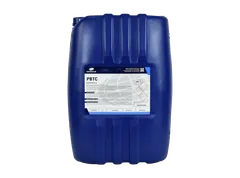
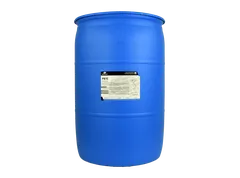
PBTC CORROSION AND SCALE INHIBITOR INDUSTRIAL GRADE
View All Prices
| Quantity | Unit Price |
|---|---|
| kg | |
| 1 - 99 | USD 2.82 |
| 100 - 199 | USD 2.78 |
| 200 - 499 | USD 2.73 |
| 500 - 999 | USD 2.69 |
| 1000 - 4999 | USD 2.65 |
| 5000 - 9999 | USD 2.61 |
| 10000 - 17999 | USD 2.57 |
| 18000+ | USD 2.54 |
PBTC — Industrial Grade Corrosion and Scale Inhibitor
At Quimiconsult we supply PBTC (2-phosphonobutane-1,2,4-tricarboxylic acid, CAS 37971-36-1), an industrial grade corrosion and scale inhibitor supplied as a colorless to pale yellow liquid with an active content of about 50%. Its molecular structure combines one phosphonic group with three carboxylic groups, giving it an exceptional ability to adsorb onto metal surfaces and onto suspended inorganic particles, so it acts simultaneously as a corrosion inhibitor, a scale inhibitor (antiscalant) and a dispersant in industrial water systems.
What sets PBTC apart from other phosphonic inhibitors is its high stability against chlorine and bleach, which makes it compatible with water treatment systems that use hypochlorite or chlorine dioxide as biocides. This property is critical in cooling towers and process water systems, where disinfection and scale control must run in parallel without chemical interference between the actives. PBTC is also effective at low doses, compatible with high-hardness water and miscible with water in any proportion.
As an established supplier in San Nicolás de los Garza, Nuevo León, we distribute PBTC with nationwide coverage, backed by a technical data sheet (TDS), safety data sheet (SDS), a certificate of analysis (CoA) for each lot and dosing advice from the Quimiconsult technical team. For anyone looking for a corrosion inhibitor, a scale inhibitor, a chlorine-stable phosphonic antiscalant or industrial grade PBTC 50%, this is the choice in the Quimiconsult catalog.
What is a corrosion inhibitor and how does PBTC work?
A corrosion inhibitor is a compound that, when added at low concentrations to an aqueous system, significantly reduces the corrosion rate of metal surfaces in contact with the water. The mechanisms can be anodic (they block oxidation of the metal), cathodic (they inhibit oxygen reduction) or mixed (they act on both).
PBTC acts mainly as a mixed corrosion inhibitor: its phosphonic and carboxylic groups adsorb onto the metal surface, forming a protective molecular layer that hinders dissolved oxygen and aggressive ions (chlorides, sulfates) from reaching the metal-water interface. This layer is thin enough not to affect heat transfer in exchangers and towers, and adherent enough to hold up under turbulence and temperature.
In addition, as a scale inhibitor, PBTC adsorbs onto crystals of calcium carbonate, calcium sulfate and other minerals that precipitate in hard water, preventing their growth (threshold inhibition effect), and as a dispersant it keeps particles in suspension so they can be removed by blowdown. This combined action reduces both under-deposit localized corrosion and the loss of thermal efficiency caused by scaling (fouling).
PBTC nomenclature and technical terms
PBTC appears in the technical literature and in registries under several names:
- IUPAC name: 2-phosphonobutane-1,2,4-tricarboxylic acid
- Abbreviation: PBTC (also PBTCA, "pb tc")
- Alternative names: phosphonobutane tricarboxylic acid, phosphonated tricarboxylic acid, butanetricarboxylic acid, 2-phosphonobutane-1,2,4-tricarboxylic
- CAS number: 37971-36-1
- Typical commercial form: PBTC 50% (aqueous solution, ~50% active)
- Chemical family: polycarboxylic phosphonic acids
Note: the "tricarboxylic acid" in PBTC's name should not be confused with the tricarboxylic acid cycle (Krebs cycle) of biochemistry; here "tricarboxylic" simply means the molecule has three carboxylic groups (-COOH) in addition to the phosphonic group (-PO₃H₂), which gives it its chelating character and its affinity for metal surfaces and divalent ions (Ca²⁺, Mg²⁺, Fe²⁺).
PBTC technical specifications
Substance:
2-Phosphonobutane-1,2,4-tricarboxylic acid (PBTC)
Active content:
49.0 – 51.0% (≈50%)
Appearance:
Colorless to pale yellow liquid
Odor:
Faint
pH (1% solution):
1.50 – 1.98
Density (at 20 °C):
1.28 – 1.38 g/cm³
Solubility:
Miscible with water in any proportion
Hardness compatibility:
Stable and effective in high-hardness water
Stability against oxidizers:
High stability against chlorine and bleach
CAS number:
37971-36-1
Grade:
Industrial / technical
Quimiconsult SKU:
INMPF035
The exact values for each lot are stated in the certificate of analysis (CoA). PBTC containers come with FDA Approved documentation (ES-EN).
Functional properties of PBTC: inhibition, dispersion and stability
PBTC packs into a single molecule three functions that usually require two or three different products in a water treatment program:
- Corrosion inhibition: adsorption of the phosphonic and carboxylic groups onto the metal forms a passivating barrier that reduces corrosion of carbon steel (its leading application), and provides protection in systems with stainless steel, copper and copper alloys.
- Scale inhibition (threshold effect): at very low concentrations it interferes with the nucleation and crystal growth of calcium carbonate, calcium sulfate and other salts, delaying the formation of hard deposits in exchangers and piping.
- Dispersion of inorganic particles: by adsorbing onto suspended mineral particles, it keeps them dispersed and prevents them from agglomerating and settling, improving system cleanliness.
- High stability against chlorine: it resists oxidation by hypochlorite and chlorine dioxide at typical use concentrations, unlike other phosphonates (HEDP, ATMP) that degrade with strong oxidizers.
- Compatibility with high-hardness water: unlike polyphosphates, it does not readily precipitate with calcium or magnesium, so it remains effective in hard water.
- Effective at low doses: it works at low product concentrations, which means low consumption per volume of treated water and good cost-effectiveness.
Industrial applications of PBTC
Reference doses should be validated against the water analysis of each system.
Cooling tower water treatment
This is PBTC's highest-value application. Evaporation concentrates the dissolved solids and raises the calcium carbonate scaling potential, while dissolved oxygen and temperature accelerate corrosion. PBTC acts on both problems at once —scaling and corrosion— and allows operation at higher cycles of concentration with less blowdown, saving water. Its stability against chlorine makes it ideal when chlorinated biocides are dosed for microbiological control (including Legionella).
Low- and medium-pressure boiler water
As an antiscalant in the feedwater, it prevents calcium carbonate and calcium sulfate deposits on heat-transfer surfaces, which reduce energy efficiency and create hot spots. (For high-pressure, high-temperature boilers, validate thermal stability with the technical team.)
Process water systems and closed loops
In closed loops (mold cooling in plastic injection molding, industrial HVAC, process cooling), PBTC controls corrosion of carbon steel piping and of copper or brass exchangers sharing the same loop, with low maintenance doses once the passivating layer is established.
Industrial and household cleaning formulations
As a functional additive in industrial and household detergents, PBTC acts as a calcium and magnesium sequestrant in hard water, improving surfactant performance and preventing the formation of insoluble soaps. Its compatibility with chlorine makes it valuable in cleaning and sanitation products that combine detergency with oxidizing power (for example, chlorinated formulations).
PBTC dosing and directions for use
The operating concentration depends on the type of system, water hardness, temperature and target saturation index. As a general reference (to be validated with a water analysis):
- Cooling towers (open loop): on the order of 5 – 20 mg/L of active PBTC in the system water, depending on the cycles of concentration and the hardness of the makeup water.
- Boiler water (pretreatment): on the order of 2 – 10 mg/L of active PBTC in the feedwater.
- Closed loops: an initial loading dose to establish the passivating layer, followed by lower maintenance doses.
- Detergents (as a sequestrant): on the order of 0.5 – 3.0% in the finished product, depending on the target hardness.
PBTC is miscible with water in any proportion, which simplifies preparing dosing solutions without solvents or heating. The Quimiconsult technical team can analyze your system's water and propose a dosing program and complementary biocides.
PBTC versus other phosphonic inhibitors (HEDP, ATMP, polyphosphates)
- PBTC vs. HEDP: HEDP is a good scale inhibitor, but it degrades quickly in the presence of chlorine; PBTC remains active with chlorinated biocides, so it is preferable in cooling towers using hypochlorite or chlorine dioxide.
- PBTC vs. ATMP: ATMP is a chelant with high affinity for calcium, but it can precipitate in high-hardness water; PBTC, thanks to its mixed (phosphonic + carboxylic) nature, offers better stability in hard water.
- PBTC vs. polyphosphates: polyphosphates are inexpensive but hydrolyze at high temperatures (precipitating as orthophosphate) and are degraded by microorganisms; PBTC is thermally and biologically stable, staying effective where polyphosphates fail.
PBTC storage, handling and safety
PBTC is an acidic solution (pH 1.50 – 1.98 in a 1% solution; the concentrate is more acidic) that must be handled according to its current Safety Data Sheet (SDS). Acid-resistant gloves and eye protection are recommended when handling the concentrate; in case of contact with skin or eyes, rinse with plenty of water for several minutes. Avoid contact with strong bases in concentrated form (abrupt neutralization generates heat and splashing) and do not store next to strong oxidizers in concentrated form (the diluted product is stable against chlorine).
Storage: in the original closed container, in a cool (ideally 5 – 40 °C), dry place protected from direct sunlight; avoid freezing. Store in high-density polyethylene (HDPE) or polypropylene containers; avoid carbon steel for long-term storage of the concentrate. See the current SDS for the full GHS classification, H and P statements and first aid. Dispose of the product and containers in accordance with applicable environmental regulations.
Frequently asked questions about PBTC
What is a corrosion inhibitor and how does it differ from a scale inhibitor?
A corrosion inhibitor protects metal surfaces from electrochemical attack by water and dissolved agents (oxygen, chlorides, CO₂). A scale inhibitor prevents minerals (such as calcium carbonate) from precipitating and depositing on heat-transfer surfaces. They are different mechanisms, and in most systems both problems occur at the same time. PBTC acts on both with the same dose, which simplifies the treatment program.
Why does PBTC's stability against chlorine matter?
Because chlorinated biocides (hypochlorite, chlorine dioxide) are dosed into cooling towers and process water for microbiological control, including Legionella. Many phosphonates (HEDP, ATMP) oxidize and lose effectiveness; PBTC withstands those conditions, so the program maintains biological control and protection against corrosion and scale at the same time.
Is PBTC suitable for high-hardness water?
Yes. Unlike polyphosphates and some phosphonates that precipitate with calcium, PBTC stays soluble and effective in hard water, making it well suited to the typical conditions of northern Mexico.
Can PBTC be used as a corrosion inhibitor for rebar (reinforcing steel in concrete)?
That is not its application. A "rebar corrosion inhibitor" refers to protecting reinforcing steel embedded in concrete, a different environment and mechanism (the very alkaline pH of concrete, chloride attack), where inhibitors such as calcium nitrites or amino alcohols are used. PBTC is designed for recirculating aqueous systems (towers, boilers, loops), not for concrete. If you are unsure which inhibitor is right for your case, contact us.
What does "industrial grade" mean for PBTC?
It means it is a technical-quality product for use in water treatment and industrial formulations, with an active content of about 50% and consistent specifications verified by CoA.
Where can I buy PBTC in Mexico?
At Quimiconsult we distribute it with availability from Monterrey, Nuevo León, and shipping throughout Mexico. Contact us at +52 (81) 8105 0063 for a quote, the technical data sheet and a dosing assessment.
What package sizes is PBTC available in?
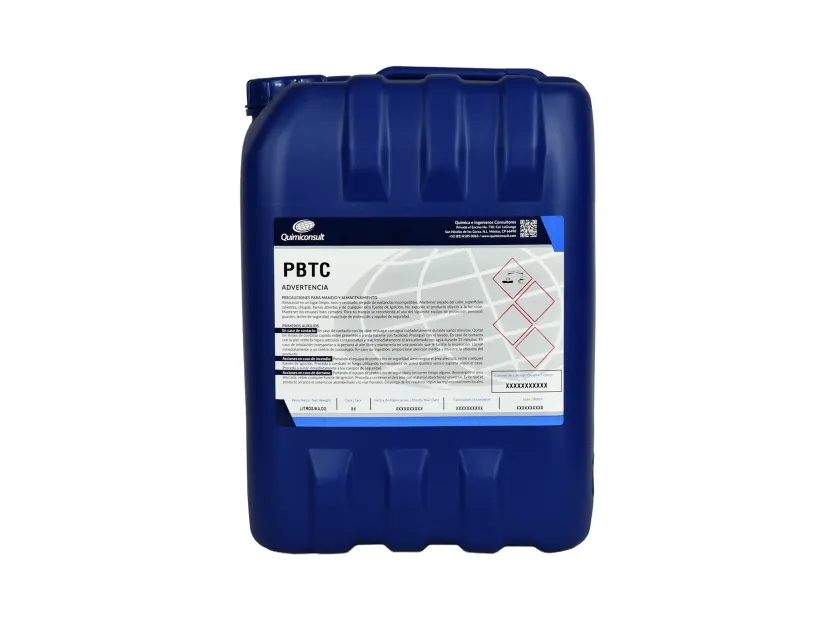
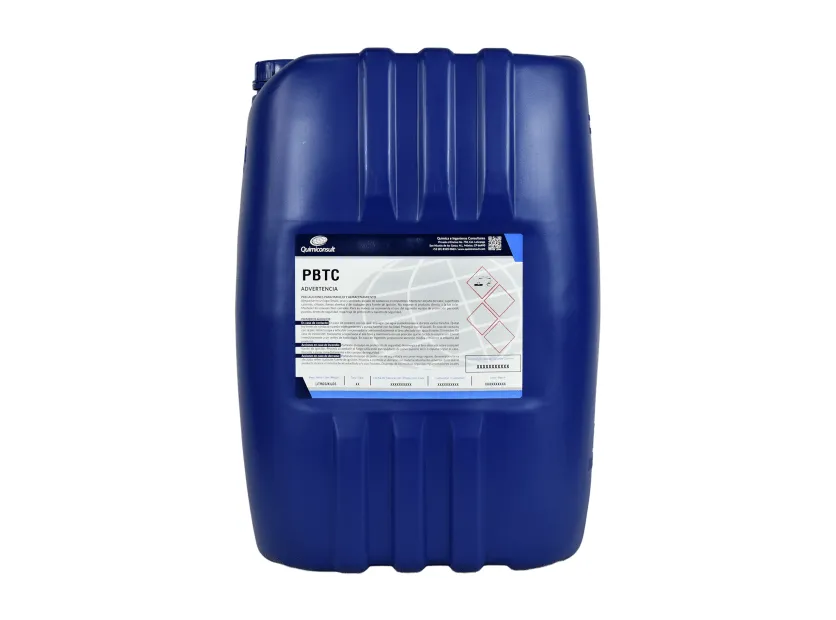
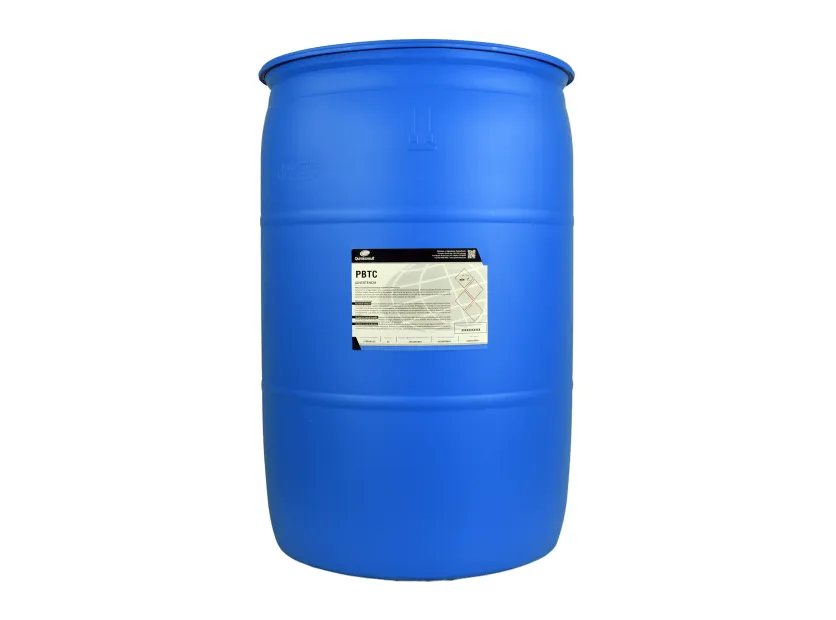
PBTC is available in 20 L and 50 L jerrycans, 200 L drums and 1,000 L containers (totes), in FDA Approved packaging (ES-EN); a laboratory sample is also available for technical evaluation or formulation development. We fill orders from Monterrey, Nuevo León, with logistics throughout Mexico (tote orders are coordinated with specialized chemical freight transport).
Other names and terms related to PBTC
PBTC, PBTCA, pb tc, 2-phosphonobutane-1,2,4-tricarboxylic acid, phosphonobutane tricarboxylic acid, butanetricarboxylic acid, phosphonated tricarboxylic acid, corrosion inhibitor, scale inhibitor, antiscalant, industrial grade corrosion inhibitor, industrial grade inhibitor, water treatment dispersant, chlorine-stable phosphonate, cooling tower inhibitor, boiler antiscalant, calcium and magnesium sequestrant, PBTC 50%, liquid PBTC, industrial grade PBTC, industrial PBTC, PBTC CAS 37971-36-1, PBTC Quimiconsult, corrosion inhibitor Monterrey, PBTC supplier Mexico.
Why buy PBTC from Quimiconsult?
Quimiconsult is a Mexican company with more than 30 years of experience in specialty chemicals, combining the manufacture of its own formulations with the distribution of raw materials and supplies for water treatment, sanitation and industrial cleaning. When you buy PBTC from Quimiconsult you get:
- Industrial grade PBTC (~50% active) with consistent specifications, a CoA for each lot, and FDA Approved packaging (ES-EN).
- Water technical advice: system analysis, compatibility assessment with the other chemicals in the program and dosing recommendations.
- The option of integrating PBTC into a complete water treatment program (inhibitors, dispersants, biocides) together with the other supplies in our catalog.
- Nationwide availability and logistics from Monterrey, Nuevo León.
Does your operation have cooling towers, boilers or water loops that need corrosion and scale control? Contact us at +52 (81) 8105 0063: we will analyze your water and propose the right dosing program.
Related products
PBTC is part of Quimiconsult's water treatment and industrial chemicals portfolio. Related products:
- Sequestrants and antiscalants (EDTA, sodium gluconate) — for hardness and scale control in a variety of systems.
- Clorsan DS / Sodium hypochlorite — chlorinated biocides for disinfection and microbiological control (compatible with PBTC at use doses).
- Anticel Peracetic Acid (5% / 15%) — broad-spectrum oxidizing sanitizer for sanitation.
- Caustic soda (sodium hydroxide) and acids — for pH adjustment in water programs.
Looking for a reliable corrosion and scale inhibitor or to put together a complete water treatment program? Contact us and we will review the options in our catalog for your system.