 Spanish
 English


Xanthan and guar gum: what they are and why they're everywhere
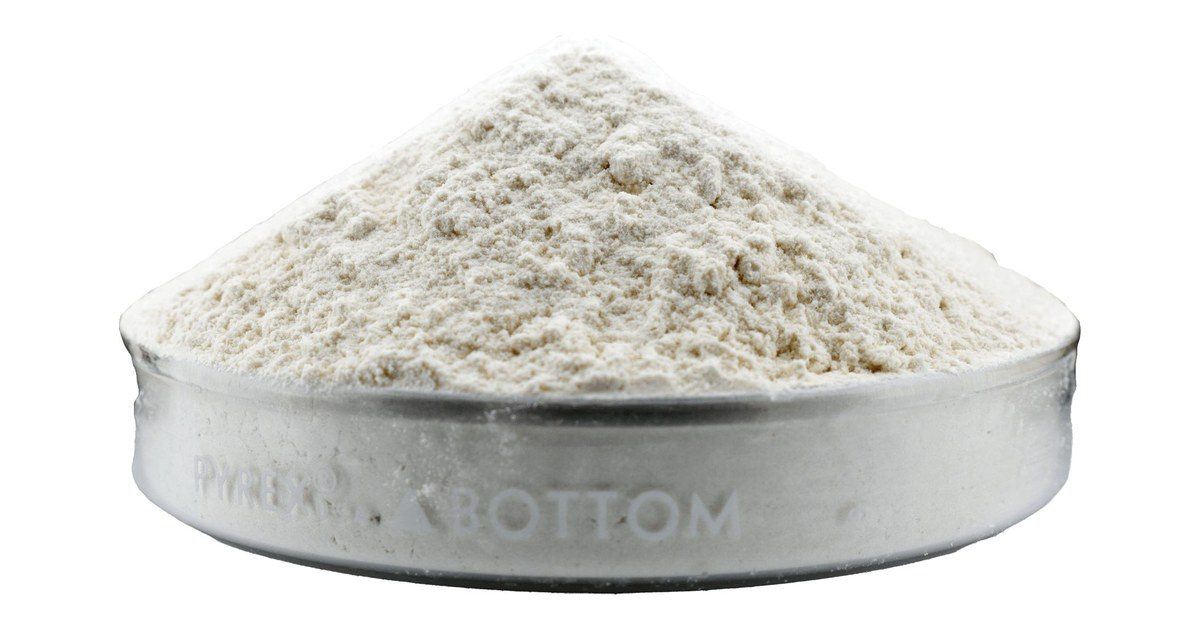
Check the label on your salad dressing, ice cream or toothpaste and you will very likely find xanthan gum, guar gum or both. They are natural thickeners that, in very small amounts, give body, stability and texture to thousands of products. Here is what they are, how they differ and how to choose the right one.
What is xanthan gum?
Xanthan gum is a polysaccharide made by the bacterium Xanthomonas campestris as it ferments sugars. A US Department of Agriculture team led by chemist Allene Jeanes discovered it, and it was approved for food use in 1968. In the European Union it is food additive E415.
Its big advantage is stability. It dissolves in cold or hot water, thickens at 0.1% to 1%, and keeps its viscosity through changes in temperature and acidity. It is also shear-thinning: it flows when stirred or pumped and regains body at rest, like a dressing that pours easily from the bottle but doesn't run off the salad.
What is guar gum?
Guar gum comes from the endosperm of the guar bean (Cyamopsis tetragonoloba), a legume grown mainly in India, which produces about 80% of the world's supply. It is a galactomannan: a mannose chain with galactose branches. In the European Union it is food additive E412.
It hydrates in cold water without heating and has almost eight times the thickening power of cornstarch. That makes it one of the most economical thickeners per unit of viscosity.
Why they're everywhere
Because they solve common problems at very low doses:
- Dressings and sauces: they stop oil and water separating and keep spices suspended.
- Ice cream and desserts: guar slows ice-crystal growth and gives a creamy texture.
- Gluten-free baking: xanthan provides the stretch that gluten normally gives.
- Beverages: they keep pulp and solids evenly distributed.
- Cosmetics and personal care: they thicken shampoos, creams and gels; in toothpaste, xanthan acts as a binder.
- Industry: they thicken gel cleaners and agrochemical suspensions and are used in oil-drilling fluids. Guar is also used in paper and textiles.
Xanthan gum vs. guar gum
Property | Xanthan gum | Guar gum |
|---|---|---|
Source | Bacterial fermentation (Xanthomonas campestris) | Guar seed (Cyamopsis tetragonoloba) |
Polymer type | Bacterial polysaccharide | Plant galactomannan |
Additive code | E415 | E412 |
Dissolves in | Cold or hot water | Cold water |
Stability to heat, acid and salt | Very high | Lower in long acidic, hot processes |
Texture | Flows when stirred, regains body; suspends particles | Creamy body; controls ice crystals |
Cost per viscosity | Higher | Lower |
Best for | Dressings, acidic sauces, gluten-free, cosmetics, cleaners | Ice cream, dairy, bakery, sauces, paper and textiles |
What if I combine them?
Many formulas use both. Together they give more viscosity than either one alone, an effect called synergy. That lets you lower the total dose and fine-tune texture: xanthan brings stability, guar brings creaminess and economy.
How to choose the right mesh
“Mesh” refers to the particle size of the powder:
- Xanthan gum 200 mesh: fine particles that disperse fast with fewer lumps. Ideal for food and cosmetic lines.
- Xanthan gum 80 mesh: coarser particles that raise less dust when emptying bags. Preferred for large volumes, agrochemicals, paints and drilling.
- Guar gum 200 mesh: food grade, with a viscosity of 5,500 to 6,000 cP at 1%.
Formulation tip: to avoid lumps (“fish eyes”), blend the gum with other dry ingredients such as sugar or salt before adding it to water, or add it under strong agitation.
Browse all our thickeners for food and beverages.
Frequently asked questions
Are xanthan gum and guar gum the same? No. Xanthan is made by bacterial fermentation and guar is extracted from a seed. Both thicken, but xanthan is more stable in acidic and hot conditions, and guar is cheaper.
Are they safe to eat? Yes. Both are approved food additives (E415 and E412). In 2017 the European Food Safety Authority concluded that xanthan gum raises no safety concern for the general population.
How much xanthan gum is used? Very little: usually 0.1% to 1% of the product, and under 0.5% in most foods.
Can I replace xanthan gum with guar gum? In many recipes, yes, with an adjusted dose. In acidic products or ones heated for a long time, xanthan usually performs better.
What does “200 mesh” mean? It is the particle size. In 200 mesh, most particles pass through a 75-micron opening; it is finer than 80 mesh and disperses faster.
How Quimiconsult helps
Quimiconsult distributes food-grade gums from Monterrey, Nuevo León, with shipping across Mexico:
- Fufeng® xanthan gum: in 200 mesh and 80 mesh.
- Polymerals® guar gum: 200 mesh food grade.
- Documentation and support: certificate of analysis per batch, technical data sheet and help choosing the gum and dose.
Not sure which one your formula needs? Talk to a technical advisor.
Related articles
Chlorhexidine: what it is, what it's for and which concentration to use
What chlorhexidine is, how it's used in mouthwash, antiseptics and teat dips, how to dilute the 20% concentrate and how it compares with povidone-iodine.
Glycerin: what it is, what it's for and how to choose the right grade
What glycerin is used for in cosmetics, pharma, food and industry, how crude, USP and vegetable glycerin differ, and why the grade matters.
Citric acid: much more than lemons
From soft drinks to descalers and fizzy tablets: discover what citric acid does in industry and how to choose the right grade.
