Spanish
 English


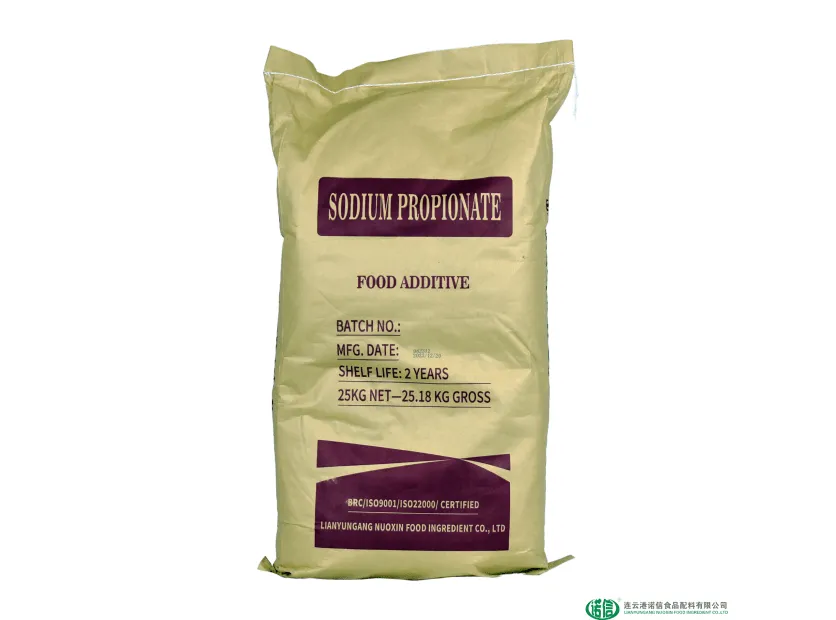
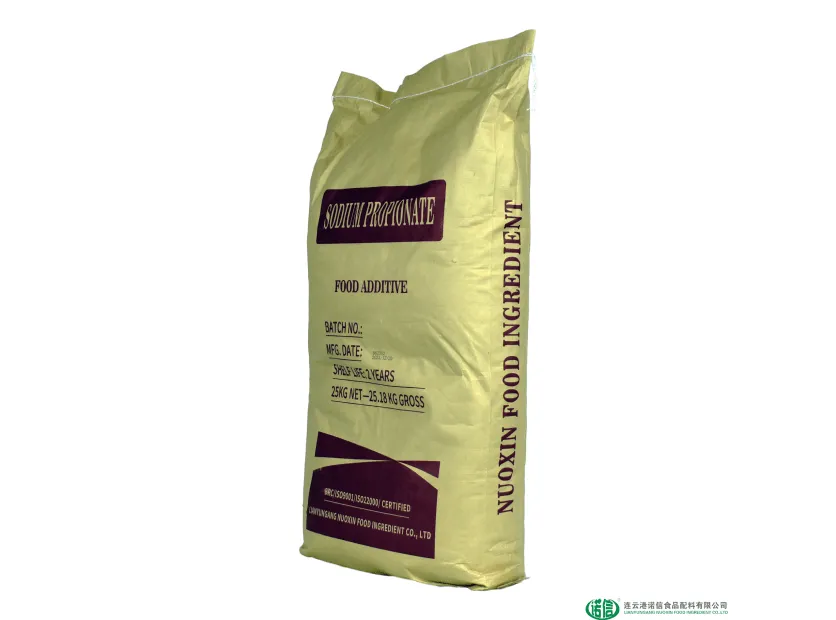
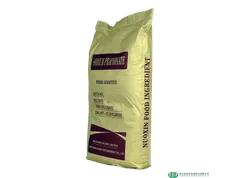
SODIUM PROPIONATE LIANYUNGANG NUOXIN FOOD INGREDIENT® FOOD GRADE
View All Prices
| Quantity | Unit Price |
|---|---|
| kg | |
| 1 - 99 | USD 1.86 |
| 100 - 199 | USD 1.83 |
| 200 - 499 | USD 1.81 |
| 500 - 999 | USD 1.78 |
| 1000 - 4999 | USD 1.76 |
| 5000 - 9999 | USD 1.73 |
| 10000 - 17999 | USD 1.71 |
| 18000+ | USD 1.68 |
Product description: Sodium Propionate, food grade food preservative
At Quimiconsult we distribute fine powder Sodium Propionate (CH3‑CH2‑COONa), a food grade food preservative recognized worldwide for its ability to inhibit the growth of molds and fungi in bakery, tortilla, pastry and a wide variety of processed food products. Sodium Propionate acts as a contact antifungal agent that interferes with the enzymatic metabolism of filamentous fungi, preventing their proliferation without affecting the organoleptic characteristics of the final product or altering yeast fermentation processes.
Unlike other food preservatives that can inhibit the activity of biological yeasts, Sodium Propionate is fully compatible with fermentation processes, which makes it the preservative of choice for the baking industry. This compatibility means that bakers and formulators can add it directly to the dough without adjusting fermentation times, yeast quantities or process conditions, maintaining the quality of the finished product while significantly extending its shelf life.
Our fine powder Sodium Propionate has a minimum purity of 99.0% on a dry basis, a pH between 8.0 and 10.5 and a maximum moisture content of 1.0%, meeting international quality standards for food additives. Its fine powder form allows homogeneous dispersion in dry mixes, bakery premixes, prepared flours and formulations where uniform distribution of the preservative is essential to ensure consistent antifungal protection throughout the production batch.
Sodium Propionate is highly soluble in water, allowing it to be incorporated into both dry formulations and aqueous solutions for spray application on the surfaces of baked goods, cheeses or sausages. Its low solubility in alcohol also makes it suitable for specific formulations where the preservative needs to remain in the aqueous phase of the food system, maximizing its antimicrobial activity where moisture favors fungal growth.
Available in Monterrey, Nuevo León, Quimiconsult's fine powder Sodium Propionate comes with specialized technical support, nationwide shipping and complete documentation supporting its use in the food industry, including a technical data sheet, safety data sheet and certificate of analysis for every lot.
Nuoxin Food Ingredient, specialized Sodium Propionate manufacturer
The fine powder Sodium Propionate we distribute at Quimiconsult is manufactured by Nuoxin Food Ingredient, a Chinese company specializing in the production of food additives and preservatives for the global food industry. Nuoxin has established itself as one of the benchmark manufacturers of propionic acid salts, including Sodium Propionate and Calcium Propionate, serving markets in the Americas, Europe, Asia and the Middle East from manufacturing facilities equipped with high-efficiency synthesis and purification technology.
The value of Sodium Propionate made by Nuoxin Food Ingredient lies in the consistent quality offered by a producer focused specifically on food additives. Nuoxin operates under quality management systems geared to the food industry, ensuring that every lot of Sodium Propionate meets the specifications of minimum 99.0% purity on a dry basis, strict limits on heavy metals (arsenic, lead, mercury) and the particle size, moisture and pH parameters demanded by formulators of processed foods, industrial bakery products and premixes. This lot-to-lot reproducibility is a critical factor for production plants that need raw materials with predictable performance to keep the quality of their finished products uniform.
Nuoxin has developed optimized production processes that allow it to offer Sodium Propionate with a controlled impurity profile and a degree of whiteness and particle fineness that facilitate homogeneous incorporation of the preservative into dry mixes, prepared flours and automated dosing systems. Nuoxin's production capacity and its focus on food preservatives allow it to maintain stable supply volumes even during periods of high demand, an important consideration for the baking and tortilla industries, which operate continuous production cycles and cannot afford shortages of critical raw materials.
By choosing Sodium Propionate from Nuoxin Food Ingredient through Quimiconsult, our customers gain access to a product of international quality with the advantage of local technical support, inventory available in Monterrey, Nuevo León, complete documentation in Spanish (technical data sheet, safety data sheet and certificate of analysis for every lot) and advice on dosing and formulation that complements the quality of the original manufacturer's product. Quimiconsult has built a stable commercial relationship with Nuoxin that allows us to offer continuous availability, competitive prices and flexible purchase volumes, from individual bags to full pallets and containers for large-scale operations in the Mexican food industry.
Benefits of Sodium Propionate as a food preservative
The main benefit of Sodium Propionate is its ability to extend the shelf life of food products by preventing the growth of molds and fungi, which are among the leading causes of spoilage in bakery products, tortillas and foods with intermediate water activity. By incorporating Sodium Propionate into the formulation, food manufacturers reduce losses from spoiled product, cut customer returns and widen their commercial distribution windows, which translates directly into improved operating profitability.
Sodium Propionate's full compatibility with the biological yeasts used in baking is a differentiating advantage over other preservatives such as Calcium Propionate or Potassium Sorbate. While some preservatives can interfere with fermentation activity and require adjustments to the formulation or process times, Sodium Propionate can be integrated directly without modifications, which simplifies production processes and reduces lot-to-lot variability.
Sodium Propionate helps control the growth of Bacillus mesentericus, the bacterium responsible for "rope" or "ropiness" in bread, a condition that produces viscous, sticky strands in the crumb, generates unpleasant odors and makes the product completely unacceptable to consumers. This antibacterial property complements its main antifungal action and provides more complete microbiological protection for bakery products.
From a regulatory standpoint, Sodium Propionate is a GRAS (Generally Recognized as Safe) food additive according to the US FDA, is approved by the European Union as additive E281, and is recognized by the Codex Alimentarius as a safe preservative for use in food within the established maximum doses. This broad regulatory acceptance makes it easier to market products containing it in both domestic and international markets, with no additional labeling restrictions beyond the standard declaration of the additive.
The safety profile of Sodium Propionate is exceptionally favorable. Propionic acid and its salts are produced naturally during the fermentation of certain foods such as Swiss cheese, where propionic bacteria generate propionic acid as a metabolic by-product. This natural presence in fermented foods supports the perception of the ingredient's safety both from a regulatory perspective and in terms of end-consumer acceptance, an increasingly important factor in a market where the trend toward recognizable, familiar ingredients is gaining ground.
In addition, Sodium Propionate does not impart significant flavor or odor to products at the recommended use levels, allowing the sensory characteristics that define each product's identity to remain intact. As a fine white powder with a slight odor, it is unobtrusive in the formulation and easy to handle in production environments where cleanliness and the absence of cross-contamination are priorities.
Industrial applications of Sodium Propionate
Sodium Propionate is one of the most versatile preservatives in the food industry, with applications that extend far beyond traditional baking. Its antifungal mechanism of action, its compatibility with fermentation processes and its safety profile make it suitable for a wide range of industrial sectors.
In the baking industry, Sodium Propionate is added directly to the dough of sandwich bread, pan loaves, hamburger buns, hot dog buns, rolls, small breads, sponge cakes and industrial sweet bakery products. Its main function is to prevent the growth of molds such as Rhizopus, Aspergillus and Penicillium, the most common fungal genera in baked goods stored at room temperature. The typical use level in baking ranges from 0.1% to 0.3% of flour weight, although it can vary depending on the product's water activity, storage conditions and desired shelf life.
In the tortilla industry, Sodium Propionate is an indispensable ingredient for extending the shelf life of wheat flour tortillas and derived products such as industrial wraps, burritos and quesadillas. Flour tortillas are particularly susceptible to mold growth due to their moisture content and frequent storage at room temperature, so adding the preservative is standard practice in the Mexican tortilla industry and among tortilla manufacturers worldwide.
In the industrial pastry and cake industry, Sodium Propionate is used in cakes, muffins, brownies, soft cookies, donuts and filled products that maintain intermediate water activity. These products pose a particular preservation challenge because they combine high-water-activity ingredients (fillings, creams, fruit) with baked bases, creating microenvironments favorable to fungal growth that Sodium Propionate helps control.
In the dairy industry, Sodium Propionate is used as a preservative in processed cheeses, cheese spreads, analog cheeses and cheese-based preparations. It is also applied by spraying an aqueous solution onto the surface of aged cheeses to prevent the growth of unwanted surface molds during ripening and storage. In some processed cheese and slicing cheese formulations, Sodium Propionate is part of the preservation system that extends the shelf life of the refrigerated product.
In the meat industry, Sodium Propionate is used in cooked sausages, frankfurters, hams and packaged meat products where control of surface fungal growth is necessary to maintain the product's appearance and safety throughout its shelf life. Its use is particularly relevant in sliced meat products exposed to air while on sale in self-service display cases.
In the premix and prepared flour industry, Sodium Propionate is incorporated into ready-to-make mixes for bread, pancakes, waffles, cake, pizza and other convenience products. Premix manufacturers especially value Sodium Propionate's stability in dry mixes, as it retains its preservative activity during prolonged storage of the premix and becomes fully active once the product is hydrated and baked.
In the pharmaceutical industry, Sodium Propionate is used as an antifungal agent in topical formulations, ointments and dermatological preparations where fungal growth must be inhibited. It is also used as an excipient in certain pharmaceutical formulations where its preservative properties help maintain the microbiological stability of the medicine throughout its shelf life. In the veterinary field, Sodium Propionate is incorporated into topical preparations for treating fungal infections in animals.
In the animal feed industry, Sodium Propionate is widely used as a preservative in balanced feeds, compound feeds, silage and nutritional supplements for cattle, poultry, pigs, aquaculture and pets. Its role in this sector is to prevent mold growth and mycotoxin formation during feed storage, protecting both the nutritional quality of the product and the health of the animals that consume it. Mycotoxins produced by fungi such as Aspergillus and Fusarium pose a significant risk in the animal production chain, and Sodium Propionate is one of the most effective and economical tools for preventing them.
In the cosmetics and personal care industry, Sodium Propionate is used as a preservative in creams, lotions, gels and personal hygiene products where antifungal protection is required. Its compatibility with a wide range of cosmetic ingredients and its recognized safety profile make it a viable option for personal care formulators looking for alternatives to traditional preservatives such as parabens.
In agricultural applications, Sodium Propionate is used as a preventive treatment for stored grains and seeds to inhibit fungal growth during storage in silos and warehouses. This application is particularly important in regions with high ambient humidity, where the risk of fungal contamination and mycotoxin generation in stored grain is high.
Chemical properties and technical specifications of Sodium Propionate
Sodium Propionate (CH3‑CH2‑COONa) is the sodium salt of propionic acid, with CAS number 137‑40‑6 and a molecular weight of 96.06 g/mol. It is a fine, white crystalline powder with a slight odor and is highly hygroscopic, which means it tends to absorb moisture from the air if not stored correctly.
The technical specifications of the fine powder Sodium Propionate we distribute at Quimiconsult are as follows. The product's moisture content is maximum 1.0%, which ensures a high active content and good powder flowability for dosing in automated processes. Purity on a dry basis is minimum 99.0%, ensuring that virtually all of the product is active Sodium Propionate, free of impurities that could affect quality or performance in the final application.
The pH of Sodium Propionate in solution is between 8.0 and 10.5, indicating its slightly alkaline nature. This pH value is relevant for formulators who need to consider the preservative's impact on the final pH of their product, especially in baking applications where dough pH influences yeast activity, gluten development and the final characteristics of the bread.
In terms of chemical safety, Sodium Propionate meets strict heavy metal limits. Arsenic content is maximum 3.0 mg/kg, lead maximum 2.0 mg/kg, total heavy metals expressed as lead maximum 10 mg/kg and mercury maximum 1.0 mg/kg. These limits fall within the parameters established by the main pharmacopeias and international food additive regulations, guaranteeing the product's safety for human consumption.
The product's particle size specification is a maximum of 10% retained on a 30 USBS mesh, confirming its classification as a fine powder and ensuring a particle distribution suitable for uniform incorporation into dry mixes, flours and industrial premixes.
Sodium Propionate is very soluble in water (approximately 1 g per ml of water at room temperature), which facilitates both its direct use as a powder and the preparation of aqueous solutions for spray application. Its low solubility in alcohol (approximately 1 g per 25 ml of ethanol) is a characteristic that can be exploited in specific formulations where selective distribution of the preservative between phases is required.
How to use and dose Sodium Propionate
The dosage of Sodium Propionate varies according to the type of food product, the desired shelf life, the storage conditions and the water activity of the final product. General use recommendations by sector are given below.
In bakery and industrial sweet bakery products, the recommended dose is 0.1% to 0.3% calculated on the weight of the flour used in the formulation. For pan loaves, sandwich bread and products requiring an extended shelf life (7 to 21 days), working in the upper dosage range is recommended. For fast-consumption products with a short shelf life (3 to 7 days), the lower range is usually sufficient. Sodium Propionate is added directly to the dry mix together with the flour and other powdered ingredients before hydration.
In wheat flour tortillas, the typical dose ranges from 0.2% to 0.3% of flour weight. It is added at the dry mixing stage to ensure homogeneous distribution of the preservative throughout the dough. In high-speed continuous processes, it is important that the Sodium Propionate is perfectly dispersed to avoid spots of variable concentration that could produce differences in antifungal protection between tortillas from the same batch.
In processed cheeses and dairy products, the dose can range from 0.1% to 0.3% of total product weight, depending on the specific formulation and the required shelf life. For surface spray applications on aged cheeses, aqueous solutions are prepared at concentrations of up to 5% for localized application on the cheese rind.
In animal feed, Sodium Propionate doses are generally higher than in food for human consumption, typically ranging from 0.1% to 1.0% of the weight of the balanced feed, depending on the product's moisture content, storage conditions and the level of protection required against fungi and mycotoxin formation.
In all cases, stability testing and sensory evaluation of the finished product are recommended to determine the optimal dose that achieves the ideal balance between antimicrobial protection, desired shelf life and organoleptic acceptance. Quimiconsult's technical team can advise on determining the right dose for each specific application.
Sodium Propionate regulation and approvals
Sodium Propionate has a broad, solid regulatory framework worldwide that supports its use as a safe food additive. This broad regulatory acceptance makes it easier to export products formulated with Sodium Propionate to virtually any international market without additional restrictions.
In the United States, the FDA (Food and Drug Administration) classifies Sodium Propionate as a GRAS (Generally Recognized as Safe) substance under 21 CFR 184.1784, which permits its use in food without prior approval, provided it is used in accordance with good manufacturing practices (GMP). This GRAS classification is one of the most recognized worldwide and is considered the benchmark standard for evaluating the safety of food additives.
In the European Union, Sodium Propionate is authorized as a food additive with the number E281 under Regulation (EC) No. 1333/2008 on food additives. EFSA (the European Food Safety Authority) has evaluated its safety and set maximum use levels for different food categories, confirming its safety profile when used within the established limits.
The Codex Alimentarius, the international regulatory reference for food safety established by the FAO and WHO, includes Sodium Propionate in its list of permitted food additives (INS 281) and sets maximum use levels in various food categories. This inclusion in the Codex is particularly relevant for Mexican manufacturers that export food products, since most countries base their national regulations on Codex guidelines.
In Mexico, the use of Sodium Propionate as a food preservative is regulated under the applicable rules of COFEPRIS (Federal Commission for the Protection against Sanitary Risks), aligned with Codex Alimentarius recommendations and international food safety standards.
Sodium Propionate storage and handling
Proper storage of Sodium Propionate is essential to preserve its quality, purity and preservative efficacy over time. Because of its hygroscopic nature, the product tends to absorb moisture from the air, which can cause caking, loss of flowability and dosing difficulties if the proper precautions are not taken.
Sodium Propionate should be stored in its original, tightly closed container in a dry, cool, well-ventilated place, protected from direct sunlight and away from heat sources. The recommended storage temperature is room temperature under controlled humidity conditions. It is essential to keep containers closed when not in use and to avoid prolonged exposure of the product to air during weighing and dosing operations.
The product should be kept away from strong acids and materials that can promote exothermic reactions, as these are considered incompatible materials according to the safety data sheet. Although Sodium Propionate is not classified as a hazardous material for transport purposes (it is not regulated under UN regulations) and does not meet the criteria for classification in a hazard class under the Globally Harmonized System, good practices for handling food chemicals should be followed.
When handling Sodium Propionate, avoid generating dust clouds and use respiratory protection against dust (P1) when handling large quantities or working in areas with limited ventilation. Splash-proof safety goggles, protective gloves and suitable work clothing are advisable. In case of eye contact, rinse immediately with plenty of water for at least 15 minutes and seek medical attention if irritation persists.
Under the NFPA classification, Sodium Propionate has a health hazard rating of 1 (slight), flammability of 0 (minimal) and reactivity of 0 (stable), confirming its low level of risk under normal handling and storage conditions. Nevertheless, the product can form dust-air mixtures that may be combustible, so it should be kept away from ignition sources such as open flames, boilers and other heat sources.
The product is not toxic if ingested in small amounts, but as with any industrial chemical, unintentional ingestion should be avoided and the product kept out of the reach of unauthorized persons. In case of significant accidental ingestion, contact a doctor.
Following these good storage and handling practices ensures that Sodium Propionate maintains its quality specifications throughout its shelf life and performs its preservative function optimally when incorporated into the food product formulation.
Other names and synonyms for Sodium Propionate
Sodium Propionate can also be identified by its Spanish names Propionato de Sodio, Propionato Sódico or Sodio Propionato, terms widely used in the food industry to refer to this antifungal preservative. These names frequently appear in ingredient technical data sheets, bakery formulations, raw material purchasing specifications and quality control documentation.
In food additive nomenclature, Sodium Propionate is identified as E281 in the European Union numbering system and as INS 281 in the Codex Alimentarius numbering system. These codes are commonly used on food product labels, in national and international regulations and in technical documentation across the global food industry. Its CAS number is 137‑40‑6, the reference used in analytical chemistry, research and chemical substance regulation.
Chemically, Sodium Propionate is the sodium salt of propionic acid and may also be referred to as the sodium salt of propanoic acid or sodium propanoate (propanoato de sodio), which are the names following IUPAC nomenclature. In technical and scientific literature, Sodium Propionate is commonly referenced by its molecular formula CH3CH2COONa or C3H5NaO2, depending on the notation used.
Within the broader category of food-grade propionates, Sodium Propionate differs from Calcium Propionate (E282) in its greater water solubility and its effect on dough rheology. While Calcium Propionate contributes calcium ions that can toughen the dough in certain baking systems, Sodium Propionate contributes sodium ions that generally have a smaller impact on dough texture, which may be preferable in specific formulations.
In industrial purchasing and sourcing it is common to see searches such as sodium propionate price, sodium propionate for bakery, food grade sodium propionate, sodium propionate technical data sheet, sodium propionate safety data sheet, bread preservative, sodium propionate for tortillas, sodium propionate food use, sodium propionate E281, sodium propionate supplier Mexico or sodium propionate Monterrey, where variations in the product description and its application are used to find suppliers and options available on the Mexican market. These variations help purchasing managers, formulators, food technologists and quality managers identify the product within the market for food additives and ingredients for the baking and processed food industries.