Spanish
 English


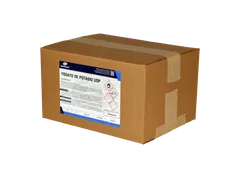
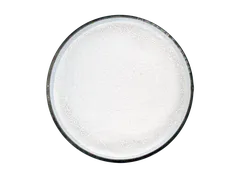
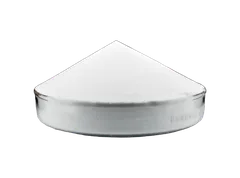
POTASSIUM IODATE USP GRADE STABILIZER AND OXIDIZER
View All Prices
| Quantity | Unit Price |
|---|---|
| kg | |
| 1 - 99 | USD 54.64 |
| 100 - 199 | USD 54.43 |
| 200 - 499 | USD 54.22 |
| 500 - 999 | USD 54.02 |
| 1000 - 4999 | USD 53.81 |
| 5000 - 9999 | USD 53.61 |
| 10000 - 17999 | USD 53.41 |
| 18000+ | USD 53.21 |
Potassium Iodate (KIO₃) Description: A High-Purity Stabilizer and Oxidizer
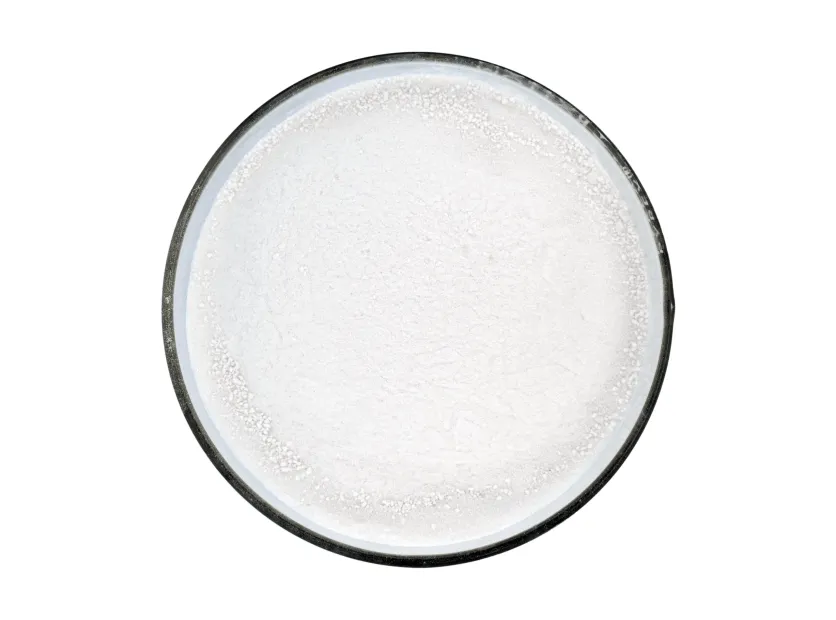
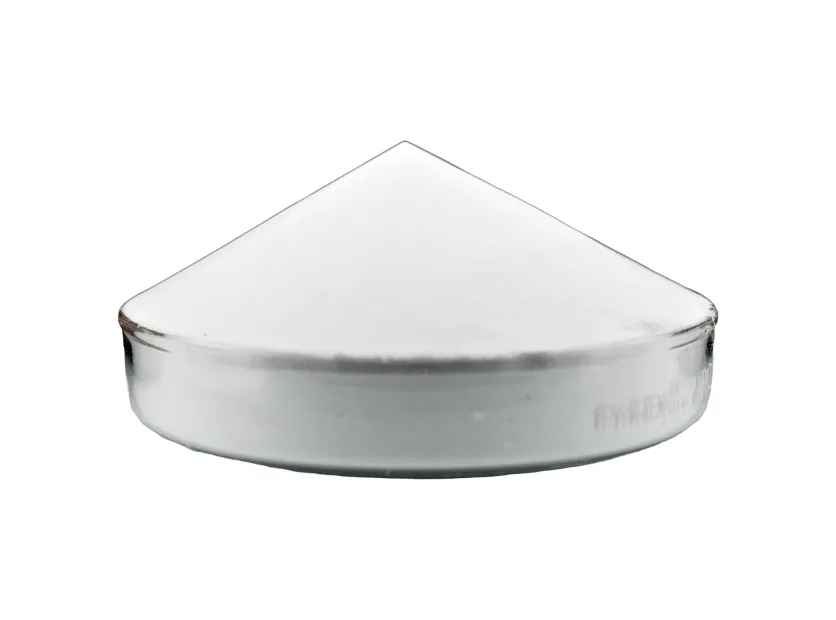
At Quimiconsult we offer USP grade Potassium Iodate, a fine white powder with a purity of 99.0‑101.0% that meets pharmaceutical and food standards. It is a fine, white, stable and highly water-soluble powder used as an oxidizing agent, a nutritional source of iodine and a stabilizer in demanding industrial and analytical applications.
Thanks to its high purity and solubility, potassium iodate can be easily incorporated into mineral feeds, flour and dough treatment and conditioning, as well as biocidal formulations. Its effectiveness as an oxidizer and antiseptic agent makes it a valuable ingredient in human and animal nutrition, baking, the analytical industry and sanitizing solutions.
USP grade potassium iodate is available in Monterrey, with shipping throughout Mexico.
Potassium iodate USP details and properties
At Quimiconsult, our USP grade potassium iodate (KIO₃, CAS number 7758-05-6) is manufactured and controlled to strict specifications to guarantee purity between 99.0 and 101.0%, a critical range in industries where the consistency of the active ingredient directly affects performance and regulatory compliance. This inorganic compound is a fine white powder, odorless, non-hygroscopic under dry conditions and with excellent water solubility, allowing fast, homogeneous integration into salt iodization, animal nutrition, baking, analytical chemistry and redox titration processes. Its pH in a 5% aqueous solution ranges from 5.0 to 8.0, a range compatible with food matrices and mineral feed blends that avoids unwanted interference in sensitive formulations. It also provides 58.75 to 59.93% available iodine, which makes it a stable, highly efficient source for nutritional fortification and a primary standard in chemical assays.
Impurity limits are kept at critical safety and performance levels: iodide ≤ 20 ppm, chlorate ≤ 100 ppm, arsenic ≤ 2.0 ppm, cadmium ≤ 10.0 ppm, lead ≤ 4.0 ppm and mercury ≤ 0.1 ppm, parameters typically audited by the food and pharmaceutical industries, flour mills, salt producers and accredited laboratories that require documentary traceability. Its thermal stability and behavior as a controlled oxidizer allow the product to retain its functionality for at least 12 months, provided it is stored in dry conditions, protected from direct light and away from reducing agents or sources of combustion.
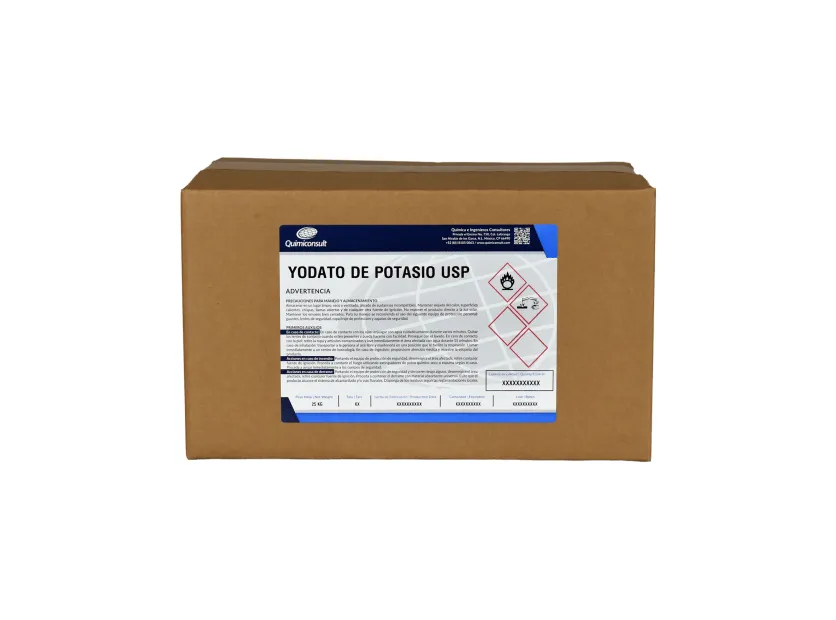
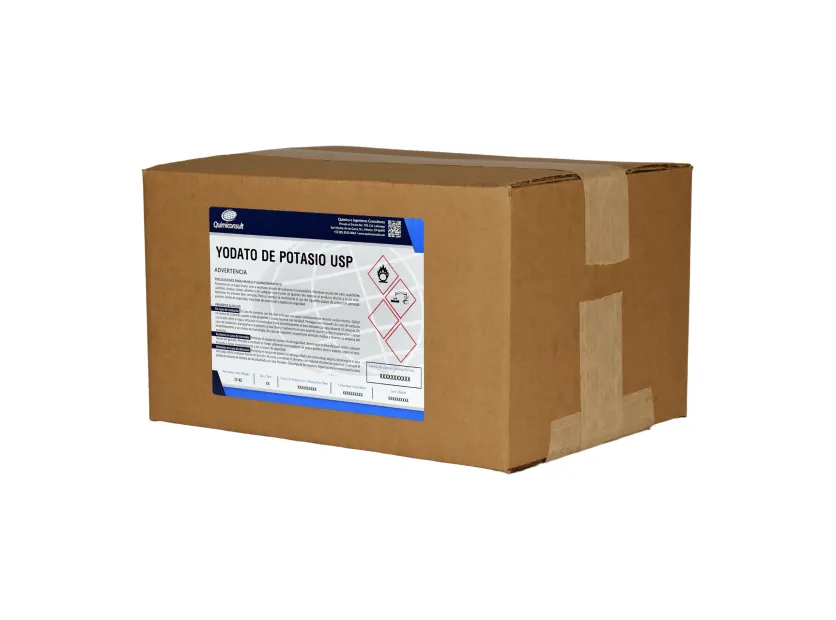
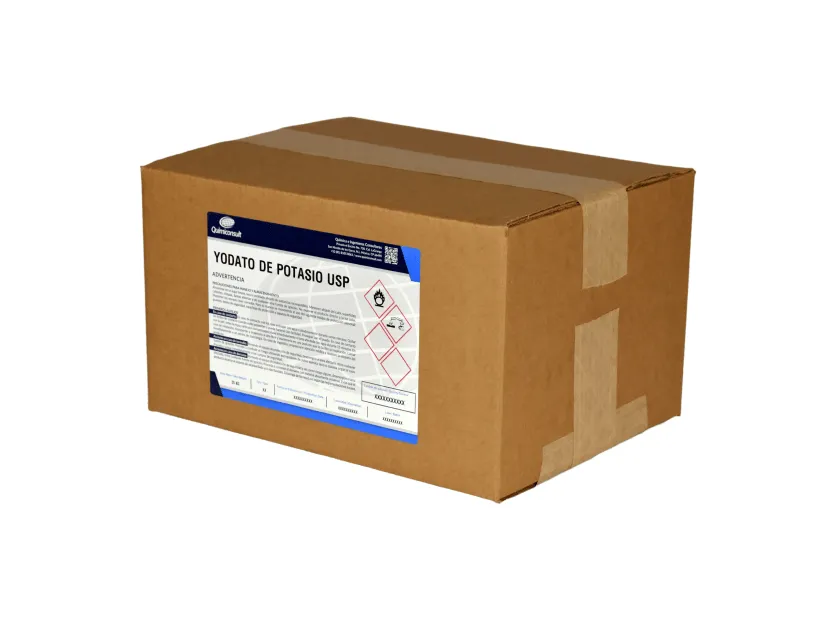
To ensure safe storage and efficient industrial logistics, we sell potassium iodate USP in 25 kg boxes with a sealed multilayer inner bag, a barrier that protects the material from moisture, cross-contamination and premature degradation. These formats allow safe pallet stacking, easy unloading at the plant, integration into regulated chemical warehouses and compliance in ground transport. Our operation in Monterrey, Mexico, ensures constant availability, competitive delivery times and specialized technical support for applications that demand stable performance and clear regulatory documentation
Properties of Potassium Iodate (KIO₃)
USP grade potassium iodate (KIO₃) is a solid inorganic compound notable for its high chemical stability, its excellent solubility in aqueous media and its behavior as a strong, controlled oxidizing agent, characteristics that make it reliable in food processes, animal nutrition and analytical assays. Unlike other iodine salts such as iodides, iodate has lower hygroscopicity, which reduces the risk of powder caking in storage and makes it easier to dose in dry blends, especially in matrices such as salt, flours and mineral premixes. Its stable crystalline structure allows it to withstand moderate temperature variations without degrading easily, keeping the active content within the critical USP specification ranges, even under industrial logistics conditions.
When dissolved in water, iodate releases iodine ions in bioavailable form, acting as a stable nutritional source for fortifying table salt and animal feed, while also providing oxidizing capacity useful in redox reactions and laboratory titrations. Its available iodine content, close to 59%, makes it a standard reference for controlled iodization and a primary reagent for volumetric and spectrophotometric methods, as shown in the technical data sheet table on page 1 of the attached document, which lists the purity, pH and impurity limit parameters. In analytical chemistry, KIO₃ is used as a stable redox titrant, ideal for preparing standard solutions with minimal variation, enabling reproducible results in assays where the oxidizing potential must be precise and traceable.
Thanks to its purity, compatibility and stability profile, potassium iodate USP is suitable for applications that require regulatory compliance, consistent performance and batch-level technical documentation, integrating easily into industrial food processes, mills, salt producers and animal nutrition lines. Although it is a powerful oxidizer, its decomposition is slow and predictable when stored in dry, protected conditions, which supports its use as a fortification ingredient with an extended shelf life under good storage practices, retaining its functionality in demanding applications without losing the integrity of the main active ingredient
Potassium Iodate Applications and Industrial Uses
USP grade potassium iodate (KIO₃, CAS number 7758-05-6) is a chemical compound widely used in industries where a stable, controlled supply of iodine is critical for nutrition and regulatory compliance. Its main application is table salt iodization, a fundamental process in Mexico and other countries to prevent iodine deficiency in the human diet, an essential micronutrient for proper metabolic and endocrine function. Compared with other sources such as iodide, iodate is preferred for its lower hygroscopicity, greater thermal and oxidative stability, and more uniform release of the iodine ion, which allows consistent performance during the production, storage and distribution of fortified salt.
In animal nutrition, KIO₃ is used as an additive in feeds, mineral salts and nutritional premixes, ensuring adequate iodine levels in production species such as poultry, swine, beef cattle and dairy cattle, where it has a direct impact on metabolism, fertility, development and the quality of the final product, such as milk or eggs. Its high solubility allows it to be easily incorporated into liquid dosing systems or solid matrices without compromising the stability of other sensitive minerals present in nutritional blends.
In the flour milling and baking industry, potassium iodate acts as a controlled oxidizer in wheat flour treatments and dough conditioners, improving gluten strength, dough elasticity, crumb structure, bread volume and tolerance to mechanical processing, which is especially valued by mills and industrial bakeries that require ingredients of high purity and USP specification to meet auditable quality standards in continuous production.
In the laboratory and analytical chemistry, KIO₃ is recognized as a primary standard reagent in redox titrations, volumetric assays and spectrophotometric analysis, where an oxidizing agent with minimal active variation and excellent repeatability is required, allowing reliable standard solutions to be prepared for critical measurements such as redox potential or wavelength calibration. Because of these properties, it is also used as an oxygen-releasing oxidizer in high-precision redox assays and as an ingredient in food grade and industrial grade sanitizing solutions, where its oxidizing function and supply of bioavailable iodine are valuable without relying on restrictive regulatory classifications.
To learn more about related applications in food, dough, nutrition or industrial solutions, see our sections such as Food & Beverage, Stabilizers, Nutrients and Pharmaceutical & Wellness and other specialty chemical technical data sheets available at quimiconsult.com.
Storage and handling of Potassium Iodate
To preserve the quality, stability and purity of USP grade POTASSIUM IODATE (KIO₃, CAS number 7758-05-6), it is essential to follow storage practices appropriate for high-purity inorganic oxidizing compounds used in the food industry, animal nutrition and analytical laboratories. At Quimiconsult, we recommend keeping the product in its original, hermetically sealed container, designed to protect it from moisture, cross-contamination and degradation of the active ingredient, because although iodate is not hygroscopic under dry conditions, prolonged exposure to humid environments can affect the flowability of the powder and its dosing in industrial processes.
The material should be stored in a cool, dry, well-ventilated place away from direct sunlight, at moderate temperatures that do not exceed the typical ranges of industrial chemical warehouses, avoiding close contact with reducing agents, fuels, reactive organic powders, finely divided metals or any flammable material that could react with its oxidizing capacity. Because of its nature as a stable oxygen releaser and strong oxidizing agent, accidental contact with flammable substances or ignition sources must be prevented, and the area must have safety protocols for handling solid oxidizers, including safety data sheets (SDS), clear labeling and batch-level inventory control.
During handling, personnel should use personal protective equipment (PPE) suitable for industrial chemical powders, such as resistant gloves, safety glasses, a fine-particle mask if dust is generated, and protective clothing, avoiding direct inhalation or prolonged contact with skin or eyes. In addition, the product must be properly identified in the warehouse and on the production line, following internal traceability systems, as it is a compound frequently audited in regulated sectors such as salt works, flour mills, food factories and accredited laboratories.
When these recommendations are followed, the compound maintains its chemical stability for at least 12 months, retaining its functionality as a nutritional source of iodine and standard oxidizing reagent, enabling consistent performance in production, transport and high-precision analytical assays.
Other names and synonyms
The term Potassium Iodate USP is the most widely used English name for pharmaceutical-specification potassium iodate (yodato de potasio), especially in analytical chemistry, international trade and audited food fortification documentation. The abbreviation KIO₃ is a compact chemical form widely recognized by process engineers, laboratory technicians and chemical analysts, as it clearly identifies the compound on quality sheets, certificates of analysis, technical data sheets and SDS, and is also used as a reference in calculations of oxidizing potential and available iodine balance in redox processes.
The code E917 is used in the European Union to classify potassium iodate as an additive intended for salt iodization, distinguishing it from other iodine derivatives within the same additive numbering system. Although it is identified as an additive in Europe, the global industry also recognizes it as a stable solid oxidizing agent, useful in processes that require an iodine source less reactive to moisture than iodides, a characteristic that makes it the preferred choice for flour mills, fortified salt producers and manufacturers of mineral premixes for animal nutrition.
The term potassium acid iodate is used in advanced analytical chemistry when the compound takes part in acidified media during titrations or standardizations, since under these conditions it can form ionic species relevant to redox assays and instrument calibrations. Likewise, names such as standard reagent for redox titrations, iodinated laboratory oxidizer, or stable iodine source for feed and edible salt are common semantic terms in the industry when the function of the compound needs to be described precisely without falling into restrictive classifications.
Phrases such as Potassium Iodate USP Safety Data Sheet (SDS), KIO₃ certificate of analysis, or potassium iodate for fortification are common searches made by industrial buyers and quality managers, as they are associated with processes where the active ingredient must meet batch-auditable parameters, warehouse safety, blending compatibility and documentary traceability. These terms not only work as identifying synonyms, but as markers of purchase intent and technical validation, helping search engines better interpret the site's content within the industrial chemical and food sector.