Spanish
 English


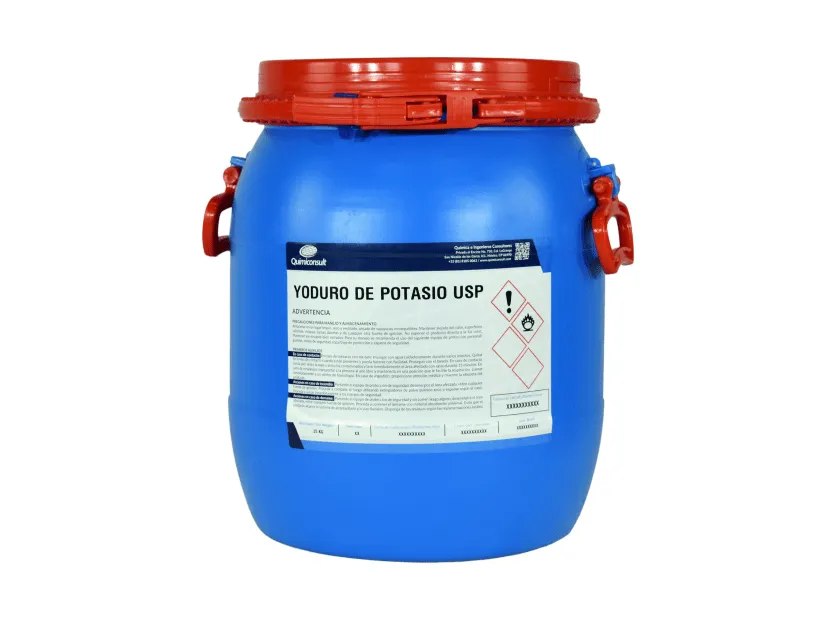
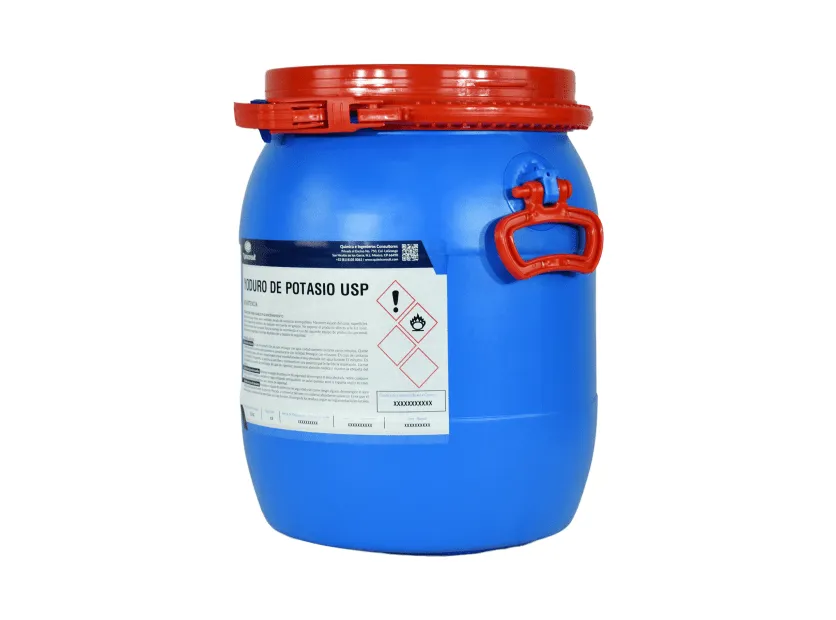
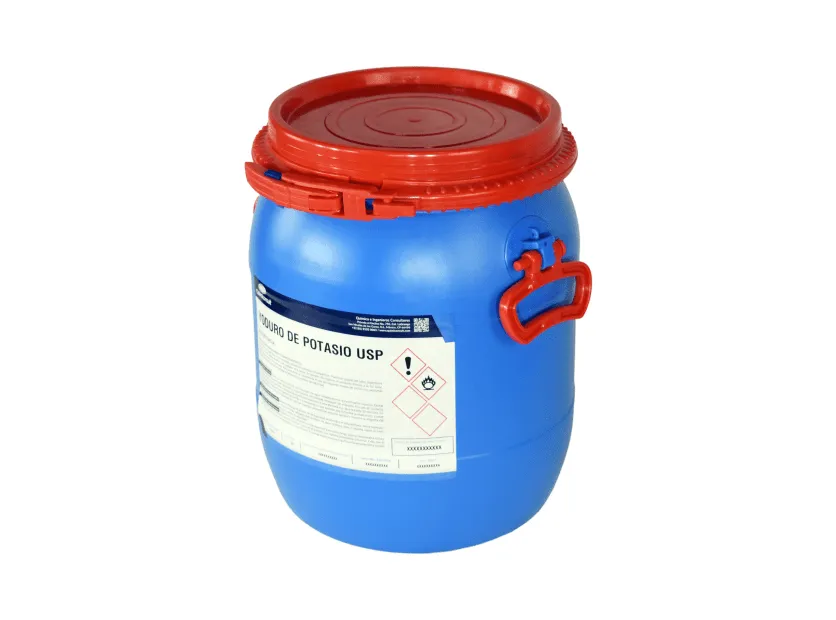
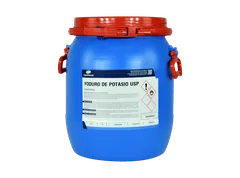
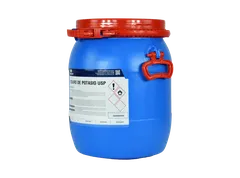
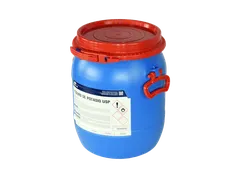
POTASSIUM IODIDE USP GRADE IODINE SOURCE & ADDITIVE
View All Prices
| Quantity | Unit Price |
|---|---|
| kg | |
| 1 - 99 | USD 78.47 |
| 100 - 199 | USD 78.19 |
| 200 - 499 | USD 77.92 |
| 500 - 999 | USD 77.64 |
| 1000 - 4999 | USD 77.37 |
| 5000 - 9999 | USD 77.11 |
| 10000 - 17999 | USD 76.84 |
| 18000+ | USD 76.58 |
We'll send you a single e-mail as soon as it's back in stock. No spam.
USP grade potassium iodide description
At Quimiconsult we offer USP potassium iodide, a pharmaceutical-grade inorganic compound supplied as a high-purity white powder with a KI assay of 99.0 to 99.9%. With the chemical formula KI and CAS number 7681-11-0, this product is one of the most widely used sources of iodine in industrial, pharmaceutical and food applications thanks to its high water solubility, its chemical stability and a purity profile that meets the standards set by the United States Pharmacopeia (USP).
Potassium iodide acts as a direct source of iodine, an essential trace element for proper thyroid gland function in humans and animals. Its USP grade guarantees that the product has been manufactured, tested and documented under quality standards that make it suitable for applications where purity is a critical requirement, such as the formulation of medicines, nutritional supplements, food additives and laboratory reagents. This classification sets it apart from technical or industrial grades, which do not have the same level of control over impurities and traceability.
In addition to its relevance as a nutrient, potassium iodide has applications in biocide formulation, chemical synthesis processes, the photographic industry and the production of iodized salt. Its versatility makes it a high-value raw material for many sectors that require a reliable, traceable source of iodine with supporting documentation.
For those wondering where to buy potassium iodide, at Quimiconsult you will find an experienced supplier with technical support, certificates of analysis for every lot and shipping throughout Mexico. USP grade potassium iodide is available in Monterrey, Nuevo León, with nationwide distribution capacity.
Potassium iodide details and properties
Potassium iodide, with the chemical formula KI, is an inorganic salt composed of a potassium cation (K⁺) and an iodide anion (I⁻), with a molecular weight of 166 g/mol. Its iodine content is approximately 75.74 to 76.89%, which makes it one of the most concentrated sources of elemental iodine available on the raw materials market. It appears as a white crystal at room temperature (25°C) and is characterized by its high water solubility, a property that makes it easy to prepare concentrated solutions for both analytical laboratory applications and industrial formulation processes.
Our USP potassium iodide offers a purity (KI assay) of 99.0 to 99.9%, with controlled impurity levels that ensure the quality required for pharmaceutical and food applications. Iodate content is kept at a maximum of 4.0 ppm, sulfate at a maximum of 150 ppm, iron at a maximum of 20.0 ppm and heavy metals below 10.0 ppm. These limits are consistent with USP Pharmacopeia specifications and allow the product to be used in formulations where the presence of contaminants must be minimal.
In terms of stability, potassium iodide is chemically stable under normal storage conditions, although it is important to protect it from moisture, as it is a hygroscopic salt that can absorb water from the air. Prolonged exposure to light and to oxidizing materials or strong acids should also be avoided, as these conditions can cause the release of free iodine, evidenced by a color change toward yellow or brown tones.
The physicochemical properties of potassium iodide, including its melting point of 681°C and its density of 3.12 g/cm³, make it compatible with a wide variety of industrial processes operating across different temperature ranges and formulation conditions. Our standard packaging includes 25 kg pails, with certificates of analysis and traceable lots that make it easy to integrate the product into quality management systems.
Potassium iodide applications and uses: what it is used for
Potassium iodide is a raw material with a range of applications spanning the pharmaceutical and food industries as well as analytical chemistry, photography and biocide formulation. Its main role in most of these applications is to serve as a controlled, stable, high-purity source of iodine.
In the pharmaceutical industry, potassium iodide is used as an active ingredient and as an excipient in the formulation of medicines related to thyroid function. It is a key component in the production of potassium iodide tablets and solutions indicated for protecting the thyroid gland in radiological emergencies, where radioactive iodine can accumulate in this gland if it is not previously saturated with stable iodine. It is also used in the formulation of expectorants and in dermatological preparations for treating certain fungal skin conditions.
In the food industry, potassium iodide is the most widely used compound worldwide for iodizing table salt, a public health program implemented in most countries to prevent iodine deficiency disorders, which include goiter, hypothyroidism and cognitive development problems. In addition to iodized salt, potassium iodide is incorporated into vitamin and mineral premixes for the processed food industry, ensuring that final products contain the iodine levels required by nutritional regulations.
In animal nutrition, potassium iodide is added to mineral premixes and supplements for cattle, swine, poultry and aquaculture. Iodine deficiency in production animals can cause reproductive problems, reduced milk production, low birth weight and metabolic disorders, so supplementation with potassium iodide is standard practice in the formulation of balanced feeds and mineral premixes.
In analytical chemistry laboratories, potassium iodide is a fundamental reagent for iodometric and redox titrations, where it is used as a reducing agent to determine the concentration of oxidizing substances in solution. It is also used to prepare Nessler's reagent for ammonia detection, in the synthesis of organic compounds and in qualitative tests for identifying heavy metals and other analytes.
In the photographic and radiographic industry, potassium iodide takes part in the formation of light-sensitive silver halides, an essential process in the production of photographic film, radiographic plates and printing materials. Although digital photography has reduced demand in this sector, applications in medical and industrial radiography remain relevant.
In biocide and disinfectant formulation, potassium iodide is used as a precursor for generating active iodine, a broad-spectrum antimicrobial agent effective against bacteria, fungi, viruses and spores. Iodine solutions formulated from potassium iodide are used in surface sanitization programs, water disinfection and antisepsis in clinical and veterinary settings.
In addition, potassium iodide has applications in the water treatment industry, where it is used as a component of heavy metal removal systems, and in industrial chemical synthesis as an intermediate in the production of iodinated organic compounds.
For complementary solutions, you can explore our Biocides, Disinfection & Sanitization, Pharmaceutical & Wellness and Food & Beverage lines to discover complementary solutions.
Storage and handling of potassium iodide powder
To preserve the quality and purity of USP potassium iodide, it is essential to store it in its original, tightly closed container in a cool, dry, well-ventilated place, protected from direct sunlight. Potassium iodide is a hygroscopic salt, which means it tends to absorb moisture from the air. If the product is exposed to high humidity without adequate protection, it can cake, partially dissolve and lose the flow characteristics needed for accurate dosing in formulation processes.
Prolonged exposure to light should also be avoided, as it can promote partial oxidation of the iodide, releasing elemental iodine that shows up as a color change of the product toward yellow or brown tones. This change not only affects appearance but can also alter the effective concentration of available iodide, compromising accuracy in applications where purity is critical.
When handling potassium iodide powder, it is recommended to use personal protective equipment including splash-proof safety goggles, gloves, a lab coat or protective clothing and, if dust is generated during weighing or transfer, an approved respirator. Contact with skin and eyes, as well as inhalation of dust, should be avoided, as it can cause respiratory tract irritation, skin irritation and eye irritation.
It is important to keep potassium iodide away from incompatible materials, particularly strong acids, oxidizing agents and powdered metals, as interaction with these materials can cause unwanted reactions. Solutions should be prepared in clean glass or compatible plastic containers, avoiding metal containers that may react with the product.
By following these storage and handling recommendations, USP potassium iodide maintains its chemical stability and purity specifications for extended periods, ensuring consistent performance in all its applications.
Potassium iodide vs potassium iodate: differences and which to choose
One of the most frequent questions among formulators, quality managers and raw material buyers is the difference between potassium iodide (KI) and potassium iodate (KIO₃). Although both compounds are sources of iodine and are used in similar applications, their chemical properties, stability and behavior under different conditions make them better suited to specific uses.
Potassium iodide (KI) is a reduced salt of iodine, which means the iodine is in its lowest oxidation state (-1). This characteristic gives it high water solubility and excellent bioavailability; that is, the iodine in potassium iodide is rapidly absorbed by the body. For these reasons, potassium iodide is the preferred option in pharmaceutical applications, nutritional supplements, laboratory formulations and processes requiring rapid release of iodine in solution. However, potassium iodide is more susceptible to oxidation when exposed to moisture, heat and light, which can cause the release of free iodine and a color change in the product.
Potassium iodate (KIO₃) is an oxidized salt in which iodine is in the +5 oxidation state. This form is considerably more stable under adverse environmental conditions such as high humidity, high temperatures and exposure to light. For this reason, potassium iodate is the preferred compound for iodizing table salt in tropical climates and in countries where salt storage and distribution conditions are not controlled, as it retains its iodine content for longer periods without degrading.
In practical terms, the choice between potassium iodide and potassium iodate depends on the end use. For pharmaceutical formulations, laboratory reagents, thyroid protection solutions and applications where immediate iodine bioavailability is the priority, USP grade potassium iodide is the right choice. For salt fortification in regions with extreme climates or where the distribution chain does not guarantee controlled storage, potassium iodate offers greater long-term stability.
At Quimiconsult we carry USP potassium iodide for applications that require high purity and bioavailability. If your process requires a technical evaluation to determine which of the two compounds best suits your specific conditions, our technical support team can guide you in the selection.
Other names and salts related to potassium iodide
Potassium iodide is also known as yoduro de potasio in Spanish, and is identified commercially under the designations USP potassium iodide, pharmaceutical-grade potassium iodide or simply KI. These names frequently appear in purchasing specifications, certificates of analysis, pharmaceutical formulations and regulatory documentation. Its CAS number 7681-11-0 is the universal identifier used in chemical databases, safety data sheets and international trade records.
In the context of iodine salts used in industry, it is useful to distinguish potassium iodide from other related compounds that, although they share the iodide anion, have different properties, applications and safety profiles.
Sodium iodide (NaI) is a related compound used mainly in radiography and medical diagnostics, particularly in the form of sodium iodide labeled with radioactive isotopes for thyroid function studies and scintigraphy. In some industrial processes it can be used as an alternative to potassium iodide, although differences in solubility and chemical behavior must be evaluated for the specific application.
Silver iodide (AgI) is a salt used in the traditional photographic industry and in the production of radiographic film. It also has applications in cloud seeding to induce precipitation. Despite sharing the iodide anion, its properties are fundamentally different from those of potassium iodide, and the two should not be confused in procurement or formulation processes.
Calcium iodide (CaI₂) is used as a mineral supplement in animal nutrition, particularly in formulations that need to supply both calcium and iodine at the same time. It is less common than potassium iodide in human pharmaceutical and food applications, but it has an established niche in the production of balanced livestock feed.
For those asking what potassium iodide is, it is the potassium salt of hydroiodic acid (HI), a crystalline inorganic compound that serves as the most widely used source of iodine in the pharmaceutical, food and chemical industries worldwide. Its USP grade indicates that it meets the purity and quality standards established by the United States Pharmacopeia, making it suitable for applications where safety, traceability and regulatory compliance are indispensable.
Likewise, in purchasing and sourcing it is common to see searches such as potassium iodide price, buy potassium iodide, pharmaceutical grade KI, potassium iodide Mexico or potassium iodide supplier, where variations in the product description are used to find options available on the market. These variations help you, as purchasing, quality and formulation managers, identify the product within the pharmaceutical-grade chemical raw materials market.
Frequently asked questions about potassium iodide
What is potassium iodide and what is it used for?
Potassium iodide is an inorganic salt with the chemical formula KI that serves as a high-purity source of iodine. It is used in many applications, including the formulation of thyroid medicines, the iodization of table salt, mineral supplementation in animal nutrition, the preparation of reagents for laboratory analysis, the formulation of biocides and disinfectants, and as a raw material in the photographic industry. Its USP grade indicates that it meets United States Pharmacopeia standards, making it suitable for pharmaceutical and food applications.
How does potassium iodide dissolve in water?
Potassium iodide is very highly soluble in water: approximately 140 g dissolve in 100 mL of water at 20°C. To prepare solutions, simply add the required amount of potassium iodide to the desired volume of water and stir until completely dissolved. Heating is not required to dissolve it at most working concentrations. Glass or compatible plastic containers and purified or distilled water are recommended for analytical and pharmaceutical applications.
Is potassium iodide dangerous?
In its solid form, potassium iodide can cause skin irritation, serious eye irritation and respiratory tract irritation if the dust is inhaled. It is classified as category 2 for skin irritation and category 2A for eye irritation under the Globally Harmonized System (GHS). Personal protective equipment including safety goggles, gloves and protective clothing should be used during handling. In case of eye contact, rinse with plenty of water for at least 15 minutes and seek immediate medical attention. The product is not flammable, but it is classified as an oxidizing solid, category 2, so it must be kept away from combustible materials.
What is the difference between USP grade and technical grade potassium iodide?
USP grade potassium iodide meets the purity specifications established by the United States Pharmacopeia, which include strict limits on impurities such as iodate, sulfate, iron and heavy metals, and it also requires traceability documentation and certificates of analysis for each lot. Technical or industrial grade may have lower purity levels and does not have the same level of impurity control or the documentation required for pharmaceutical or food applications. If your application involves food contact, drug formulation or nutritional supplements, USP grade is required.
How should potassium iodide be stored properly?
Potassium iodide should be stored in its original, tightly closed container in a cool, dry, well-ventilated place protected from direct light. As a hygroscopic salt, it absorbs moisture from the air, which can cause caking and affect dosing. It must be kept away from strong acids, oxidizing agents and powdered metals. A color change toward yellow or brown tones indicates that partial oxidation and release of free iodine have occurred, which compromises the purity of the product.
Where to buy potassium iodide in Mexico?
At Quimiconsult we offer USP grade potassium iodide with certificates of analysis, traceable lots and technical support. We are located in Monterrey, Nuevo León, and ship throughout Mexico. Our packaging includes 25 kg pails, adapting to the needs of laboratories, formulation plants and industrial operations of different volumes.